


Ultimate Buying Guide for Fiberglass Covered Wire
I. Introduction
Fiberglass covered wire, also known as glass fiber wire or glass fiber insulated wire, is an important product type in the special magnet wire industry. With its excellent high temperature resistance, superior mechanical strength, and reliable chemical stability, fiberglass covered wire is widely used in high-end manufacturing fields such as high temperature motors, welding machines, rail transit traction transformers, large generators, and aerospace electrical equipment.
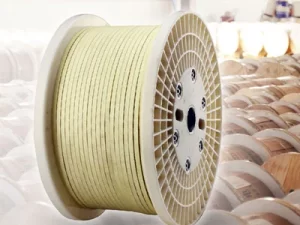
However, procuring fiberglass covered wire is not simply a matter of “comparing prices and placing an order.” Products from different manufacturers may have significant differences in conductor specifications, insulation thickness, thermal class, and impregnation processes. These differences directly affect the electrical performance, mechanical life, and safety of the final product.
This article serves as the ultimate buying guide for fiberglass covered wire, providing comprehensive and systematic reference for procurement personnel and technical engineers from multiple dimensions including product classification, key parameters, selection points, supplier evaluation, quality identification, and price analysis, helping you make informed procurement decisions.
II. Basic Classification and Specifications of Fiberglass Covered Wire
2.1 Classification by Conductor Material
Copper Conductor Fiberglass Covered Wire: Uses high-purity oxygen-free copper as the conductor with conductivity ≥101% IACS. It is currently the mainstream product in the market. Copper conductor fiberglass covered wire has excellent conductivity, mechanical strength, and weldability, making it suitable for applications with stringent reliability requirements.
Aluminum Conductor Fiberglass Covered Wire: Uses high-purity electrical aluminum as the conductor with conductivity approximately 61% IACS. Aluminum conductor products have lower cost and lighter weight, making them suitable for cost-sensitive applications where conductivity requirements are not high.
2.2 Classification by Thermal Class
| Thermal Class | Maximum Operating Temperature | Typical Impregnation Resin | Application Scope |
|---|---|---|---|
| Class B | 130°C | Polyester resin | General industrial use |
| Class F | 155°C | Epoxy modified polyester | Medium and high temperature environment |
| Class H | 180°C | Silicone resin | High temperature motors, welding machines |
| Class C | 200°C~240°C | Polyimide/silicone composite | Ultra-high temperature special equipment |
2.3 Classification by Product Specifications
Round Wire: Conductor diameter range typically 0.50mm~7.00mm, suitable for small and medium-sized motors and transformer windings.
Flat Wire: Conductor thickness 4.0mm~12.0mm, width 10.0mm~50.0mm, suitable for large power transformer and reactor windings.
Multi-strand Stranded Wire: Composed of multiple round wires twisted together, suitable for high current output applications, effectively reducing losses caused by skin effect and proximity effect.
III. Key Procurement Parameters for Fiberglass Covered Wire
3.1 Conductor Specification Parameters
Conductor specifications are the fundamental parameters determining the product’s current carrying capacity and winding design. The following information must be specified during procurement:
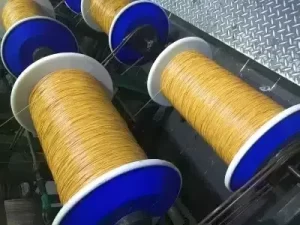
- Conductor Material: Copper or aluminum; conductors of different materials cannot be mixed.
- Nominal Diameter/Cross-section: Should be consistent with the design drawings; allowable deviations must comply with IEC 60317 or GB/T 6109 standards.
- Conductor Tolerance: For high-precision products, tolerances should be controlled within ±0.005mm.
- Surface Quality: The conductor surface should be smooth, free of scratches and oil stains.
3.2 Insulation Structure Parameters
- Insulation Thickness: The thickness of the glass fiber insulation layer determines the electrical strength and withstand voltage rating. The thickness range is typically 0.5mm to 5.0mm.
- Wrapping Method: Single-layer wrapping or double-layer wrapping. Double-layer reverse cross-wrapping provides more uniform insulation but is more expensive.
- Coverage Rate: The coverage rate of the glass fiber yarn wrapping should reach 85% to 95%.
- Impregnation Degree: The resin should fully fill the gaps in the glass fiber yarn; the filling rate should be ≥60%.
3.3 Electrical Performance Parameters
| Electrical Parameters | Testing Standards | Acceptance Indicators |
|---|---|---|
| Breakdown Voltage | IEC 60317 | Not lower than the standard specified value |
| Dielectric Loss Factor (tanδ) | IEC 60250 | ≤0.05 (90°C test conditions) |
| Insulation Resistance | GB/T 6109 | ≥100MΩ |
| Partial Discharge | IEC 60885 | ≤10pC (high voltage products) |
3.4 Mechanical Performance Parameters
- Flexibility: No cracking or peeling of the insulation layer after bending test.
- Bond Strength: The bond strength between the glass fiber layer and the conductor should meet the requirements of the winding process.
- Tensile Strength: The tensile strength of the conductor should meet the material standard.
- Thermal Shock Resistance: No cracking or delamination of the insulation layer after temperature cycling test.
IV. Key Selection Points for Fiberglass Covered Wire
4.1 Selection Based on Application Scenarios
High Temperature Motors: Choose Class H or Class C heat-resistant products to ensure long-term stable operation in high-temperature environments ranging from 180°C to 240°C. Typical applications include electric arc furnace transformers, induction heating equipment, and welding transformers.
Rail Transit Traction Transformers: Select Class H products with high mechanical strength and high reliability, with at least two layers of wrapping, and excellent vibration fatigue resistance.
Aerospace Equipment: Select Class C heat-resistant, lightweight, and highly reliable special-purpose products.
Industrial Electric Heating Equipment: Select the appropriate thermal class based on the equipment’s operating temperature, while also paying attention to heat dissipation design.
4.2 Selection Based on Voltage Level
| Voltage Level | Insulation Thickness Range |
|---|---|
| Low Voltage (≤690V) | 0.5mm~1.0mm |
| Medium Voltage (690V~3300V) | 1.0mm~2.0mm |
| High Voltage (3300V~10kV) | 2.0mm~3.5mm |
| Ultra-High Voltage (≥10kV) | ≥3.5mm (multi-layer composite structure) |
4.3 Selection Based on Environmental Conditions
- Humid Environment: Select products with excellent moisture-proof performance; if necessary, select products with a protective outer sheath.
- Salt Spray Corrosion Environment: Prioritize copper conductor products and confirm the corrosion resistance of the impregnating resin.
- Vacuum Environment: Select low-volatile products specifically designed for vacuum environments.
V. Supplier Evaluation and Selection Criteria
5.1 Supplier Qualification Review
Before purchasing fiberglass covered wire, a comprehensive qualification review of suppliers should be conducted:
- Company Qualifications: Business license, production license, ISO9001 quality management system certification.
- Product Certifications: UL certification, REACH compliance, RoHS compliance, CE certification (if applicable).
- Testing Capabilities: Does the company possess complete electrical, mechanical, and thermal performance testing equipment?
- Export Experience: Does the company have experience exporting to target markets and is familiar with international standards and trade processes?
5.2 Production Capacity Assessment
- Production Capacity: Does the monthly production capacity and annual supply capacity meet procurement needs?
- Equipment Level: The sophistication of key equipment such as enameling machines, wrapping machines, impregnation equipment, and drying tunnels.
- Process Level: The completeness of the quality control system for each process.
- Customization Capabilities: Does the company possess the capability to customize production for non-standard requirements and special needs?
5.3 Quality Control Assessment
- Raw Material Inspection: Whether incoming inspection is conducted on raw materials such as copper/aluminum rods, insulating paint, fiberglass yarn, and resin.
- Process Control: Whether there are first-time inspections, patrol inspections, and final inspections for each key process.
- Finished Product Inspection: Whether 100% or sampling electrical performance testing is conducted according to standard requirements.
- Traceability: Whether product quality issues can be traced back to specific batches and processes.
5.4 After-Sales Service Assessment
- Technical Support: Whether selection guidance and application technical support are provided.
- Quality Dispute Handling: Response speed, handling process, and compensation mechanism for quality issues.
- Supply Guarantee: Delivery commitment, inventory capacity, and emergency response.
VI. Price Analysis Method for Fiberglass Covered Wire
6.1 Cost Components
| Cost Components | Percentage | Price Influencing Factors |
|---|---|---|
| Raw Materials (Copper/Aluminum) | 50%~65% | International metal price fluctuations |
| Insulating varnish/resin | 5%~10% | Varnish type, brand |
| Fiberglass yarn | 5%~8% | Yarn specifications, quality grade |
| Manufacturing costs | 15%~25% | Equipment depreciation, labor, energy |
| Testing costs | 2%~5% | Testing items, certification requirements |
| Management costs | 5%~10% | Factory management, quality system |
6.2 Price Assessment Considerations
- Beware of excessively low quotes: Products priced significantly below the market average may have quality issues such as substandard conductor materials, insufficient insulation thickness, or incomplete impregnation.
- Verify complete specifications: Quotes should include complete specifications to avoid “formal pricing.”
- Clarify the unit of measurement: Whether pricing is in “ten thousand yuan/ton” or “ten thousand yuan/km” can result in significantly different conversion values.
- Consider Total Cost of Ownership: Beyond just the unit price, consider comprehensive costs such as transportation, customs duties (if applicable), inspection fees, and quality losses.
VII. Common Procurement Misconceptions and Avoidance Guidelines
7.1 Misconception 1: Focusing Only on Price, Ignoring Quality
Risk: Low-priced products may have issues such as falsely advertised insulation thickness, insufficient conductor purity, and incomplete impregnation, leading to serious quality problems like insulation breakdown and shortened lifespan after use.
Recommendation: Include quality requirements as a core indicator in supplier selection and establish a reasonable price-quality balance mechanism.
7.2 Misconception 2: Inaccurate Specifications
Risk: Vague specifications may lead suppliers to produce based on misunderstandings, resulting in products that do not meet usage requirements and incurring high costs for returns and exchanges.
Recommendation: Provide complete and accurate specifications, including conductor dimensions, insulation thickness, number of wrapping layers, thermal class, and testing standards.
7.3 Misconception 3: Neglecting Type Testing
Risk: Performing only routine testing without type testing may overlook performance defects of the product under extreme conditions.
Recommendation: Request the supplier to provide a third-party type test report covering items such as electrical strength, thermal aging, bending, and mechanical impact.
7.4 Misconception 4: Neglecting Small-Scale Verification
Risk: Using goods in large quantities without small-batch trial runs may result in losses due to product incompatibility with equipment or processes.
Recommendation: Before large-scale procurement, conduct small-batch trial runs to verify the actual performance of the product and its compatibility with production processes.
VIII. Frequently Asked Questions (FAQ)
Q1: How to choose between copper conductor and aluminum conductor?
A: Copper conductor is suitable for applications requiring high reliability, high power density, and high mechanical strength, such as large motors and high-voltage transformers. Aluminum conductors are suitable for cost-sensitive, weight-sensitive applications where conductivity requirements are not high.
Q2: How to choose between double-layer and single-layer wrapping?
A: Double-layer wrapping is recommended for high-voltage, high-reliability, and high-temperature products. Single-layer wrapping is suitable for general industrial applications and cost-sensitive products.
Q3: How to determine the thermal class?
A: Select based on the actual operating temperature of the equipment, generally allowing a margin of 10°C to 20°C. For example, if the equipment’s operating temperature is 150°C, choose a Class H (180°C) product.
Q4: What is the typical delivery time?
A: Standard products typically take 2-4 weeks to deliver. Non-standard products or those with special requirements may require 4-8 weeks. For bulk orders, communicate the delivery date with the supplier in advance.
Q5: How to verify product quality?
A: You may request the supplier to provide: (1) factory inspection report; (2) third-party testing report (type test); (3) user case studies. If you have any doubts, you may send the product to a third-party laboratory for testing.
IX. Conclusion
The procurement of fiberglass covered wire is a systematic task that requires comprehensive consideration of product performance, quality assurance, supplier capabilities, and cost-effectiveness.
During the procurement process, it is recommended to focus on the following key points:
- Clearly define required parameters: Conductor specifications, insulation thickness, thermal class, testing standards, etc., must be clearly and accurately defined.
- Select qualified suppliers: Choose suppliers with complete qualifications, stable quality, and good reputation.
- Emphasis on quality verification: Ensure product quality through testing reports, type tests, small-sample verification, etc.
- Balance price and value: Avoid simply pursuing the lowest price; establish a reasonable price-quality assessment mechanism.
- Establish long-term cooperation: Establishing long-term and stable cooperative relationships with high-quality suppliers is beneficial for quality assurance and cost optimization.
Zhengzhou LP Industry Co., Ltd. is a professional manufacturer specializing in the R&D, production, and sales of magnet wire for 30 years. Our fiberglass covered wire products cover two major series: copper conductor and aluminum conductor, with complete specifications and thermal classes ranging from B to C, widely used in high-temperature motors, welding machines, rail transportation, transformers, and other fields.
Our factory is ISO9001/ISO14001/ISO45001 triple certified, and our products comply with IEC/GB/JIS/NEMA international standards. Our products have been exported to over 50 countries and regions worldwide.
Contact us for a professional quote on fiberglass covered wire:
Email: office@cnlpzz.com
WhatsApp: 0086-19337889070