

Introduction
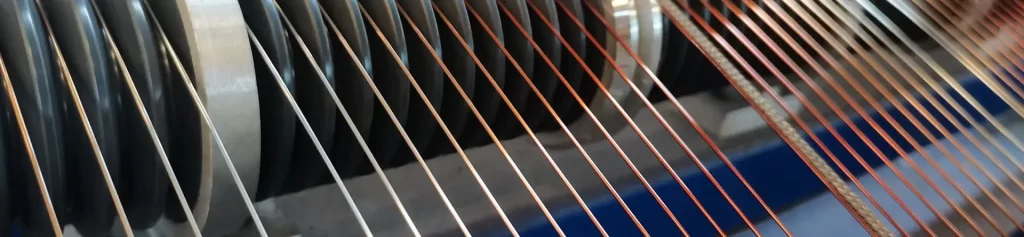
Fiberglass covered wire is a special type of insulated wire made by winding a layer of glass fiber around the surface of a traditional magnetic wire and then curing it at high temperature. This product combines the advantages of organic insulating varnish and inorganic glass fiber, exhibiting outstanding performance in heat resistance, mechanical strength, and chemical stability. It is widely used in electrical equipment such as motors, transformers, and reactors.
This article will systematically describe the product definition, classification system, technical specifications, key performance indicators, and application areas to provide selection reference for engineering technicians.
1. Product Definition and Structural Characteristics
1.1 Basic Definition
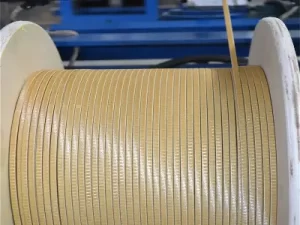
Fiberglass covered wire is a composite insulated wire made by wrapping or weaving one or more layers of glass fiber yarn around or braiding a round or flat magnetic wire as the base, and then baking and curing it. The base wire is typically enameled wire, including polyester imide and polyamide imide types; the glass fiber layer serves as a reinforcing protective layer, providing additional insulation and mechanical support.
1.2 Structural Layers
From a cross-sectional perspective, glass fiber-coated wire comprises three structural layers from the inside out:
- Conductor Layer: Usually drawn from oxygen-free copper or electrolytic aluminum rods. The conductivity of a copper conductor is approximately 58 S·m/mm², and that of an aluminum conductor is approximately 35 S·m/mm², only about 60% of that of copper.
- Insulating Varnish Layer: An organic insulation layer coated on the conductor surface, typically 0.02~0.12 mm thick, providing primary insulation. This layer is also a key factor determining the wire’s thermal class.
- Glass Fiber Layer: An inorganic fiber layer wrapped or braided around the outside of the insulating varnish layer, typically 0.08~0.4mm thick, providing secondary insulation, mechanical protection, and thermal protection.
2. Classification System
2.1 Classification by Glass Fiber Processing Technology
Glass Fiber Wrapped Wire: Uses a unidirectional or cross-wrapping process, winding glass fiber yarn along the conductor axis onto the surface of the insulating varnish layer. This process is simple, efficient, and relatively low-cost, making it the most common type of glass fiber coated wire on the market. Based on the number of wrapping layers, it can be further divided into:
- Single-layer wrapping: Suitable for general industrial applications
- Double-layer wrapping: Offers superior insulation performance
- Thick-layer wrapping: Suitable for high-voltage or special environments
Glass Fiber Braided Wire: Uses a braiding process, cross-weaving glass fiber yarn into a mesh structure to cover the surface of the conductor. Compared to wrapping, braided structures offer stronger damage resistance and are less prone to breakage from mechanical impacts or friction. However, braiding equipment is complex and production costs are higher.
2.2 Classification by Thermal Class
| Thermal Class | Maximum Operating Temperature | Insulation Combination |
|---|---|---|
| Grade C | 200°C | Polyester Insulating Varnish + Glass Fiber |
| Grade D | 220°C | Polyester Imide Insulating Varnish + Glass Fiber |
| Grade R | 240°C | Modified Polyester Imide Insulating Varnish + Glass Fiber |
| Grade SR | 260°C | Polyamide Imide Insulating Varnish + Glass Fiber |
The selection of thermal class should be based on the actual operating temperature of the equipment, with an appropriate margin. It is generally recommended that the design temperature be at least 20°C lower than the rated heat resistance temperature.
2.3 Classification by Conductor Material
Copper Conductor: Excellent conductivity and high mechanical strength, it is currently the most widely used type. Copper conductors exhibit less skin effect at high frequencies, making them suitable for high-frequency applications such as variable frequency motors.
Aluminum Conductor: Cost is 30%~40% lower than copper conductors, and it is about 60% lighter, but its conductivity is only about 60% of that of copper. Aluminum conductors are suitable for cost-sensitive, continuously operating transformer and reactor products.
3. Technical Specifications and Standards System
3.1 Geometric Specifications
Round Conductor Specifications Range:
- Conductor Diameter: 0.5mm ~ 7.0mm
- Insulation Thickness: 0.1mm ~ 0.4mm (single layer), 0.2mm ~ 0.5mm (double layer)
Flat Conductor Specifications Range:
- Conductor Thickness: 0.8mm ~ 10mm
- Conductor Width: 2mm ~ 25mm
- Insulation Thickness: 0.12mm ~ 0.45mm
The selection of conductor specifications should be based on a comprehensive consideration of current carrying capacity, skin effect, and heat dissipation conditions.
3.2 International Standards System
IEC 60317 Series: International Electrotechnical Commission (IEC) standards for electrical wires, among which IEC 60317-13 specifically specifies the technical requirements for glass fiber coated polyimide enameled round copper wire. This standard clearly specifies conductor dimensions, insulation thickness, electrical performance, and mechanical performance.
NEMA MW 1000 Series: Standards from the National Electrical Manufacturers Association (NEMA), with MW 35-C defining the specifications for fiberglass-insulated magnetic wires, and MW 37-C specifying insulated wires for variable frequency motors.
GB/T 6109 Series: Chinese national standards, specifying the technical requirements for various types of enameled wires. Fiberglass-coated wires are often expanded upon to form enterprise or industry standards.
3.3 Key Performance Indicators
Electrical Performance Indicators:
- Insulation Resistance: Under normal temperature conditions, the insulation resistance of fiberglass-coated wires is typically required to be greater than 100 MΩ/km; at rated operating temperature, the insulation resistance should be maintained above 10 MΩ/km.
- Breakdown Voltage: Generally, the insulation layer is required to withstand voltages of 500V to 1000V or higher without breakdown; the specific value is determined based on the insulation thickness and design voltage level.
- Dielectric Loss Factor (tanδ): A smaller value indicates better dielectric properties. The dielectric loss factor of high-quality fiberglass-coated wire should be below 0.02 at room temperature.
Mechanical Performance Indicators:
- Winding Test: Requires the wire to be wound a specified number of times on a round bar of a specified diameter without cracking or peeling of the insulation layer.
- Tensile Test: Evaluates the wire’s ability to retain its properties under tension.
- Adhesion Test: Evaluates the bonding strength between the insulation layer and the conductor. Good adhesion prevents the insulation layer from slipping or detaching under bending or vibration conditions.
Thermal Performance Indicators:
- Thermal Shock Test: Fiberglass-coated wire can typically withstand thermal shocks of 250°C to 300°C without damage.
- Softening Breakdown Test: Determines the electrical strength retention rate of the insulation layer under high-temperature conditions. This test is particularly important for evaluating wires used in variable frequency motors.
4. Manufacturing Process
The manufacturing process of glass fiber coated wire includes the following core steps:
- Conductor Drawing: Copper or aluminum rods are gradually reduced in diameter to the target size through multiple drawing dies, while bright annealing is performed to ensure conductor flexibility.
- Insulation Coating: After the conductor passes through the enamel bath, an insulating enamel layer is applied to the surface, and then it enters an oven for high-temperature curing. This process requires strict control of the enamel coating thickness and curing temperature to ensure uniform and stable insulation performance.
- Glass Fiber Wrapping: The insulated wire is wound with glass fiber yarn at a specified angle and density using a specialized wrapping machine. Wrapping tension, angle, and density are key parameters affecting product quality.
- High-Temperature Baking: The wrapped wire enters a tunnel oven and is baked and cured at 180°C to 240°C, allowing the insulating enamel to penetrate the glass fiber and form a complete and dense insulation structure.
- Quality Inspection: Includes dimensional inspection, electrical performance testing, mechanical performance testing, and visual inspection to ensure products meet technical specifications.
5. Application Areas
5.1 Motor Industry
- Large Industrial Motors: In metallurgy, mining, building materials, petrochemical and other fields, large motors typically operate at temperatures of 150°C to 180°C, with large load fluctuations and significant vibrations. The application of fiberglass-covered wire can effectively improve the insulation level of motors and extend their service life.
- Special Motors: Special motors such as servo motors, stepper motors, and elevator traction motors have strict requirements for reliability and durability. Fiberglass-covered wire is a key material to ensure the long-term stable operation of such motors.
- Power Tool Motors: Handheld power tools such as electric drills, angle grinders, and impact drills have high speeds and high heat dissipation requirements. Fiberglass-covered wire can withstand the thermal cycling shock caused by frequent start-stop cycles.
5.2 Transformer Field
- Power Transformers: Large power transformers can reach winding temperatures of 120°C to 150°C under continuous operation. The application of fiberglass-covered wire provides transformers with a higher safety margin.
- Reactors: Various industrial reactors, filter reactors, and power factor correction reactors operate in complex environments, requiring high heat resistance and reliability of insulation materials.
- High-Frequency Transformers: Switching power supplies and inverters use high-frequency transformers with operating frequencies exceeding 20kHz. Fiberglass-covered wire, with its excellent dielectric properties, is the preferred solution.
5.3 New Energy Field
- New Energy Vehicle Drive Motors: New energy vehicle drive motors operate at temperatures as high as 180°C to 200°C and require long lifespan and high reliability. Fiberglass-covered wire is the mainstream choice in this field.
- Photovoltaic Inverter: Solar power generation systems use inverters in harsh environments with large diurnal temperature variations and high risks of salt spray corrosion. The application of fiberglass-covered wire ensures long-term stable operation of the inverter in complex environments.
- Energy Storage System: Large-scale energy storage power stations’ transformers and reactors also have stringent requirements for insulation materials, and fiberglass-covered wire is increasingly widely used in this field.
5.4 Other High-End Fields
Aerospace, military, and nuclear power industries have extremely stringent requirements for the fire safety and reliability of electrical equipment. Fiberglass-covered wire, with its non-combustible properties and excellent heat resistance, has irreplaceable application value in these fields.
6. Selection Recommendations
6.1 Basic Selection Principles
- Operating Condition Matching: Select a matching thermal class and structural type based on the actual operating temperature, vibration conditions, chemical corrosion environment, and fire protection requirements of the equipment.
- Safety Margin: It is recommended that the design operating temperature be at least 20°C lower than the wire’s rated heat resistance temperature to cope with load fluctuations and changes in ambient temperature.
- Economic Consideration: The unit price of fiberglass-covered wire is approximately 1.5 to 2 times that of ordinary enameled wire, but due to its longer service life and lower failure rate, the total life cycle cost is actually lower.
6.2 Supplier Evaluation Factors
- Certifications: ISO9001 quality management system certification is a basic requirement. Products exported to the United States need UL certification, and products exported to the European Union need to comply with REACH/RoHS directives.
- Production Capacity: A large-scale production base can ensure delivery cycle and quality stability. Companies with a production scale of 60 acres or more usually have strong supply capabilities.
- Technical Strength: The ability to provide complete technical parameter documents, product testing reports, and selection technical support is an important basis for measuring the supplier’s professional capabilities.
- Export Experience: Companies with export experience to over 50 countries and regions typically have more standardized product quality and business processes.
7. Conclusion
As an important type of special insulated wire, fiberglass-covered wire significantly improves the product’s heat resistance, mechanical strength, and chemical stability by incorporating a fiberglass braided layer on top of traditional enameled wire. Under harsh conditions such as high temperature, vibration, corrosion, and fire resistance, this product has irreplaceable technical advantages.
With the rapid development of strategic industries such as new energy, intelligent manufacturing, and aerospace, the market demand for fiberglass-covered wire will continue to grow. A deep understanding of the product’s classification system, technical specifications, and selection principles is crucial for engineering technicians to correctly select the appropriate product.
Company Profile
Zhengzhou LP Industrial Co., Ltd. is a professional enterprise engaged in the research, development, production, and export of electrical magnet wire. The company has 30 years of export experience in the electrical magnet wire industry and is a enameled wire source manufacturer, directly supplying from the factory. The production base covers 60 acres and holds ISO9001, ISO14001, and ISO45001 certifications. Products have passed UL, REACH, RoHS, and other international certifications. The company exports its products to over 50 countries and regions worldwide, providing round conductors (0.016-7.0mm) and flat conductors (thickness 0.8-10mm, width 2-25mm), covering a full range of thermal classes from 155°C to 240°C.