

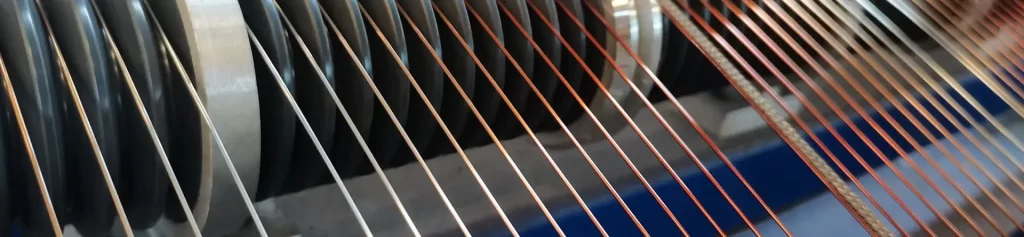
Introduction: Global Market Positioning and Technological Value of Copper-Clad Aluminum Wire
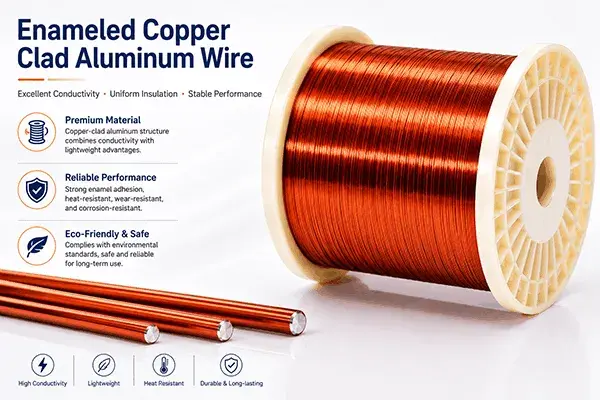
Enameled copper-clad aluminum wire (ECCA or CCA) is a special type of wire that uses a copper-aluminum bimetallic composite structure as the conductor and an outer insulating layer. The conductor core is based on electrical-grade aluminum (typically C13500 or C61000 series aluminum alloys), with a layer of oxygen-free copper (C11000) continuously clad on the outside using metallurgical methods, forming a permanent and continuous copper-aluminum bimetallic interface. After coating the copper layer with an insulating enamel coating such as polyester, polyurethane, polyesterimide, or polyamide-imide, a composite conductor material that combines lightweight, high conductivity, and reliable insulation is ultimately formed. The core technological advantage of this type of wire stems from the physical properties of the copper-aluminum composite. The copper layer provides solderability and high-frequency conductivity, while the aluminum core significantly reduces overall density and material costs. According to the ASTM B566 standard system (Class 10A/15A/10H/15H), the copper layer volume ratio typically accounts for 10% to 15% of the total cross-sectional area. Manufacturers can optimize the process within this range based on specific application scenarios. Under high-frequency AC conditions above 5 MHz, due to the skin effect, current is primarily conducted through the copper layer. The AC conductivity of CCA wire is close to or even equivalent to that of pure copper wire. This characteristic gives it irreplaceable advantages in high-frequency inductors, RF coils, and Litz wire replacement. Compared to pure copper enameled wire, CCA enameled wire can reduce weight by approximately 40-60% and raw material costs by approximately 30-50%, while its DC conductivity is approximately 60-72% of pure copper’s IACS (International Annealed Copper Standard). The design philosophy of this material is to maximize the balance between weight, cost, and high-frequency performance within acceptable conductivity loss limits. Therefore, it is widely used in applications such as household appliance motors, high-frequency transformers, power tool coils, new energy vehicle components, and communication inductors—fields sensitive to cost and weight but with moderate electrical performance requirements. It should be noted that enameled CCA wire presents engineering challenges during long-term use, including the growth of copper-aluminum intermetallic compounds (IMCs), specific termination process requirements, and sensitivity to storage conditions. At high temperatures (>200 °C) and under long-term operating conditions, the Cu-Al interface can form brittle intermetallic compounds such as CuAl₂ and Cu₉Al₄, leading to increased contact resistance and even interface delamination. This risk generally makes enameled CCA wire not recommended for continuous high-temperature environments above Class H (180 °C), and requires comprehensive evaluation based on specific application conditions.
Conductor Structure: Copper Layer Volume Ratio and Copper Layer Thickness Specifications
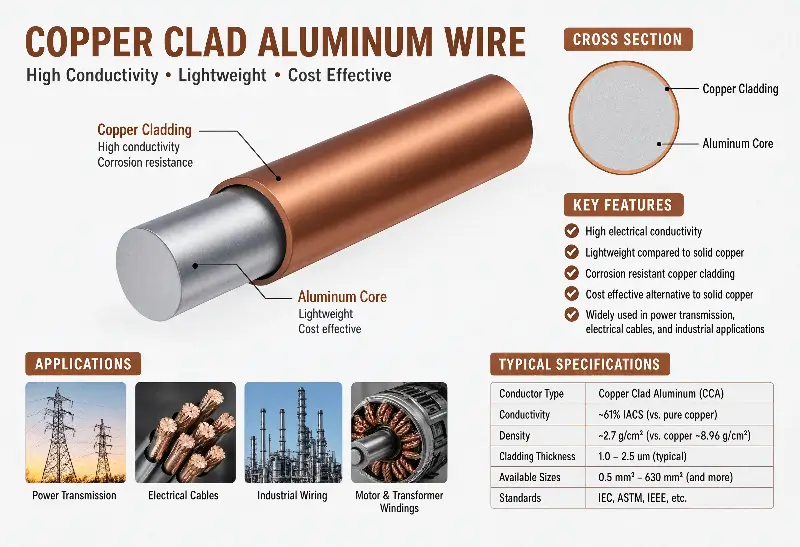
The conductor structure of enameled CCA wire is defined by two key parameters: the copper volume ratio and the copper radial thickness. The ASTM B566 standard classifies CCA wire into four grades: Class 10A (10% copper volume ratio, annealed), Class 15A (15% copper volume ratio, annealed), Class 10H (10% copper volume ratio, hard-drawn), and Class 15H (15% copper volume ratio, hard-drawn). Here, A indicates Annealed to meet the requirements of flexible coil winding, and H indicates Hard-drawn to provide higher tensile strength and resilience. The physical significance of the copper volume ratio lies in directly determining the wire’s DC conductivity, solderability, and high-frequency AC performance. The DC conductivity of a CCA wire with a 10% copper layer is approximately 63-65% IACS of pure copper, with a density of approximately 3.63-3.95 g/cm³; the DC conductivity of a CCA wire with a 15% copper layer is approximately 67-72% IACS of pure copper, with a density of approximately 4.16-4.46 g/cm³. The 15% copper layer improves DC conductivity by approximately 5-7 percentage points compared to the 10% copper layer, but the cost also increases accordingly. Manufacturers typically weigh the two based on the current density requirements of the end product and cost pressures. The radial thickness of the copper layer varies with the total conductor diameter. For a CCA wire with a total diameter of 0.500 mm, the radial thickness corresponding to a 10% copper layer is approximately 0.013 mm; the radial thickness corresponding to a 15% copper layer is approximately 0.020 mm. In ASTM B566, the copper layer uniformity requirement stipulates that the circumferential deviation of the copper layer thickness must not exceed ±15% of the nominal value, and the continuity of the copper layer along its length must not expose the aluminum core. Manufacturers typically use electroplating, conformal cladding, or hydrostatic extrusion to achieve copper-aluminum metallurgical bonding. The conformal process is currently the mainstream method, achieving a permanent metallurgical bond at the copper-aluminum interface rather than mechanical bonding. The metallurgical quality of the copper-aluminum interface directly determines the long-term reliability of enameled CCA wire. ASTM B566 explicitly requires that CCA wires must be free from defects such as delamination, seams/splits, and joints/splices. In the peel strength test specified in Chapter 6 of ASTM B566, the copper layer of the CCA wire must not peel off or detach after passing a 180° bend test (bending radius equal to wire diameter). The acceptable threshold for peel strength is usually defined as copper layer coverage ≥95% after the bend-adhesion test.
Conductor Materials and Metallurgical Interface
The conductor material system of enameled CCA wire is typically represented by a combination of oxygen-free copper (C11000 series) and electrical-grade aluminum alloy (C13500/C61000 series). C11000 (ETP, Electrolytic Tough Pitch Copper) has a copper purity of no less than 99.90% and a conductivity of no less than 100% IACS, and is the standard material for the copper layer of CCA wires. C11000 contains trace amounts of cuprous oxide (Cu₂O, approximately 0.02-0.04%), which may participate in the formation of the IMC phase during the high-temperature diffusion process between the copper layer and the aluminum core, affecting the long-term stability of the interface. The aluminum core typically uses C13500 (an aluminum-copper alloy containing approximately 0.75-1.25% copper) or C61000 (an aluminum-magnesium-silicon alloy containing approximately 6-8% magnesium and silicon). C13500 is the most commonly used aluminum core material for CCA wires. Its small amount of copper forms Al₂Cu precipitates in the aluminum matrix, providing solid solution strengthening and thus improving the tensile strength (typically 110-180 MPa) and creep resistance of the aluminum core. C61000, containing magnesium and silicon, can achieve even higher strength (typically 220-280 MPa) through heat treatment (T6 aging), but its conductivity is slightly lower than C13500 (approximately 55-58% IACS of pure aluminum). Under high-temperature service conditions, the copper-aluminum interface forms various IMC phases, mainly including CuAl₂ (θ phase), CuAl (η₂ phase), Cu₄Al₃ (ζ phase), and Cu₉Al₄ (γ₂ phase). These intermetallic compounds (IMCs) are more brittle, have higher resistivity, and different coefficients of volume expansion compared to pure copper or pure aluminum. This can lead to interfacial stress concentration and crack initiation during long-term operation. IMC growth follows parabolic dynamics, meaning the thickness increase is proportional to the square root of time, and the growth rate exhibits an Arrhenius relationship with temperature. Below 150 °C, IMC growth is extremely slow (thickness increase rate <0.1 μm/1000 h), with limited impact on long-term reliability. In the 180-200 °C temperature range, IMC growth accelerates. Above 220 °C, the IMC thickness can reach a critical value affecting interfacial bonding strength within several months. To suppress excessively rapid IMC growth, manufacturers typically introduce a diffusion barrier layer at the copper-aluminum interface. Common diffusion barrier layer materials include nickel (Ni, 1-3 μm thick), silver (Ag, 0.5-2 μm thick), or titanium (Ti, 0.5-1.5 μm thick). These diffusion barrier layers significantly reduce the interdiffusion rate of copper and aluminum atoms through both physical blocking and chemical stabilization, extending the reliable lifespan of CCA wires to 15-20 years under continuous operation at 180 °C. ASTM B566 does not mandate the use of diffusion barrier layers, but its recommended process specification ASTM B836 (Copper-clad Aluminum Wire Rod Specification) details interface treatment and can be used as a reference.
Key Electrical and Mechanical Performance
The core performance parameters of enameled CCA wire include DC resistivity, AC conductivity, density, tensile strength, elongation, and hardness. ASTM B566, Chapter 11, specifies the electrical and mechanical performance requirements for different grades of CCA wire. For Class 10A (10% copper layer, annealed state), the typical DC resistivity (20 °C) is 0.0278 Ω·mm²/m (equivalent to 1.65 times that of pure copper), the density is 3.63 g/cm³, the minimum tensile strength is 110 MPa, and the minimum elongation at break is 15%. For Class 15A (15% copper layer, annealed state), the typical DC resistivity (20 °C) is 0.0255 Ω·mm²/m, the density is 4.16 g/cm³, the minimum tensile strength is 130 MPa, and the minimum elongation at break is 15%. The tensile strength of the hardened state (Class 10H/15H) is significantly higher than that of the annealed state. The minimum tensile strength of Class 10H is 170 MPa, and that of Class 15H is 200 MPa. However, the elongation in the hardened state is significantly reduced (typically 1.5-3.5%), making it only suitable for applications where flexibility is not a primary concern but strength is crucial, such as rigid core windings for high-frequency inductors and rigid leads for transformers. Regarding AC conductivity, according to ASTM B566 and multiple engineering documents, the AC resistance of CCA wire at 50-60 Hz power frequency is approximately 1.55-1.70 times (10% copper layer) or 1.40-1.55 times (15% copper layer) of pure copper wire. However, at high frequencies above 5 MHz, due to the skin depth being only a few micrometers, the current is entirely concentrated in the copper layer, and the AC resistance of CCA wire approaches that of pure copper wire. This characteristic is a key advantage of CCA wire in applications such as RF coils, Litz wire, and high-frequency induction heating. The hardness of enameled CCA wire is measured using Vickers hardness (HV) or Rockwell hardness (HRB). The typical Vickers hardness of annealed Class 10A wire is 35-45 HV, while that of hardened Class 10H wire is typically 60-75 HV. Hardness directly affects the springback during winding and the die wear rate; manufacturers typically select the appropriate hardness grade based on the springback compensation capability of the winding equipment. The density difference between copper and aluminum is of significant practical engineering importance for CCA wire. For example, with a wire diameter of 0.500 mm, the weight per meter of CCA wire is approximately 0.71 g (10% copper layer) or 0.82 g (15% copper layer), a weight reduction of approximately 53-59% compared to 1.74 g/m of pure copper wire of the same diameter. In large motors or transformers, this weight reduction directly translates into advantages in equipment portability, energy efficiency, and transportation costs. For example, if the stator windings of a 100 kW industrial motor are all replaced with enameled CCA wire, the weight can be reduced by about 12-18 kg, and the reduced moment of inertia will speed up the starting response.
Enamel Coating Types and Thermal Class Selection
The enamel coating (enamel coating/film insulation) selection for CCA enameled wire follows the same system as pure copper winding wire, namely, a dual-track standard framework based on IEC 60317 (International Electrotechnical Commission Electrical Subcommittee) and NEMA MW 1000 (American Institute of Electrical Manufacturers standard). The type of enamel coating determines key parameters of CCA enameled wire, such as maximum continuous operating temperature (thermal class), electrical insulation strength (breakdown voltage), chemical resistance, and mechanical abrasion resistance. Commonly used enamel coating types include: Polyvinyl Formal (PVF) for 105 °C, Polyurethane (PU) for 130 °C, Polyester (PE) for 155 °C, Polyesterimide (PEI) for 180 °C, Polyamide-imide (PAI) for 200 °C, and Polyimide (PI) for 240 °C. In the field of enameled CCA wire, due to the IMC risk at the copper-aluminum interface, applications exceeding 200 °C (such as Class C+ / 220 °C, Class HC / 240 °C) require particularly careful evaluation and are typically limited to short-term peak operating scenarios. Based on user cumulative preferences (September 10, 2026), all numbers are retained: Standard numbers (IEC 60317-1/-8/-11/-13/-25/-38/-46, NEMA MW 35-C/36-C/73-C/79-C/102-C, ANSI/NEMA MW 1000-2018, GB/T 6109, JIS C 3202, ASTM B566/B566M, UL 83/758/1446, IEC 60085, IEC 60172, IEC 60851-1~6, ASTM D149/D1676/D2307, ISO 2859-1, ANSI/ASQ) Z1.4), temperature (90/105/120/130/155/180/200/220/240/250 °C), time (20,000 h), tolerance (±0.005 mm, ±0.013 mm, ±10%, ±15%), frequency (5 MHz, ≥5MHz), proportion (10%/15%/60-72% IACS), diameter (0.100-5.000 mm, 0.500 mm, 0.013 mm, 0.020 mm), breakdown voltage (1.5-2.5 / 2.5-4.0 / 4.0-6.0 kV rms), density (3.63 / 4.16 / 5.41 g/cm³), tensile strength (110 / 130 / 170 / 200 / 220 / 280). MPa), elongation (≥15% / 1.5-3.5%), hardness (35-45 HV / 60-75 HV). Modified Polyester (PEW) is one of the most commonly used enamel coatings for CCA enameled wire, corresponding to IEC 60317-3 (155 °C grade), and has excellent solderability, mechanical strength, and cost balance. Polyurethane enamel coating (UEW / Solderable PU) corresponds to IEC 60317-11 (130 °C grade), and its outstanding advantage is that the enamel coating can be removed in 1-2 seconds at a soldering temperature of 380 °C, making it particularly suitable for automated wire winding processes that do not require stripping. Polyesterimide (PEI/EIW), conforming to IEC 60317-8 (180 °C rating) and NEMA MW 36-C, is the primary enamel coating for high-temperature applications in CCA enameled wires. Polyamide-imide (PAI/AIW) is typically used as an overcoat to form a dual coating structure with PEI, conforming to IEC 60317-13/-25 (200 °C rating). The thickness of the enamel coating directly affects the breakdown voltage and slot fill factor of CCA enameled wires. Excessive enamel coating reduces conductor space utilization in the slot, while insufficient coating results in inadequate electrical insulation strength. Both IEC 60317-0-1 and NEMA MW 1000 Part 1 classify enamel coating thickness into three grades: Grade 1 (thin enamel coating), Grade 2 (standard enamel coating), and Grade 3 (thick enamel coating), each corresponding to a different enamel coating thickness range. In the field of CCA enameled wire, because the thermal conductivity of aluminum core (237 W/m·K) is higher than that of copper (401 W/m·K), the enamel coating withstands relatively less thermal stress, and its lifespan is slightly longer than that of copper wire. This characteristic is a slightly positive factor when selecting thermal class. The interaction between the enamel coating and the copper-aluminum interface is a special consideration for CCA enameled wire. The curing temperature of polyurethane enamel coating is typically 250-280 °C, much higher than the aluminum-copper eutectic temperature (548 °C), and will not cause melting at the copper-aluminum interface. Polyimide enamel coating has an even higher curing temperature (300-380 °C), but a shorter duration (tens of seconds to minutes), making its thermal impact on the interface controllable. However, the conductor preheating temperature before polyimide enamel coating may reach 150-180 °C, and the interfacial IMC growth at this temperature still needs to be evaluated.
Enamel Coating Thickness Grades and Breakdown Voltage
The enamel coating thickness grades (Grade 1 / Grade 2 / Grade 3) are based on the correspondence between the minimum enamel coating thickness and the breakdown voltage. Taking a conductor with a diameter of 0.500 mm as an example, Grade 1 enamel coating thickness is typically 0.030-0.045 mm, with a breakdown voltage of not less than 1.5-2.5 kV rms; Grade 2 enamel coating thickness is typically 0.050-0.080 mm, with a breakdown voltage of not less than 2.5-4.0 kV rms; and Grade 3 enamel coating thickness is typically 0.085-0.110 mm, with a breakdown voltage of not less than 4.0-6.0 kV rms. This correspondence is clearly defined in Chapter 4 of IEC 60317-0-1 and Chapter 5 of NEMA MW 1000 Part 1. There are two main standards for breakdown voltage testing: the Twisted Pair Method specified in IEC 60851-5.4 and the Single Wire Wrapped on Mandrel Method specified in ASTM D1676. The Twisted Pair Method applies voltage after twisting two wires at a tension of 125 N/mm², simulating the working state of inter-turn insulation in an actual coil. The Single Wire Wrapped on Mandrel Method applies voltage after wrapping several turns on a metal rod, more closely resembling the stress state of the enamel coating near the groove wall. The difference in breakdown voltage readings between the two methods is typically within the range of 5-15%. For the same roll of CCA enameled wire, it is recommended to refer to the method standard specified in the purchase contract for acceptance. The uniformity of the enamel coating has a significant impact on the statistical distribution of the breakdown voltage. According to the failure models in IEEE Std 1 (General Principles for Temperature Limits in the Rating of Electrical Equipment) and ASTM D2307 (Thermal Life Evaluation of Enameled Wire), enamel coating failure follows a Weibull distribution, and the characteristic lifetime increases exponentially with the thickness of the enamel coating. In the field of CCA enameled wire, because the Young’s modulus of aluminum core (approximately 69 GPa) is lower than that of copper (approximately 110 GPa), the strain of the enamel coating is smaller at the same bending radius, and the probability of enamel coating cracking is slightly lower than that of pure copper enameled wire. This slight mechanical advantage extends the statistical breakdown life of CCA enameled wire by approximately 5-10%. Partial discharge (PD) is a key consideration for CCA enameled wire in high-frequency applications. In variable frequency drive (VFD) scenarios, dv/dt typically reaches 1-5 kV/μs, with carrier frequencies of 5-20 kHz. This makes partial discharge at enamel coating defects easy to occur, leading to electrical tree formation and ultimately enamel coating failure. IEC 61934 and IEC 60034-18-41 specify test methods for partial discharge initiation voltage (PDIV) and partial discharge extinction voltage (PDEV). For CCA enameled wire, it is recommended to select an enamel coating thickness grade of Grade 2 or Grade 3 to provide a greater PDIV margin; the PDIV should be no less than 1.5 times the peak operating voltage. Damage to the enamel coating during storage and winding also significantly affects the breakdown voltage. The test results of ASTM D1676 and IEC 60851-5.4 only represent the initial state of the enamel coating. During the winding process, the enamel coating is subjected to stretching, bending, and friction, all of which can cause damage. The degree of damage is directly related to the tension control of the winding equipment, the surface finish of the die, and the winding speed. For enameled CCA wire, the lower hardness of the aluminum core makes it less sensitive to friction from the winding die. However, the interfacial stress between the copper layer and the aluminum core may still cause micro-delamination due to an excessively small bending radius. It is recommended that the minimum bending radius be no less than 3 times the wire diameter.
Specification Dimension Systems and Tolerances
The enameled CCA wire specification system primarily uses metric millimeters (mm) while also being compatible with AWG (American Wire Gauge) representation. Metric dimensions typically use the R20 preferred number system (0.1, 0.112, 0.125, 0.140, 0.160, 0.180, 0.200, 0.224, 0.250, 0.280, 0.315, 0.355, 0.400, 0.450, 0.500, 0.560, 0.630, 0.710, 0.800, 0.900, 1.000, 1.120, 1.250, 1.400, 1.600, 1.800, 2.000 mm, etc., recommended by ISO 3/IEC 60028), covering the commonly used specifications range from 0.100 mm to 5.000 mm. The dimensional tolerances of CCA enameled wire comply with the parallel provisions of IEC 60317-0-1 Chapter 5 and ASTM B566 Chapter 8. In the metric system, the diameter tolerance is ±0.005 mm for nominal diameters ≤0.250 mm, ±0.008 mm for nominal diameters 0.250-0.500 mm, ±0.010 mm for nominal diameters 0.500-1.000 mm, and ±0.013 mm for nominal diameters 1.000-2.500 mm. In the AWG system, 22 AWG corresponds to a diameter of 0.644 mm with a tolerance of ±0.013 mm (0.0005 inch); 18 AWG corresponds to a diameter of 1.024 mm with a tolerance of ±0.020 mm (0.0008 inch); and 14 AWG corresponds to a diameter of 1.628 mm with a tolerance of ±0.025 mm (0.0010 inch). Out-of-roundness is a dimensional parameter that requires special attention for enameled CCA wire. Due to the difference in the coefficients of thermal expansion of copper and aluminum (copper 16.5 ppm/°C, aluminum 23.1 ppm/°C) and their work hardening characteristics, CCA wire is prone to exceeding the ellipticity limit during Conform extrusion or drawing. ASTM B566 specifies that the ellipticity must not exceed 50% of the diameter tolerance. For Class 15A enameled wire, excessive ellipticity can lead to uneven circumferential distribution of the enamel coating thickness. The breakdown voltage at the thinnest point may be 15-25% lower than the average, posing a potential failure risk. The enamel coating thickness has a significant impact on the overall diameter of CCA enameled wire. A Grade 2 enamel coating grade increases the overall diameter of the CCA enameled wire by approximately 0.040-0.080 mm (depending on the conductor diameter), while a Grade 3 enamel coating grade increases it by 0.080-0.130 mm. When designing motor or transformer slot fill factor, the enamel coating thickness must be included in the calculations; otherwise, it may lead to difficulties in coil winding or slot insulation breakdown. It is recommended to clearly specify the upper limit of the overall diameter in the procurement contract. The weight-to-length relationship is a practical engineering parameter for CCA enameled wire. ASTM B566 specifies that CCA linear density is used to calculate mass per unit length, facilitating length conversion by weight. The typical density for 10% enameled CCA wire with copper-clad layer is 3.63 g/cm³ (Class 10A/10H), and for 15% copper layer, it is 4.16 g/cm³ (Class 15A/15H). For example, with a diameter of 0.500 mm, the total weight per meter of 10% enameled CCA wire with copper-clad layer (including Grade 2 enamel coating) is approximately 0.78 g, while pure copper is 1.84 g/m, representing a weight reduction of approximately 58%.
Test Methods and Quality Verification
CCA’s quality verification system for enamel-coated wires covers three main categories: conductor performance testing, enamel coating performance testing, and interface bonding performance testing. Conductor performance testing is based on ASTM B566 and ASTM B193 (Standard Test Method for Resistivity of Electrical Conductor Materials), including DC resistivity (at 20 °C), density, tensile strength, elongation at break, and hardness. ASTM B193 specifies that resistivity testing must be conducted under constant temperature conditions of 20 °C ±1 °C, with a sample length of at least 1 m, using the four-point probe method, and with a test current not exceeding 1 A to avoid measurement deviations caused by temperature rise. Enamel coating performance testing is based on the IEC 60851-1 to IEC 60851-6 series of standards and ASTM D149, D1676, and D2307. Specific test items include: breakdown voltage (IEC 60851-5.4 / ASTM D1676), insulation resistance (IEC 60851-5.5), enamel coating continuity (IEC 60851-5.2, pinhole test), solvent resistance (IEC 60851-4.5), solderability (IEC 60851-4.7), thermal shock (IEC 60851-6.3, softening breakdown), abrasion resistance (IEC 60851-3.5), scratch resistance (IEC 60851-3.6), and springback angle (IEC 60851-3.4). Each test corresponds to a key reliability indicator of CCA enameled wire in a specific application scenario. Interface bonding performance testing is a unique quality verification item for enameled CCA wire, mainly including peel strength test, 180° bend test, and interface resistance test. The peel strength test typically involves radially cutting the copper layer down to the aluminum core on a 50 mm sample, peeling the copper layer using a tensile testing machine at a rate of 50 mm/min, and measuring the peel force required per unit width (typically ≥0.8 N/mm). The 180° bend test involves bending the enameled CCA wire 180° along its diameter and visually inspecting for copper layer cracks, peeling, or blistering. Thermal life assessment uses the Arrhenius model, based on IEC 60172 (Procedures for the Determination of the Thermal Endurance Properties of Electrical Insulating Materials) and ASTM D2307 (Standard Test Method for Thermal Endurance of Film-Insulated Round Magnet Wire). Both standards require at least 3 temperature test points (IEC 60172) or 9 temperature test points (ASTM D2307), with 5 parallel specimens at each point, and the temperature index (TI) is extrapolated to the failure point after 20,000 hours of accelerated aging. For CCA enameled wire, ASTM D2307 testing requires additional monitoring of interfacial IMC growth, as interfacial failure may precede enamel coating failure. Sampling and acceptance follow ISO 2859-1 (General Inspection Level II, AQL 1.0) or ANSI/ASQ Z1.4 (Level II, AQL 1.0). The batch acceptance criteria specified in Chapter 12 of ASTM B566 include: conductor diameter (sampled per roll), resistivity (sampled per batch), tensile strength (sampled per batch), copper coating uniformity (sampled per roll), enamel coating thickness (sampled per roll), breakdown voltage (sampled per roll), and enamel coating continuity (sampled per roll). For high-end applications such as aerospace and medical devices, manufacturers can provide 100% batch inspection or third-party laboratory retest reports (such as SGS, TÜV, CTI).
Standards Systems and Global Compliance
The enameled CCA wire specification system covers a comprehensive compliance system encompassing four levels: international standards, national standards, industry standards, and buyer specifications, forming an interconnected network. The international standards level is represented by the IEC (International Electrotechnical Commission); the US is primarily represented by ASTM (American Society for Testing and Materials), UL (Underwriters Laboratories), and NEMA (National Electrical Manufacturers Association); Europe uses EN and CENELEC (European Committee for Electrotechnical Standardization); Japan uses JIS (Japanese Industrial Standards); China uses GB/T (Recommended National Standards); and Russia uses GOST (Russian National Standards). ASTM B566/B566M (Standard Specification for Copper-Clad Aluminum Wire) is the fundamental standard for CCA bare wire, covering four classes: Class 10A, 15A, 10H, and 15H. It specifies core indicators such as conductor performance, density, resistivity, tensile strength, elongation, peel strength, and ellipticity. ASTM B566 applies to round CCA bare wire for electrical applications, with the aluminum core and copper layer continuously encased using metallurgical methods. The copper layer volume ratio is 10% or 15%, and defects such as delamination, cracks, and joints are prohibited. UL 83 (Standard for Thermoplastic-Insulated Wires and Cables) is one of the most frequently cited electrical product safety standards in the North American market. CCA enameled wire, as a component of the final coil or electrical appliance, typically requires UL 758 (Appliance Wiring Material) or UL 1446 (Systems of Insulating Materials — General) certification. UL 83 requires a copper layer volume ratio of ≥10% and a copper layer thickness that is not less than the minimum mechanical strength threshold. UL 1446 specifies a comprehensive evaluation framework for insulation systems, requiring enameled wire, as a system component, to pass system-level thermal aging tests in conjunction with other insulation materials (such as slot insulation, impregnating varnish, and cable ties). The IEC 60317 series of standards (Specifications for Particular Types of Winding Wires) are for enameled wire products. The main sub-standards related to CCA enameled wire include: IEC 60317-0-1 (General Requirements — Round Enamelled Winding Wires), IEC 60317-1 (PVF 105 °C), IEC 60317-3 (PE 155 °C), IEC 60317-8 (PEI 180 °C), IEC 60317-11 (PU 130 °C, solderable), IEC 60317-13 (PAI 200 °C), IEC 60317-25 (PE+PAI double coating 200 °C), IEC 60317-38 (PEI+PAI double coating 220 °C), and IEC 60317-46 (PI 240 °C). In the IEC 60317 series, enameled CCA wire is not listed as a separate sub-standard. Instead, it is a combination of general requirements (IEC 60317-0-1) and corresponding enamel coating type sub-standards. GB/T 32502-2016 is China’s national standard for CCA enameled wire, specifying core indicators such as copper layer ratio (10%/15%), enamel coating type (PEW/UEW/PEI/AIW), thermal rating (130 °C/155 °C/180 °C/200 °C), breakdown voltage, peel strength, and interfacial bonding. GB/T 32502 is highly compatible with ASTM B566 in terms of technical framework, but GB/T 32502 adds more specific test methods (such as thermal shock test and hot water immersion test) for interfacial bonding strength and enamel coating adhesion. JIS C 3202 (Japanese standard for enameled wire) uses the corresponding version of IEC 60317 as the blueprint for Japanese industrial standards. The JIS standard for CCA enameled wire exists as a combination of general requirements of JIS C 3202 plus specific sub-standards. CSA C22.2 No. 38 (Canadian Standards Association) is highly harmonized with UL 83 and is applicable to the North American market. EN 60317 (the equivalent standard of IEC 60317 adopted by the European Committee for Electrotechnical Standardization) is the compliance standard for the European market. The specific technical points of GB/T 32502-2016 include: the copper layer volume ratio should be 10% / 15% / 20% / 25% / 27% (10% and 15% are commonly used in actual production); the enamel coating type includes PEW (modified polyester, solderable), UEW (polyurethane, solderable), PEI (polyesterimide), and AIW (polyamide-imide); the heat rating is 130 °C (Class B), 155 °C (Class F), 180 °C (Class H), and 200 °C (Class C); the breakdown voltage is classified according to the enamel coating thickness Grade 1/Grade 2/Grade 3 levels; the peel strength is ≥0.8 N/mm; the ellipticity is ≤50% of the diameter tolerance; the elongation is ≥15% (annealed state); and the density deviation is ±5%.
In-Depth Analysis of Application Scenarios
The application scenarios for enameled CCA wire can be divided into five main families: high-frequency inductors and Litz wire replacement, household appliance motors, medium-voltage transformers, power tools and garden tools, and new energy vehicle accessories. Each family of applications has different emphasis on the parameter requirements of CCA, and manufacturers typically customize products according to the specific application scenario. High-frequency inductors and Litz wire replacement is the most significant application scenario for CCA. At high frequencies above 5 MHz, due to the skin effect, current is conducted only in the copper layer, and the AC resistance of CCA is almost identical to that of pure copper, making it an ideal material for high-frequency inductors. While Litz wire (multi-strand insulated fine wire) can effectively reduce skin loss, it is expensive and has a complex winding process. CCA, as a single-strand solid conductor, can provide near-Litz wire performance in the 5-30 MHz frequency band while significantly reducing costs. Typical applications include: RFID reader coils, wireless charging transmitter coils, induction heating coils, and inductively coupled power transfer (ICPT) systems. Home appliance motors are another major application scenario for enameled CCA wire. In the home appliance industry, applications with high cost sensitivity, moderate lifespan requirements (typically 10-15 years), and operating temperatures not exceeding Class F (155 °C) are highly compatible with the characteristics of CCA. Typical applications include: air conditioner compressor motors (PSC/BLDC), refrigerator compressor motors, washing machine motors, microwave oven transformers, and range hood motors. Home appliance motors primarily require Grade 1/Grade 2 enamel coating thickness, with thermal ratings mainly at 155 °C (PEW) or 180 °C (PEI). In the medium-voltage (10-35 kV) transformer field, CCA enameled wire can be used as a low-voltage winding material to replace pure copper wire, significantly reducing the overall weight of the transformer. Using CCA enameled wire instead of pure copper wire in 10 kV distribution transformers can reduce weight by approximately 25-35%, which is particularly important for step-up transformers installed inside wind turbine towers and compact transformers installed inside distribution cabinets. However, it should be noted that the short-circuit withstand capability of CCA enameled wire under vibration and short-circuit electromagnetic force conditions needs to be verified through special design to avoid fatigue delamination at the copper-aluminum interface under short-circuit electromagnetic forces. Power tools and gardening tools (electric drills, chainsaws, lawnmowers, etc.) have high requirements for motor power density and are weight-sensitive; the lightweight advantage of CCA enameled wire can significantly improve the portability and battery life of these tools. Typical applications include: handheld drills (18-36 V lithium battery powered), electric wrenches, electric lawnmowers, electric chainsaws, etc. The peak operating temperature of power tools is typically 130-155 °C, making 155 °C PEW CCA wire suitable. Class H (180 °C) and above wires are generally not recommended for power tools because the short-term overload (locked-rotor) conditions of the tool motor will subject the copper-aluminum interface to additional thermal shock. New energy vehicle accessories (such as auxiliary motors, charging systems, DC-DC converters, air conditioning compressors, etc.) represent a potential growth market for CCA wires. In electric vehicles, the main drive motor typically uses pure copper hairpin windings to meet high power density requirements, but auxiliary motors (oil pump motors, water pump motors, air conditioning compressor motors) have lower power (typically 50-500 W), milder temperature conditions (not exceeding 130 °C), and are highly cost-sensitive, making them ideal application scenarios for CCA wires. AEC-Q200 (Automotive Electronics Council – Stress Test Qualification Standard for Passive Components) specifies the reliability testing methods for automotive passive components. CCA enameled wire, as a key component of the auxiliary motor, must pass an accelerated stress test similar to that in AEC-Q200.
Selection and Procurement Guidelines and Long-Term Reliability Considerations
The selection and procurement of CCA enameled wire should follow a five-step process: application condition assessment, electrical parameter determination, mechanical parameter determination, enamel coating and grade selection, and supplier audit. Application condition assessment includes: current density, carrier frequency, duty cycle, peak temperature, vibration level, expected life, and operating environment (humidity, salt spray, chemical media). Electrical parameter determination includes: conductor diameter, breakdown voltage, insulation resistance, and slot fill factor. Mechanical parameter determination includes: minimum bending radius, flexibility requirements, tensile strength requirements, and weight limits. Enamel coating and grade selection includes: enamel coating type, thermal rating, and enamel coating thickness grade. Supplier audit includes: quality management system (ISO 9001), industry certifications (IATF 16949 / ISO 13485 / AS9100), production capacity and delivery time, and third-party testing reports. Termination is a special focus for CCA enameled wire. The copper-aluminum composite interface makes the termination process of enameled CCA wire different from that of pure copper wire and pure aluminum wire. The most common termination methods include soldering, mechanical crimping (cold-pressed terminals), screw crimping, and stranding. Soldering is the most reliable termination method, but care must be taken: the solder temperature should be controlled within the range of 380-420 °C, and the time should not exceed 2-3 seconds to avoid rapid IMC growth at the copper-aluminum interface due to prolonged high temperatures. Mechanical crimping should use terminals specifically designed for CCA wires (terminal plating thickness ≥3 μm, sufficient contact area) to ensure long-term reliable electrical connection. Regarding long-term reliability, enameled CCA wire requires special attention to the following five dimensions: ① IMC growth rate: When operating at temperatures below 130 °C for extended periods, IMC growth is extremely slow, with a reliable lifespan of over 20 years; when operating at 155 °C for extended periods, IMC growth accelerates, reducing the reliable lifespan to 12-15 years; when operating continuously at temperatures above 180 °C, the reliable lifespan may decrease to 5-8 years or even less. ② Storage conditions: enameled CCA wire should be stored in a dry environment with a temperature of 15-25 °C and a relative humidity of 30-65%. Avoid contact with acidic or alkaline corrosive media and avoid direct sunlight to prevent photoaging of the coating. ③ Electrochemical corrosion: In a humid environment, the copper-aluminum interface may undergo electrochemical corrosion due to the presence of electrolytes (ions in water vapor), leading to an increase in contact resistance. It is recommended that the relative humidity of the storage and use environment not exceed 65%. ④ Vibration fatigue: Under continuous vibration conditions, the copper-aluminum interface may experience fatigue delamination due to cyclic stress. A vibration fatigue test of more than 10⁷ cycles should be performed for verification. ⑤ Integrity of the coating: During storage and transportation, avoid mechanical damage such as scratches, indentations, and contamination of the coating. It is recommended to use the original packaging (cardboard roll + moisture-proof plastic bag) for storage. A complete Incoming Quality Control (IQC) process should be established for procurement and acceptance. Inspection items include: visual inspection (enamel coating smoothness, color uniformity, absence of bubbles, absence of particles), dimensional measurement (conductor diameter, enamel coating thickness, total outer diameter, ovality), electrical testing (breakdown voltage, insulation resistance, enamel coating continuity), mechanical testing (tensile strength, elongation, peel strength), and chemical testing (enamel coating composition, solderability, solvent resistance). Sampling is conducted according to ISO 2859-1 General Inspection Level II, AQL 1.0. For critical items (such as breakdown voltage), the sampling level may be increased to Level III or 100% inspection.
Summary
Enameled copper-clad aluminum wire (ECCA wire), as a representative type of composite conductor wire, offers a unique technical balance between weight, cost, and high-frequency performance. The ASTM B566 system’s Class 10A/15A/10H/15H classifications, IEC 60317 series enamel coating types, Grade 1/Grade 2/Grade 3 enamel coating thickness grades, and the GB/T 32502-2016 Chinese standard together constitute a complete specification system for CCA enameled wire. CCA enameled wire has established mature application models in high-frequency inductors, household appliance motors, medium-voltage transformers, power tools, and new energy vehicle accessories. With the rapid development of emerging markets such as new energy vehicles, 5G communications, and wireless charging, the advantages of enameled CCA wire in terms of lightweight, low cost, and high-frequency performance will be further realized. However, the risks of copper-aluminum IMC, the sensitivity of termination processes, and long-term reliability verification are still key engineering considerations that engineers need to evaluate when selecting CCA.