

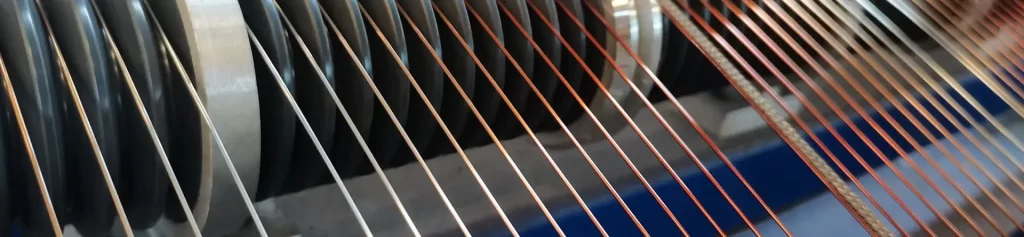
What is Motor Winding Wire?
Motor winding wire is one of the most fundamental and important materials in the field of electrical engineering, widely used as a core component in various electromagnetic conversion equipment such as motors, transformers, and inductors. For electrical engineers, purchasing personnel, and equipment manufacturers, a deep understanding of the definition, classification, characteristics, and selection points of motor winding wire is essential for ensuring product quality and controlling production costs. This article will systematically introduce the basic knowledge of motor winding wire, providing readers with comprehensive and practical technical references.
Definition of Motor Winding Wire
Motor winding wire, also known as magnet wire, enameled wire, or insulated wire, is a type of metallic conductor wire with an insulation layer coated on its surface. Its core function is to form windings in electromagnetic equipment, generating magnetic fields through current or converting electrical energy into mechanical energy. The quality of the motor winding wire directly determines the efficiency, reliability, and service life of the motor.
Structurally, motor winding wire mainly consists of two parts: a metallic conductor and an insulating coating. The conductor is usually made of copper or aluminum, but composite materials such as copper-clad aluminum are also used. The insulation coating is the core technology of motor winding wires, determining their thermal class, electrical performance, mechanical strength, and chemical stability.
According to international standards IEC 60317 and NEMA MW 1000, the nominal conductor diameter of enameled round copper wire ranges from 0.020 mm to 5.000 mm, while the diameter of enameled aluminum wire is typically above 0.100 mm. These subtle dimensional differences may seem insignificant, but they have a profound impact on motor design and performance. For example, under the same power conditions, using thinner wires can increase the number of turns, thereby improving motor efficiency, but it also means higher manufacturing costs and more complex winding processes.
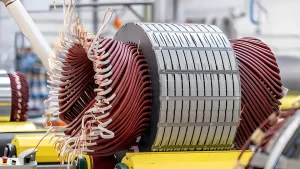
Working Principle of Motor Winding Wires
The working principle of motor winding wires is based on the law of electromagnetic induction. When current flows through the winding wire, a magnetic field is generated around it; when the winding wire is placed in a changing magnetic field, an induced electromotive force is generated. This basic principle forms the working basis of all electromagnetic devices such as motors, generators, transformers, and inductors.
Taking the most common brushless motor as an example, the winding wires on the stator generate a rotating magnetic field when energized, driving the rotor permanent magnet to produce torque and drive the external load. The conductivity of the winding wires directly determines the amount of current required for the motor to generate the same torque—the lower the resistance of the conductor, the smaller the loss and the higher the efficiency. Copper conductor is one of the most commonly used materials with the best conductivity, with a resistivity of about 60% that of aluminum conductor, giving it a significant advantage in applications requiring high efficiency.
In a transformer, the winding wires achieve voltage conversion through electromagnetic induction. The primary winding generates an alternating magnetic field when energized, which induces currents of different voltages in the secondary winding. The efficiency of a transformer is closely related to the resistance loss of the winding wires, which is why high-power transformers typically use flat copper wires or copper foils with lower resistivity and larger cross-sections.
The Key Role of Insulating Coatings
The insulating coating is the core technology of motor winding wires. Compared to bare metal wires, the insulating coating imparts the following key properties to the winding wires:
Electrical insulation is the primary function of the insulating coating. The insulation layer isolates adjacent conductor turns, preventing current from flowing directly from one turn to another (short circuit) and ensuring that current flows through the winding along the designed path. The dielectric strength (breakdown voltage) of the insulation coating is the core indicator for measuring this performance, typically measured in kV/mm; high-quality enameled wire can achieve a dielectric strength of over 150 kV/mm.
Environmental protection is the second important function of the insulation coating. The insulation layer blocks the conductor from contact with environmental factors such as air, moisture, and chemicals, preventing performance degradation caused by oxidation, corrosion, and humidity. Motors used in harsh environments, such as submersible pumps and marine equipment, require windings with special protective coatings.
Mechanical protection is equally important. The insulation layer provides mechanical support to the conductor, protecting it from damage during winding, tensioning, and installation. In high-frequency vibration environments, the flexibility and adhesion of the insulation layer directly affect the mechanical stability of the winding.
There are various types of insulation coatings, each with its own technical characteristics. Polyurethane-enameled wire (UEW) is one of the most common types, possessing good flexibility, winding performance, and solderability, making it suitable for automated high-speed winding processes. Polyester-enameled wire (PEW) has excellent heat resistance and mechanical strength, making it the mainstream choice for industrial motors. Polyester-imide-enameled wire (EIW) and polyamide-imide-enameled wire (AIW) represent higher thermal classes, reaching over 155°C and 180°C respectively, and are widely used in high-end fields such as new energy vehicle drive motors and rail transportation traction motors. Polyimide-enameled wire (PIW) currently offers the highest thermal class, capable of long-term stable operation in high-temperature environments of 220°C and even 240°C, primarily used in extreme applications such as aerospace and nuclear power plants.
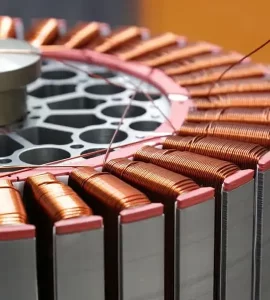
Thermal Class and Material Classification
Thermal class is one of the most crucial parameters of motor winding wire, directly affecting its service life and application range. According to the IEC 60034-1 international standard, insulating materials are classified into different thermal grades based on their maximum permissible operating temperature.
Grade 130 (corresponding to IEC Standard Class B) uses polyester material, with a maximum operating temperature of 130°C, and is one of the most widely used grades in industrial applications. Its advantages include outstanding cost-effectiveness, good processability, and good compatibility with mainstream impregnating resins. Typical applications include household appliance motors (air conditioner compressors, refrigerator compressors, washing machine motors, etc.), general industrial small-power motors, and water pump motors.
Grade 155 (corresponding to IEC Standard Class F) uses modified polyester or polyester imide material, with a maximum operating temperature of 155°C. Compared to Grade 130, Grade 155 has better thermal stability and a slower aging rate, making it suitable for applications with higher operating temperatures. Typical applications include industrial transformer windings, medium and large industrial motors, welding equipment, and auxiliary motors for rail transit.
Grade 180 (corresponding to IEC Standard Class H) uses polyester imide or polyamide-imide material, with a maximum operating temperature of 180°C. This is a landmark material for the new energy vehicle era, widely used in high-end fields such as new energy vehicle drive motors, high-speed rail traction motors, and wind turbines. Grade 180 materials maintain stable insulation performance even under high temperatures and drastic temperature fluctuations, making them the first choice for high-reliability applications.
Grade 200 (corresponding to IEC standard C) uses polyamide-imide or polyimide materials, with a maximum operating temperature exceeding 200°C. This grade of material has extremely high chemical stability, maintaining excellent insulation performance and mechanical strength for extended periods even at high temperatures. It is mainly used in aerospace motors, critical equipment in nuclear power plants, and medical MRI equipment—fields with extremely high reliability requirements.
Grades 220 and 240 represent the highest heat resistance levels currently available, employing polyimide or composite coating technology, and maintaining stable operation at temperatures between 220°C and 240°C. These ultra-high-grade materials are almost the only reliable choice in extreme high-temperature environments, but their price is typically several times that of conventional grades.
Conductor Material Selection
Copper and aluminum are the two most commonly used conductor materials for motor windings. Copper conductors are renowned for their excellent conductivity—copper has a resistivity of approximately 1.68 × 10⁻⁸ Ω·m, making it one of the most widely used conductive materials. For the same cross-sectional area, the resistance of a copper conductor is about 40% lower than that of an aluminum conductor, meaning lower losses and higher efficiency. Therefore, copper windings are the preferred choice for applications requiring high efficiency, such as electric vehicle drive motors and high-efficiency industrial motors.
Aluminum conductors are known for their lightweight and low cost—aluminum has a density of approximately 2.7 g/cm³, only 30% that of copper, giving aluminum windings a significant advantage in weight-sensitive applications. The cost of aluminum conductors is also significantly lower than copper, making aluminum windings a common choice in some cost-sensitive applications where efficiency requirements are less stringent, such as large power transformers. Copper-clad aluminum (CCA) wire is a compromise, with a copper layer coating the aluminum conductor, combining the advantages of lightweight and relatively good conductivity, but its performance still falls short of pure copper windings.
Flat wire and rectangular wire are another important type of winding wire. Compared to round wire, flat wire can achieve a higher slot fill factor within the same space, thus increasing power density. This is also the main reason why flat wire windings are commonly used in new energy vehicle drive motors—achieving greater power within a limited engine compartment space is one of the key technological paths for improving the performance of electric vehicles.
Main Application Areas
The application areas of motor winding wires are extremely wide, covering almost all industrial and consumer sectors using electromagnetic conversion technology.
In the home appliance sector, core components of products such as air conditioner compressors, refrigerator compressors, washing machine motors, and fan motors all rely on motor winding wires. This sector typically uses 130-155 grade polyester or polyester-imide enameled wire, achieving a good balance between cost and performance.
In the industrial manufacturing sector, various equipment such as industrial motors, pump motors, fan motors, and compressor motors all require motor winding wires. Medium and large industrial motors typically use 155- or 180-grade products to ensure long-term operational reliability.
In the field of new energy vehicles, core components such as drive motors, generators, OBC on-board chargers, and DC-DC converters extensively utilize 180- and even 200-grade polyester imide and polyamide-imide enameled wire. The extreme pursuit of motor efficiency in new energy vehicles makes high-quality winding wire a crucial material guarantee for achieving this goal.
In the rail transit sector, equipment such as traction motors, auxiliary motors, and transformers have extremely high reliability requirements, typically using winding wire products of 180 grade or higher. Motors in high-speed rail, subways, and light rail operate under harsh conditions for extended periods, placing stringent demands on the heat resistance, vibration resistance, and reliability of winding wires.
In the power energy sector, equipment such as power transformers, distribution transformers, photovoltaic inverters, and wind power converters extensively utilize winding wire products of various specifications. High-power transformers typically employ flat copper wire or copper foil windings to achieve higher efficiency and better heat dissipation.
In specialized applications, aerospace motors, critical nuclear power plant equipment, medical equipment, and deep-sea exploration equipment have the most stringent requirements for winding wires, often necessitating ultra-high-grade products (220 or even 240 class) or specialized winding wires developed specifically for these applications.
Selection Considerations
Choosing the right motor winding wire for a specific application requires comprehensive consideration of multiple factors.
Temperature matching is paramount. Designers must accurately calculate the actual operating temperature of the equipment and select winding wire products with a rated temperature 15 to 20°C higher than the design temperature. Choosing a wire with a rating too low can lead to premature equipment failure, while choosing one with a rating too high may increase unnecessary costs.
Electrical performance is the second key indicator. Parameters such as the resistance, dielectric strength, and partial discharge characteristics of the winding wire directly affect the efficiency and reliability of the motor. In high-voltage applications, special attention should be paid to the partial discharge performance of the winding wire—partial discharge leads to gradual degradation of the insulation layer, a major cause of premature failure in high-voltage motors.
Mechanical performance is equally important. The flexibility, tensile strength, and adhesion of winding wire determine its performance during winding and tensioning, as well as its ability to withstand vibration during operation. In automated high-speed winding applications, flexibility is a key indicator; for motors used in vibration environments, products with better flexibility should be selected.
Chemical compatibility is related to the long-term reliability of equipment in specific environments. Winding wire must have good compatibility with impregnating resins and chemicals in the installation environment (such as transformer oil, coolant, etc.). When used in corrosive environments, specially coated winding wire or additional protective measures may be required.
Cost control is a practical factor that must be considered in industrial applications. There are significant price differences between different thermal classes and specifications of winding wire. Meeting performance requirements at a reasonable cost is an important goal in the selection process. In most applications, Class 155 products achieve a good balance between cost and performance, making them a cost-effective choice.
Industry Development Trends
The motor winding wire industry is undergoing a dual transformation of technological upgrading and market adjustment.
The rapid development of new energy vehicles has brought huge market opportunities and technological challenges to the winding wire industry. The relentless pursuit of power density, efficiency, and reliability in electric vehicle drive motors is driving rapid growth in demand for high-quality winding wires, ranging from Class 180 to Class 200. The widespread adoption of flat wire winding technology is changing the traditional round wire winding pattern, placing higher demands on the specifications and quality of winding wires.
Continuously improving energy efficiency standards are also propelling technological progress in the industry. Various countries and regions have successively introduced higher motor energy efficiency standards (such as IE4 and IE5 ultra-high-efficiency motor standards), imposing stricter requirements on motor losses. Reducing the resistance loss of winding wires, increasing slot fill factor, and developing new insulation materials with lower losses have become the main directions for technological development in the industry.
The deepening of intelligent manufacturing and industrial automation is placing higher demands on the consistency of winding wire product quality and the responsiveness of the supply chain. Suppliers with sound quality management systems, stable supply capabilities, and continuous technical support will have a competitive advantage.
Increasingly stringent environmental requirements are also influencing industry development. Environmental regulations such as the EU RoHS Directive, which restrict hazardous substances, are driving the industry towards more environmentally friendly production processes and product formulations. The research and development of environmentally friendly products such as water-based insulating varnishes and recyclable materials is accelerating.
Conclusion
Motor winding wire is a core basic material for electrical equipment, and its technological advancements and supply chain stability have a profound impact on the entire electrical manufacturing industry. A thorough understanding of the definition, classification, characteristics, and selection points of motor winding wire is a fundamental skill for every electrical engineer and purchasing personnel. In practical work, the most suitable magnet wire product should be selected based on specific application requirements, comprehensively considering factors such as thermal class, electrical performance, mechanical performance, chemical compatibility, and cost.