

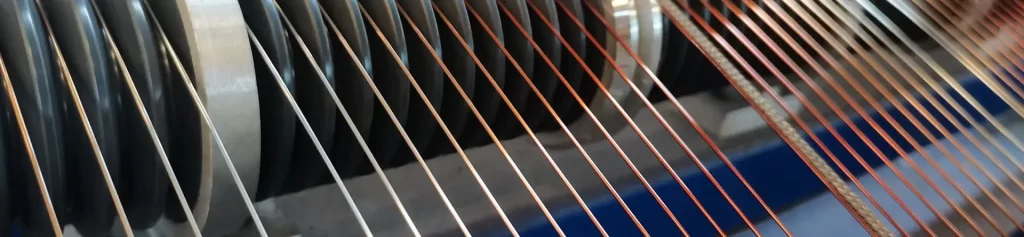
What is Electrical Insulation Wire
I. Introduction
Electrical insulation wire is a core fundamental material for power systems, electrical equipment, and electronic products. In modern society, electrical insulation wire is indispensable in power generation, transmission, distribution, and the operation of various electrical equipment.
Many people may be familiar with the “outer sheath” of electrical wires, but electrical insulation wire and ordinary wire and cable are actually two different product systems. Electrical insulation wire specifically refers to specialized wire products that have an insulation layer coated or wrapped on the conductor surface and are directly used for winding electrical equipment windings.
This article systematically elaborates on the basic concepts, main types, technical parameters, selection points, and wide application areas of electrical insulation wire, providing professional reference for electrical engineering technicians and related industry practitioners.
II. Basic Concepts of Electrical Insulation Wire
2.1 Definition
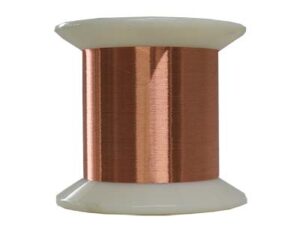
Electrical insulation wire refers to specialized wire products that have insulating materials coated or wrapped on the surface of metal conductors (mainly copper or aluminum), possessing specific electrical insulation functions.
Unlike ordinary wire and cable, electrical insulation wire is mainly used for manufacturing windings in electrical equipment, rather than for power transmission. Its insulation layer is relatively thin but requires extremely high insulation performance, needing to provide reliable electrical isolation within a limited volume.
2.2 Differences from Ordinary Wire and Cable
| Comparison Items | Electrical Insulation Wire | Ordinary Wire and Cable |
|---|---|---|
| Main Purpose | Electrical equipment windings | Power transmission/distribution |
| Insulation Thickness | 0.015 mm – 2.0 mm | 0.5 mm – several mm |
| Manufacturing Process | Coating/wrapping | Extrusion molding |
| Performance Requirements | Electrical insulation + mechanical performance | Mechanical protection + environmental protection |
| Typical Products | Enameled wire, wrapped wire | PVC wire, XLPE cable |
2.3 Core Functions
- Electrical Isolation: Forms a reliable electrical barrier between the conductor and external environment, preventing short circuits and leakage.
- Voltage Withstanding: Bears the operating voltage of the conductor, ensuring safe operation under rated voltage and overvoltage conditions.
- Thermal Protection: Bears the heat generated by the conductor during operation and effectively dissipates it.
- Mechanical Support: Provides structural support for windings and withstands electromagnetic forces.
III. Main Types of Electrical Insulation Wire
3.1 Enameled Wire
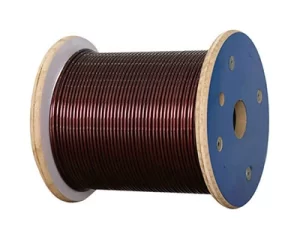
Enameled wire is the most widely used type of electrical insulation wire, with the insulation layer formed by coating insulating varnish on the conductor surface and curing it through baking.
| Enamel Type | Thermal Class | Code | Main Characteristics |
|---|---|---|---|
| Polyester Enamel | Class B (130°C) | PEW | Lower cost, general purpose |
| Polyester Imide Enamel | Class F (155°C) | PEIW | Excellent overall performance |
| Polyimide Enamel | Class H (180°C) | PIW | Excellent high temperature resistance |
| Polyamide-Imide Enamel | Class C (200°C+) | PAIW | Excellent heat and chemical resistance |
3.2 Wrapped Insulation Wire
Wrapped wire uses glass fiber, paper tape, or other insulation materials wrapped around the conductor surface to form the insulation layer.
- Fiberglass Covered Wire: Wrapped with glass fiber and impregnated with resin, with excellent temperature resistance, used for high-voltage transformers and reactors.
- Paper Insulated Wrapped Wire: Wrapped with insulating paper, with a long history, used in power transformers.
- Polyester Film Wrapped Wire: Wrapped with polyester film, with excellent electrical performance.
3.3 Extruded Insulation Wire
Plastic insulation layer is extruded on the conductor surface through an extrusion process.
- PVC Insulated Wire: Lower cost, used for general electrical equipment.
- XLPE Insulated Wire: Cross-linked polyethylene, with excellent insulation performance, used for higher voltage levels.
3.4 Special Insulation Wire
- Self-Adhesive Enameled Wire: Can be bonded by heating, used for irregularly shaped coils.
- Solderable Enameled Wire: The enamel coating can be directly soldered, simplifying the process.
- Refrigerant-Resistant Enameled Wire: Suitable for air conditioner and refrigerator compressor motors.
IV. Key Technical Parameters
4.1 Electrical Performance Parameters
| Parameter | Definition | Typical Requirements |
|---|---|---|
| Dielectric Strength | Ability of the insulation layer to withstand electric field strength | ≥100 kV/mm |
| Dielectric Loss Factor | Energy loss in AC electric field | ≤0.01 (at 90°C) |
| Insulation Resistance | Ability to isolate current | ≥10¹² Ω·cm |
| Partial Discharge | Micro-discharge phenomenon inside insulation | ≤10 pC (high voltage products) |
4.2 Thermal Performance Parameters
| Parameter | Definition | Description |
|---|---|---|
| Thermal Class | Maximum operating temperature of the insulation layer | Class B/F/H/C |
| Thermal Decomposition Temperature | Critical temperature for thermal decomposition of insulation | Above thermal class temperature |
| Thermal Aging Life | Expected lifespan at rated temperature | ≥20,000 hours |
4.3 Mechanical Performance Parameters
| Parameter | Definition | Requirements |
|---|---|---|
| Flexibility | Ability to bend without breaking | Meet standard tests |
| Adhesion | Bonding strength between enamel coating and conductor | Enamel coating does not peel off |
| Abrasion Resistance | Ability to withstand mechanical friction | Meet standard tests |
V. Main Application Areas
5.1 Motor Field
- Industrial Motors: Stator and rotor windings of asynchronous motors and synchronous motors.
- Home Appliance Motors: Air conditioner compressors, washing machine motors, electric fan motors.
- Special Motors: Servo motors, stepper motors, rail transit motors.
5.2 Transformer Field
- Power Transformers: High-voltage and low-voltage windings.
- Special Transformers: Furnace transformers, rectifier transformers.
- Instrument Transformers: Current transformer and voltage transformer windings.
5.3 Electronic Product Field
- Consumer Electronics: Micro coils for mobile phones, earphones, cameras.
- Medical Equipment: Precision coils for medical sensors.
- Automotive Electronics: Automotive motors and control systems.
5.4 Power System Field
- Switching Equipment: Operating mechanisms for high-voltage circuit breakers and disconnect switches.
- Transmission Equipment: High-voltage bushings and insulators.
- Distribution Equipment: Internal connections for various distribution devices.
VI. Selection Points
6.1 Selection Based on Thermal Class
| Thermal Class | Temperature Limit | Recommended Applications |
|---|---|---|
| Class B | 130°C | General-purpose motors, general applications |
| Class F | 155°C | High-efficiency motors, air conditioner compressors |
| Class H | 180°C | High-efficiency transformers, high-temperature environments |
| Class C | Above 200°C | Special high-temperature equipment |
6.2 Selection Based on Voltage Level
| Voltage Level | Recommended Insulation Thickness | Product Type |
|---|---|---|
| Low Voltage (≤690V) | 0.020 mm – 0.050 mm | Enameled wire |
| Medium Voltage (690V – 3300V) | 0.050 mm – 0.100 mm | Thickened enameled wire |
| High Voltage (>3300V) | 0.5 mm – 2.0 mm | Wrapped wire/special insulation |
6.3 Selection Based on Environmental Conditions
- Humid Environment: Select products with excellent moisture resistance.
- Chemically Corrosive Environment: Select insulation materials with strong chemical resistance.
- Vibration Environment: Select products with excellent flexibility.
- Outdoor Environment: Select products with strong weather resistance.
VII. Conclusion
Electrical insulation wire, as a core fundamental material for electrical equipment, plays an irreplaceable role in various fields including power systems, industrial manufacturing, and consumer electronics.
The main types include enameled wire, wrapped insulation wire, and extruded insulation wire, with thermal classes covering Class B (130°C) to Class C (above 200°C), meeting a wide range of application needs from low-voltage motors to high-voltage transformers.
During selection, one should comprehensively consider the thermal class, voltage level, and environmental conditions of the equipment, as well as electrical performance, mechanical performance, and cost factors, to select the most suitable electrical insulation wire product.
Zhengzhou LP Industry Co., Ltd. is a professional manufacturer specializing in the R&D, production, and sales of magnetic wire for over 30 years. Our electrical insulation wire products cover multiple types including enameled wire, fiberglass covered wire, and paper insulated wrapped wire, with thermal classes covering Class B to Class C and voltage levels covering low voltage to high voltage, widely used in motors, transformers, power systems, and other fields.
Our factory is certified by ISO9001/ISO14001/ISO45001, and our products comply with IEC/GB/JIS/NEMA international standards, and have been exported to over 50 countries and regions worldwide.
Contact us for a professional quote:
Email: office@cnlpzz.com | WhatsApp: 0086-19337889070