

Introduction
In the magnet wire field, fiberglass covered wire and enameled wire are two of the most important types of insulated conductors. Each has unique application scenarios and technical advantages in electrical equipment manufacturing. From large power transformers to miniature home appliance motors, from high-temperature industrial equipment to new energy vehicle drive systems, the selection of these two insulated conductors directly affects equipment performance, reliability, and manufacturing cost.
Correctly understanding the differences between fiberglass covered wire and enameled wire is crucial for engineers to make reasonable material selection decisions in the design of transformers, motors, reactors, and other equipment. This article systematically compares the differences between these two types of insulated conductors from the aspects of material structure, insulation performance, thermal performance, mechanical properties, environmental resistance, manufacturing processes, application fields, and cost, providing comprehensive material selection references for engineering technicians.
1. Material and Structural Differences
1.1 Fiberglass Covered Wire
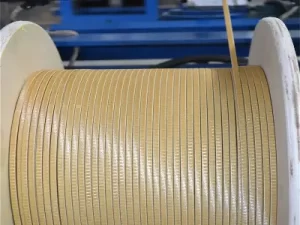
Fiberglass covered wire adopts a composite insulation structure of “conductor + fiberglass braided layer + impregnating varnish”, which is a typical multi-material composite insulation system.
Conductor: Copper or aluminum, same as enameled wire. Copper conductors use oxygen-free copper rods (OFC) with purity typically above 99.95% and conductivity of not less than 100% IACS. Aluminum conductors use high-purity aluminum (above 99.7%) with lightweight advantages.
Insulation Layer: Fiberglass filaments are braided onto the conductor surface in double or triple layers using specialized braiding equipment. The main chemical component of fiberglass is silicon dioxide (SiO₂, 52%~62%), supplemented by aluminum oxide, calcium oxide, magnesium oxide, and other oxides. After braiding, the wire is impregnated with insulating varnish (such as silicone resin, polyester resin, polyimide, etc.) and cured to form a complete insulation system. The insulation layer thickness is typically between 0.2mm~0.8mm, with specific thickness determined by voltage class and operating environment.
Structural Characteristics: Thicker insulation layer with high mechanical strength and heat resistance, but relatively lower flexibility. The composite structure gives fiberglass covered wire unique advantages in harsh conditions such as high temperature, high voltage, and high mechanical stress.
1.2 Enameled Wire
Enameled wire adopts a single-layer or multi-layer insulation structure of “conductor + insulating varnish film”, which is a relatively simple but highly mature type of insulated conductor.
Conductor: Copper or aluminum, with manufacturing process same as fiberglass covered wire.
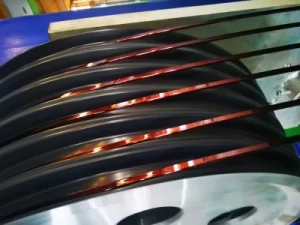
Insulation Layer: Insulating varnish is uniformly coated on the conductor surface through coating and high-temperature baking processes. Common insulating varnish types include polyester-imide (PEI), polyamide-imide (PAI), polyurethane (PU), and polyester resin. The insulation layer thickness is typically between 0.01mm~0.12mm (single side), with single-layer, double-layer, or multi-layer coating processes selectable based on electrical performance requirements.
Structural Characteristics: Thin and uniform insulation layer with good flexibility and high slot fill factor, but relatively lower mechanical strength and heat resistance. The thin insulation layer design of enameled wire gives it significant advantages in high power density motors and transformers.
2. Insulation Performance Comparison
2.1 Breakdown Voltage
Breakdown voltage is a key indicator of the electrical strength of insulated conductors, directly determining the applicable voltage class.
| Insulated Conductor Type | Breakdown Voltage Range | Applicable Voltage Class |
|---|---|---|
| Fiberglass Covered Wire | 5,000V~15,000V+ | Medium-High Voltage Windings |
| Enameled Wire (Single Layer) | 1,000V~3,000V | Low Voltage Windings |
| Enameled Wire (Multi-Layer) | 3,000V~5,000V | Medium-Low Voltage Windings |
The breakdown voltage of fiberglass covered wire is significantly higher than that of enameled wire, making it suitable for high-voltage winding applications. Enameled wire is typically used for medium-low voltage windings, but in certain high-voltage applications, breakdown voltage can be improved by increasing insulation layer thickness or adopting multi-layer coating processes.
2.2 Insulation Resistance
Insulation resistance is an important indicator of an insulation material’s ability to prevent current leakage.
| Insulated Conductor Type | Room Temperature | High Temperature (155℃) |
|---|---|---|
| Fiberglass Covered Wire | ≥1,000 MΩ·km | ≥50 MΩ·km |
| Enameled Wire | ≥500 MΩ·km | ≥20 MΩ·km |
The insulation resistance of fiberglass covered wire is superior to that of enameled wire, especially under high-temperature conditions. This difference mainly stems from the composite insulation structure formed by the fiberglass braided layer and impregnating varnish, which more effectively prevents current leakage.
2.3 Dielectric Constant and Dielectric Loss
The dielectric constant of fiberglass covered wire is approximately 4.0~6.0, while that of enameled wire is approximately 3.0~4.5. The dielectric loss factors (tanδ) of both under high-frequency conditions are between 0.01~0.05. Lower dielectric constant and dielectric loss help reduce power loss under high-frequency conditions, making enameled wire more suitable for high-frequency power electronic equipment such as high-frequency transformers and high-frequency reactors.
2.4 Partial Discharge Resistance
Partial discharge is one of the main causes of insulation aging, especially in high-voltage motors and transformers. The partial discharge resistance of fiberglass covered wire is significantly superior to that of enameled wire. The composite insulation structure formed by the fiberglass braided layer and impregnating varnish can effectively distribute the electric field, reducing the probability of partial discharge occurrence and extending the service life of the insulation system.
3. Thermal Performance Comparison
3.1 Thermal Class
From a thermal class perspective, both can achieve high thermal classes, but the implementation methods and actual application performance differ.
| Insulated Conductor Type | Thermal Class Range | Maximum Operating Temperature | Typical Insulation Material |
|---|---|---|---|
| Fiberglass Covered Wire | Class B~C | 130℃~240℃+ | Silicone resin, polyimide |
| Enameled Wire | Class B~C | 130℃~240℃+ | Polyester-imide, polyamide-imide |
The high-temperature resistance of fiberglass covered wire is more stable in actual operation, because the softening point of fiberglass itself is as high as 800℃~1000℃, and it will not soften, melt, or thermally decompose within the normal operating temperature range.
3.2 Thermal Stability
Fiberglass covered wire has excellent thermal stability under high-temperature conditions. Fiberglass itself is an inorganic material and will not undergo thermal decomposition or carbonization. Silicone impregnating varnish, after long-term operation at 200℃, can still maintain its electrical and mechanical properties at over 80% of the initial values. Verified through thermal aging tests, high-quality fiberglass covered wire can maintain its performance within acceptable ranges after continuous operation for 20,000 hours at rated temperature.
Enameled wire under high-temperature conditions may experience thermal aging of the insulating varnish film, leading to a decline in insulation performance. Especially when the operating temperature exceeds the rated thermal class, the insulation performance of enameled wire will drop sharply. Polyamide-imide enameled wire has better thermal stability than polyester-imide enameled wire at 200℃, but still不及 fiberglass covered wire.
3.3 Flame Retardant Properties
The flame retardant properties of fiberglass covered wire are excellent. Fiberglass itself is a non-combustible material that will not burn, will not release toxic gases, and will not produce molten drips under high-temperature flame action. According to UL 94 flame retardant grade testing, fiberglass covered wire typically achieves V-0 grade (the highest flame retardant grade).
The flame retardant properties of enameled wire vary by insulating varnish type. Polyester-imide and polyamide-imide enameled wire have certain flame retardant properties, but may burn or release toxic gases under high-temperature flame action, with flame retardant properties inferior to fiberglass covered wire.
4. Mechanical Property Comparison
4.1 Tensile Strength
The tensile strength of fiberglass covered wire is typically 200~350 MPa, with single-filament tensile strength of fiberglass reaching 2,000~3,500 MPa. The fiberglass braided layer has a reinforcing effect on the conductor, giving fiberglass covered wire better tensile performance under high mechanical stress conditions.
The tensile strength of enameled wire mainly depends on the conductor material, with copper conductors approximately 200~250 MPa and aluminum conductors approximately 70~110 MPa. The insulating varnish film of enameled wire contributes less to tensile strength.
4.2 Wear Resistance
The wear resistance of fiberglass covered wire is significantly superior to that of enameled wire. The fiberglass braided layer has high hardness and wear resistance, effectively protecting conductors from mechanical damage during winding processes such as winding, embedding, and shaping. In the insertion process of flat wire windings, fiberglass covered wire can effectively prevent conductors from being cut and damaged by sharp edges or burrs.
The wear resistance of enameled wire is relatively poor, and insulation layer damage is prone to occur during winding processing. Especially in high-speed automated winding equipment, the wear resistance of enameled wire is an important factor affecting production efficiency and product yield.
4.3 Flexibility
The flexibility of enameled wire is superior to that of fiberglass covered wire. The insulating varnish film of enameled wire is thin and uniform, and is not prone to cracking during bending, twisting, and other processing operations. Fiberglass covered wire has relatively lower flexibility due to its thicker insulation layer, and its application in complex winding structures (such as spiral windings and concentric windings) is somewhat limited.
4.4 Cut Resistance
The cut resistance of fiberglass covered wire is significantly superior to that of enameled wire. During winding processing and operation, the fiberglass braided layer can effectively prevent conductors from being cut and damaged by sharp edges or burrs, reducing the risk of winding short circuits.
5. Environmental Resistance Comparison
5.1 Moisture Resistance
Fiberglass covered wire treated with impregnating varnish has a moisture absorption rate typically not exceeding 2%, and can maintain good insulation performance in humid environments. Silicone impregnating varnish has excellent moisture resistance and can operate stably for extended periods in high-temperature and high-humidity environments.
The moisture resistance of enameled wire is good, but after long-term operation in high-humidity environments, insulation performance may decline. Especially in tropical and subtropical regions with high temperature and humidity, the insulation resistance of enameled wire may decrease due to moisture absorption.
5.2 Chemical Resistance
Fiberglass covered wire has good resistance to most organic solvents and mineral oils. Common organic solvents such as gasoline, kerosene, transformer oil, and lubricating oil have no obvious erosive effect on the insulation layer of fiberglass covered wire.
The solvent resistance of enameled wire varies by insulating varnish type. Polyester-imide enameled wire has good solvent resistance, while polyurethane enameled wire has poor solvent resistance. In application scenarios involving strong polar solvents, enameled wire may experience insulation layer swelling or degradation.
5.3 UV Resistance
The UV resistance of fiberglass covered wire is excellent. Fiberglass itself has good resistance to ultraviolet rays and will not age or degrade due to UV exposure. The UV resistance of silicone impregnating varnish is also superior to most organic impregnating varnishes.
The UV resistance of enameled wire varies by insulating varnish type. For enameled wire used outdoors or in UV-exposed environments, insulating varnish types with better UV resistance should be selected, or additional protective measures should be taken.
6. Manufacturing Process Comparison
6.1 Fiberglass Covered Wire Manufacturing Process
The manufacturing process of fiberglass covered wire is relatively complex, with higher equipment investment and production costs, mainly including the following steps:
1. Conductor Drawing: Copper or aluminum rods are drawn to the target diameter through multiple passes, with drawing speed, drawing force, and lubrication conditions controlled during the process.
2. Annealing Treatment: Eliminate work hardening and restore conductor flexibility and conductivity.
3. Fiberglass Braiding: Fiberglass filaments are braided onto the conductor surface at specific braiding density and angle, with braiding density typically 85%~95%.
4. Impregnating Varnish Coating: Impregnating varnish is uniformly coated on the fiberglass braided layer surface, typically using dip coating method.
5. Drying and Curing: High-temperature curing is carried out in vertical or horizontal ovens, with curing temperature set according to the impregnating varnish type.
6. Quality Inspection: Dimensional inspection, electrical performance inspection, mechanical performance inspection, thermal performance inspection.
6.2 Enameled Wire Manufacturing Process
The manufacturing process of enameled wire is relatively mature and simple, with high production efficiency, mainly including the following steps:
1. Conductor Drawing: Copper or aluminum rods are drawn to the target diameter.
2. Annealing Treatment: Eliminate work hardening and restore conductor flexibility.
3. Insulating Varnish Coating: Insulating varnish is uniformly coated on the conductor surface through vertical or horizontal coating equipment.
4. Drying and Curing: High-temperature curing is carried out in ovens, typically divided into preheating zone, curing zone, and cooling zone.
5. Quality Inspection: Dimensional inspection, electrical performance inspection, mechanical performance inspection.
7. Application Field Comparison
7.1 Typical Applications of Fiberglass Covered Wire
| Application Field | Typical Scenario | Selection Reason |
|---|---|---|
| Dry-type Transformers | High-voltage windings | High breakdown voltage, excellent heat resistance |
| High-Temperature Motors | Metallurgy, mining, power motors | High-temperature resistance, wear resistance, high mechanical strength |
| Reactors | Filter reactors, current-limiting reactors | High-temperature resistance, arc resistance |
| Household Appliances | Oven, microwave oven heating elements | High-temperature resistance, flame retardant |
| Industrial Heating Equipment | Electric furnaces, heat treatment equipment | High-temperature resistance (200℃+) |
7.2 Typical Applications of Enameled Wire
| Application Field | Typical Scenario | Selection Reason |
|---|---|---|
| Distribution Transformers | Dry-type transformer windings | High slot fill factor, lower cost |
| Motors | General motors, home appliance motors | Good flexibility, high slot fill factor |
| Reactors | Low-voltage reactors | Lower cost, mature process |
| EV Drive Motors | Flat wire windings | Thin insulation layer, high slot fill factor |
| High-Frequency Transformers | Switching power supplies, inverters | Thin insulation layer, low high-frequency loss |
8. Cost Comparison
| Comparison Item | Fiberglass Covered Wire | Enameled Wire |
|---|---|---|
| Raw Material Cost | Medium | Low |
| Manufacturing Cost | Medium-High (complex braiding process) | Low (mature process) |
| Comprehensive Cost | Medium | Low |
| Life Cycle Cost | Low (long service life, low maintenance) | Medium |
The manufacturing cost of fiberglass covered wire is higher than that of enameled wire, mainly due to the complex fiberglass braiding process and large amount of impregnating varnish used. However, the long service life and low maintenance characteristics of fiberglass covered wire give it advantages in life cycle cost, especially in harsh operating conditions such as high temperature and high voltage.
9. Comprehensive Comparison Summary
| Comparison Item | Fiberglass Covered Wire | Enameled Wire | Advantage |
|---|---|---|---|
| Breakdown Voltage | 5,000V~15,000V+ | 1,000V~5,000V | Fiberglass Covered Wire |
| Insulation Resistance | ≥1,000 MΩ·km | ≥500 MΩ·km | Fiberglass Covered Wire |
| Thermal Class | Class B~C | Class B~C | Comparable |
| Thermal Stability | Excellent | Good | Fiberglass Covered Wire |
| Flame Retardancy | Excellent | Fair | Fiberglass Covered Wire |
| Tensile Strength | 200~350 MPa | 200~250 MPa | Fiberglass Covered Wire |
| Wear Resistance | Excellent | Good | Fiberglass Covered Wire |
| Flexibility | Good | Excellent | Enameled Wire |
| Slot Fill Factor | Lower | Higher | Enameled Wire |
| Manufacturing Cost | Medium-High | Low | Enameled Wire |
| Moisture Resistance | Good | Good | Comparable |
| Chemical Resistance | Good | Varies by varnish type | Fiberglass Covered Wire |
10. Selection Recommendations
10.1 When to Choose Fiberglass Covered Wire
High-Temperature Environments (180℃+): High-temperature industrial motors in metallurgy, mining, and power industries.
High-Voltage Windings (Breakdown Voltage >5,000V): High-voltage windings of dry-type transformers.
High Mechanical Stress Conditions: Crane motors, large transformer rotor windings.
Locations Requiring Excellent Flame Retardant Properties: Building electrical equipment, rail transit, marine electrical equipment.
Outdoor Environments (UV Resistance Required): Outdoor transformers, outdoor motors.
Industrial Heating Equipment (200℃+): Industrial electric furnaces, heat treatment equipment, drying equipment.
10.2 When to Choose Enameled Wire
Medium-Low Voltage Windings (Breakdown Voltage <5,000V): Low-voltage windings of distribution transformers.
Winding Designs Requiring High Slot Fill Factor: Flat wire windings of EV drive motors.
Cost-Sensitive Application Scenarios: Home appliance motors, general industrial motors.
Winding Processing Requiring Good Flexibility: Complex winding structures, spiral windings.
High-Frequency Transformers and Switching Power Supplies: High-frequency power electronic equipment.
General Industrial Motors and Home Appliance Motors: Air conditioner compressors, refrigerator compressors, washing machine motors.
10.3 Supplier Selection Factors
Certifications: Products should comply with international standards such as IEC 60317, NEMA MW 1000, and GB/T 6109, with ISO9001 quality management system certification. Products exported to the North American market should have UL certification, and products exported to the European market should comply with REACH and RoHS directives.
Manufacturing Capabilities: Possess professional production equipment, able to precisely control conductor dimensions, insulation layer thickness, and quality uniformity. Fiberglass covered wire suppliers need to have professional braiding equipment, and enameled wire suppliers need to have professional coating equipment.
Testing Capabilities: Possess complete testing capabilities, including breakdown voltage, insulation resistance, thermal aging, mechanical performance, and other test items. Suppliers should be able to provide detailed product inspection reports and technical support.