

Welding equipment is an indispensable core piece of equipment in industrial manufacturing, construction, automotive repair, shipbuilding, and other fields. Whether it’s a traditional arc welding machine, argon arc welding machine, gas shielded welding machine, or a modern digital inverter welding machine or laser welding machine, the performance and reliability of its core power components—the motor and transformer—directly determine the output stability, welding quality, and service life of the welding equipment. As the “heart” of the motor and transformer, the selection and quality of the winding wire play a decisive role in the performance of the welding equipment.
The working environment of welding equipment is extremely harsh: high current loads, frequent start-stops, high-temperature environments, strong vibrations, and short-term overloads place stringent technical requirements on the winding wire. This article provides a systematic technical guide for welding equipment design engineers and purchasing decision-makers from seven dimensions: product definition, application scenario analysis, conductor material selection, insulation system, key manufacturing processes, quality control, and selection guidelines.
I. Product Definition of Welding Equipment Winding Wire
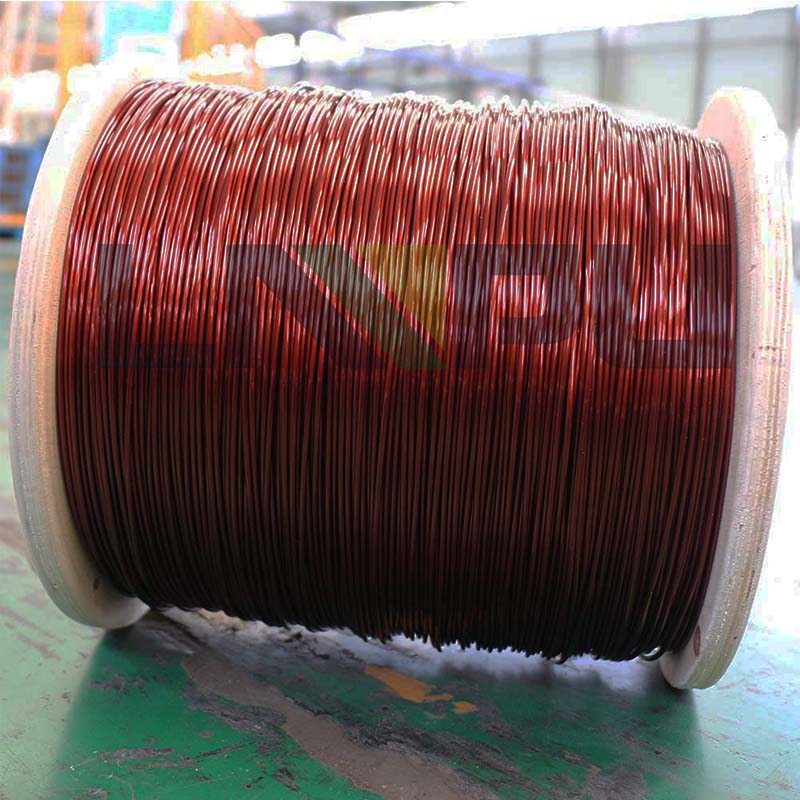
Welding equipment winding wire is an electromagnetic wire product specifically used for the motors and transformers in various welding equipment, mainly including two categories: enameled copper wire and enameled aluminum wire.
Special Requirements for Welding Equipment Winding Wires:
- High Current Load: Welding equipment needs to output large currents in a short time
- Frequent Start-Stop: Frequent start-stop operations during welding require the winding wires to withstand thermal cycling shocks
- High Temperature Environment: The internal temperature of welding equipment can reach 100-150°C
- Vibration Conditions: Strong vibrations occur at the welding site, requiring the winding wires to withstand vibration
- Short-Time Overload: Short-time overloads may occur during welding
II. Application Scenarios Analysis
2.1 Arc Welding Machine Motor/Transformer
Arc welding machines are the most common welding equipment:
Technical Requirements:
- Insulation Class: Class F/H
- High Current Output: Stable output welding current
- Good Heat Dissipation: Forced air cooling or natural cooling
- Protection Class: IP23/IP21
2.2 TIG Welding Machine
TIG welding machines are used for precision welding:
Technical Requirements:
- Insulation Class: Class F
- Current Stability: High-precision current control
- High-Frequency Arc Ignition: Withstands high-frequency pulse voltage
2.3 Gas Shielded Welding Machine (MIG/MAG)
Gas shielded welding machines are used for automated welding:
Technical Requirements:
- Insulation Class: Class F/H
- Continuous Operation: Long-term continuous welding
- Wire Feed Motor: Stable wire feeding
2.4 Resistance Welding Machine
Resistance welding machines are used for spot welding and seam welding:
Technical Requirements:
- Insulation Class: Class H
- High Current: Thousands of amperes welding current
- Short-Time Overload: Withstands short-term high current impact
2.5 Digital Inverter Welding Machine
Modern inverter welding machines use high-frequency inverter technology:
Technical Requirements:
- Insulation Class: Class F/H
- High Frequency Transformer: High-frequency winding wire
- Miniaturization: Compact design
- High Efficiency: Meets energy efficiency standards
III. Conductor Material Selection
3.1 Enameled Copper Wire
Enameled copper wire is the mainstream choice for welding equipment windings:
Advantages:
- High conductivity (≥100% IACS), suitable for high current output
- Good mechanical strength, vibration resistant
- Good heat resistance, suitable for high-temperature environments
- Good welding performance
Applications:
- Arc welding machine transformer
- Argon arc welding machine transformer
- High-frequency inverter welding machine transformer
- Welding equipment motors
3.2 Enameled Aluminum Wire
The application of enameled aluminum wire in some welding equipment is gradually increasing:
Advantages:
- Low cost, about 30-40% of copper wire
- Lightweight, about 30% of copper wire
- Meets basic performance requirements
Applications:
- Low-cost arc welding machines
- Small welding equipment
- Cost-sensitive products
3.3 Comparison of Copper and Aluminum Wire
| Considerations | Copper Wire | Aluminum Wire |
|---|---|---|
| Conductivity | 100% IACS | 61% IACS |
| Cost | High | Low (30-40%) |
| Weight | Heavy | Light (30%) |
| Heat Resistance | Excellent | Good |
| Vibration Resistance | Excellent | Good |
IV. Insulation System
4.1 Insulation Classes
Commonly used insulation classes for welding equipment windings:
| Insulation Class | Maximum Operating Temperature | Typical Applications |
|---|---|---|
| Class B (130°C) | 130°C | Light Welding Equipment |
| Class F (155°C) | 155°C | Arc Welding Machine, TIG Welding Machine, Gas Shielded Welding Machine |
| Class H (180°C) | 180°C | Resistance Welding Machine, Industrial Welding Machine |
4.2 Insulation Material Types
Polyester Imide (PEI):
- Thermal Class: Class F
- Suitable for arc welding machines and TIG welding machines
- Good heat resistance and mechanical strength
Polyamide Imide (PAI):
- Thermal Class: Class H
- Suitable for resistance welding machines and industrial welding machines
- Excellent mechanical strength and chemical resistance
Modified Polyester Wire:
- Thermal Class: Class B
- Suitable for light welding equipment
- Low cost
4.3 High Current Resistance
Welding equipment winding wires must have good high current resistance:
High Current Challenges:
- Short-term high current causes a rapid rise in winding temperature
- Thermal cycling shock causes insulation aging
- Skin effect is particularly prominent in high-frequency welding machines
Solutions:
- Select high thermal class insulation materials
- Increase conductor cross-sectional area
- Optimize heat dissipation design
V. Key Manufacturing Processes
5.1 Wire Drawing Process
Copper Wire Drawing:
- Multi-pass drawing to ensure wire diameter accuracy
- Good die condition to avoid surface scratches
- Controlled drawing speed to ensure surface quality
5.2 Annealing Process
Temperature Control:
- Copper wire annealing temperature: 400-600°C
- Protective atmosphere: nitrogen or vacuum to prevent oxidation
Performance Requirements:
- Conductivity recovery: ≥100% IACS
- Flexibility: Passes bending test
5.3 Coating Process
Thin Coating Multiple Times:
- Ensure uniform and dense enamel coating
- Avoid excessive enamel coating leading to cracking
- Enamel coating thickness control: Determined according to insulation class
Baking and Curing:
- Precise temperature profile control
- Ensure full curing of enamel coating
5.4 Winding Process
Tension Control:
- Uniform winding tension, avoid excessive looseness or tightness
- Ensure neat winding arrangement
Insulation Treatment:
- Interlayer insulation: insulating paper, Nomex paper
- End insulation: reinforced insulation treatment
VI. Quality Control
6.1 Raw Material Inspection
Conductor Inspection:
- Copper wire: Purity ≥99.9%, conductivity ≥100% IACS
- Aluminum wire: Purity ≥99.5%, conductivity ≥61% IACS
- Wire diameter tolerance: ±0.002mm
Insulating Varnish Inspection:
- Breakdown Voltage
- Flexibility
- Enamel coating continuity (spark test)
- Heat Resistance
6.2 Production Process Inspection
| Process | Control Points | Inspection Items |
|---|---|---|
| Wire Drawing | Compression Ratio, Die Condition | Wire Diameter Accuracy, Surface Quality |
| Annealing | Temperature Profile, Protective Atmosphere | Conductivity, Flexibility |
| Coating | Enamel coating thickness, uniformity | Breakdown Voltage, Appearance |
| Baking | Temperature Profile, Time | Enamel coating curing degree, Flexibility |
6.3 Factory Inspection
Welding equipment winding wires must undergo strict inspection before leaving the factory:
| Inspection Items | Requirements |
|---|---|
| Conductor Dimensions | Meets tolerance requirements |
| Breakdown Voltage | ≥ Specified Value |
| Flexibility | Passes bending test |
| Enamel Coating Continuity | Spark test shows no breakdown |
| Heat Resistance Performance | Passes thermal aging test |
VII. Selection Guide
7.1 Application Scenarios Confirmation
Select according to welding equipment type and working conditions:
- Arc Welding Machine: Class F, high conductivity
- Argon Arc Welding Machine: Class F, resistant to high-frequency pulses
- Gas Shielded Welding Machine: Class F/H, continuous operation
- Resistance Welding Machine: Class H, resistant to high-current impacts
- Inverter Welding Machine: Class F/H, high-frequency characteristics
7.2 Conductor Material Selection
- Copper Wire: High-efficiency welding machine, industrial welding machine, inverter welding machine
- Aluminum Wire: Cost-sensitive, lightweight welding machine
7.3 Insulation Class Selection
Select according to welding equipment operating temperature:
- Class B (130°C): Lightweight welding equipment
- Class F (155°C): Arc welding machine, TIG welding machine, gas shielded welding machine
- Class H (180°C): Resistance welding machine, industrial welding machine
7.4 Certification Requirements
Ensure products meet relevant certification requirements:
- UL: North American market
- CE: European market
- CCC: Chinese market
- RoHS: Environmental requirements
Conclusion
As the core material of welding equipment, the performance of the winding wire directly affects the output stability, welding quality, lifespan, and safety of the welding equipment. Scientifically and rationally selecting the winding wire material and insulation system based on specific application scenarios, working conditions, load requirements, and cost budgets is key to ensuring the long-term reliable operation of welding equipment.
Partnering with professional winding wire manufacturers to ensure product quality and supply chain stability is an important guarantee for the success of welding equipment manufacturers.