

Power distribution equipment is an indispensable and crucial component of the power system, responsible for distributing electrical energy from high-voltage transmission systems to various users. Whether it’s a distribution transformer, dry-type transformer, oil-immersed transformer, switchgear, ring main unit, or instrument transformer and reactor, the performance and reliability of its core component—the winding system—directly determine the operational safety and service life of the power distribution equipment. As the core material of the winding system, the selection and quality of the winding wire play a decisive role in the performance of the power distribution equipment.
Although the operating environment of power distribution equipment is relatively stable, it faces challenges such as short-circuit current surges, long-term continuous operation, overload conditions, and changes in ambient temperature and humidity, placing special technical requirements on the winding wire. This article provides a systematic technical guide for power distribution equipment design engineers and procurement decision-makers from seven dimensions: product definition, application scenario analysis, conductor material selection, insulation system, short-circuit withstand capability, quality control, and selection guidelines.
I. Product Definition of Winding Wires for Power Distribution Equipment
Winding wires for power distribution equipment are electromagnetic wire products specifically used for electromagnetic components such as transformers, instrument transformers, and reactors in various power distribution equipment, mainly including enameled copper wire, enameled aluminum wire, paper-insulated wire, silk-insulated wire, and other types.
Special Requirements for Winding Wires of Power Distribution Equipment:
- Short-Circuit Withstand Capacity: Must withstand the thermal and electrodynamic effects of short-circuit current
- Long-Term Continuous Operation: Power distribution equipment typically operates 24 hours a day without interruption
- Insulation Reliability: The insulation system must ensure long-term stable operation
- Overload Capacity: Must possess a certain short-term overload capacity
- Environmental Adaptability: Adaptable to different environmental temperature and humidity conditions
II. Application Scenario Analysis
2.1 Power Distribution Transformer
The power distribution transformer is the core equipment of the power distribution system:
Oil-Immersed Power Distribution Transformer:
- Insulation Class: Class A
- Conductor: Copper or Aluminum Wire
- Cooling Method: Oil Cooling
- Capacity Range: 50kVA-2500kVA
Dry-Type Power Distribution Transformer:
- Insulation Class: Class F/H
- Conductor: Copper or Aluminum Wire
- Cooling Method: Self-Cooling/Air Cooling
- Capacity Range: 30kVA-2500kVA
2.2 Switchgear
Current transformers and reactors in switchgear require winding wires:
Current Transformer:
- Insulation Class: Class B/F
- Requirements: High accuracy, low error
Voltage Transformer:
- Insulation Class: Class B/F
- Requirements: High accuracy, stability
2.3 Ring Main Unit
Transformers and current transformers in ring main units:
Technical Requirements:
- Insulation Class: Class F
- Miniaturization: Compact design
- Reliability: Long-term maintenance-free
2.4 Prefabricated Substation
Prefabricated substations integrate transformers, switchgear, etc.:
Technical Requirements:
- Insulation Class: Class F/H
- Environmental Adaptability: Outdoor operation
- Protection Class: IP54/IP55
2.5 Reactors
Current-limiting reactors and filter reactors in power distribution systems:
Technical Requirements:
- Insulation Class: Class F/H
- High Current: Withstands high short-circuit current
- Good Heat Dissipation
III. Conductor Material Selection
3.1 Enameled Copper Wire
Enameled copper wire is the mainstream choice for windings in power distribution equipment:
Advantages:
- High conductivity (≥100% IACS), low loss
- Good mechanical strength, able to withstand short-circuit electrodynamic forces
- Corrosion resistant, long service life
- Good weldability
Applications:
- High-efficiency power distribution transformers
- Dry-type power distribution transformers
- Instrument transformers
- Reactors
3.2 Enameled Aluminum Wire
Enameled aluminum wire is widely used in power distribution transformers:
Advantages:
- Low cost, approximately 30-40% of copper wire
- Lightweight, approximately 30% of copper wire
- Meets the basic performance requirements of power distribution transformers
Applications:
- Oil-immersed power distribution transformers
- Dry-type power distribution transformers
- Cost-sensitive projects
3.3 Copper vs. Aluminum Selection
| Considerations | Copper Wire | Aluminum Wire |
|---|---|---|
| Conductivity | 100% IACS | 61% IACS |
| Cost | High | Low (30-40%) |
| Weight | Heavy | Light (30%) |
| Short Circuit Withstand Capacity | Excellent | Good |
| Connection Method | Conventional Welding | Special Treatment Required |
IV. Insulation System
4.1 Insulation Classes
Commonly used insulation classes for windings of distribution equipment:
| Insulation Class | Maximum Operating Temperature | Typical Applications |
|---|---|---|
| Class A (105°C) | 105°C | Oil-immersed Transformer |
| Class B (130°C) | 130°C | Dry-type Transformer, Instrument Transformer |
| Class F (155°C) | 155°C | Dry-type Transformer, Reactor |
| Class H (180°C) | 180°C | Special Dry-Type Transformers |
4.2 Insulation Material Types
Polyester (PE) Wire:
- Thermal class: Class B
- Suitable for dry-type transformers and instrument transformers
- Good electrical and mechanical properties
Polyester Imide (PEI) Wire:
- Thermal class: Class F
- Suitable for dry-type distribution transformers and reactors
- Good heat resistance and mechanical strength
Polyamide Imide (PAI) Wire:
- Thermal class: Class H
- Suitable for special dry-type transformers
- Excellent mechanical strength and chemical resistance
4.3 Insulation System
The insulation system of power distribution equipment includes not only the insulating varnish of the winding wires, but also:
Oil-Immersed Transformers:
- Insulating oil: Mineral oil or environmentally friendly oil
- Insulating paper: Kraft paper, Nomex paper
- Winding wires: Enameled wire or paper-insulated wire
Dry-Type Transformers:
- Casting resin: Epoxy resin
- Insulating varnish: Winding wire insulating varnish
- Insulating material: Nomex paper, insulating board
V. Short-Circuit Withstand Capability
5.1 Short-Circuit Current Challenge
Power distribution equipment may face short-circuit faults during operation:
Thermal Effect:
- Short-circuit current causes a sharp rise in winding temperature
- Short-term temperature can reach above 250°C
- Insulating material may be damaged
Electrodynamic Effect:
- Short-circuit current generates huge electrodynamic force
- Winding may deform or shift
- Insulation may break
5.2 Countermeasures
Conductor Selection:
- Use high mechanical strength conductors
- Increase conductor cross-sectional area
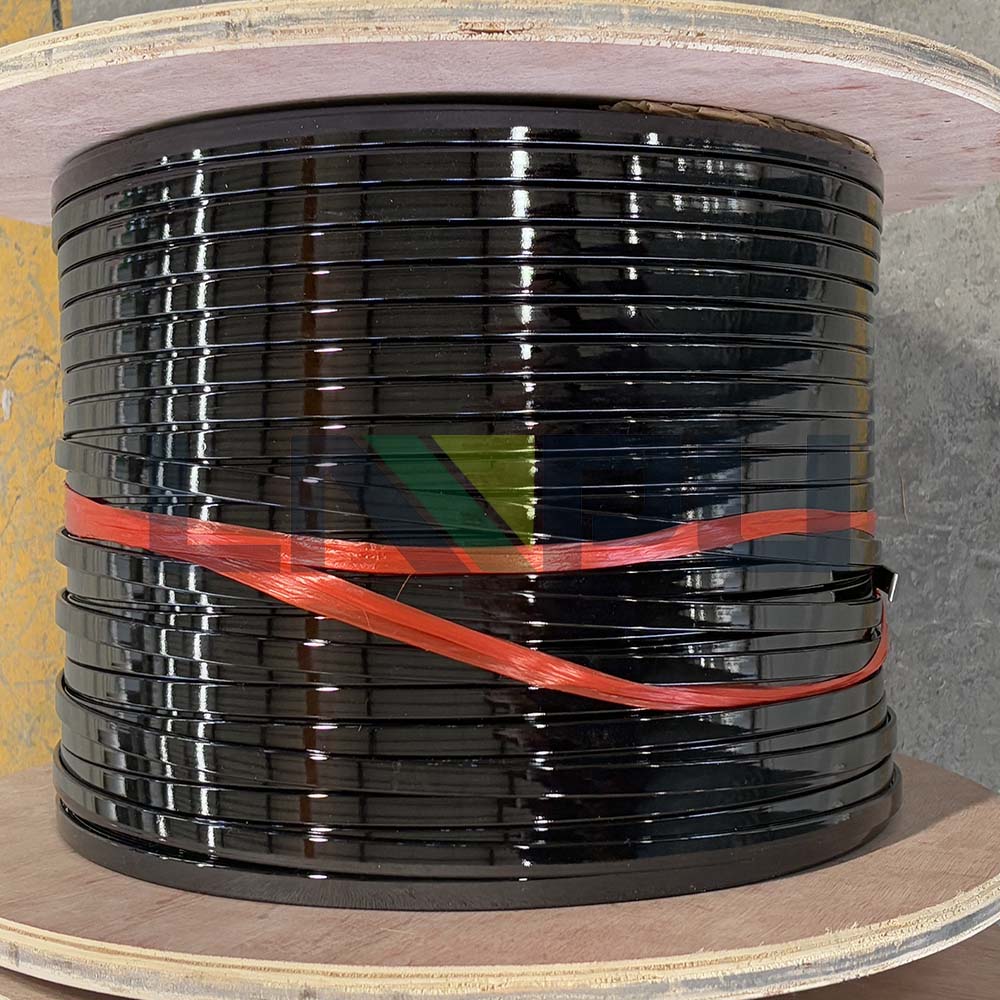
- Use flat wires to improve mechanical strength
Insulation Design:
- Use high thermal class insulation materials
- Increase insulation thickness
- Strengthen winding fixation
Structural Design:
- Optimize winding arrangement
- Add support structure
- Use integral casting (dry-type transformer)
VI. Quality Control
6.1 Raw Material Inspection
Conductor Inspection:
- Copper wire: Purity ≥99.9%, conductivity ≥100% IACS
- Aluminum wire: Purity ≥99.5%, conductivity ≥61% IACS
- Wire diameter tolerance: ±0.002mm
Insulating Varnish Inspection:
- Breakdown voltage
- Flexibility
- Enamel coating continuity (spark test)
- Heat resistance
6.2 Production Process Inspection
| Process | Control Points | Inspection Items |
|---|---|---|
| Drawing | Compression ratio, die condition | Wire diameter accuracy, surface quality |
| Annealing | Temperature profile, protective atmosphere | Conductivity, flexibility |
| Coating | Enamel coating thickness, uniformity | Breakdown voltage, appearance |
| Baking | Temperature profile, time | Enamel coating curing degree, flexibility |
6.3 Factory Inspection
Before leaving the factory, the winding wires of power distribution equipment must undergo strict inspection:
| Inspection Items | Requirements |
|---|---|
| Conductor Dimensions | Meet tolerance requirements |
| Breakdown Voltage | ≥ Specified Value |
| Flexibility | Pass bending test |
| Enamel Coating Continuity | Spark test without breakdown |
| Heat Resistance | Pass thermal aging test |
VII. Selection Guide
7.1 Application Scenario Confirmation
Select according to the type of power distribution equipment and operating conditions:
- Oil-Immersed Power Distribution Transformer: Class A, copper or aluminum wire
- Dry-Type Power Distribution Transformer: Class F/H, copper or aluminum wire
- Instrument Transformer: Class B/F, high precision
- Reactor: Class F/H, high current
7.2 Conductor Material Selection
- Copper Wire: High-efficiency power distribution transformer, reactor, instrument transformer
- Aluminum Wire: Oil-immersed power distribution transformer, dry-type power distribution transformer, cost-sensitive projects
7.3 Insulation Class Selection
Based on the operating temperature of the power distribution equipment:
- Class A (105°C): Oil-immersed power distribution transformer
- Class B (130°C): Dry-type power distribution transformer, instrument transformer
- Class F (155°C): Dry-type power distribution transformer, reactor
- Class H (180°C): Special dry-type transformer
7.4 Certification Requirements
Ensure products meet relevant certification requirements:
- UL: North American market
- IEC: International market
- CCC: Chinese market
- K-factor: Nonlinear load certification
- RoHS: Environmental requirements
Conclusion
As the core material of power distribution equipment, the performance of the winding wire directly affects the operational safety, reliability, lifespan, and efficiency of the power distribution equipment. Scientifically and rationally selecting winding wire materials and insulation systems based on specific application scenarios, operating conditions, load requirements, and cost budgets is crucial to ensuring the long-term reliable operation of power distribution equipment.
Partnering with professional winding wire manufacturers to ensure product quality and supply chain stability is an important guarantee for the success of power distribution equipment manufacturers.