


Wide-width aluminum foil coils are a key material in the manufacture of large power transformers and special transformers. Compared to conventional width aluminum foil, wide-width aluminum foil coils can significantly reduce the number of winding joints, improve the overall electrical performance and mechanical strength of the winding, and reduce the risk of partial discharge during transformer operation. With the trend of power transformers developing towards larger capacity and higher voltage, the application of wide-width aluminum foil coils is becoming increasingly widespread.
Having worked in this industry for 30 years, we have a deep understanding—customers choose wide-width aluminum foil not to follow any trend, but because they are truly solving problems.
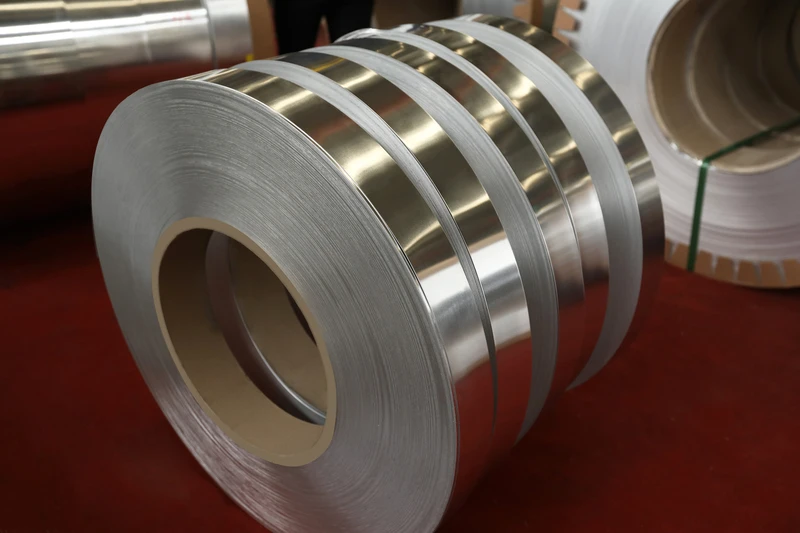
I. Technical Characteristics and Advantages of Wide-width Aluminum Foil Coils
1.1 The Demand for Wide-width Aluminum Foil in Large Transformers
The development of power transformers towards larger capacity and higher voltage places higher demands on winding materials. Traditional narrow-width aluminum foil presents several problems when winding large transformers: a higher number of winding seams increases the risk of partial discharge; increased contact resistance at the seams affects transformer efficiency; and reduced overall winding mechanical strength and short-circuit withstand capability decrease. The application of wide-width aluminum foil coils effectively solves these problems.
Frankly, customers using narrow-width aluminum foil used to have to deal with seam issues frequently. Now, with wide-width foil, it’s much more convenient.
1.2 Core Advantages of Wide-Width Aluminum Foil Coils
Reduced Seam Number: Wide-width aluminum foil coils can reach widths of 500-1200mm, reducing the number of seams by more than 60% compared to conventional 100-300mm wide aluminum foil, significantly reducing electrical and mechanical problems caused by seams.
Improved Electrical Performance: Reducing seams means reducing partial discharge points at the seams, lowering the risk of discharge during transformer operation, and improving the overall electrical performance of the winding.
Enhanced Mechanical Strength: Windings wound with wide-width aluminum foil have better overall integrity, stronger short-circuit electrodynamic withstand capability, and significantly improved mechanical strength.
Improved Production Efficiency: Reduce splicing operations, shorten winding time, and improve production efficiency.
Saved Material Costs: Reduce overlap loss and improve material utilization.
1.3 Main Application Areas
- Power Transformer (110kV and above)
- Converter Transformer
- Electric Furnace Transformer
- Traction Transformer
- Special Transformer
II. Technical Specifications
2.1 Aluminum Foil Substrate Requirements
Alloy Grades:
- 1060: Aluminum content ≥ 99.60%
- 1070: Aluminum content ≥ 99.70%
- 3003: Manganese content 1.0%-1.5%
Conductivity: Annealed aluminum foil should achieve IACS ≥ 59% for 1060/1070 series and ≥ 45% for 3003 series.
Thickness Range: 0.3-3.0mm, thickness tolerance ±0.02mm (standard), ±0.01mm (precision).
Width Range: 500-1200mm, width tolerance ±1.0mm.
Mechanical Properties: Tensile strength 60-100MPa (annealed state), elongation ≥25-30%, hardness 25-45HV.
2.2 Special Requirements for Wide Aluminum Foil
Thickness Uniformity: Wide aluminum foil requires higher thickness uniformity, which must be controlled within ±0.02mm.
Surface Quality: Surface roughness Ra≤0.8μm, ensuring stable insulation performance.
Edge Quality: Straight edges, no burrs, to avoid damage to the insulation layer during winding.
Flatness: Flat and without waves, otherwise it will affect the winding quality and electrical performance.
There has been a significant change in the past two years—customers have increasingly higher requirements for the surface quality of wide aluminum foil. Previously, “good enough” was acceptable; now, Ra≤0.8μm is required.
III. Production Process Flow
3.1 Rolling Process
The production process flow for wide aluminum foil is: ingot preparation → hot rolling → cold rolling → annealing → slitting.
The key is thickness control during the rolling process. When rolling wide aluminum foil, the thickness difference between the edges and the center must be strictly controlled; otherwise, it will affect subsequent use.
3.2 Surface Treatment
Bright Finish: Suitable for general applications, with a high surface finish.
Insulating Coating: Suitable for insulating windings, providing additional insulation protection.
Passivation Treatment: Suitable for oil-immersed transformers, preventing the aluminum foil from reacting with the transformer oil.
In my experience, passivated aluminum foil must be used for oil-immersed transformers; otherwise, over time, it will affect the performance of the transformer oil.
IV. Selection Guide
4.1 Selection by Transformer Capacity
| Transformer Capacity | Recommended Width | Recommended Thickness |
|---|---|---|
| Large (≥63000kVA) | 600-1200mm | 0.5-2.0mm |
| Medium (10000-63000kVA) | 400-800mm | 0.4-1.5mm |
| Small (≤10000kVA) | Standard Width or 200-400mm | 0.2-1.0mm |
4.2 Selection by Voltage Rating
| Voltage Rating | Recommended Width | Recommended Thickness |
|---|---|---|
| High Voltage (≥110kV) | ≥600mm | 0.5-2.0mm |
| Medium Voltage (10-110kV) | 300-600mm | 0.3-1.5mm |
| Low Voltage (<10kV) | Standard Width | 0.2-1.0mm |
Don’t just look at the price when selecting a product. We’ve seen too many customers try to save a little money on materials, only to end up losing out on operating costs. While wide aluminum foil may have a slightly higher unit price, it’s more cost-effective overall.
V. Industry Standards and Certifications
5.1 Main Standards
- IEC 60325 “Aluminum Foil for Electrical Transformers”
- GB/T 3190 “Chemical Composition of Wrought Aluminum and Aluminum Alloys”
- GB/T 3880 “Aluminum and Aluminum Alloy Plates and Strips for General Industrial Use”
- JB/T 9683 “Aluminum Foil for Electrical Transformers”
5.2 Quality Certifications
A reliable supplier should possess: ISO 9001 Quality Management System Certification, ISO 14001 Environmental Management System Certification, UL certification, RoHS compliance, and REACH compliance.
Here’s a pitfall to be aware of—some suppliers may try to pass off other people’s certifications as their own. Always insist that the supplier provide the original certificates, and verify that the manufacturer’s name on the certificate matches the contract.
VI. Quality Inspection
6.1 Incoming Material Inspection Items
- Thickness, Width, Length
- Appearance Quality (Surface Defects, Edge Quality)
- Mechanical Properties (Tensile Strength, Elongation)
- Conductivity
6.2 Special Inspection Items
Wide-width aluminum foil also requires thickness uniformity inspection, flatness inspection, and surface roughness inspection (Ra≤0.8μm).
6.3 Storage Conditions
Dry, well-ventilated environment, humidity ≤60%RH, avoid corrosive media. Shelf life 12-24 months.
VII. Supplier Selection Recommendations
7.1 Core Evaluation Indicators
- Wide-width Production Capacity: Can the supplier produce aluminum foil wider than 600mm?
- Thickness Tolerance Control: Can the supplier achieve an accuracy of ±0.02mm?
- Width Tolerance Control: Can the supplier achieve an accuracy of ±1.0mm?
- Surface Treatment Capacity: Does the supplier offer multiple surface treatment options?
- Customization Capacity: Can the supplier customize products to meet specific requirements?
7.2 Technical Service Capabilities
Good suppliers not only sell products but also provide selection support, quality reports, and bulk sample services. We recommend starting orders at 500kg and conducting on-site testing before making large-scale purchases.
7.3 Case Studies
When selecting suppliers, request industry case studies and customer feedback. Suppliers with real-world case studies generally have good service capabilities.
VIII. Product Specifications Reference
8.1 1060/1070 Pure Aluminum Series
| Thickness Range | Width Range | Temper | Tensile Strength | Conductivity | Main Applications |
|---|---|---|---|---|---|
| 0.3-0.5mm | 500-1200mm | O Temper | 60-80MPa | ≥59%IACS | Low Voltage Winding |
| 0.5-1.0mm | 500-1200mm | O Temper | 60-80MPa | ≥59%IACS | Medium Voltage Winding |
| 1.0-2.0mm | 500-1200mm | O Temper | 60-80MPa | ≥59%IACS | High Voltage Winding |
| 2.0-3.0mm | 500-1200mm | O Temper | 60-80MPa | ≥59%IACS | Ultra-high Voltage Winding |
8.2 3003 Aluminum-Manganese Alloy Series
| Thickness Range | Width Range | Temper | Tensile Strength | Conductivity | Main Applications |
|---|---|---|---|---|---|
| 0.3-0.5mm | 500-1000mm | O Temper | 100-150MPa | ≥45%IACS | High-strength Winding |
| 0.5-1.0mm | 500-1000mm | O Temper | 100-150MPa | ≥45%IACS | Special Transformer |
| 1.0-2.0mm | 500-1000mm | O Temper | 100-150MPa | ≥45%IACS | Electric Furnace Transformer |
Conclusion
Our company has focused on exporting electric wire and metal foil for 30 years, specializing in 1060/1070 pure aluminum and 3003 aluminum-manganese alloy wide aluminum foil, with widths ranging from 500-1200mm and thicknesses from 0.3-3.0mm. Customization is available upon request. Samples can be shipped worldwide.
If you are looking for suitable wide aluminum foil for large electric transformers, please contact us.
Contact Information:
Email: office@cnlpzz.com
WhatsApp: 0086-19337889070