


Introduction
Oil-filled transformers (also known as oil-immersed transformers) are among the most critical power transmission and distribution equipment in electrical power systems, with their reliability and service life directly affecting the safe and stable operation of the power grid. In the manufacturing of oil-filled transformers, the selection of winding insulation materials is a key factor determining overall transformer performance. Paper covered wire, unique insulation characteristics, high compatibility with transformer oil, and mature and reliable application history, has become the preferred insulated conductor for oil-filled transformer windings.
The application of paper covered wire in transformers has a history spanning over a century. As early as the early 20th century, with the rapid development of power systems, paper covered wire was widely used in power transformer winding manufacturing. After more than a century of technological improvements and process optimization, the manufacturing technology of paper covered wire has become increasingly mature, with significant enhancements in its insulation performance, mechanical properties, and thermal performance.
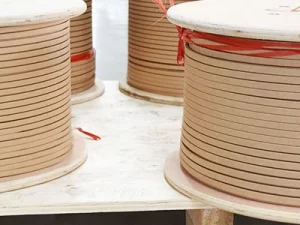
This article systematically elaborates on the technical advantages of paper covered wire in oil-filled transformers from the aspects of material characteristics, insulation mechanism, electrical performance, thermal performance, mechanical properties, compatibility with transformer oil, manufacturing processes, and application fields, providing comprehensive material selection references for engineering technicians.
1. Material Characteristics and Structural Features of Paper Covered Wire
1.1 Insulating Paper Materials
The insulation layer of paper covered wire is mainly made of electrical insulating paper (Kraft Paper) or electrical insulating pressboard. Electrical insulating paper is a high-purity cellulose insulation material made from unbleached sulfate wood pulp through a special manufacturing process.
Chemical Composition: The main component of electrical insulating paper is cellulose, with a content typically above 90%, supplemented by small amounts of hemicellulose and lignin. Cellulose is a natural polymer compound composed of D-glucose units connected by β-1,4-glycosidic bonds, possessing good electrical insulation properties and mechanical strength.
Physical Properties: The thickness of electrical insulating paper typically ranges from 0.05mm~0.5mm, with single-layer or multi-layer wrapping selected based on insulation thickness requirements. The density of insulating paper is approximately 0.7~1.2 g/cm³, with high tensile strength and good flexibility.
Thermal Class: The thermal class of paper covered wire is typically Class A (105℃) or Class E (120℃). In transformer oil immersion and sealed environments, the actual operating temperature can reach 120℃~130℃.
1.2 Conductor Materials
The conductor materials of paper covered wire are mainly copper or aluminum, with copper conductors occupying the dominant position.
Copper Conductors: Made from oxygen-free copper rods (OFC) as raw materials, processed through multiple drawing passes to the target diameter. The purity of oxygen-free copper is typically above 99.95%, with a conductivity of not less than 100% IACS (International Annealed Copper Standard) and a resistivity of not more than 0.017241 Ω·mm²/m (20℃).
Aluminum Conductors: In cost-sensitive application scenarios, high-purity aluminum (above 99.7%) is also used as a conductor material. The conductivity of aluminum conductors is approximately 61% of that of copper, but the density is only 30% of copper, offering significant lightweight advantages.
1.3 Structural Features
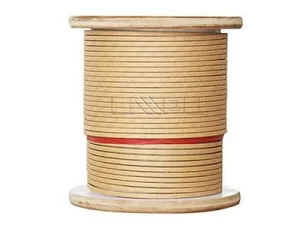
Paper covered wire adopts a “conductor + insulating paper wrapping layer” structure. Based on the wrapping method, paper covered wire can be classified into the following types:
Straight Wrap: Insulating paper strips are wrapped parallel to the conductor axis, suitable for round wire and small cross-section conductors.
Overlap Wrap: Insulating paper strips are spirally wrapped on the conductor surface with a certain overlap width, typically 15%~30% of the paper strip width, ensuring the continuity and integrity of the insulation layer.
Double/Multi-Layer Wrapping: Based on voltage class and insulation requirements, double-layer or multi-layer insulating paper wrapping can be adopted, with each layer wrapped in opposite directions to improve the uniformity and mechanical strength of the insulation layer.
2. Insulation Mechanism of Paper Covered Wire in Oil-Filled Transformers
2.1 Paper-Oil Composite Insulation System
Oil-filled transformers adopt a “paper-oil” composite insulation system, which is the fundamental reason why paper covered wire is preferred in oil-filled transformers.
Role of Insulating Paper: As a solid insulation material, insulating paper directly covers the conductor surface, providing basic electrical insulation. The porous structure of insulating paper allows it to fully absorb transformer oil, forming a paper-oil composite insulation system.
Role of Transformer Oil: As a liquid insulation material, transformer oil penetrates the micro-pores of insulating paper, filling the gaps between paper fibers, significantly improving the breakdown voltage and insulation resistance of the composite insulation system. At the same time, transformer oil serves a heat dissipation and cooling function, transferring heat generated by windings to the transformer tank.
Synergistic Effect: The electrical performance of the paper-oil composite insulation system is significantly superior to that of single paper insulation or oil insulation. The porous structure of insulating paper provides good adsorption and retention capacity for transformer oil, while transformer oil effectively improves the breakdown voltage and partial discharge resistance of insulating paper.
2.2 Moisture Management
Moisture is a key factor affecting transformer insulation performance. Paper covered wire in oil-filled transformers has the following characteristics in moisture management:
Moisture Absorption and Desorption Equilibrium: Insulating paper has certain hygroscopicity and establishes a dynamic equilibrium with moisture in transformer oil. Under normal operating conditions, the moisture content in insulating paper is typically controlled between 2%~4%, at which point the electrical performance of insulating paper is optimal.
Moisture Migration: As transformer operating temperature changes, moisture migrates between insulating paper and transformer oil. When temperature increases, moisture migrates from insulating paper to transformer oil; when temperature decreases, moisture migrates from transformer oil to insulating paper. This moisture migration characteristic needs to be considered in transformer design and operation maintenance.
Drying Treatment: During transformer manufacturing, windings and transformer oil need to undergo strict drying treatment to reduce moisture content in insulating paper to a minimum (typically below 0.5%), ensuring insulation performance after the transformer is put into operation.
3. Electrical Performance Advantages
3.1 Breakdown Voltage
The breakdown voltage of paper covered wire in transformer oil is significantly higher than that in air. Under dry conditions, the breakdown voltage of paper covered wire is typically between 15,000V~30,000V, with specific values depending on insulation layer thickness and transformer oil quality.
The breakdown voltage of the paper-oil composite insulation system has a “self-recovery” characteristic. When local breakdown occurs in the insulation system, transformer oil can quickly fill the breakdown channel and restore insulation performance. This characteristic enables oil-filled transformers to continue operating after experiencing transient overvoltages (such as lightning strikes, switching overvoltages, etc.).
3.2 Insulation Resistance
The insulation resistance of paper covered wire in transformer oil is typically not less than 1,000 MΩ·km, and can reach above 5,000 MΩ·km under dry conditions. The magnitude of insulation resistance mainly depends on the quality of insulating paper, the purity of transformer oil, and moisture content.
3.3 Dielectric Constant and Dielectric Loss
The dielectric constant of insulating paper is approximately 3.5~4.5, which is relatively close to the dielectric constant of transformer oil (2.2~2.4). The matching of dielectric constants helps reduce electric field concentration in the insulation system, lowering the risk of partial discharge.
The dielectric loss factor (tanδ) of paper covered wire is typically between 0.005~0.02, with lower dielectric loss helping to reduce power loss under high-frequency conditions and improving transformer operating efficiency.
3.4 Partial Discharge Resistance
The paper-oil composite insulation system has good partial discharge resistance. The porous structure of insulating paper can effectively distribute the electric field, reducing the probability of partial discharge occurrence. At the same time, transformer oil can inhibit the development of partial discharge, preventing rapid aging of the insulation system.
4. Thermal Performance Characteristics
4.1 Thermal Class
The thermal class of paper covered wire is typically Class A (105℃) or Class E (120℃). In transformer oil immersion and sealed environments, the actual operating temperature of paper covered wire can reach 120℃~130℃.
Although the thermal class of paper covered wire is lower than certain organic insulation materials (such as polyester-imide, polyamide-imide, etc.), in oil-filled transformers, the cooling effect of transformer oil can effectively reduce winding operating temperature, making the thermal performance of paper covered wire fully meet operating requirements.
4.2 Thermal Aging Characteristics
Insulating paper undergoes thermal aging during long-term operation, mainly manifested as the breaking of cellulose molecular chains and a decrease in the degree of polymerization. According to the Arrhenius thermal aging model, the aging rate of insulating paper has an exponential relationship with operating temperature, with the aging rate approximately doubling for every 6℃~8℃ increase in temperature.
High-quality insulating paper, after continuous operation for 20,000 hours at 105℃, has its degree of polymerization (DP) reduced from approximately 1,000 to approximately 250, at which point the mechanical strength of the insulating paper can still be maintained within usage requirements. The degree of polymerization of insulating paper is an important indicator for assessing transformer remaining life; typically, when the degree of polymerization drops below 200, the transformer needs to consider replacement or major overhaul.
4.3 Thermal Conductivity
The thermal conductivity of insulating paper is approximately 0.15~0.20 W/(m·K), and the thermal conductivity of transformer oil is approximately 0.12~0.15 W/(m·K). The thermal conductivity of the paper-oil composite insulation system lies between the two, effectively transferring heat generated by windings to transformer oil, which then dissipates heat to the transformer tank through oil circulation.
5. Mechanical Property Characteristics
5.1 Tensile Strength
Insulating paper has high tensile strength, with dry tensile strength typically between 50~150 MPa. When immersed in transformer oil, the tensile strength of insulating paper slightly decreases but still remains within 30~100 MPa, meeting the mechanical strength requirements for winding processing and operation.
5.2 Flexibility
Paper covered wire has good flexibility and can adapt to winding processing operations such as bending and twisting. When immersed in transformer oil, the flexibility of insulating paper further improves, facilitating forming operations during winding processing.
5.3 Compressive Strength
In large transformers, windings need to withstand significant short-circuit electrodynamic forces. Paper covered wire insulation layer has certain compressive strength, protecting conductors from mechanical damage under short-circuit electrodynamic forces.
6. Compatibility with Transformer Oil
6.1 Oil-Paper Compatibility
Insulating paper and transformer oil have high compatibility, which is the core advantage of paper covered wire being preferred in oil-filled transformers.
Chemical Compatibility: The main component of insulating paper is cellulose, a natural organic polymer compound that does not chemically react with mineral oil-based transformer oils. During long-term operation, insulating paper will not degrade or deteriorate due to oil erosion.
Physical Compatibility: The porous structure of insulating paper allows it to fully absorb transformer oil, forming a stable paper-oil composite insulation system. The oil absorption rate of insulating paper is typically between 30%~50%, capable of maintaining sufficient oil volume to ensure insulation performance.
6.2 Oil Quality Stability
The long-term operation of paper covered wire in transformer oil does not have a negative impact on oil quality. On the contrary, insulating paper has certain adsorption capacity and can adsorb trace moisture and impurities in transformer oil, playing a role in purifying the oil.
6.3 Environmental Friendliness
Insulating paper is a biodegradable natural material with minimal environmental impact after disposal. Compared with certain synthetic insulation materials, paper covered wire has better environmental friendliness, meeting sustainable development requirements.
7. Key Manufacturing Processes
7.1 Conductor Drawing
The conductor drawing process for paper covered wire is similar to that of ordinary magnet wire. Copper or aluminum rods are drawn to the target diameter through multiple passes, with drawing speed, drawing force, and lubrication conditions controlled during the process to ensure conductor surface quality and dimensional accuracy.
7.2 Insulating Paper Wrapping
Insulating paper wrapping is the core process in paper covered wire manufacturing. Specialized wrapping equipment covers the conductor surface with insulating paper strips at specific wrapping angles and overlap widths. The following parameters need to be controlled during the wrapping process:
Wrapping Tension: Control paper strip tension uniformly to ensure the insulation layer tightly adheres to the conductor.
Overlap Width: Typically 15%~30% of the paper strip width, ensuring continuity of the insulation layer.
Number of Wrapping Layers: Based on voltage class and insulation requirements, single-layer, double-layer, or multi-layer wrapping can be adopted.
7.3 Drying Treatment
After wrapping, paper covered wire needs to undergo drying treatment to remove moisture from the insulating paper. Drying treatment is typically carried out in a vacuum drying oven, with temperature controlled at 80℃~120℃ and vacuum level controlled at 10~100 Pa, ensuring moisture content in insulating paper is reduced to below 0.5%.
7.4 Quality Inspection
Quality inspection items for paper covered wire include:
Dimensional Inspection: Conductor diameter, insulation outer diameter, insulation layer thickness.
Electrical Performance: Breakdown voltage, insulation resistance, dielectric loss.
Mechanical Performance: Tensile strength, flexibility.
Moisture Content: Typically controlled below 0.5%.
8. Application Field Analysis
8.1 Power Transformers
Oil-Immersed Distribution Transformers: Paper covered wire is the main insulated conductor type for oil-immersed distribution transformer windings. In 10kV~35kV distribution transformers, the application of paper covered wire is very mature, providing保障 for the safe and reliable operation of distribution systems.
Oil-Immersed Power Transformers: In 110kV~500kV high-voltage and extra-high-voltage power transformers, paper covered wire,凭借其 excellent electrical insulation properties and high compatibility with transformer oil, has become the preferred solution for winding insulation.
8.2 Special Transformers
Rectifier Transformers: Rectifier transformers operate under DC pulsating voltage conditions, with higher demands on the partial discharge resistance of winding insulation materials. The paper-oil composite insulation system has good partial discharge resistance and is suitable for winding insulation in rectifier transformers.
Electric Furnace Transformers: Electric furnace transformers operate at high temperatures and require paper covered wire with higher thermal class or paper-Nomex® composite insulation structures to ensure long-term stable operation.
8.3 Reactors
Oil-Immersed Reactors: In various oil-immersed reactors such as filter reactors, current-limiting reactors, and shunt reactors, paper covered wire is the main choice for winding insulation. The paper-oil composite insulation system can withstand long-term operation under high voltage and high current, ensuring safe and reliable operation of reactors.
9. Comparison with Other Insulated Conductors
| Comparison Item | Paper Covered Wire | Enameled Wire | Fiberglass Covered Wire | Nomex® Covered Wire |
|---|---|---|---|---|
| Thermal Class | Class A~E (105℃~120℃) | Class B~C | Class B~C | Class H~C |
| Breakdown Voltage (in Oil) | 15,000V~30,000V | 5,000V~15,000V | 5,000V~15,000V | 10,000V~20,000V |
| Compatibility with Transformer Oil | Excellent | Good | Good | Excellent |
| Mechanical Strength | Medium-High | Medium | High | Medium-High |
| Cost | Low | Low | Medium | High |
| Environmental Friendliness | Excellent (Biodegradable) | Fair | Fair | Good |
| Typical Applications | Oil-filled transformers | Dry-type transformers, motors | Dry-type transformers, high-temp motors | Dry-type transformers, special transformers |
10. Selection Recommendations
10.1 Insulation Layer Thickness Selection
Based on the transformer’s voltage class and insulation requirements, select appropriate insulation layer thickness:
Low-Voltage Windings (<1kV): Single-layer or double-layer insulating paper wrapping, insulation layer thickness 0.2mm~0.4mm.
Medium-Voltage Windings (1kV~35kV): Double-layer or multi-layer insulating paper wrapping, insulation layer thickness 0.4mm~0.8mm.
High-Voltage Windings (>35kV): Multi-layer insulating paper wrapping, insulation layer thickness 0.8mm~1.5mm.
10.2 Insulating Paper Type Selection
Based on the transformer’s operating environment and performance requirements, select appropriate insulating paper type:
Standard Electrical Insulating Paper: Suitable for conventional oil-immersed transformers.
High-Density Insulating Paper: Suitable for high-voltage and extra-high-voltage transformers, with higher electrical strength.
Pre-Coated Adhesive Insulating Paper: Suitable for applications requiring enhanced winding mechanical stability.
10.3 Supplier Selection Factors
Certifications: Products should comply with international standards such as IEC 60454 and GB/T 5591, with ISO9001 quality management system certification.
Manufacturing Capabilities: Possess professional paper covered wire production equipment, able to precisely control conductor dimensions, insulating paper wrapping quality, and overlap width.
Testing Capabilities: Possess specialized testing capabilities including breakdown voltage, insulation resistance, moisture content, degree of polymerization, and other testing items.