

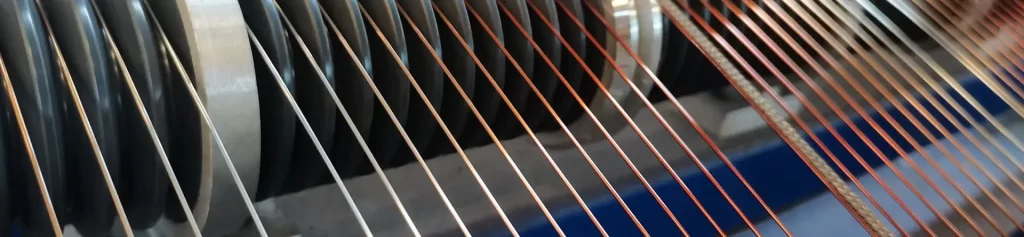
As a core insulation material for power transformers and special transformers, the insulation performance of paper-sheathed wire directly relates to the safe operation of the entire power system.
Kraft paper&39;s selection as the preferred insulation material for paper-sheathed wire is not accidental, but rather a result of its unique material properties and long-term engineering practice.
With its excellent electrical insulation performance, good mechanical strength, and mature processing technology, kraft paper occupies an irreplaceable position in the power transformer field.
This article will delve into the material properties of kraft paper, its application advantages in paper-sheathed wire, and why kraft paper has become the preferred insulation material for transformers, providing readers with a comprehensive technical interpretation.
Material Properties of Kraft Paper Cellulose Fiber Structure Kraft paper uses natural cellulose as its main component and has a unique fiber structure: Cellulose is a natural polymer material extracted from wood or other plant fibers. The cellulose molecular chain contains a large number of hydroxyl groups, providing excellent polar characteristics. This structure gives cellulose paper excellent dielectric properties, making it suitable as an insulating material. Kraft Paper Manufacturing Process Kraft paper uses a special sulfate pulping process: The sulfate process is one of the most mature industrial pulping processes. This process produces pulp with high fiber strength and purity. The resulting kraft paper has good mechanical strength and electrical properties. Types of Kraft Paper Depending on the application and performance requirements, kraft paper comes in various types: Cable paper is used for insulating power cables. High-voltage cable paper has high density and uniform thickness. Transformer paper undergoes special treatment and is suitable for oil-immersed transformer applications.
Electrical Insulation Advantages of Kraft Paper Excellent Dielectric Properties Kraft paper has excellent electrical insulation characteristics: It has a moderate dielectric constant, preventing excessive polarization loss under an electric field. It has a low dielectric loss factor, reducing energy loss in alternating electric fields. It has a high breakdown voltage, capable of withstanding high voltage stress without insulation breakdown. Perfect Compatibility with Insulating Oil The combination of kraft paper and insulating oil is a classic insulation solution for transformer: The insulating oil can penetrate into the pores of the kraft paper fibers, forming a composite insulation structure. The dielectric strength of the oil-paper combination is much higher than that of using kraft paper or insulating oil alone. The insulating oil also acts as a coolant, improving the thermal stability of transformer. Low Hygroscopicity Although kraft paper is hygroscopic, it can be controlled through treatment: The initial moisture content of new paper is very low, which can be further reduced through drying. After drying and oil impregnation, the hygroscopicity of kraft paper decreases significantly. The moisture content of kraft paper in the oil-impregnated state must be strictly controlled below 0.5%. Heat Resistance Kraft paper has good thermal stability within a certain temperature range: The long-term operating temperature can reach 105°C, meeting the requirements of Class B insulation. It has a slow thermal aging rate and a long service life. Under the protection of insulating oil, thermal stability is further improved.
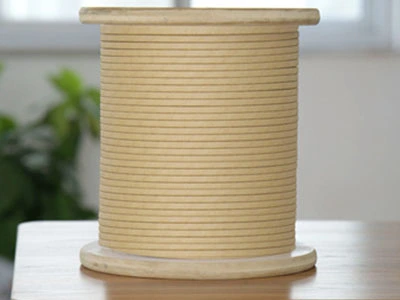
Mechanical Advantages of Kraft Paper High Tensile Strength Kraft paper possesses excellent tensile strength: The sulfate pulping process retains the long fiber structure of cellulose.
High strength makes kraft paper less prone to breakage during wrapping.
The tightly wound paper tape can withstand various stresses during transformer operation.
Good Flexibility Kraft paper maintains flexibility while possessing sufficient strength: It facilitates tight wrapping on conductor surfaces.
Flexibility allows the paper tape to adapt to changes in conductor shape and size.
The wrapped paper layers are evenly distributed, without wrinkles or bubbles.
Abrasion Resistance Kraft paper has a certain degree of abrasion resistance: It is not easily damaged during wrapping and winding.
It can withstand a certain amount of mechanical friction and compression.
It protects the internal insulation structure from external factors.
Folding Resistance Kraft paper has good folding resistance: It can fit tightly at wrapping overlaps.
The folded paper layers are not prone to cracking or delamination.
It ensures the integrity and sealing of the insulation structure.
Chapter 4Economic Advantages and Supply Advantages Cost Advantage Kraft paper has a significant price advantage compared to other high-performance insulation materials: Kraft paper production technology is mature, and raw material sources are widely available.
Wood is a sustainable raw material resource.
Large-scale production keeps the cost of kraft paper at a low level.
Stable Supply Chain Kraft paper has a mature and stable supply system: There are multiple large kraft paper manufacturers worldwide.
Product quality is stable, and specifications are complete.
Products of different thicknesses and widths can be customized according to needs.
Process Compatibility Kraft paper is highly compatible with existing manufacturing processes: Wrapping equipment and technology are very mature.
The drying and oil impregnation process has been extensively optimized for kraft paper.
Quality inspection methods and standards are comprehensive and reliable.
Environmental Protection and Sustainability Renewable Resources Kraft paper comes from renewable forest resources: Wood is a sustainably managed renewable resource. Reasonable logging and planting maintain ecological balance. It has a greater environmental advantage compared to other non-renewable insulation materials. Biodegradability Kraft paper has the characteristic of natural degradation: Cellulose materials can be decomposed by microorganisms. Kraft paper from waste transformers can be recycled, meeting the requirements of green manufacturing and a circular economy. Production Process Improvements Kraft paper production processes are continuously being improved: Sulfate pulping allows for the recycling of chemicals, reducing energy consumption and pollutant emissions. Bleaching processes are moving towards chlorine-free bleaching, making it more environmentally friendly.
Comparison with Other Insulation Materials Comparison with Synthetic Materials Compared to synthetic insulation materials such as polyester and polyimide, kraft paper has unique advantages: Kraft paper is significantly cheaper than high-performance synthetic materials. Its compatibility with insulating oil has been proven over a long period. The technology and equipment are very mature. Comparison with NOMEX Paper NOMEX paper is another high-performance insulation material: NOMEX paper has better heat resistance than kraft paper, reaching up to 220°C. However, NOMEX paper is significantly more expensive than kraft paper. In most common applications, kraft paper offers better overall cost-effectiveness. Comparison with Plastic Films Plastic films, such as polyester films, are also used for transformer insulation: The thickness uniformity of films is superior to kraft paper. However, the flexibility and oil absorption of films are not as good as kraft paper. Oil-paper composite insulation systems have a greater overall performance advantage.
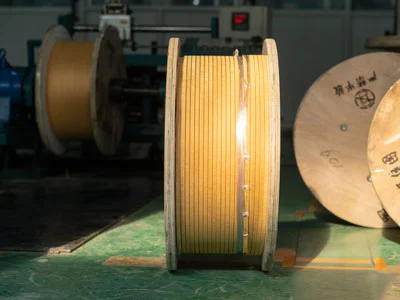
ConclusionKraft paper is widely used in paper-insulated wire manufacturing due to its comprehensive advantages: its excellent electrical insulation performance perfectly complements insulating oil; its good mechanical strength and flexibility facilitate processing and application; mature production processes and a stable supply chain ensure reliable quality and reasonable costs; and its renewable and biodegradable environmental characteristics meet the requirements of sustainable development.
Although high-performance synthetic insulation materials are constantly emerging, kraft paper will continue to maintain its dominant position in the field of power transformer insulation due to its mature technology, excellent performance, and outstanding cost-effectiveness.
For most conventional applications, kraft paper insulation systems remain the best choice.
With the advancement of materials technology, the performance of kraft paper is also constantly improving, with products offering higher density and better electrical performance being continuously launched, providing stronger guarantees for the safe and reliable operation of power equipment.