

What is Thermal Class in Wire
Thermal class is a core parameter for evaluating the heat resistance of insulation materials and plays a crucial guiding role in the selection and application of enameled wire. Accurately understanding the concept of thermal class is essential for personnel involved in the design, manufacturing, and procurement of electrical equipment. As a key material in electrical equipment such as motors and transformers, the heat resistance of the insulation layer of enameled wire directly determines the upper limit of the equipment operating temperature and its expected service life. When insulation materials operate beyond their temperature resistance limits, the aging process of the insulation will be accelerated, leading to premature failure of electrical equipment. This article systematically explains the definition of thermal class, the IEC 60085 standard system, the types of insulation materials corresponding to different thermal classes, the relationship between thermal class and equipment life, and precautions for practical selection and application, providing comprehensive reference guidance for engineering technicians.
Definition and Connotation of Thermal Class
Basic Definition
Thermal class is a technical parameter characterizing the maximum allowable operating temperature of an insulation material. According to the IEC 60085 standard, the thermal class, expressed in degrees Celsius, is defined as the highest temperature that an insulating material can withstand under normal operating conditions for an extended period. Exceeding this temperature limit will significantly degrade the performance of the insulating material, drastically shortening its expected service life. The concept of thermal class is based on the principle of thermal aging. Insulating materials undergo slow chemical degradation under temperature, manifesting as brittleness, cracking, and loss of elasticity in the insulation layer, ultimately leading to electrical breakdown. For every 10 degrees C increase in temperature, the thermal aging rate of the insulating material approximately doubles; this rule is known as the 10 degrees C rule. Thermal class is not only a theoretical upper limit of temperature resistance but also a crucial basis for designers to determine the operating temperature of equipment. Selecting an insulating material with an appropriate thermal class is fundamental to ensuring the reliable operation of electrical equipment.
The Relationship Between Thermal Class and Insulation Systems
Thermal class is a core parameter in insulation system design. In an electrical device, multiple insulating materials may be used; the thermal classes of these materials must be compatible to ensure that the entire insulation system operates harmoniously at its highest operating temperature. For enameled wire, the thermal class is determined by the type and thickness of the insulating varnish. Insulating varnishes with different chemical compositions have different heat resistance properties: the thermal class of conventional polyester varnish is typically 130 degrees C to 155 degrees C; modified polyester or polyester imide varnishes can reach 155 degrees C to 180 degrees C; and polyamide-imide varnishes can reach 200 degrees C or even 220 degrees C. The overall thermal class of the insulation system is determined by the component with the lowest heat resistance. Therefore, when designing motors or transformers, it is essential to ensure that the thermal classes of all insulating materials—including enameled wire, insulating paper, insulating sleeves, impregnating varnish, etc.—are compatible and exceed the expected maximum operating temperature of the equipment by 15 degrees C to 20 degrees C.
Thermal Class Identification Systems
Internationally, two main thermal class identification systems are used: alphabetic and numerical systems. The letter system originates from the International Electrotechnical Commission (IEC) standard, using letters such as E, B, F, H, and C to identify different thermal classes. Class E corresponds to 120 degrees C, Class B to 130 degrees C, Class F to 155 degrees C, Class H to 180 degrees C, and Class C to 200 degrees C. This system is widely used in the European and Asia-Pacific markets. The numerical system is mainly used in the North American market, directly identifying the temperature value, such as Class 130, Class 155, Class 180, and Class 200. The NEMA MW 1000 standard uses this identification method. The correspondence between the two identification systems is as follows: Class 130 corresponds to Class B (130 degrees C), Class 155 corresponds to Class F (155 degrees C), Class 180 corresponds to Class H (180 degrees C), and Class 200 corresponds to Class C (200 degrees C).
IEC 60085 Thermal Class System
Overview of the Standard System
IEC 60085 is a standard developed by the International Electrotechnical Commission (IEC) for the thermal assessment and classification of insulating materials, providing a unified specification for the definition and testing of thermal classes worldwide. This standard applies not only to enameled wires but also covers insulating materials used in various electrical equipment such as motors and transformers. IEC 60085 specifies the test methods and verification procedures for thermal classes. The determination of a thermal class is based on long-term thermal aging tests. By conducting accelerated aging tests on samples under different temperature conditions, a thermal life curve for the material is established, thereby determining its maximum allowable operating temperature. This standard also establishes a guideline for the correspondence between thermal classes and insulating material types, providing a reference for material selection. It should be noted that these correspondences are instructive; the actual thermal class of a product should be determined based on specific test data.
IEC Thermal Class Conversion Table
Based on the IEC 60085 standard, the common thermal classes for enameled wire products and their corresponding temperatures are as follows: Class E (120 degrees C) is a lower thermal class, corresponding to a maximum operating temperature of 120 degrees C. This class of insulation material is mainly used in applications such as ordinary electronic equipment and small coils inside precision instruments with low operating temperatures. Class B (130 degrees C) corresponds to a maximum operating temperature of 130 degrees C and is one of the most widely used thermal classes in small and medium-sized motors and transformers. Conventional or modified polyester varnishes usually belong to this class. Class F (155 degrees C) corresponds to a maximum operating temperature of 155 degrees C and is suitable for industrial motors and enclosed motors with higher operating temperatures. Modified polyester varnishes or polyester imide varnishes usually reach this thermal class. Class H (180 degrees C) corresponds to a maximum operating temperature of 180 degrees C and mainly uses polyester imide insulating varnish. This grade of product is suitable for high-temperature operating conditions, large motors, and applications requiring a long expected lifespan. Class C (200 degrees C and above) is the highest standard thermal class, corresponding to a maximum operating temperature of 200 degrees C. Polyamide-imide varnish or composite insulation systems can reach this grade and are used in extreme high-temperature environments or applications with extremely high reliability requirements. Some special insulation systems can reach 220 degrees C or even 240 degrees C, suitable for extreme high-temperature applications such as electric arc furnaces, aerospace, etc.
North American Standard System Comparison
The NEMA MW 1000 series standards are enameled wire specifications developed by the Electrical Manufacturers Association (EMA) and hold an important position in the North American market. This standard uses a numerical identification system, which corresponds to the IEC alphabetical system. In the NEMA standard, Class 130 corresponds to IEC Class B (130 degrees C), Class 155 corresponds to Class F (155 degrees C), Class 180 corresponds to Class H (180 degrees C), and Class 200 corresponds to Class C (200 degrees C). It is worth noting that the NEMA standard differs from the IEC 60317 standard in terms of testing methods, dimensional specifications, and performance requirements. Products exported to the North American market should explicitly adopt the NEMA standard and ensure that they obtain the corresponding UL certification.
Thermal Class and Insulation Material Types
Polyurethane Insulation Systems
Polyurethane enameled wire is one of the most common low-temperature grade products. The main advantage of polyurethane insulation systems is that they can be directly soldered without the need for pre-scraping the insulation layer, a characteristic that gives them a unique advantage in applications such as electronic transformers, relays, and ignition coils. The thermal class of polyurethane enameled wire is typically Class 120 (Class E) or Class 130 (Class B). Class 120 polyurethane enameled wire uses polyurethane resin as the insulation material, with a maximum operating temperature of 120 degrees C, and is suitable for electronic equipment operating at low temperatures. Class 130 polyurethane enameled wire incorporates modified components into polyurethane resin, enhancing its heat resistance and allowing for a maximum operating temperature of 130 degrees C. This product expands its application range while maintaining good weldability. The chemical structure of polyurethane insulation systems determines an upper limit to their heat resistance. At higher temperatures, polyurethane materials soften or decompose, making it impossible to achieve higher thermal classes through formulation adjustments.
Polyester Insulation Systems
Polyester insulation systems are one of the most widely used insulation types in industrial applications. Conventional polyester enameled wire has a thermal class of Class 130, offering cost-effectiveness and excellent processing performance, and is widely used in small and medium-sized motors, transformers, lighting ballasts, and other fields. Modified polyester varnishes, by introducing heat-resistant modified monomers into the polyester molecular chain or employing special synthesis processes, improve the thermal class, reaching up to Class 155. The modification process expands the application temperature range while maintaining the good processing performance of polyester varnish. Polyester insulation systems have the following characteristics: excellent insulation performance and high dielectric strength; good leveling properties and smooth surface in enamel coatings; excellent flexibility and stable adhesion; and economical cost and high cost-effectiveness. The limitations of polyester insulation systems are: optimal performance in the temperature range of 130 degrees C to 155 degrees C; moderate hydrolysis resistance, requiring durability evaluation in humid environments; and limited chemical resistance, requiring protective measures in strong solvent environments.
Polyester Imide Insulation Systems
Polyester imide insulation systems significantly improve heat resistance and chemical stability by introducing imine structures into the polyester molecular chain. Polyester imide enameled wires can reach a thermal class of Class 180, making them the mainstream choice for high-temperature applications. The core advantages of the polyester imide insulation system are: excellent heat resistance, capable of long-term operation at 180 degrees C; good chemical stability, resistant to various chemical substances; stable thermal aging performance, and long expected service life. This system is particularly suitable for the following applications: industrial motors operating at high temperatures; enclosed or high-voltage motors; power distribution transformer windings; and electrical equipment in outdoor or humid environments. While the polyester imide insulation system is more expensive than conventional polyester products, its reliability under high-temperature conditions makes it the preferred choice for many applications.
Polyamide-Imide Insulation System
Polyamide-imide is one of the commercially available insulation materials with the best heat resistance. Polyamide-imide wires can achieve thermal class ratings of Class 200 or even Class 220, suitable for extreme high-temperature environments. Key features of this insulation system include: maximum temperature resistance up to 220 degrees C; excellent chemical resistance, resistant to strong acids, strong alkalis, and organic solvents; excellent abrasion resistance, suitable for applications with frequent vibration; and good thermal shock resistance, able to withstand sudden temperature changes. The main application areas of polyamide-imide insulation systems include: extreme high-temperature equipment such as electric arc furnaces; high-reliability electrical equipment in the aerospace field; traction motors in rail transit vehicles; and supporting electrical equipment for high-temperature industrial furnaces. Due to its high cost, polyamide-imide insulation systems are usually only used in applications with special requirements for heat resistance.
Relationship Between Thermal Class and Equipment Lifespan
Thermal Aging Mechanism
The aging of insulating materials under temperature is a complex chemical process, mainly manifested in molecular chain breakage, cross-linking reactions, and oxidative degradation. These chemical changes cause the insulating material to gradually lose its elasticity, become brittle, and eventually lose its insulating function. The rate of thermal aging is closely related to temperature. According to the Arrhenius equation, for every 10 degrees C increase in temperature, the rate of most chemical reactions increases by one to two times. This means that the expected lifespan of the insulating material will be shortened by about half after the temperature increases by 10 degrees C. This rule is known as the 10 degrees C rule and is the basic theoretical basis for the thermal design of electrical equipment. For example, if an insulation material has an expected lifespan of 20,000 hours at 130 degrees C, it may only have 10,000 hours at 140 degrees C, and could extend to 40,000 hours at 120 degrees C.
Thermal Class and Design Margin
When designing electrical equipment, it is essential to ensure that the maximum permissible operating temperature of the insulation material is sufficiently higher than the expected maximum operating temperature of the equipment. This margin takes into account factors such as: fluctuations in ambient temperature; temperature rise due to load changes; measurement errors and design uncertainties; and performance degradation during long-term operation. A temperature margin of 15 degrees C to 20 degrees C is generally recommended. This means that if the expected maximum operating temperature of the equipment is 100 degrees C, a Class 155 insulation material (maximum permissible temperature 155 degrees C) should be selected to provide sufficient protection against uncertainties. Too small a margin will increase the risk of premature equipment failure due to thermal aging; too large a margin will result in unnecessary cost waste, as higher thermal class materials are generally more expensive.
Actual Life Assessment
The thermal class provides the maximum allowable operating temperature of the insulation material, while the actual expected life of the equipment depends on the specific operating temperature and load conditions. For equipment operating continuously for long periods (such as power distribution transformers), the design life is typically 20 to 30 years. For equipment with frequent start-stop cycles (such as crane motors), the accelerated aging effect of temperature cycling on insulation needs to be considered. Accurate life assessment requires establishing the thermal life curve of the material through accelerated aging tests based on the thermal aging test methods specified in IEC 60085 standard. This process is usually completed by the insulation material manufacturer and provided to the user in the form of technical documents. For equipment designers, it is recommended to communicate fully with the insulation material supplier to understand the expected life data of the material under actual operating conditions, rather than relying solely on the thermal class for design.
Thermal Class Selection and Application Guidelines
Motor Selection and Application
Motors are one of the most important application areas for winding wire. Based on the type and operating mode of the motor, the appropriate thermal class of enameled wire should be selected. For open-frame small and medium-sized motors operating in normally ventilated environments, the stator winding operating temperature is typically between 80 degrees C and 120 degrees C. Selecting Class 130 polyester enameled wire or Class 130 polyurethane enameled wire will meet the insulation requirements while offering good economic benefits. For enclosed motors or motors operating in harsh environments, the internal temperature may exceed 130 degrees C. In this case, Class 155 modified polyester enameled wire or polyester imide wire should be selected to ensure sufficient temperature margin. For applications with stringent insulation requirements, such as high-voltage motors and inverter-powered motors, Class 180 polyester imide wire is recommended, and may require the use of high-performance products such as fully insulated film wire (FIW). The duty cycle is also an important factor to consider when selecting a motor. Motors operating on continuous duty (S1) can be selected using conventional methods; however, for motors operating on intermittent duty (S3 to S8), due to frequent temperature cycles, the accelerated aging effect of thermal shock on insulation must be considered, and it is recommended to select a product one grade higher than the calculated thermal class.
Transformer Selection and Application
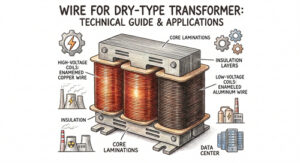
Transformer windings are another important application area for enameled wire. The operating temperature of a transformer depends on the load rate, ambient temperature, and heat dissipation conditions, requiring comprehensive evaluation before selection. For oil-immersed transformers, the winding operating temperature is typically between 100 degrees C and 140 degrees C. Selecting Class 155 polyester imide enameled wire can meet most application requirements and allows for appropriate safety margins. For dry-type transformers, winding temperatures may be higher due to relatively poor heat dissipation. In this case, it is recommended to select Class 180 polyester imide wire to ensure the long-term reliability of the insulation system at higher operating temperatures. For special transformers such as electric arc furnace transformers and rectifier transformers, operating temperatures may reach 180 degrees C or even higher. These applications require Class 200 polyamide imide wire or a composite insulation system. Another important consideration in transformer design is partial discharge. Higher thermal class materials generally have better partial discharge resistance and should be taken into account in high-voltage transformer designs.
Electronic Equipment Selection Applications
Electronic equipment components such as transformers, inductors, and relays widely use enameled wire. These applications operate at relatively low temperatures but have high requirements for dimensional accuracy, consistency, and weldability. Electronic transformers typically operate in environments ranging from room temperature to 80 degrees C, and selecting Class 120 or Class 130 polyurethane enameled wire is a common practice. The direct solderability of polyurethane enameled wire simplifies the production process and improves efficiency. For high-frequency transformers in switching power supplies, the higher switching frequency generates additional temperature rise, requiring the selection of an appropriate thermal class product based on specific design evaluation. Relay and solenoid valve windings are typically intermittently operated, and Class 130 polyester enameled wire or polyurethane enameled wire suffices. Considering the cost-sensitive nature of these devices, the most cost-effective solution should be chosen while meeting technical requirements.
Thermal Class and Certification Standards
International Standards System
IEC 60317 is a series of product standards for enameled wire developed by the International Electrotechnical Commission (IEC). It details the technical requirements for various types of enameled wire, including thermal class, dimensional specifications, and test methods. IEC 60317-0-1 specifies the basic requirements for enameled round copper wire; IEC 60317-0-2 specifies the requirements for enameled round aluminum wire; and IEC 60317-0-8 specifies the requirements for enameled flat copper wire. Specific product standards specify particular requirements for different insulation types of enameled wire. The EU market requires products to comply with IEC 60317 standards and bear the CE marking. Products exported to Europe must ensure they have passed relevant tests and certifications.
North American Certification Requirements
The North American market has strict certification requirements for enameled wire products. UL certification is a necessary condition for entering the US market, and products that have passed UL certification should bear the UL marking. The main UL standards related to enameled wire include UL 1446 (Insulation System Standard) and UL 1000 (enameled wire standard). Obtaining UL certification indicates that the product has passed rigorous testing and complies with relevant US safety standards. The NEMA MW 1000 series standards are widely accepted product specifications in the US market. The method for identifying thermal class differs from the IEC standard; this should be carefully considered during product selection.
Chinese Standard System
The Chinese market primarily adopts the GB/T 23312 standard, which is equivalent to IEC 60317 and supplements some technical clauses according to Chinese national conditions. The method for identifying thermal class in Chinese standards is consistent with the IEC standard, using a letter system (E, B, F, H, C) or an equivalent numerical system (120, 130, 155, 180, 200). When purchasing in the domestic market, the specific standards to be followed and whether UL certification or other special certification requirements are needed should be clearly specified in the procurement technical documents.
Common Misconceptions and Clarifications
Higher Thermal Class Equals Safety
This is a common misconception. While choosing a higher thermal class does provide greater safety margin, it does not mean that the higher the thermal class, the better. The choice of thermal class should be based on the actual operating temperature requirements of the equipment. An excessively high thermal class means higher product costs, potentially creating unnecessary financial burdens. For example, if the equipment operating temperature is only 80 degrees C, choosing a Class 180 product might cost twice as much or more than a Class 130 product. The correct approach is to select the appropriate thermal class based on the equipment maximum operating temperature, with a margin of 15 degrees C to 20 degrees C. This principle optimizes economy while meeting reliability requirements.
Thermal Class Equals Operating Temperature
This is another misconception that needs clarification. Thermal class refers to the maximum permissible operating temperature of the insulation material, not the normal operating temperature. When equipment operates at the temperature corresponding to its thermal class, its expected lifespan will be affected. For example, a Class 130 insulation material has an expected lifespan of 10,000 hours at 130 degrees C. If equipment operates at 130 degrees C for extended periods, the insulation layer will gradually age and may not reach its expected 20-year lifespan. Therefore, designers should ensure that the operating temperature of the insulation material is below its thermal class when determining the equipment operating temperature, and allow sufficient margin.
Different Thermal Classes Can Be Mixed
Mixing materials of different thermal classes in the same insulation system is incorrect. The overall heat resistance of an insulation system is determined by the lowest-class component; mixing them will reduce the system reliability. For example, in a motor designed to use Class 155 insulation, if a component mistakenly uses Class 130 material, the motor maximum permissible operating temperature will be limited to 130 degrees C, not the designed 155 degrees C. The correct approach is to ensure that all components in the insulation system—enameled wire, insulating paper, insulating sleeve, impregnating varnish, connecting wires, etc.—meet the designed thermal class.
Conclusion
Thermal class is one of the most important technical parameters in the selection of enameled wire. Accurately understanding its meaning is crucial for ensuring the reliability and economy of electrical equipment. The IEC 60085 standard establishes a unified standard for the classification of insulation materials globally. The main thermal classes include: Class E (120 degrees C), Class B (130 degrees C), Class F (155 degrees C), Class H (180 degrees C), and Class C (200 degrees C), corresponding to different insulation material types and applications. Thermal class and equipment lifespan follow the 10 degrees C rule: for every 10 degrees C increase in temperature, the insulation aging rate approximately doubles. Therefore, sufficient temperature margin must be reserved during selection, typically 15 degrees C to 20 degrees C. Different application scenarios have different requirements for thermal class: For conventional small and medium-sized motors, Class 130 or Class 155 products are suitable; for high-temperature conditions or enclosed motors, Class 155 or Class 180 products are recommended; for extreme high-temperature environments, Class 180 or Class 200 polyamide-imide products are required. When selecting a model, factors such as equipment operating temperature, environmental conditions, load characteristics, and cost budget should be comprehensively considered to choose the product solution with the best cost-performance ratio while meeting technical requirements.