

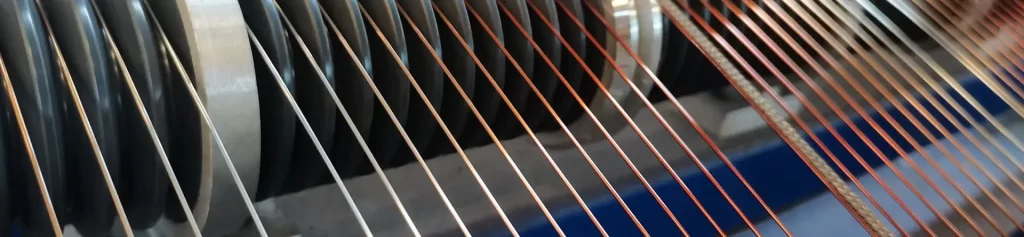
Enameled Aluminum Wire is an electromagnetic wire product made with high-purity aluminum as the conductor and coated with an insulating enamel coating. It is widely used in the winding manufacturing of electromagnetic equipment such as transformers, motors, and inductors. As an economical alternative to copper enameled wire, enameled aluminum wire occupies an important position in the global magnet wire market due to its significant cost advantages, lightweight characteristics, and stable supply chain.
I. Definition and Technical Principles of Enameled Aluminum Wire
Enameled aluminum wire (also known as Aluminum Magnet Wire) is an electromagnetic wire made with an aluminum conductor as the base material, which is drawn and annealed, coated with multiple layers of insulating enamel coating, and then baked and cured.
Product Structure
- Conductor Layer: Made of high-purity electrolytic aluminum (purity ≥ 99.5%), processed through continuous wire drawing and annealing.
- Insulation Layer: Coated with polyesterimide, polyimide, or other high-performance enamel coating materials.
Working Principle
The enamel coating provides electrical insulation performance, allowing the wires to be tightly wound into coils without short circuits. The insulation enamel coating must simultaneously possess excellent electrical strength, heat resistance, chemical resistance, and mechanical flexibility.
II. Main Technical Standards for Enameled Aluminum Wire
The production and testing of enameled aluminum wire comply with multiple international and national standards:
International Standards
- IEC 60317: Specifications for Particular Types of Winding Wires
- NEMA MW 1000: Magnet Wire Standard (National Electrical Manufacturers Association)
- JIS C 3202: Japanese Industrial Standard for Winding Wires
- UL 1446: Systems of Insulating Materials — General
Thermal Classes (Temperature Index)
| Model | Thermal Class | Temp. Index | Enamel System | Typical Application |
|---|---|---|---|---|
| UEW (QA) | Class B | 130°C | Polyurethane | Electronic Transformers, Relays |
| PEW (QZ) | Class F | 155°C | Polyesterimide | Home Appliance Motors, Industrial Motors |
| EIW (QZXY) | Class H | 180°C | Polyesterimide / Polyamide-imide | Power Equipment, Industrial Motors |
| EI/AIW (QZY) | Class C | 200-240°C | Polyimide / Polyamide-imide | High-Temperature Environments, Special Motors |
Specifications Range
- Round Wire Diameter: 0.016–7.0mm
- Flat Wire Cross-Section: Thickness 0.8–10mm, Width 2–25mm
III. Performance Comparison: Aluminum Conductor vs. Copper Conductor
| Parameter | Aluminum Conductor | Copper Conductor | Impact Analysis |
|---|---|---|---|
| Conductivity (20°C, IACS) | 61% | 100% | Aluminum wire needs ~1.6x larger cross-section for equivalent conductivity |
| Density (g/cm³) | 2.70 | 8.89 | Aluminum wire weighs only ~30% of copper wire at same volume |
| Resistivity (Ω·mm²/m) | 0.0283 | 0.0172 | Aluminum resistivity is ~1.64x that of copper |
| Thermal Expansion (×10⁻⁶/°C) | 23.1 | 16.6 | Aluminum expands more; winding process requires attention |
| Market Price Ratio | 1 | 3–5 | Aluminum material cost is 1/5 to 1/3 of copper |
Technology Selection Principles
When the product’s conductivity requirements are not at the extreme level and the following conditions are met, aluminum conductor is a reasonable choice:
- The equipment allows for an appropriately increased winding cross-sectional area
- The product is highly sensitive to weight and cost
- The application scenario does not involve high-frequency or extremely high-current conditions
IV. Core Application Areas
4.1 Transformer Industry
Enameled aluminum wire is most widely used in the transformer field, covering the following sub-markets:
Distribution Transformers: The global market share of aluminum-winding distribution transformers continues to increase, especially in the medium and low voltage distribution field, where they have become the mainstream solution.
Power Transformers: Some high-capacity power transformers are beginning to adopt aluminum windings to optimize cost and weight.
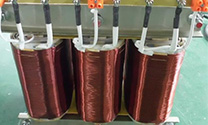
High-Frequency Transformers: Demand for aluminum wire in power electronics transformers such as switch-mode power supplies and inverter transformers is steadily growing.
Electronic Transformers: UEW-type enameled aluminum wire applications in small transformers and power supply transformers are well-established and mature.
Key Technical Points: When using aluminum wire for transformer windings, it is necessary to compensate for conductivity differences by increasing the conductor cross-sectional area, while optimizing the winding process to adapt to the softer mechanical properties of aluminum wire.
4.2 Motor Industry
The application scope of aluminum magnet wire in the motor sector continues to expand:
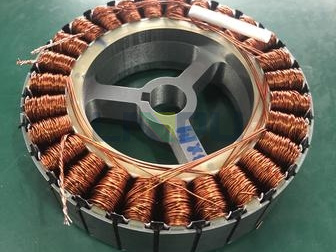
Industrial Motors: Three-phase asynchronous motors, variable-frequency motors, etc. utilizing PEW/EIW-type aluminum wire achieve significant cost advantages.
Special Motors: Precision motors such as servo motors, stepper motors, and micro motors have higher requirements for enamel film quality.
New Energy Vehicle Drive Motors: Lightweighting demand drives research and application of aluminum wire in electric vehicle drive motors.
Home Appliance Compressor Motors: Air conditioner compressors, refrigerator compressors, etc. are extremely cost-sensitive, making aluminum wire the preferred solution.
4.3 New Energy & Power Electronic Equipment
- Photovoltaic Inverters: Inverter transformers and filter inductors extensively use aluminum windings
- Energy Storage Systems: Transformers and inductors in energy storage converters
- Charging Stations: Charging module transformers and filter inductors
- UPS Uninterruptible Power Supplies: High-frequency transformers and power inductors
4.4 Electronic Components
- Inductor coils, chokes, deflection coils
- High-frequency coils, filters
- Relay coils, solenoid valve coils
V. Market Demand Trend Analysis
5.1 Copper-Aluminum Price Differential Drives Substitution
Copper prices have remained elevated since 2020, with LME copper fluctuating in the $7,000–10,000/ton range, while aluminum prices have been maintained at $2,000–3,000/ton. The copper-to-aluminum price ratio exceeding 3:1 provides a clear economic driver for enameled aluminum wire substitution.
5.2 New Energy Sector Drives Incremental Demand
The continued expansion of global photovoltaic installations and the energy storage market scale drives growing demand for transformers and inductor components. The increasing penetration rate of new energy vehicles promotes the development of drive motors and charging infrastructure, creating an incremental market for enameled aluminum wire.
5.3 Global Supply Chain Restructuring
Aluminum resources are abundant with widely distributed production capacity, resulting in greater supply chain stability compared to copper. Against the backdrop of increasing geopolitical and trade environment uncertainty, buyers’ demand for supply chain diversification is becoming increasingly prominent.
5.4 Certification Systems Becoming More Comprehensive
International certification requirements such as UL certification, REACH compliance, and RoHS directives continue to evolve. Manufacturers with complete certification systems hold a clear advantage in export markets.
VI. Key Supplier Evaluation Criteria
6.1 Qualification and Certification System
- Quality Management System: ISO 9001
- Environmental Management System: ISO 14001
- Occupational Health & Safety: ISO 45001
- Product Certification: UL, REACH, RoHS
- International Standard Compliance: IEC, NEMA, JIS
6.2 Production Capacity & Quality Control
- Production base scale and monthly production capacity
- Wire diameter coverage (round wire / flat wire)
- Thermal class product coverage
- Online inspection capability and factory inspection standards
- Process stability and batch consistency
6.3 Export Service Experience
- Target market export experience
- International standard adaptation capability
- Supporting services: customs clearance, packaging, transportation
- Technical support and after-sales service response capability
VII. Zhengzhou LP Industry Co., Ltd. — Core Advantages
Company Overview
- 30 years of magnet wire industry export experience
- 60-acre modern production base with large-scale manufacturing capabilities
- Full product range covering both copper and aluminum conductors
- Products exported to over 50 countries and regions
Certifications
- ISO 9001 / ISO 14001 / ISO 45001 three-system certification (SGS audited)
- UL / REACH / RoHS product certifications
- Compliance with IEC / GB / JIS / NEMA international standards
Product Capabilities
- Round Wire Specifications: 0.016–7.0mm
- Flat Wire Specifications: Thickness 0.8–10mm, Width 2–25mm
- Models Covered: UEW(QA), PEW(QZ), EIW(QZXY), EI/AIW(QZY)
- Thermal Classes: 130°C–240°C