

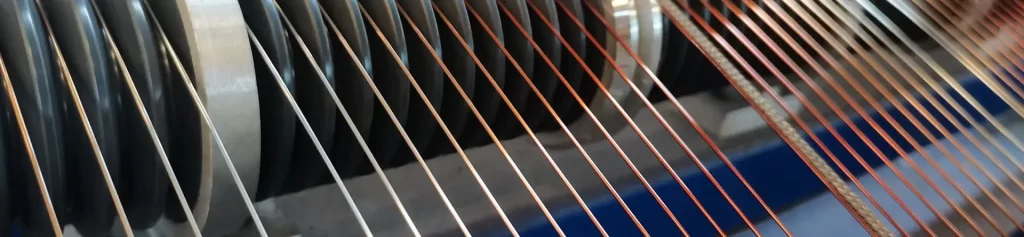
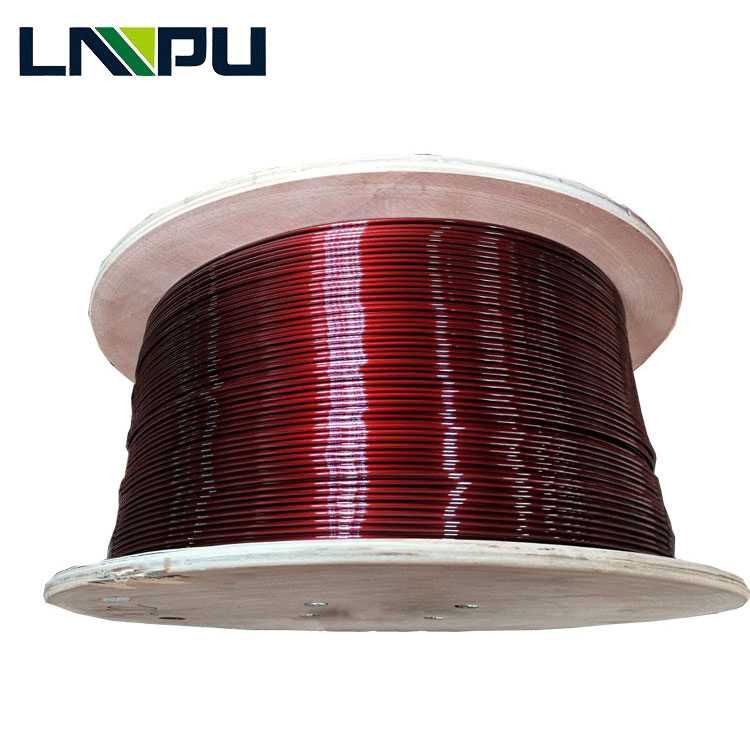
Aluminum magnet wire is an important member of the magnet wire family. Simply put, it is a wire with aluminum or aluminum alloy as the conductor, coated with a thin layer of insulating enamel on the surface. By coating insulating enamel on the aluminum conductor, aluminum magnet wire enables high-density winding arrangement in motors, transformers, and electromagnetic equipment while ensuring good electrical insulation performance.
For engineers, buyers, or students learning about magnet wire materials, “what is aluminum magnet wire” is the first lesson in entering this field. This article provides a systematic and accessible technical introductory guide from six dimensions: definition, material properties, comparison with copper wire, insulation systems, application scenarios, and purchasing guide.
I. Definition of Aluminum Magnet Wire
Aluminum magnet wire is a type of magnet wire made from electrical aluminum (purity ≥99.5%) as the conductor, which undergoes wire drawing and annealing, then is coated with one or more layers of insulating enamel on the surface and baked to cure.
The thickness of the insulating enamel is typically only tens of micrometers, but this thin film。It ensures that adjacent turns do not short circuit while allowing windings to be closely packed in limited space, thereby improving the efficiency of motors and transformers.
Aluminum magnet wire belongs to the category of “magnet wire,” along with copper magnet wire, copper-clad aluminum magnet wire, and similar products, differing only in the conductor material.
II. Material Properties of Aluminum Magnet Wire
2.1 Electrical Conductivity
The conductivity of aluminum is approximately 61% IACS (International Annealed Copper Standard), meaning that at the same cross-sectional area, the resistance of an aluminum conductor is about 60% higher than that of a copper conductor. To achieve the same conductivity as copper wire, aluminum magnet wire needs to increase its cross-sectional area by approximately 1.6 times (wire diameter increased by approximately 1.26 times).
Although conductivity is lower than copper, in most motor and transformer applications, by appropriately increasing the wire diameter, aluminum magnet wire can fully meet performance requirements.
2.2 Lightweight Advantage
The density of aluminum is only 2.70 g/cm³, approximately 30% of copper’s density (8.96 g/cm³). This means that at the same length, aluminum magnet wire weighs about 60% less than copper magnet wire.
The lightweight advantage is particularly important in the following application scenarios:
- New energy vehicle drive motors (weight reduction improves range)
- Aerospace motors (every gram of weight has value)
- Portable equipment and handheld tools (reduces operator fatigue)
- Home appliances (reduces transportation costs)
2.3 Thermal Conductivity
The thermal conductivity of aluminum is 237 W/(m·K), which, while lower than copper’s 401 W/(m·K), in motor windings, heat is primarily conducted through the insulating enamel film, slot insulation materials, and housing. The thermal conductivity of the conductor itself has limited impact on overall heat dissipation.
Practical tests show that in reasonably designed motors, the steady-state temperature rise difference between aluminum magnet wire windings and copper magnet wire windings is typically within 3-8°C.
2.4 Corrosion Resistance
Aluminum naturally forms a dense aluminum oxide (Al&sub2;O&sub3;) film in the air, approximately 2-10 nanometers thick, with self-healing capability that effectively prevents further oxidation. Therefore, in most motor operating environments, aluminum conductors have good corrosion resistance.
However, in high humidity, high salt spray, or strong acid/alkali environments, aluminum’s corrosion resistance is inferior to copper, requiring additional protective measures.
III. Aluminum Magnet Wire vs. Copper Magnet Wire
| Comparison Dimension | Aluminum Magnet Wire | Copper Magnet Wire | Description |
|---|---|---|---|
| Conductivity | 61% IACS | 100% IACS | Aluminum wire requires increased cross-section for compensation |
| Density | 2.70 g/cm³ | 8.96 g/cm³ | Aluminum wire is approximately 60% lighter |
| Raw Material Cost | Lower | Higher | Aluminum wire costs 20-30% less |
| Connection Process | Requires specialized welding | Mature welding process | Aluminum wire connection is slightly more difficult |
| Mechanical Strength | Lower | Higher | Aluminum wire tensile strength is lower than copper |
| Corrosion Resistance | Good | Excellent | Copper wire performs better in harsh environments |
| Thermal Conductivity | 237 W/(m·K) | 401 W/(m·K) | Difference has limited impact on heat dissipation |
3.1 When to Choose Aluminum Magnet Wire?
- Cost-sensitive: Raw material costs are 20-30% lower than copper wire
- Weight-sensitive: Need to reduce product weight
- Sufficient space: Winding space allows for increased wire diameter
- Standard applications: Home appliance motors, small/medium motors, distribution transformers, etc.
3.2 When to Choose Copper Magnet Wire?
- High efficiency requirements: Need minimum copper losses
- Space-constrained: Limited winding space, unable to increase wire diameter
- High reliability requirements: Aerospace, military, and other high-end applications
- Harsh environments: High humidity, high salt spray, and other corrosive environments
IV. Insulation Systems for Aluminum Magnet Wire
The insulation performance of aluminum magnet wire depends on the type of insulating enamel coated on the surface. Common insulation systems include:
4.1 Polyurethane Aluminum Magnet Wire (UEW)
- Thermal Class: Class 130 (B) or Class 155 (F)
- Characteristics: Direct solderable, no enamel stripping required, convenient welding
- Applications: Home appliance motors, electronic transformers, relays
4.2 Polyester Aluminum Magnet Wire (PEW)
- Thermal Class: Class 130 (B) or Class 155 (F)
- Characteristics: Good overall performance, excellent abrasion resistance
- Applications: Small/medium motors, industrial transformers
4.3 Polyesterimide Aluminum Magnet Wire (PEIW/EIW)
- Thermal Class: Class 155 (F)
- Characteristics: Excellent heat resistance, good refrigerant resistance
- Applications: Compressor motors, industrial motors
4.4 Polyesterimide/Polyamide-imide Composite Aluminum Magnet Wire (EI/AIW)
- Thermal Class: Class 180 (H) or Class 200 (N)
- Characteristics: Top-level heat resistance, excellent chemical resistance
- Applications: New energy vehicle motors, inverter motors
V. Main Application Scenarios for Aluminum Magnet Wire
5.1 Home Appliance Motors
Air conditioning compressors, refrigerator compressors, washing machine motors, fan motors, and other applications are the most mature application areas for aluminum magnet wire. Major global compressor manufacturers (such as Embraco, Danfoss, Panasonic, Daikin, etc.) have long been using aluminum magnet wire windings on a large scale in their products.
5.2 Small and Medium Industrial Motors
In industrial applications with stable loads such as fans, water pumps, and conveyor belts, the performance and reliability of aluminum magnet wire motors have been extensively validated.
5.3 Distribution Transformers
Distribution transformers, control transformers, reactors, and other transformer products widely use aluminum magnet wire, especially in cost-sensitive markets.
5.4 Automotive Motors
Auxiliary drive motors in new energy vehicles, starter motors and generator motors in traditional vehicles, and other applications favor aluminum magnet wire for its lightweight advantages.
5.5 Other Applications
- Ballasts: Inductor coils in fluorescent lamps and LED driver power supplies
- Sensor Coils: Electromagnetic coils in various sensors
- Relay Coils: Coils in various relays and solenoid valves
VI. Purchasing Guide
6.1 Confirm Specifications
- Conductor Material: Confirm whether pure aluminum or aluminum alloy
- Wire Diameter: Determine conductor diameter based on winding design
- Insulation Class: Select Class B/F/H, etc. based on operating temperature
- Color: Common colors include red, green, natural, etc.
6.2 Check Quality Indicators
- Conductivity: Should be ≥61% IACS
- Breakdown Voltage: Determined based on wire diameter and insulation class
- Flexibility: No cracking in mandrel wrap test
- Film Continuity: No breakdown points in spark testing
6.3 Certification Requirements
Ensure products meet relevant certification requirements, such as UL, IEC, NEMA, REACH, RoHS, and other standards.
Conclusion
Aluminum magnet wire is a magnet wire with aluminum as the conductor and insulating enamel coated on the surface.
Understanding the material properties of aluminum magnet wire, its differences from copper wire, and applicable insulation systems helps engineering technicians and procurement decision-makers make more informed material choices. Using aluminum magnet wire in appropriate application scenarios can achieve significant cost reduction and efficiency improvement while ensuring product quality.