

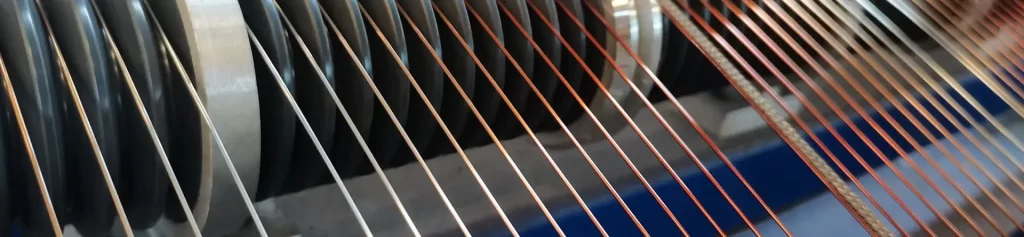
High-frequency transformers are widely used in power electronics, new energy, communication equipment, medical devices, and other fields, with operating frequencies typically ranging from 20kHz to several hundred kHz. Compared to power frequency transformers, high-frequency transformers have significant advantages such as smaller size, lighter weight, and higher efficiency. As the core material for high-frequency transformer windings, the thickness accuracy, surface quality, and electrical performance of ultra-thin copper foil directly affect the conversion efficiency and reliability of the high-frequency transformer.
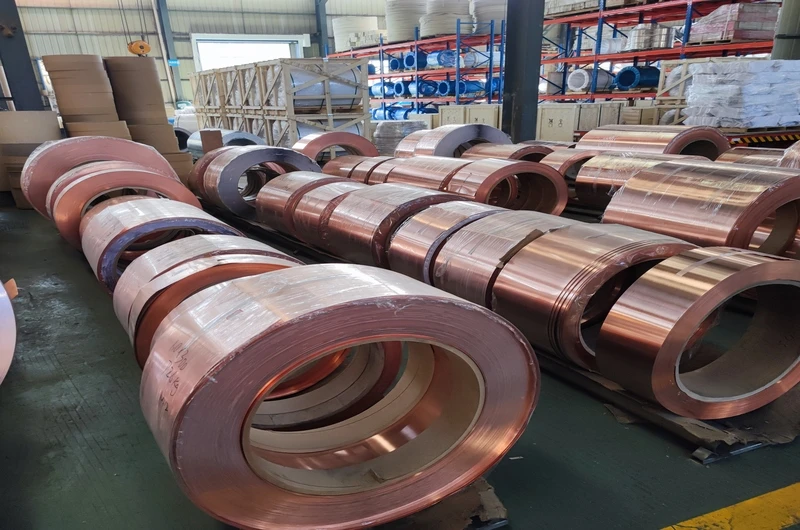
I. Technical Characteristics of High-Frequency Transformers and Requirements for Ultra-thin Copper Foil
1.1 Operating Characteristics of High-Frequency Transformers
Compared to power frequency transformers, high-frequency transformers have the following significant characteristics:
- High operating frequency, from 20kHz to several hundred kHz, with a wide frequency range
- Small size and light weight; high frequency operation significantly reduces transformer size
- High efficiency requirements; high-frequency loss is a major challenge
- High heat dissipation requirements; high loss density per unit volume
- EMI sensitivity; electromagnetic interference is a prominent issue
1.2 Skin Effect and Proximity Effect
High-frequency currents in conductors produce significant skin and proximity effects:
- Skin depth: increases with frequency, and the current tends to converge towards the conductor surface
- Effective conductive cross-sectional area is reduced, leading to increased AC resistance
- Proximity effect: magnetic fields of adjacent conductors influence each other
- Solutions: using thin copper foil or multi-strand fine wire winding
1.3 Core Considerations for Ultra-Thin Copper Foil Selection
- Thickness accuracy: tolerance within ±0.01mm, ensures uniformity
- Surface quality: Ra≤0.4μm, reduces surface roughness impact
- Conductivity: IACS≥101%, reduces high-frequency losses
- Width accuracy: tolerance within ±0.2mm, facilitates precision winding
- Flexibility: adapts to complex shape winding
II. Specifications of Ultra-thin Copper Foil Materials
2.1 Recommended Grades and Characteristics
| Grade | Copper Content | Conductivity | Thickness Range | Typical Application |
|---|---|---|---|---|
| C11000 (ETP) | ≥99.90% | ≥101% IACS | 0.05-0.3mm | Standard high-frequency transformers |
| C10100 (OFC) | ≥99.99% | ≥101.5% IACS | 0.03-0.2mm | High-performance high-frequency transformers |
| C10200 (TPA) | ≥99.95% | ≥101% IACS | 0.05-0.25mm | Precision high-frequency applications |
2.2 Key Performance Parameters
Electrical Properties:
- Conductivity: IACS ≥101% (annealed state)
- Resistivity: 0.01724 Ω·mm²/m (20°C)
- Skin depth: approximately 0.47mm at 20kHz; approximately 0.21mm at 100kHz
Geometric Dimensions:
- Thickness range: 0.03-0.5mm (ultra-thin specifications)
- Thickness tolerance: ±0.01mm (ultra-precision) or ±0.02mm (standard)
- Width range: 3-200mm (precision specifications)
- Width tolerance: ±0.2mm
Mechanical Properties:
- Tensile strength: 200-280 MPa (annealed state)
- Elongation: ≥15-25%
- Hardness: 35-65 HV
- Surface roughness: Ra ≤0.4μm (ultra-thin surface)
III. Special Process Requirements for High-Frequency Transformers
3.1 Selection of Ultra-Thin Copper Foil Thickness
Select appropriate copper foil thickness based on operating frequency:
| Operating Frequency | Recommended Thickness | Notes |
|---|---|---|
| 20-50kHz | 0.1-0.3mm | Skin depth approximately 0.3-0.5mm |
| 50-100kHz | 0.05-0.1mm | Skin depth approximately 0.2-0.3mm |
| 100-300kHz | 0.03-0.05mm | Skin depth approximately 0.1-0.2mm |
| >300kHz | ≤0.03mm | Close to or below skin depth |
3.2 Winding Process Requirements
- Tension control: Uniform tension, typically 5-10 N/mm²
- Alignment accuracy: Edge alignment deviation ≤0.1mm
- Interlayer insulation: Polyester film or insulating paper
- Encapsulation: Epoxy resin encapsulation for fixation
3.3 Insulation Coordination
| Insulation Type | Recommended Material | Thickness |
|---|---|---|
| Interlayer insulation | Polyester film | 0.025-0.05mm |
| External insulation | Epoxy resin | 1-3mm |
| Bushing insulation | Ceramic / PTFE | According to voltage rating |
IV. Industry Standards and Certification System
4.1 Applicable Standards
| Standard System | Standard Number | Scope of Application |
|---|---|---|
| IEC | IEC 60325 | Copper foil for transformers |
| GB | GB/T 5231 | Processed copper and copper alloys |
| ASTM | ASTM B372 | Copper foil for electronic applications |
| JIS | JIS H3100 | Copper and copper alloy foil strips |
4.2 High-Frequency Application Related Standards
- AEC-Q200: Automotive electronic component certification (if applicable)
- UL Certification: Material safety certification
- RoHS/REACH: Environmental compliance
V. Quality Inspection and Quality Control Points
5.1 Special Testing for Ultra-Thin Copper Foil
| Test Item | Test Method | Acceptance Criteria |
|---|---|---|
| Thickness tolerance | Precision thickness gauge | ±0.01mm (ultra-precision) |
| Thickness uniformity | Multi-point measurement | Fluctuation ≤0.01mm |
| Surface roughness | Surface roughness tester | Ra ≤0.4μm |
| Width tolerance | Caliper measurement | ±0.2mm |
| Conductivity | Eddy current conductivity meter | IACS ≥101% |
5.2 High-Frequency Performance Related Testing
| Test Item | Test Method | Requirements |
|---|---|---|
| DC resistance | Four-wire method | Conforms to nominal value |
| AC resistance | LCR meter measurement | Conforms to design at 100kHz |
| Interlayer capacitance | LCR meter measurement | Conforms to design requirements |
VI. Supplier Selection Recommendations
6.1 Core Capability Assessment
- Ultra-thin production capability: Capable of producing 0.03-0.1mm ultra-thin copper foil
- Thickness control accuracy: Within ±0.01mm
- Surface treatment capability: Can provide ultra-smooth surface treatment
- Width accuracy control: Within ±0.2mm
6.2 Technical Service Capability
- Provide thickness uniformity test reports
- Support small batch samples (from 10-50kg)
- Non-standard customization (thickness, width, temper)
- Timely technical support response
VII. Product Specifications (Reference)
| Grade | Thickness (mm) | Width (mm) | Temper | Tensile Strength (MPa) | Conductivity (IACS) |
|---|---|---|---|---|---|
| C11000 | 0.05-0.3 | 3-200 | O/H22 | 200-280 | ≥101% |
| C10100 | 0.03-0.2 | 3-150 | O/H22 | 190-260 | ≥101.5% |
| C10200 | 0.05-0.25 | 3-180 | O/H24 | 195-265 | ≥101% |
Thickness tolerance: ±0.01mm (ultra-precision specifications)
Surface condition: Bright / Ultra-smooth
Packaging: Coil packaging + moisture-proof paper + foam shock absorption, suitable for air freight
Conclusion
The selection of ultra-thin copper foil for high-frequency transformers requires careful consideration of thickness accuracy, uniformity, and surface quality based on the operating frequency. When evaluating suppliers, it is recommended to focus on their ultra-thin copper foil production capabilities, thickness control accuracy, and high-frequency performance testing capabilities.
Our company has focused on exporting electrical wire and metal foil for 30 years, and can provide C11000/C10100/C10200 series ultra-thin copper foil for high-frequency transformers. Custom sizes are supported, and samples can be sent worldwide. Inquiries are welcome.
Contact Us:
Email: office@cnlpzz.com
WhatsApp: 0086-19337889070