

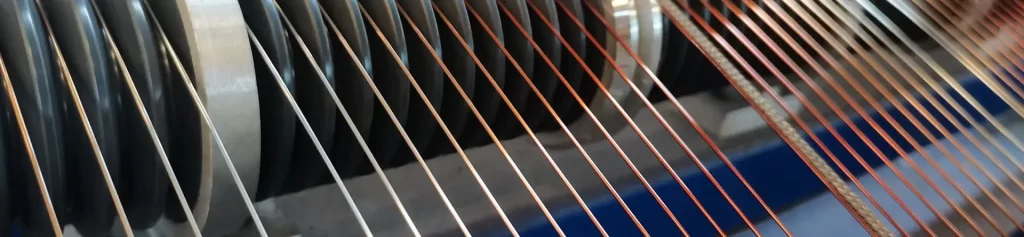
Traditional Round Enameled Copper Wire Motor Winding Advantages
Round enameled copper wire, as the most traditional and widely used conductor material for motor windings, occupies an irreplaceable position in the motor manufacturing industry due to its mature production process, excellent comprehensive performance, and good economy. From small household appliance motors to large industrial motors, from consumer electronics to new energy vehicles, round enameled copper wire is the preferred material for winding manufacturing. Compared with alternative materials such as flat wire and aluminum wire, round enameled copper wire has unique technical advantages in motor winding applications. This article systematically describes the product classification, insulating varnish systems, technical advantages, applications in different motor types, selection methods, and quality control points of round enameled copper wire, providing comprehensive technical reference for motor design, manufacturing, and procurement personnel.
Development History of Round Enameled Copper Wire
Technical Origin of Enameled Copper Wire
The manufacturing technology of enameled copper wire originated in the late 19th century. With the development of the electrical industry, the demand for insulated wires was increasing, and enameled wire emerged as a new type of insulation material. The earliest enameled wire used natural resin or shellac as insulation material, with simple process but limited performance. At the beginning of the 20th century, with the development of synthetic resin technology, phenolic resin enameled wire, polyvinyl acetal enameled wire, etc. came out successively, and the performance of enameled copper wire was significantly improved. In the mid-20th century, the development of modern insulating varnish systems such as polyester varnish and polyurethane varnish brought the heat resistance, electrical properties, and mechanical properties of enameled copper wire to a new level.
Process Advantages of Round Conductors
Round cross-section is the most basic and widely used conductor shape for enameled copper wire. Compared with special-shaped cross-sections such as rectangular and flat, round conductors have significant advantages in manufacturing process. Mature Drawing Process: The drawing process of round copper wire has undergone long-term development and is very mature and stable. Through multiple drawing dies, the diameter and surface quality of round copper wire can be precisely controlled. Uniform Varnish Film Coating: Round cross-section conductors receive uniform force during the varnishing process, making varnish film thickness easy to control and ensuring stable and reliable insulation layer quality. Simple Winding Process: Round wire is not prone to stress concentration during the winding process, the winding process is simple, and is suitable for automated production. Specified Series: The specifications of round copper wire form a complete series from 0.018 mm to several millimeters, which can meet the design requirements of motors with different power levels.
Development of Modern Round Enameled Copper Wire
Modern round enameled copper wire has made significant progress in the following aspects: Diversification of Insulating Varnish Systems: From the early single insulating varnish to multiple systems such as polyurethane, polyester, polyester imide, and polyamide imide, it can meet the needs of different thermal classes and application scenarios. Improvement of Dimensional Accuracy: The diameter tolerance of modern round copper wire can be controlled within plus or minus 0.002 mm, meeting the requirements of high-speed winding and precision winding. Optimization of Varnish Film Performance: Through improving the varnishing process and curing technology, the continuity, adhesion strength, and abrasion resistance of the varnish film have been significantly improved. Development of Special Functions: The development of special function products such as self-bonding enameled wire and corona-resistant enameled wire has expanded the application range of round enameled copper wire.
Main Product Types of Round Enameled Copper Wire
Classification by Insulating Varnish System
Polyurethane Enameled Round Copper Wire: The thermal class is usually Class 130 (Class B), and the biggest advantage is that it can be directly soldered without scraping off the insulation layer. It is mainly used in applications requiring automatic soldering such as electronic transformers, relays, and ignition coils. Polyester Enameled Round Copper Wire: The thermal class is usually Class 130 or Class 155, making it the most widely used type of enameled round copper wire in industrial applications. It is widely used in small and medium-sized motors, transformers, lighting ballasts, and other fields. Polyester Imide Enameled Round Copper Wire: The thermal class is usually Class 180 (Class H), which is the mainstream choice for medium and high temperature applications. It is used in industrial motors, distribution transformers, traction motors, and other occasions. Polyamide Imide Enameled Round Copper Wire: The thermal class can reach Class 200 or higher, suitable for applications requiring extreme high temperature or high reliability. Polyvinyl Acetal Enameled Round Copper Wire: The thermal class is usually Class 120 (Class E), an early product mainly used in oil-immersed transformers. Modified Polyester Enameled Round Copper Wire: Through modification, it can reach Class 155, expanding the application temperature range. Composite Insulating Varnish Enameled Round Copper Wire: Using multi-layer coating process, the thermal class can reach Class 200 or higher.
Classification by Specification Size
The specification range of round enameled copper wire is wide, forming a complete series from ultra-fine wire to thick round wire: Ultra-Fine Enameled Copper Wire: The diameter is usually between 0.018 mm and 0.10 mm, mainly used in precision instruments, micro motors, sensor coils, etc. Fine Enameled Copper Wire: The diameter is usually between 0.10 mm and 0.50 mm, which is the main specification for small and medium-sized motor windings. Medium-Coarse Enameled Copper Wire: The diameter is usually between 0.50 mm and 2.00 mm, used in small and medium-sized motors and transformer windings. Coarse Enameled Copper Wire: The diameter is usually above 2.00 mm, mainly used in large motors, traction transformers, and high-power windings. Round enameled copper wire of different specifications has differences in drawing process, varnish film coating, and winding process, and appropriate specifications need to be selected based on specific applications.
Classification by Special Function
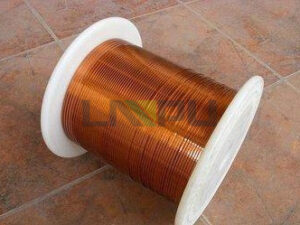
Self-Bonding Enameled Round Copper Wire: A layer of self-bonding varnish is coated on the outside of the insulating varnish layer, and the coil is cured and formed by heating or solvent action after winding. It is mainly used in frameless coils and special-shaped coils. Corona-Resistant Enameled Round Copper Wire: Corona-resistant additives are added to the insulating varnish to improve partial discharge resistance. It is mainly used in variable frequency motors and high-voltage motors. High-Strength Enameled Round Copper Wire: Special conductor materials or special varnish films are used to improve mechanical strength. It is mainly used in motors under vibration and impact conditions. Direct-Solderable Enameled Round Copper Wire: Direct-solderability aids are added to polyurethane varnish or other insulating varnishes to further improve soldering performance.
Technical Advantages of Round Enameled Copper Wire
Process Performance Advantages
Round enameled copper wire has the following significant advantages in process performance: Excellent Winding Performance: Round cross-section receives uniform force during the winding process, and is not prone to stress concentration and varnish film damage. Round wire can conveniently wind coils of various shapes, including circular, elliptical, rectangular, etc. High-Speed Winding Capability: Round wire is suitable for automated high-speed winding, with winding speeds up to several thousand turns per minute and high production efficiency. Convenient Coil Insertion: Round wire has good flexibility and can be conveniently inserted into motor stator slots, with mature coil insertion process. Simple Joint Processing: The welding, crimping, and other joint processing techniques for round wire are mature, with stable and reliable joint quality. High Coil Insertion Efficiency: Round wire has high coil insertion efficiency, which can significantly reduce the labor cost of motor assembly.
Electrical Performance Advantages
Excellent Electrical Conductivity: Copper has excellent electrical conductivity, low resistivity, which can effectively reduce the copper loss of motor windings and improve motor efficiency. High Dielectric Strength: The insulating varnish layer has sufficient dielectric strength to withstand motor working voltage and transient overvoltage. Stable Insulation Resistance: During long-term use, the insulation resistance remains stable with high reliability. Skin Effect Influence: Under power frequency conditions, the skin effect has less impact on enameled round wire. In high-frequency applications, multi-strand fine wire or Litz wire structures can be used.
Mechanical Performance Advantages
Good Flexibility: Round wire has excellent flexibility and can withstand complex bending deformation without damaging the varnish film. High Tensile Strength: Copper conductors have high tensile strength and can withstand tensile stress during the winding process. Shape Stability: Round wire has good shape retention after winding, and the coil shape is stable. Vibration Resistance: Coils wound with round wire have good stability under vibration conditions and are not easily loosened.
Economic Performance Advantages
Economical Cost: The production process of round enameled copper wire is mature, the production efficiency is high, and large-scale production brings significant cost advantages. Complete Specifications: The specification series of round wire is complete, with convenient procurement and transparent prices. Strong Substitutability: Round enameled copper wire from different suppliers has good substitutability in specifications and performance, with high procurement flexibility. Low Processing Cost: The winding, coil insertion, welding, and other processing techniques for round wire are mature, with low processing costs.
Application of Round Enameled Copper Wire in Different Motors
Induction Motors
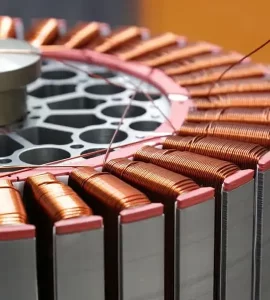
Induction motors are the most commonly used type of motor in the industrial field, and round enameled copper wire is the main material for their stator windings and rotor windings. Single-Phase Induction Motors: Usually use fine specification round enameled copper wire, with specification range between 0.30 mm and 0.80 mm. The thermal class is mostly Class 130 or Class 155. Three-Phase Induction Motors: Depending on the motor power, round enameled copper wire of different specifications is used. Small power motors use fine wire of 0.40 mm to 0.80 mm, medium power motors use medium specification wire of 0.80 mm to 1.50 mm, and large power motors use coarse wire above 1.50 mm. Variable Frequency Induction Motors: Due to the high frequency harmonics generated by the inverter power supply, it is recommended to select corona-resistant enameled round copper wire with thermal class Class 180 or higher. High-Voltage Induction Motors: For high-voltage motors above 3 kV, enameled round copper wire with special insulation structure is required, combined with vacuum pressure impregnation and other processes.
DC Motors
The armature windings, field windings, and compensating windings of DC motors all use round enameled copper wire. Small DC Motors: Use fine specification round enameled copper wire, with specification range between 0.10 mm and 0.50 mm. Industrial DC Motors: Select round enameled copper wire of corresponding specifications based on power size, with thermal class usually Class 130 or Class 155. Automotive DC Motors: DC motors in new energy vehicles usually select Class 180 or Class 200 enameled round copper wire, meeting automotive-grade reliability requirements.
Servo Motors
Servo motors have strict requirements for dynamic response, positioning accuracy, and reliability, representing high-end motor applications. AC Servo Motors: Use fine specification round enameled copper wire, with specification range between 0.20 mm and 0.80 mm. The thermal class is usually Class 155 or Class 180. DC Servo Motors: Use fine specification round enameled copper wire, with strict requirements for the insulation performance and adhesion strength of the varnish film. Permanent Magnet Servo Motors: With the rapid development of new energy vehicles, industrial robots, and other fields, the demand for permanent magnet servo motors is growing rapidly. Round enameled copper wire is the preferred material for this type of motor.
Special Motors
Special motors include stepper motors, torque motors, tachogenerators, resolvers, etc., which have special requirements for round enameled copper wire. Stepper Motors: Use fine specification round enameled copper wire, requiring the insulation performance and adhesion strength of the varnish film to meet the frequent start-stop working conditions. Torque Motors: Use medium-coarse specification round enameled copper wire, requiring good heat dissipation performance. Tachogenerators: Use extremely fine specification round enameled copper wire, with extremely high requirements for precision and consistency. Resolvers: Use fine specification round enameled copper wire, requiring strict dimensional accuracy and electrical performance.
New Energy Vehicle Drive Motors
New energy vehicle drive motors are representative of high-end motor applications, with strict requirements for round enameled copper wire. The working environment of drive motors is harsh: high working temperature, severe vibration, frequent start-stop, and long life requirements. Round enameled copper wire needs to select Class 180 or Class 200 products and pass strict vehicle-level certification. The specification of round enameled copper wire for new energy vehicle drive motors is usually between 0.50 mm and 2.00 mm, requiring high-purity copper materials, high-quality insulating varnish, and strict dimensional control.
Thermal Class and Motor Life
Thermal Class System
The commonly used insulation classes for motors and their corresponding thermal classes of enameled copper wire are as follows: Class A (105 degrees C): Use Class 120 enameled copper wire, mainly used in small low-voltage motors. Class E (120 degrees C): Use Class 120 or Class 130 enameled copper wire. Class B (130 degrees C): Use Class 130 enameled copper wire, which is the most commonly used insulation class for small and medium-sized motors. Class F (155 degrees C): Use Class 155 enameled copper wire, used in industrial motors with higher working temperatures. Class H (180 degrees C): Use Class 180 enameled copper wire, used in motors under high temperature conditions. Class C (200 degrees C and above): Use Class 200 or higher thermal class enameled copper wire, used in special high temperature motors.
Relationship Between Temperature and Life
The thermal class of enameled copper wire and motor life follow the 10 degrees C rule: for every 10 degrees C increase in working temperature, the expected life is shortened by approximately half. For example, the expected life of Class 130 enameled copper wire at 130 degrees C is approximately 20,000 hours. In actual motor design, it should be ensured that the working temperature of enameled copper wire is 15 degrees C to 20 degrees C lower than its thermal class to extend motor life.
Temperature Margin Design
A reasonable temperature margin is key to ensuring long-life operation of motors. The recommended temperature margin is 15 degrees C to 20 degrees C. If the expected maximum working temperature of the motor is 100 degrees C, Class 130 or higher thermal class round enameled copper wire should be selected. For applications with high temperature rise such as variable frequency motors and high power density motors, it is recommended to select products with higher thermal class and adopt heat dissipation measures such as forced air cooling or water cooling.
Comparison Between Round Wire and Flat Wire
Advantages of Round Wire
Compared with flat wire, round enameled copper wire has the following advantages: Simple Winding Process: Round wire is suitable for winding coils of various shapes, with mature process and high efficiency. Convenient Coil Insertion: Round wire has good flexibility and is convenient to insert in stator slots, with high coil insertion efficiency. Complete Specifications: The specification series of round wire is complete, covering the entire application range from ultra-fine to thick round wire. Economical Cost: The production cost of round wire is low, and the price is more economical than flat wire. Flexible Procurement: Round wire has many suppliers, with flexible procurement and short delivery periods.
Advantages of Flat Wire
Flat wire (rectangular enameled copper wire) has advantages that round wire does not have in certain aspects: High Slot Fill Rate: Flat wire can better fill the space of stator slots, with a slot fill rate 15% to 25% higher than round wire. Good Heat Dissipation Performance: Flat wire has a larger contact area with the iron core, with better heat dissipation performance. High Power Density: Using flat wire can improve the power density of the motor and reduce the motor volume. Efficiency Improvement: The efficiency of flat wire motors is usually 1% to 3% higher than that of round wire motors.
Comparison of Application Scenarios
Round Wire Application Scenarios: Small and medium-sized motors, household appliance motors, standard industrial motors, cost-sensitive motors, complex-shaped coils. Flat Wire Application Scenarios: High power density motors, new energy vehicle drive motors, high-speed motors, flat-designed motors. In actual selection, comprehensive consideration should be given to the specific design requirements, cost budget, production process, and other factors of the motor, and round wire or flat wire should be selected.
Standards and Certification for Round Enameled Copper Wire
IEC 60317 Standard
IEC 60317 is a series of product standards for enameled wire developed by the International Electrotechnical Commission, specifying the technical requirements for various types of round enameled copper wire in detail. IEC 60317-0-1 specifies the basic requirements for enameled round copper wire. The IEC 60317 series includes product standards for different insulating varnish systems, such as IEC 60317-4 (polyester enameled copper wire), IEC 60317-20 (polyurethane enameled copper wire), IEC 60317-8 (polyester imide enameled copper wire), etc.
NEMA MW 1000 Standard
The NEMA MW 1000 series standards are enameled wire specifications developed by the National Electrical Manufacturers Association, occupying an important position in the North American market. The NEMA standard has detailed provisions on the dimensions, tolerances, and performance requirements of round enameled copper wire. The thermal class identification uses the numerical system of Class 130, Class 155, Class 180, Class 200, etc.
GB/T 23312 Standard
The Chinese market primarily adopts the GB/T 23312 standard, which is equivalent to IEC 60317. The GB/T 23312 standard specifies the basic requirements for round enameled copper wire, with thermal class identification consistent with the IEC standard.
Industry Certification
UL Certification: UL certification is required to enter the North American market. CE Marking: CE marking is required to enter the EU market. Automotive Certification: Enameled copper wire for new energy vehicle motors needs to pass IATF 16949 and other automotive industry quality management system certifications. Rail Transit Certification: Enameled copper wire for rail transit motors needs to pass relevant industry certifications.
Quality Control and Procurement Recommendations
Key Quality Indicators
When procuring round enameled copper wire, attention should be paid to the following quality indicators: Conductor Purity: The purity of copper conductor directly affects electrical conductivity. High-quality round enameled copper wire usually uses oxygen-free copper or electrical copper with purity above 99.9%. Dimensional Accuracy: The conductor diameter should strictly comply with standard tolerance requirements. Excessive diameter deviation will affect the number of turns and electrical performance of the winding. Varnish Film Quality: The varnish layer thickness should comply with standard requirements, and the varnish film should be continuous and complete, without pinholes, bubbles, peeling, or other defects. Dielectric Strength: Should comply with the specified values of corresponding standards, ensuring insulation reliability. Flexibility: The varnish film should be able to withstand bending deformation during the winding process. Adhesion Strength: Stable adhesion strength should be maintained between the varnish film and the conductor.
Supplier Evaluation
When selecting suppliers, the following factors should be comprehensively considered: Production Capacity: Suppliers should have stable production scale and advanced production processes. Quality Management System: Should pass ISO 9001 and other quality management system certifications. R&D Capability: Should have technical research and development capabilities to provide customized products based on customer needs. Certification Qualifications: Products should pass relevant international standard certifications. After-sales Service: Should provide timely technical support and after-sales service.
Incoming Inspection
Round enameled copper wire should undergo necessary inspection upon arrival, including: Appearance Inspection: Check the surface quality of the varnish film. Dimensional Measurement: Measure conductor diameter and varnish layer thickness. Electrical Testing: Conduct dielectric strength tests and insulation resistance tests. Mechanical Testing: Conduct flexibility tests and adhesion strength tests. Batch Consistency Verification: Verify batch information.
Conclusion
Round enameled copper wire, as the most traditional and widely used material for motor windings, occupies an irreplaceable position in the motor manufacturing industry due to its mature process, excellent performance, and good economy. From small and medium-sized household appliance motors to large industrial motors, from traditional induction motors to new energy vehicle drive motors, round enameled copper wire plays an important role. The main advantages of round enameled copper wire include: excellent process performance, convenient winding and coil insertion, stable electrical performance, reliable mechanical performance, complete specification series, economical cost, and flexible procurement. Selection should be based on comprehensive consideration of motor type, power, working environment, thermal class requirements, and other factors. The thermal class selection should reserve a margin of 15 degrees C to 20 degrees C to ensure long-life stable operation of the motor. With the rapid development of high-end fields such as new energy vehicles, industrial automation, and intelligent manufacturing, the performance requirements for round enameled copper wire will continue to increase. Engineering technicians should continuously pay attention to industry technology development trends, continuously optimize selection schemes, and provide solid guarantees for the high-quality development of motor products.