


Core Definition and Engineering Significance of Thermal Aging of Magnet Wire
What is Thermal Aging of Magnet Wire?
This process is completely different from short-term heat resistance (such as a 30-minute thermal shock test), focusing on the performance retention capability of the enamel coating after thousands or even tens of thousands of hours of continuous operation near its thermal class temperature. Section 2.4 of the Philips Technical Review explicitly lists “thermal aging” as the first of the four chemical property tests for enameled wire, with its core purpose being to assess the performance degradation of the insulation layer under long-term high temperatures. Thermal aging testing is the core method for determining the Temperature Index and Thermal Class of enameled wire.
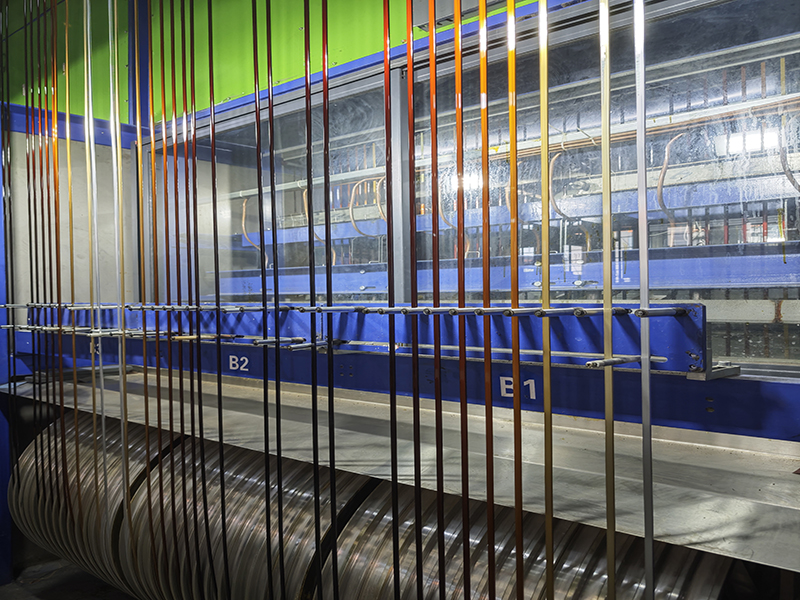
Why Thermal Aging is the “Touchstone” of Long-Term Reliability
For each grade, exceeding 10°C reduces the lifespan by approximately half. – Operating Temperature Window: Thermal aging determines the upper limit of continuous operation time of enameled wire at its rated temperature. – Fault Warning: Thermal aging is one of the root causes of insulation failure. Statistics show that over 40% of motor insulation failures are related to thermal aging – cumulative insulation breakdown: During thermal aging, the enamel coating gradually becomes brittle, its adhesion decreases, and its breakdown voltage decreases, eventually leading to breakdown under a voltage fluctuation.
Thermal Aging vs. Short-Term Heat Resistance vs. Thermal Shock Resistance
Thermal aging, short-term heat resistance, and thermal shock are three complementary tests forming a complete thermal performance evaluation system. Thermal aging testing is the most stringent because it simulates real operating conditions.
The table below summarizes the three test types across five dimensions:
| Dimensions | Thermal Aging | Short-Term Heat Resistance | Thermal Shock |
|---|---|---|---|
| Time Scale | Thousands to tens of thousands of hours | Several hours | Several minutes |
| Test Temperature | Near/slightly above operating temperature | Higher | Extremely high (instantaneous) |
| Test Purpose | Long-term reliability | Short-term reliability | Instantaneous reliability |
| Evaluation Indicators | Breakdown voltage decline rate, temperature index | Whether softening and deformation occur | Whether cracking occurs |
| Standards | IEC 60172, ASTM D2307 | IEC 60851 | IEC 60851 |
Chemical and Physical Basis of Thermal Aging
Thermo-oxidative Aging Mechanism
When the temperature rises, the polymer chains in the enamel coating undergo the following reactions: – Chain Scission: C-C bonds and CO bonds break at high temperatures, resulting in a decrease in molecular weight and a sharp decline in the mechanical properties of the enamel coating. – Oxidative Cross-linking: Reacts with oxygen to form new cross-linking bonds, causing the enamel coating to harden and become brittle. – Side Group Decomposition: Oxygen-containing groups such as ester, amide, and imide groups are removed at high temperatures, leading to weight loss in the enamel coating. – Copper Catalysis: The copper conductor catalyzes the oxidation of the enamel coating, significantly accelerating the aging process.
Arrhenius Model: The Physical Basis of Thermal Lifetime Extrapolation
This is why the damage to enamel coating from “short-term overheating” and “long-term high temperatures” is exponential rather than linearly additive.
Glass Transition Temperature (Tg): The Temperature Watershed of Thermal Aging
This is because the operating temperature must be lower than Tg; otherwise, the enamel coating will soften and fail.
The Influence of Enamel Coating Thickness on Thermal Aging
Five Core Factors Affecting Thermal Aging Life
Temperature: The Most Important Factor
According to the Arrhenius model: – A 10°C increase in temperature halves the thermal life – Class 130 enameled wire can operate for 20,000 hours at 130°C, but may only operate for 10,000 hours at 140°C – Class 220 enameled wire can operate for 20,000 hours at 220°C, but only 5,000 hours at 240°C. The core principle for enameled wire selection: The selected thermal class must be slightly higher than the actual operating temperature, but do not over-design (increase costs).
Time: Cumulative Effects of Thermal Aging
Oxygen Concentration: A Hidden Factor Accelerating Aging
Enamel Coating Thickness and Layers: Natural Protection
Fiberglass coating (e.g., MW 53-C 180 grade) significantly extends thermal aging life (the fiberglass layer is a natural oxygen barrier).
Chemical Structure: The Gene of Thermal Aging Life
Thermal Aging Life Test Methods and Industry Standards
IEC 60172: A Unified Test Method Basis…
The core standard for thermal life testing of wires specifies: – Test sample preparation: standard stranded pair – Test temperature points: typically 3 temperature points (e.g., 200℃, 220℃, 240℃) – Aging endpoint: breakdown voltage drops to 50% of the initial value (or breakdown) – Extrapolation method: Arrhenius extrapolation to the temperature corresponding to 20,000 hours
ASTM D2307: North American Standard Method
IEC 60216: General Insulating Material Thermal Aging
The thermal aging test for enameled wire primarily references the methodology of IEC 60216.
UL 1446: System-Level Certification
UL 1446 is a system-level certification standard for insulation materials in motors/transformers, requiring the combination of enameled wire and impregnated varnish to pass system testing.
NEMA MW 1000-2018: North American Enameled Wire Standard
Specific Operation of Arrhenius Extrapolation
Prepare aging data for 5-10 temperature points (e.g., 180℃, 200℃, 220℃, 240℃, 260℃) 2. Test the change in breakdown voltage over aging time at each temperature point 3. Record the time it takes for the breakdown voltage to drop to 50% of its initial value (i.e., lifespan) 4. Use ln(L) vs 1/T Plot the graph to obtain the Arrhenius curve. 5. Extrapolate to the temperature corresponding to 20,000 hours, i.e., the temperature index. GB/T 6109 and JIS C 3216 GB/T 6109 (China) and JIS C 3216 (Japan) adopt the same thermal aging test method as IEC 60172.
Thermal Class and Temperature Index of Enameled Wire
IEC Thermal Class Classification: 7 Grades
Temperature Index vs. Thermal Class
The temperature index is the value extrapolated from 20,000 hours of Arrhenius data; the thermal class is the rounded engineering classification. For example, an enamel coating with a temperature index of 178°C is classified as Class 180 (N-class).
Thermal Class – Temperature Index: Temperature value extrapolated from 20,000 hours of Arrhenius thermal life. – Thermal Class: Temperature value rounded by engineering, typically in 10°C increments. – For example, an enamel coating with a temperature index of 178°C is classified as Class 180 (N class).
Class 200 Specific Definition: IEC 60317-13
NEMA Grade and Enamel Coating System Correspondence Table
Comparison of Thermal Aging Life of Five Major Enamel Coating Systems
Polyurethane (UEW): Short-Term Heat-Resistant
Advantages: – Direct solderability (130 class 380℃, 180 class 390-410℃) – Extremely thin enamel coating (5-15μm) Disadvantages:
- Limited heat resistance (130-180℃ class) – Short thermal aging life – Moderate chemical resistance
Polyester (PEW): Classic Industrial Type
Advantages: – High mechanical strength, good adhesion and elasticity – The enamel coating extends synchronously with the conductor – Low cost Disadvantages: – Moderate heat resistance (130-155℃) – Poor thermal shock resistance – Extremely poor hydrolysis resistance
Polyesterimide (EIW): Main Heat-Resistant Type
Advantages: – Significantly improved heat resistance compared to PEW – Balanced flexibility, adhesion, and mechanical and physical properties – Long-term use at 180℃ Disadvantages: – Not suitable for direct soldering – Single coating price is higher than PEW
Polyamide-imide (AIW): Heat-Resistant + Tough Coating
Advantages: – Softening breakdown temperature 330-350℃ – No cracking under rapid heating and cooling at 200℃ – Extremely hard and smooth surface – 220℃ Disadvantages: – Highest cost – Not suitable for direct soldering – Darker color
Polyimide (PI): Special for Extreme Environments
Advantages: – Long-term use at 240℃ – Resistant to radiation and chemicals – Dimensionally stable in extreme environments Disadvantages: – Worst flexibility – Difficult to process – Extremely high cost
Comparison Table of Five Systems Thermal Aging Life
Engineering Balance Between Thermal Aging and Other Properties
Thermal Aging vs. Flexibility: The Dilemma of Molecular Design
The heat resistance of enamel coatings comes from a highly cross-linked three-dimensional network structure. However, the higher the degree of cross-linking, the harder and more brittle the enamel coating, and the worse its flexibility. Flexibility of different thermal classes of enamel coatings: – 130 grade PEW: Medium flexibility – 155 grade UEW: Excellent flexibility – 180 grade EIW: Balances flexibility and heat resistance – 220 grade AIW: Excellent flexibility (special molecular structure) – 240 grade PI: Poor flexibility
Thermal Aging vs. Adhesion: A Byproduct of Cross-linking
During thermal aging, the enamel coating undergoes further oxidative cross-linking (the enamel coating becomes harder and adhesion first increases then decreases), chain scission (molecular weight drops and adhesion plummets), and chemical bonds with copper are destroyed (adhesion lost). Engineering often uses a “dual-layer structure” to balance thermal aging and adhesion: a base layer of PEW/EIW provides adhesion and a top layer of AIW provides heat resistance.
Thermal Aging vs. Breakdown Voltage: The Time Dimension
During thermal aging, the breakdown voltage gradually decreases over time. The breakdown voltage dropping to 50% of its initial value is the endpoint criterion for thermal life testing. The thicker the enamel coating, the slower the breakdown voltage decline and the longer the thermal aging life.
Typical Failure Modes and Root Cause Analysis of Thermal Aging
Enamel Coating Oxidation: Basic Failure Mode
Loss of Adhesion: Interface Failure
Thermal Shock Cracking: Instantaneous Failure
Copper Ion Catalysis: A Hidden Accelerator
How to Improve Heat Aging Resistance in the Production Process
Paint Formulation Optimization
Painting Process Optimization
Curing Temperature Profile Optimization
Advantages of Dual-Coating Structure: 200/220 Grade EIW/AIW
Fiberglass Coating: A Natural Protective Layer
Engineering Requirements for Thermal Aging in Different Application Scenarios
- Motor Windings: Long-Term High-Temperature Operation + Vibration
- Transformer Windings: Long-Term High-Temperature Operation
- Home Appliance Motors: Cost-Sensitive Application
- Automotive Electronics: Severe Temperature Cycling and Vibration
- Aerospace: Vacuum, Radiation, Extreme Temperatures
How to Quantify Thermal Aging Requirements in Procurement Specifications
Five Essential Items in Procurement Specifications
Best Practices for Referenced Standards
Typical Specifications Example
Grade EIW/PAIW or higher, temperature index ≥ 200 (20,000-hour Arrhenius extrapolation), no cracking after thermal shock at 220℃/72h, breakdown voltage after aging at 200℃ × 168h ≥ 75% of the initial value, extractables ≤ 0.5%. The supplier shall provide a factory inspection report, thermal aging curve, and temperature index report for each batch of goods.
Quality Control and Incoming Material Inspection
Mandatory Incoming Material Inspection Items
Accelerated Aging Test: Sampling inspection (e.g., breakdown voltage ≥ 75% after 200℃ × 168h)
Field Rapid Thermal Shock Test
Take a 1-meter long enameled wire sample. 2. Wrap it around a needle of the same diameter 10 times. 3. Place it in a specified temperature oven (e.g., 220℃) for 72 hours. 4. After cooling, visually inspect: the enameled coating should have no visible cracks.
Statistical Sampling Plan for Critical Applications
Industry Misconceptions and Common Misconceptions
Misconception 1: The higher the thermal class, the better Incorrect.
The higher the thermal class, the higher the cost and the worse the flexibility. Correct practice: Select the appropriate level based on the actual operating temperature, 10-20℃ higher than the operating temperature.
Misconception 2: Temperature index = thermal class Partially correct.
The temperature index is an extrapolated value based on 20,000 hours, and thermal class is a rounded classification. A temperature index of 178℃ = class 180. However, a temperature index slightly lower than 200 (e.g., 195) may still be classified as class 200 (based on engineering experience).
Misconception 3: Test Results Can Directly Guide Motor Design Incorrect
Thermal aging testing is at the enameled wire level. Motor design must also consider the synergistic aging of impregnating varnish, insulating paper, slot insulation, etc. UL 1446 system-level testing is more comprehensive.
Misconception 4: PI is the best enameled wire Incorrect.
PI is the best choice in extreme environments of 240℃+, but it is an over-design in most civilian scenarios, with poor flexibility and high cost.
Misconception 5: Fiberglass Coating Can Boost Any Class
Fiberglass coating is only a physical barrier and cannot replace the chemical heat resistance of enamel coating. Fiberglass-coated enamel coating is still classified as 180 class.
Misconception 6: Passing thermal shock tests means long-term use. Incorrect.
Thermal shock testing is an instantaneous test; thermal aging is the long-term test. A 220-class enameled wire can operate for 20,000 hours at 220°C, but if the actual operating temperature is 230°C, its lifespan may only be 5,000 hours.
Conclusion
Enameled wire thermal aging is an engineering indicator that can be precisely quantified using international standards such as IEC 60172 / ASTM D2307 / NEMA MW 1000. Key points: Thermal aging, short-term heat resistance, and thermal shock resistance together constitute a complete assessment of heat resistance performance; the Arrhenius model is the physical basis for thermal life extrapolation; for every 10°C increase in temperature, thermal life is approximately halved; the heat resistance ranking of the five major enamel coating systems is PI > AIW > EIW > PEW ≈ UEW; there are 7 thermal class classifications (E/B/F/H/N/R/HC); the temperature index is based on a 20,000-hour thermal life extrapolation; AIW softens and breaks down at 330-350°C and does not crack under rapid cooling and heating at 200°C; the double-coating (EIW/AIW) structure represents the optimal balance between heat resistance and flexibility. For downstream users in fields such as motors, transformers, home appliances, new energy vehicles, and aerospace, choosing “high temperature resistance” enameled copper wire is essentially choosing long-term reliability, end-user satisfaction, and brand reputation.
If your application involves long-term high-temperature operation, critical equipment (aerospace, traction motors, EV drives), and long lifespan requirements (15 years or more), it is recommended to explicitly specify temperature index, thermal shock temperature, and accelerated aging breakdown voltage retention rate in the procurement specifications, and require the supplier to provide complete thermal aging curves and temperature index reports. Furthermore, establishing long-term technical partnerships with enameled wire suppliers, involving them in the early stages of product design, and jointly optimizing the enameled coating system selection and temperature design will be a key path to achieving the best return on investment for “high temperature resistance”.