

1 Introduction
Green energy is the strategic emerging industry covering solar energy, wind energy, hydro energy, biomass energy, geothermal energy, marine energy and other renewable energy as well as new energy vehicle, energy storage technology, smart grid, hydrogen energy, carbon capture utilization and storage and other low-carbon zero-carbon technologies, is the important support for global energy transition, carbon peak carbon neutrality, sustainable development. Green energy industry covers new energy vehicle, charging infrastructure, photovoltaic power generation, wind power generation, energy storage system, smart grid, rail transit, new energy equipment, energy internet, virtual power plant, hydrogen energy and other key fields.
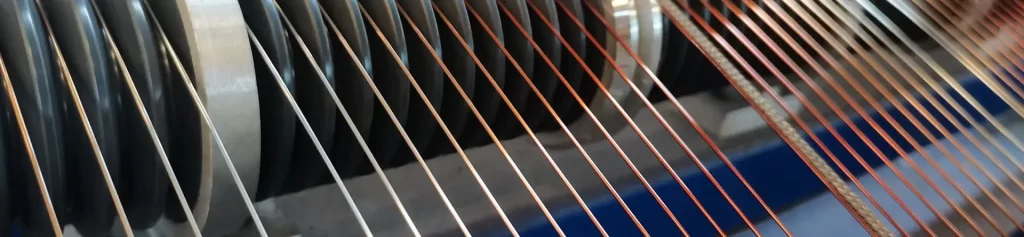
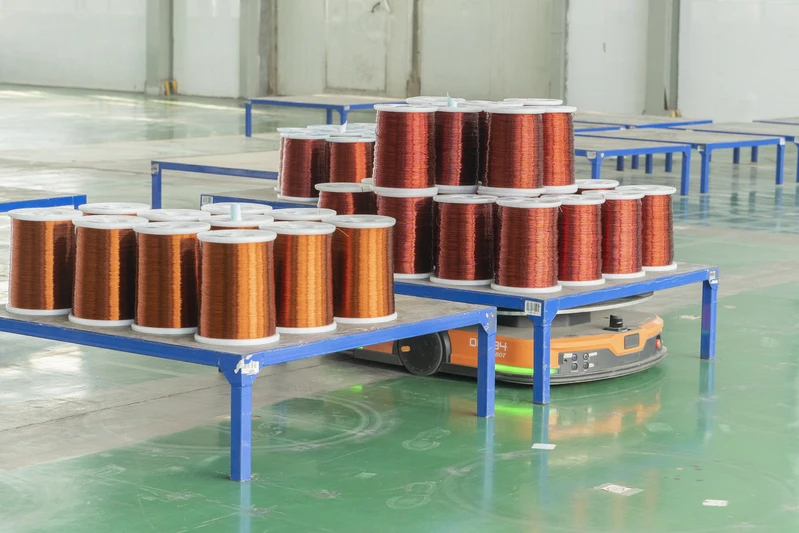
Enameled copper wire is the insulated winding wire using polyurethane, polyester, polyesterimide, polyamideimide, polyimide and other insulation varnish coated on round copper wire or flat copper wire surface, after baking curing forming insulation varnish film, is the key raw material for new energy vehicle drive motor, photovoltaic inverter, wind power converter, energy storage converter, new energy transformer, inductor, filter, charging pile, rail transit traction motor. Enameled copper wire heat resistance class covers 105 to 240 degrees Celsius, corresponding to NEMA MW 1000-2018 standard system.
Based on IEC 60317, IEC 60076, IEC 62196, UL 2269, IEEE 1776, IEEE 1547, GB/T 6109, NEMA MW 1000-2018 and other international and domestic standards, this article systematically describes the application technology and future development trend of enameled copper wire in green energy from seven dimensions including green energy and enameled wire overview, NEV application, PV application, wind and energy storage application, enameled wire technology development trend, enameled wire selection and design key points, and summary.
2 Green Energy and Enameled Wire Overview
2.1 Green Energy Industry System
Green energy industry system covers new energy vehicle, charging infrastructure, photovoltaic power generation, wind power generation, energy storage system, smart grid, rail transit, new energy equipment, energy internet, virtual power plant, hydrogen energy eleven core fields. NEV covers battery electric vehicle BEV, plug-in hybrid electric vehicle PHEV, extended range electric vehicle EREV, fuel cell electric vehicle FCEV. Photovoltaic power generation covers silicon material, silicon wafer, cell, module, inverter, combiner box, tracker, distribution cabinet, step-up transformer. Wind power generation covers onshore wind power, offshore wind power, floating wind power, wind farm, wind turbine, tower, blade, gearbox, generator, converter. Energy storage system covers pumped storage, electrochemical storage, compressed air storage, flywheel storage, super capacitor storage, hydrogen storage.
2.2 Enameled Wire Product System and Core Position
Enameled wire product system covers enameled round copper wire, enameled flat copper wire, enameled aluminum wire, composite insulation enameled wire four major categories. Enameled round copper wire conductor diameter 0.05 to 5.00 mm, enameled flat copper wire conductor width 1.00 to 16.00 mm, thickness 0.30 to 5.60 mm, enameled aluminum wire weight reduced 70%, cost reduced 30 to 50%. Composite insulation enameled wire covers enameled paper covered, enameled fiberglass covered, enameled film covered, enameled mica covered, enameled ceramic covered copper wire.
Enameled wire core position in green energy reflects in five dimensions. Key raw material: enameled wire is the irreplaceable raw material for NEV drive motor, photovoltaic inverter, wind power converter, energy storage converter, new energy transformer, charging pile, rail transit traction motor, hydrogen energy battery stack and other key equipment. Performance impact: enameled wire heat resistance class, dielectric strength, mechanical strength, thermal shock performance directly affect green energy equipment efficiency, power density, service life, reliability. Technology innovation: enameled wire technology continues to evolve, driving green energy equipment toward high frequency, high power density, high efficiency, high reliability. Energy saving and emission reduction: enameled wire high efficiency and high power density characteristics directly reduce equipment energy consumption. Industrial synergy: enameled wire manufacturing industry deep synergy with NEV, photovoltaic, wind power, energy storage industry, driving green energy industry chain high quality development.
3 Enameled Wire Application in NEV
3.1 NEV Drive Motor and Electronic Control
NEV drive motor typical types cover permanent magnet synchronous motor PMSM, induction asynchronous motor IM, switched reluctance motor SRM, axial flux motor AFM. Drive motor power 50 to 400 kW, efficiency not lower than 95%, maximum speed 15000 to 25000 rpm, peak torque 200 to 600 Nm, insulation class H 180 degrees Celsius and above.
Drive motor stator winding commonly adopts enameled flat copper wire, winding type covers distributed winding, concentrated winding, hairpin winding, wave winding, rectangular flat wire winding. Hairpin winding is the current NEV drive motor mainstream technology, adopts rectangular enameled copper wire preformed into hairpin shape, inserted into stator slot, welded end, forming continuous winding, hairpin winding slot fill factor 70% to 80%, much higher than round wire winding 40% to 50%. Drive motor rotor winding adopts enameled round copper wire, insulation class F 155 degrees Celsius or H 180 degrees Celsius.
NEV electronic control system covers motor controller MCU, on-board charger OBC, DC-DC converter, high voltage power distribution unit PDU. MCU key magnetic element includes PFC inductor, boost inductor, main transformer, auxiliary transformer, resonant inductor, output filter inductor, drive transformer, current transformer, voltage transformer, EMI filter inductor, power inductor. OBC capacity 3.3 to 22 kW, efficiency not lower than 95%, power density not lower than 3 kW per L, insulation class H 180 degrees Celsius. DC-DC capacity 1 to 5 kW, efficiency not lower than 94%. PDU capacity 50 to 500 kW, insulation class H 180 degrees Celsius.
3.2 NEV Charging System and 800V High Voltage Platform
NEV charging system covers AC charging pile, DC charging pile, super charging pile, wireless charging, battery swap station, mobile charging robot. AC charging pile capacity 7 to 22 kW, efficiency not lower than 96%. DC charging pile capacity 30 to 350 kW, efficiency not lower than 96%, output voltage 200 to 1000 V. Super charging pile capacity 350 to 1200 kW, efficiency not lower than 97%, supporting 800V high voltage platform. Wireless charging working frequency 85 to 205 kHz, efficiency not lower than 92%, insulation class H 180 degrees Celsius.
NEV 800V high voltage platform compared to 400V platform has four major advantages: charging power doubled, fast charging time halved, high voltage harness current halved, copper conductor usage reduced, high voltage harness weight reduced. 800V high voltage platform puts forward higher requirements for enameled wire: voltage withstand 800V to 1000V, temperature withstand 180 to 220 degrees Celsius, insulation thickness increase 20% to 40%, partial discharge resistance, corona resistance, thermal shock performance improved. High power density drive motor adopts polyamideimide enameled flat copper wire, H class 180 degrees Celsius or N class 200 degrees Celsius. OBC and DC-DC main transformer adopts polyamideimide enameled round copper wire, H class 180 degrees Celsius.
4 Enameled Wire Application in PV
4.1 PV Inverter and Step-up Transformer
PV inverter types cover central inverter, string inverter, micro inverter, modular inverter. Central inverter capacity 500 to 6300 kW, efficiency not lower than 98.5%, maximum input voltage 1500 V, maximum input current 2000 A. String inverter capacity 5 to 350 kW, efficiency not lower than 98.5%, maximum input voltage 1500 V. Micro inverter capacity 0.3 to 2 kW, efficiency not lower than 96%, maximum input voltage 60 V. PV inverter working frequency 20 to 100 kHz, insulation class H 180 degrees Celsius or N class 200 degrees Celsius. Main transformer adopts polyamideimide enameled round copper wire or flat copper wire, conductor specification selected based on capacity. PFC inductor adopts polyamideimide enameled round copper wire or Litz wire, core adopts iron powder core or iron silicon aluminum powder core.
PV step-up transformer capacity usually 1000 to 6300 kVA, primary voltage 400 V to 800 V, secondary voltage 10 kV or 35 kV, connection group Dyn11 or Yyn0, insulation class F 155 degrees Celsius or H 180 degrees Celsius, temperature rise not exceeding 100 K, efficiency not lower than 98.5%. Winding adopts polyesterimide or polyamideimide enameled round copper wire or flat copper wire, varnish film thickness grade 2 or 3. PV prefabricated substation capacity 1000 to 6300 kVA, voltage ratio 10/0.4 to 35/0.4 kV.
4.2 PV Combiner Box and Energy Storage Converter
PV combiner box capacity 100 to 1600 A, maximum input voltage 1500 V, maximum input current 200 A. PV tracker motor capacity 50 to 500 W, insulation class F 155 degrees Celsius or H 180 degrees Celsius. PV module junction box internal micro transformer for PV module level monitoring, capacity 1 to 5 W. PV energy storage converter combining PV and energy storage, capacity 50 to 500 kW, efficiency not lower than 97%, insulation class H 180 degrees Celsius.
5 Enameled Wire Application in Wind and Energy Storage
5.1 Wind Power Converter and Generator
Wind power converter capacity 1 to 10 MW, efficiency not lower than 97%, insulation class H 180 degrees Celsius or N class 200 degrees Celsius. Wind power step-up transformer capacity 1 to 10 MVA, primary voltage 690 V to 3300 V, secondary voltage 10 kV, 35 kV or 66 kV, connection group Dyn11, insulation class F 155 degrees Celsius or H 180 degrees Celsius. Winding adopts polyesterimide or polyamideimide enameled flat copper wire, varnish film thickness grade 2 or 3. Wind power prefabricated substation capacity 1 to 10 MVA, voltage ratio 35/0.69 to 66/0.69 kV.
Doubly fed induction generator DFIG capacity 1 to 5 MW, stator winding adopts enameled flat copper wire, insulation class F 155 degrees Celsius or H 180 degrees Celsius, rotor winding adopts enameled round copper wire or enameled flat copper wire. Permanent magnet direct drive generator PMSG capacity 1 to 10 MW, stator winding adopts enameled flat copper wire, insulation class H 180 degrees Celsius or N class 200 degrees Celsius. Semi-direct drive permanent magnet generator capacity 1 to 10 MW, stator winding adopts enameled flat copper wire, insulation class H 180 degrees Celsius. Offshore wind power generator needs to withstand salt fog, humidity, high temperature, low temperature, vibration, shock and other harsh environments, puts higher requirements for enameled wire salt fog resistance, humidity heat resistance, chemical corrosion resistance, vibration resistance, shock resistance.
5.2 Energy Storage, Hydrogen Energy and Rail Transit
Energy storage converter PCS capacity 50 to 5000 kW, efficiency not lower than 97%, insulation class H 180 degrees Celsius or N class 200 degrees Celsius. Energy storage step-up transformer capacity 100 to 5000 kVA, primary voltage 400 V to 800 V, secondary voltage 10 kV or 35 kV. Household energy storage 5 to 50 kWh, commercial industrial energy storage 50 to 500 kWh, large energy storage 1 to 100 MWh. Hydrogen energy battery stack key magnetic element includes hydrogen circulation pump motor, air compressor motor, humidifier motor, cooling pump motor, adopts enameled copper wire, insulation class H 180 degrees Celsius. Rail transit traction motor adopts enameled flat copper wire, insulation class H 180 degrees Celsius or C class 220 degrees Celsius. Rail transit auxiliary system inverter capacity 50 to 500 kW, efficiency not lower than 96%. Charging infrastructure distribution transformer capacity 100 to 2500 kVA, primary voltage 10 kV or 35 kV, secondary voltage 400 V, connection group Dyn11.
6 Enameled Wire Technology Development Trend
Enameled wire technology development trend covers eight major directions, supporting green energy industry toward high efficiency, high power density, high reliability, low energy consumption direction. High heat resistance class developing toward 240 to 300 degrees Celsius, adopts polyimide PI, polyamideimide PAI, polybenzimidazole PBI and other high temperature resistant resin system. High dielectric strength developing toward 250 to 500 V per micrometer, breakdown voltage developing toward 15000 to 30000 V, adopts multilayer composite varnish film, nano modified resin, ceramic filled resin system, significant demand growth in 800V high voltage platform, 1500V energy storage system, UHV transmission and other fields. High frequency low loss developing toward 1 to 100 MHz, suitable for SiC, GaN and other third generation power semiconductor devices, adopts Litz wire structure, nanocrystalline soft magnetic material, low loss varnish film system. High power density adopts 0.05 to 0.10 mm ultra-thin varnish film, space utilization improved 15% to 30%. High mechanical strength adopts composite coating, self-lubricating coating, wear resistant coating, toughening coating. High reliability long service life developing toward 200 degrees Celsius 20000 to 50000 hours. High efficiency green manufacturing adopts water-based varnish coating, UV curing, electron beam curing and other green manufacturing technology. High end customization provides customized enameled wire solution for specific application scenario, specific equipment requirement.
7 Enameled Wire Selection and Design Key Points
7.1 Enameled Wire Selection Principle
Enameled wire selection principle covers heat resistance class, insulation class, conductor specification, varnish film thickness, breakdown voltage, space utilization, mechanical strength, environmental adaptability, cost nine major principles.
Heat resistance class selection: A class 105 degrees Celsius select MW 1-C, B class 130 degrees Celsius select MW 2-C or MW 24-C, F class 155 degrees Celsius select MW 5-C or MW 27-C, H class 180 degrees Celsius select MW 7-C or MW 35-C, N class 200 degrees Celsius select MW 8-C or MW 36-C, R class 220 degrees Celsius select MW 10-C or MW 60-C, 240 degrees Celsius select MW 11-C or MW 61-C. Insulation class selection: conventional low voltage equipment select MW 1-C to MW 5-C, HV medium voltage equipment select MW 5-C to MW 7-C, UHV high voltage equipment select MW 7-C to MW 10-C, superconducting and aerospace equipment select MW 10-C to MW 35-C.
Conductor specification selection: low current capacity select round conductor, high current capacity select rectangular conductor, ultra high current capacity select copper foil or aluminum foil. Varnish film thickness grade selection: Grade 0 varnish film thinnest, Grade 1 standard, Grade 2 thickened, Grade 3 thickest. Breakdown voltage at least 3 times working voltage above.
7.2 Enameled Wire Winding Design and Winding Process
Enameled wire winding design covers cylindrical, disc, layer, planar, hairpin five major types. Cylindrical type suitable for low voltage, small capacity power frequency transformer and motor, layer number 1 to 10 layers, conductor diameter 0.50 to 3.00 mm. Disc type suitable for medium high voltage, medium capacity, disc number 10 to 200 discs, conductor width 2.00 to 16.00 mm, thickness 0.80 to 5.60 mm. Layer type suitable for high frequency, low voltage, high current, conductor diameter 0.20 to 1.50 mm. Planar type suitable for high frequency switch power supply magnetic element, adopts PCB winding or flat copper strip, conductor thickness 0.10 to 0.50 mm. Hairpin type is NEV drive motor mainstream technology, slot fill factor 70% to 80%.
Enameled wire winding process covers pre-winding preparation, winding process, insulation treatment, detection and test four major links. Pre-winding preparation includes enameled wire incoming inspection, winding machine precision check. Winding process tension control precision plus minus 0.1 Newton, winding speed control precision plus minus 1 rpm. Insulation treatment adopts vacuum pressure impregnation VPI, impregnant temperature 50 to 70 degrees Celsius, vacuum degree lower than 50 Pa, pressure 0.2 to 0.5 MPa, time 8 to 24 hours, baking curing temperature 150 to 200 degrees Celsius. Detection and test covers appearance, dimension, DC resistance, insulation resistance, breakdown voltage, dielectric loss, partial discharge, temperature rise, short circuit nine categories.
7.3 Enameled Wire Application Precaution
Enameled wire application precaution covers storage and transportation, winding process, assembly process, use environment, maintenance five dimensions. Storage and transportation: storage temperature 5 to 35 degrees Celsius, relative humidity 30% to 70%, avoid direct sunlight, avoid rain, avoid chemical corrosion, storage period not exceeding 1 year. Winding process: winding tension should be moderate, tension too small winding loose strand, tension too large varnish film damage. Assembly process: assembly should avoid mechanical impact, avoid varnish film damage, lead welding should adopt low temperature welding. Use environment: NEV -40 to 85 degrees Celsius, PV outdoor -40 to 70 degrees Celsius, wind power outdoor -40 to 55 degrees Celsius, energy storage -10 to 55 degrees Celsius. Maintenance: regular inspection, regular cleaning, regular test, regular maintenance, inspection period not exceeding 1 year, cleaning period not exceeding 6 months.
8 Summary
Enameled copper wire application in green energy covers NEV drive motor and electronic control, 800V high voltage platform, PV inverter and step-up transformer, wind power converter and generator, energy storage converter, hydrogen energy battery stack, rail transit traction motor, charging infrastructure eleven major categories typical application, is the key irreplaceable raw material for green energy industry.
Enameled wire technology development trend covers high heat resistance class, high dielectric strength, high frequency low loss, high power density, high mechanical strength, high reliability long service life, high efficiency green manufacturing, high end customization eight major directions, supporting green energy industry toward high efficiency, high power density, high reliability, low energy consumption direction. With NEV 800V high voltage platform popularization, PV 1500V system promotion, wind power large scale and offshore wind power development, energy storage scale application, hydrogen energy industrialization promotion, rail transit electrification deepening, enameled wire application technology in green energy will be further improved, market scale will be further expanded, providing solid support for global energy transition, carbon peak carbon neutrality, sustainable development.
Reference standards: IEC 60317-0-1 to 60317-86 enameled wire standard / IEC 60076-1 to 60076-11 power transformer / IEC 62196 electric vehicle conductive charging connector / UL 2269 electric vehicle cable / UL 2251 electric vehicle coupler / IEEE 1776 electric vehicle charging / IEEE 1547 distributed energy grid connection / GB/T 6109 enameled round winding wire / JB/T 4074 enameled wire test method / NEMA MW 1000-2018 enameled wire standard.
Contact Information: E-mail office@cnlpzz.com, WhatsApp 0086-19337889070, Zhengzhou LP Industry Co., Ltd.
- Email: office@cnlpzz.com
- WhatsApp: 0086-19337889070
- Company: Zhengzhou LP Industry Co., Ltd.