

1 Introduction
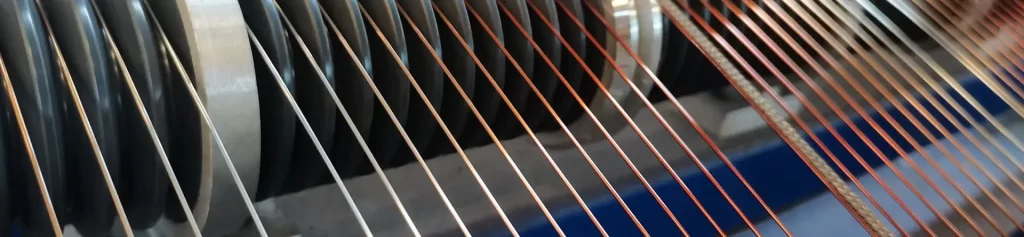
Best square enameled copper wire high power heavy current winding selection starts with the fact that square enameled copper wire, also known as rectangular enameled copper wire or flat enameled copper wire, is the key winding material for high power, heavy duty, and high power density electrical equipment. Square enameled copper wire is increasingly used in new energy vehicle drive motors, rail transit traction motors, wind power generation, special transformers, large industrial motors, and superconducting magnets. Compared to traditional round enameled copper wire, square enameled copper wire has significant advantages including high slot fill factor, good heat dissipation, large power density, low copper loss, and high mechanical strength.
The design and manufacture of square enameled copper wire high power heavy current windings is a key technical issue faced by winding engineers, electrical designers, and equipment manufacturers. This article, based on IEC 60317, NEMA MW 1000-2018, IEC 60034, and ASTM B 49 international standards, systematically describes the design methods and engineering practice of square enameled copper wire high power heavy current windings from seven dimensions including conductor design, insulation systems, performance characteristics, application scenarios, design calculations, manufacturing processes, and quality control, providing systematic technical reference for the design and manufacture of high power density electrical systems.
2 Square Enameled Copper Wire Conductor Design
2.1 Conductor Material Selection
Conductor material for square enameled copper wire should be selected based on the following factors:
TU1 oxygen-free copper: Copper content not less than 99.97%, oxygen content below 0.003%, low hydrogen embrittlement sensitivity, conductivity not less than 101% IACS, the standard conductor material for high power heavy current windings.
TU2 oxygen-free copper: Copper content not less than 99.95%, oxygen content below 0.005%, conductivity not less than 100% IACS, suitable for general high power windings.
T2 standard electrolytic copper: Copper content not less than 99.90%, oxygen content below 0.05%, conductivity not less than 100% IACS, suitable for cost-sensitive medium power windings.
High power heavy current windings typically select TU1 oxygen-free copper as conductor material, with critical scenarios using nickel-plated copper or silver-plated copper. Nickel-plated copper improves oxidation resistance and corrosion resistance, while silver-plated copper improves conductivity and oxidation resistance.
2.2 Conductor Size Specifications
Conductor dimensions of square enameled copper wire are determined by width W and thickness T parameters, with specification range typically width 2 to 20 mm and thickness 0.5 to 8 mm. Square enameled copper wire cross-sectional area S equals width times thickness, with cross-sectional area range typically 1 to 100 square mm.
Common square enameled copper wire specification examples:
Micro specifications: Width 2 to 4 mm, thickness 0.5 to 1.5 mm, cross-sectional area 1 to 6 square mm, suitable for small power motors and transformers.
Small specifications: Width 4 to 8 mm, thickness 1.0 to 3.0 mm, cross-sectional area 4 to 24 square mm, suitable for small and medium motors and transformers.
Medium specifications: Width 8 to 14 mm, thickness 2.0 to 5.0 mm, cross-sectional area 16 to 70 square mm, suitable for large motors, traction motors, and wind power.
Large specifications: Width 14 to 20 mm, thickness 3.0 to 8.0 mm, cross-sectional area 42 to 160 square mm, suitable for extra-large motors, special transformers, and superconducting magnets.
2.3 Aspect Ratio Design
The aspect ratio W/T of square enameled copper wire is a key parameter for conductor design, directly affecting winding performance:
Low aspect ratio 1 to 3: Near square cross section, simple manufacturing process, suitable for general high power windings.
Medium aspect ratio 3 to 8: Flat rectangular cross section, high slot fill factor and good heat dissipation, suitable for new energy vehicle drive motors and rail transit traction motors.
High aspect ratio 8 to 20: Flat rectangular cross section, highest slot fill factor and best heat dissipation, suitable for high power density motors and Hairpin drive motors.
Ultra-high aspect ratio above 20: Extremely flat cross section, difficult manufacturing, low rigidity, and difficult winding insertion, used only in special scenarios.
High power heavy current windings typically select aspect ratio 4 to 10, achieving balance between slot fill factor, heat dissipation, manufacturing process, and rigidity.
2.4 Corner Radius
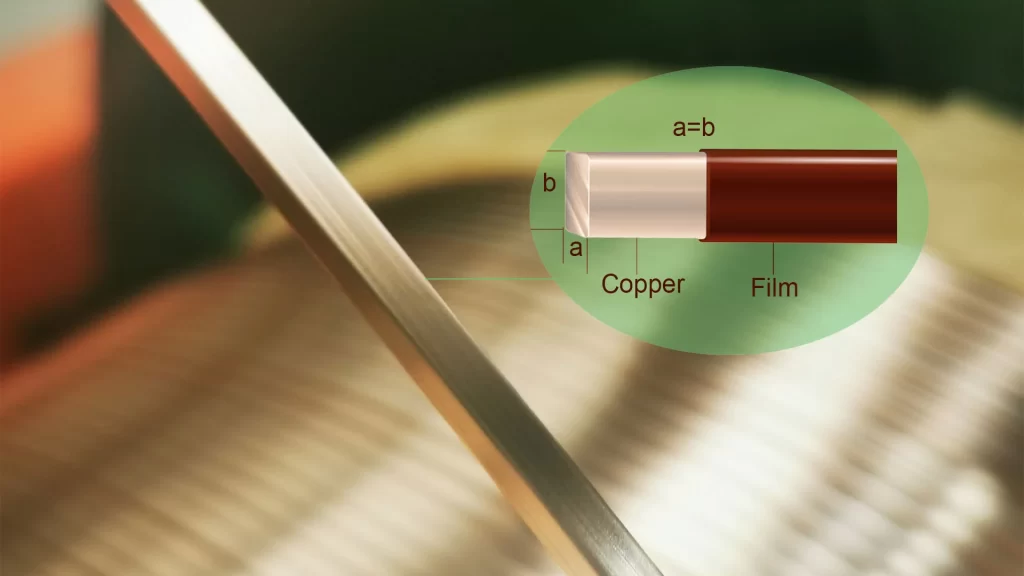
Square enameled copper wire edges typically adopt rounded corner design, with corner radius r affecting conductor performance:
Corner radius 0 to 0.2 mm: Sharp corner design with severe electric field concentration, insulation prone to breakdown, should be avoided.
Corner radius 0.2 to 0.5 mm: Small corner radius design, suitable for general high power windings.
Corner radius 0.5 to 1.0 mm: Standard corner radius design, suitable for high power density windings.
Corner radius 1.0 to 2.0 mm: Large corner radius design, optimal electric field distribution, suitable for extra-high voltage windings and special transformers.
High power heavy current windings typically select corner radius 0.5 to 1.0 mm, achieving balance between electric field distribution, conductor utilization, and manufacturing process.
2.5 Tolerance Control
Size tolerance of square enameled copper wire directly affects winding slot fill factor and insertion process:
Width tolerance: Typically ±0.05 to ±0.15 mm, high precision scenarios ±0.02 to ±0.05 mm.
Thickness tolerance: Typically ±0.03 to ±0.10 mm, high precision scenarios ±0.01 to ±0.03 mm.
Corner tolerance: Typically ±0.10 to ±0.30 mm.
Angle tolerance: Adjacent edge perpendicularity typically ±0.5 to ±1.0 degrees.
High power heavy current windings should select high precision square enameled copper wire, with size tolerance controlled within ±0.05 mm, ensuring smooth insertion and stable slot fill factor.
3 Insulation System Design
3.1 Enamel Film System
Enamel film system selection for square enameled copper wire should be based on comprehensive factors including working temperature, voltage class, mechanical stress, and chemical environment.
Polyester enamel film 130 to 155 degrees Celsius: Suitable for general high power motors and transformers, standards IEC 60317-20, IEC 60317-21, IEC 60317-35.
Polyesterimide enamel film 180 degrees Celsius: Suitable for medium high voltage high power motors and traction motors, standards IEC 60317-8, IEC 60317-13.
Polyamide-imide enamel film 200 to 220 degrees Celsius: Suitable for high power density motors, wind power, and special motors, standards IEC 60317-15, IEC 60317-26.
Polyimide enamel film 240 degrees Celsius and above: Suitable for extra-high temperature, extra-high power special motors, standards IEC 60317-7, IEC 60317-46.
High power heavy current windings typically select polyesterimide or polyamide-imide enamel film, with thermal class H or N.
3.2 Enamel Film Thickness
Enamel film thickness of square enameled copper wire directly affects dielectric strength and insertion process:
Thin enamel film Grade 1: Film thickness 0.02 to 0.06 mm, minimum breakdown voltage 1500 to 7500 V, suitable for low voltage high power windings.
Heavy enamel film Grade 2: Film thickness 0.04 to 0.10 mm, minimum breakdown voltage 2350 to 12000 V, suitable for medium voltage high power windings.
Extra heavy enamel film Grade 3: Film thickness 0.06 to 0.13 mm, minimum breakdown voltage 3000 to 14000 V, suitable for high voltage high power windings.
Square enameled copper wire recommends Grade 2 or Grade 3 enamel film thickness, to withstand high electrical stress of high power windings.
3.3 Double Coat Composite Enamel Film
High power heavy current windings typically adopt double coat composite enamel film, improving the comprehensive performance of enamel film:
Polyesterimide overcoated with polyamide-imide: Class H or N, high dielectric strength, excellent heat resistance, high mechanical strength, suitable for new energy vehicle drive motors and rail transit traction motors.
Polyesterimide overcoated with polyimide: Class H or C, extreme heat resistance and extreme dielectric strength, suitable for special motors and extra-high temperature scenarios.
Polyamide-imide overcoated with polyimide: Class N or C, extreme comprehensive performance, suitable for superconducting magnets and aerospace.
Polyester overcoated with polyamide-imide: Class F or H, excellent cost-effectiveness, suitable for general high power motors.
High power heavy current winding double coat composite enamel film recommends polyesterimide overcoated with polyamide-imide, standards IEC 60317-13, IEC 60317-15.
3.4 Additional Insulation Layer
High power heavy current windings typically add additional insulation layers on top of enamel film:
Enamel film plus fiber insulation: Enamel film with external glass fiber braided layer or polyester fiber wrapped layer, improving mechanical strength and dielectric strength.
Enamel film plus mica insulation: Enamel film with external mica tape wrapped layer, improving corona resistance and dielectric strength.
Enamel film plus polyimide film: Enamel film with external polyimide film wrapping layer, improving heat resistance and dielectric strength.
Enamel film plus glass fiber plus mica: Enamel film with external glass fiber plus mica composite insulation layer, improving comprehensive performance.
High power heavy current winding additional insulation layer recommends enamel film plus glass fiber plus mica composite insulation structure, the standard insulation structure for large high voltage motors and extra-high voltage transformers.
4 Square Enameled Copper Wire Performance Characteristics
4.1 Electrical Performance Advantages
Square enameled copper wire has significant electrical performance advantages compared to round enameled copper wire:
High slot fill factor: Square conductors arrange compactly in slots, with slot fill factor reaching 70% to 80%, while round conductors only achieve 50% to 60%. For every 10% increase in slot fill factor, motor power density increases by approximately 5% to 8%.
Low copper loss: Under same slot fill factor, square conductors have larger cross-sectional area, lower resistance, and lower copper loss. Hairpin drive motor copper loss reduces by 15% to 25% compared to round conductor windings.
High efficiency: Square conductor winding resistance loss and iron loss are both lower than round conductor windings, with overall efficiency improving by 1% to 3%. New energy vehicle drive motors adopting square conductors increase efficiency from 95% to 97%.
High power density: Square conductor winding power density improves by 20% to 35% compared to round conductor windings, which is the key technology for miniaturization and lightweight of new energy vehicle drive motors.
Low temperature rise: Square conductor winding has larger heat dissipation area, shorter heat dissipation path, with winding temperature rise reducing by 5 to 10 K compared to round conductor windings.
Skin effect influence: Square conductor AC resistance increases at high frequency, but high power heavy current windings typically operate at low frequency, with skin effect influence not significant.
4.2 Mechanical Performance Advantages
Square enameled copper wire has the following mechanical performance advantages compared to round enameled copper wire:
Strong deformation resistance: Square conductors are not easily deformed in slots, maintaining good geometric shape after insertion.
High rigidity: Square conductor cross-section polar moment of inertia is greater than round conductors, with high bending rigidity, and winding ends not easily deformed.
Strong short circuit resistance: Square conductor winding short circuit mechanical stress resistance is superior to round conductor windings, with conductors not easily deformed or damaged during short circuit.
Neat winding ends: Square conductor winding ends arrange neatly with attractive appearance, facilitating subsequent insulation treatment.
Hairpin bending performance: Hairpin square conductors maintain good cross-section shape after bending, with relatively uniform electric field distribution at bending locations.
4.3 Manufacturing Process Advantages
Square enameled copper wire manufacturing process has the following characteristics compared to round enameled copper wire:
Conductor processing: Square conductors need to be processed through flat drawing process or special shape extrusion process, with more complex process compared to round conductor drawing.
Enamel film coating: Square conductor enamel film coating process is similar to round conductors, but requires special molds to ensure uniform enamel film.
Enamel film thickness: Square conductor edge enamel film thickness is typically thinner, being the weak link of dielectric strength, requiring corner radius design improvement.
Winding forming: Square conductor windings require special forming molds, with high forming process requirements.
Hairpin process: Hairpin square conductors require high precision bending forming equipment and processes.
4.4 Insulation Performance Challenges
Square enameled copper wire insulation performance has the following challenges compared to round enameled copper wire:
Edge electric field concentration: Square conductor edges have electric field concentration, with dielectric strength decreasing. Corner radius design can significantly improve electric field distribution.
Enamel film uniformity: Square conductor enamel film thickness uniformity is worse than round conductors, with thinner enamel film at edges.
Insertion damage: During square conductor insertion process, enamel film is easily damaged by mechanical stress, requiring strict insertion process control.
Bending cracking: When square conductors bend, enamel film bears large tensile stress, with edge enamel film easily cracking.
Winding end electric field: Winding end electric field concentration requires additional insulation layer reinforcement.
5 Application Scenarios
5.1 New Energy Vehicle Drive Motors
New energy vehicle drive motors are one of the most important application scenarios for square enameled copper wire. Drive motors have high power density, stringent efficiency requirements, and large vibration impact.
Hairpin square conductor winding is the mainstream solution for new energy vehicle drive motors. Hairpin conductors adopt rectangular cross section, with width 4 to 8 mm and thickness 1.5 to 3.0 mm, bent into U shape and inserted into stator slots, with ends welded to form windings.
Key parameters of drive motors: Power density improvement 20% to 30%, efficiency improvement 1% to 2%, maximum speed reaching 15000 to 20000 rpm, cooling methods using oil cooling or water cooling.
Drive motor enamel film system: Polyesterimide overcoated with polyamide-imide double coat composite enamel film, Class H or N, Grade 2 or Grade 3 enamel film thickness. Winding insulation structure: Enamel film plus polyimide film plus impregnation varnish composite insulation.
5.2 Rail Transit Traction Motors
Rail transit traction motors include subway traction motors, locomotive traction motors, EMU traction motors, maglev traction motors, and others. Traction motors have large power, strong overload capacity, and high reliability requirements.
Traction motor square conductor winding specifications: Width 6 to 12 mm, thickness 2.0 to 4.0 mm, aspect ratio 3 to 6.
Key parameters of traction motors: Power range 100 to 1000 kW, overload capacity 2 to 3 times rated power, cooling methods using forced air cooling or water cooling.
Traction motor enamel film system: Polyesterimide enamel film or polyamide-imide enamel film, Class H or N, Grade 2 or Grade 3 enamel film thickness. Winding insulation structure: Enamel film plus glass fiber plus mica composite insulation.
5.3 Wind Power Generation
Wind power generation includes onshore wind power and offshore wind power. Wind power generators operate in harsh environments, with large vibration impact and extremely high reliability requirements.
Wind power square conductor winding specifications: Width 6 to 16 mm, thickness 2.0 to 5.0 mm, aspect ratio 3 to 5.
Key parameters of wind power: Power range 1 to 15 MW, rated speed 10 to 20 rpm, permanent magnet direct drive or semi-direct drive.
Wind power enamel film system: Polyesterimide enamel film or polyamide-imide enamel film, Class H or N, Grade 2 or Grade 3 enamel film thickness. Winding insulation structure: Enamel film plus glass fiber plus mica composite insulation, vacuum pressure impregnation resistant.
5.4 Special Transformers
Special transformers include electric furnace transformers, rectifier transformers, traction transformers, high frequency transformers, high current transformers, and others. Special transformers have high voltage class, large current, and stringent insulation requirements.
Special transformer square conductor winding specifications: Width 4 to 20 mm, thickness 1.0 to 6.0 mm, aspect ratio 3 to 10.
Key parameters of special transformers: Voltage class 0.4 to 35 kV, current range 100 to 5000 A, cooling methods using oil-immersed self-cooling, oil-immersed air cooling, forced oil circulation.
Special transformer enamel film system: Polyesterimide enamel film or polyamide-imide enamel film, Class H or N, Grade 2 or Grade 3 enamel film thickness. Winding insulation structure: Enamel film plus glass fiber plus mica plus insulation paper composite insulation.
5.5 Large Industrial Motors
Large industrial motors include large asynchronous motors, large synchronous motors, large DC motors, and others. Large motors have large power, continuous operation, and high reliability requirements.
Large motor square conductor winding specifications: Width 4 to 12 mm, thickness 1.5 to 4.0 mm, aspect ratio 2 to 5.
Key parameters of large motors: Power range 500 kW to 50 MW, voltage class 380 V to 10 kV, cooling methods using air-to-air cooling, air-to-water cooling, forced ventilation.
Large motor enamel film system: Polyesterimide enamel film or polyesterimide overcoated with polyamide-imide composite enamel film, Class H, Grade 2 enamel film thickness. Winding insulation structure: Enamel film plus glass fiber plus mica composite insulation.
5.6 Superconducting Magnets
Conventional conductor windings supporting superconducting magnets need to withstand extreme conditions including high current, ultra-low temperature, and strong magnetic field. Conventional conductor windings for superconducting magnets typically use square enameled copper wire.
Superconducting magnet square conductor winding specifications: Width 2 to 6 mm, thickness 0.5 to 2.0 mm, aspect ratio 2 to 6.
Key parameters of superconducting magnets: Working temperature 1.8 to 4.2 K, which is liquid helium temperature, magnetic field strength 1 to 20 Tesla, current density 100 to 500 A per square mm.
Superconducting magnet enamel film system: Polyimide enamel film or polyimide film insulation, Class C, Grade 2 or Grade 3 enamel film thickness. Winding insulation structure: Enamel film plus polyimide film plus glass fiber composite insulation.
6 Key Design Calculations
6.1 Current Carrying Capacity Calculation
Current carrying capacity calculation for square enameled copper wire should consider factors including conductor cross-sectional area, allowable temperature rise, heat dissipation conditions, and enamel film thermal class.
Cross-sectional area selection: Determine conductor cross-sectional area based on rated current and current density. High power heavy current winding current density is typically 4 to 8 A per square mm, with high power density scenarios reaching 8 to 15 A per square mm.
Temperature rise verification: Calculate winding temperature rise based on conductor cross-sectional area, current density, and heat dissipation coefficient, ensuring temperature rise is within enamel film thermal class allowable range.
Heat dissipation coefficient: Determine heat dissipation coefficient based on cooling method, ambient temperature, and winding structure. Air-cooled winding heat dissipation coefficient 50 to 100 W per square meter per K, water-cooled winding heat dissipation coefficient 500 to 2000 W per square meter per K.
6.2 Slot Fill Factor Calculation
Slot fill factor is the core parameter for square enameled copper wire winding design, affecting motor power density and manufacturing process.
Slot fill factor definition: Sum of conductor cross-sectional areas divided by slot effective cross-sectional area, typically expressed as percentage.
Slot fill factor calculation formula: Slot fill factor equals total conductor cross-sectional area divided by slot effective cross-sectional area multiplied by 100%.
Typical slot fill factor values: Round conductor winding 50% to 60%, square conductor winding 70% to 80%, Hairpin square winding 75% to 85%.
Slot fill factor influence: For every 10% increase in slot fill factor, motor power density increases by approximately 5% to 8%, with efficiency improvement of 0.5% to 1%. However, excessively high slot fill factor increases insertion difficulty and may damage enamel film.
6.3 Resistance Calculation
DC resistance calculation for square enameled copper wire windings should consider factors including conductor resistivity, length, cross-sectional area, and temperature coefficient.
Conductor resistance calculation formula: R equals ρ multiplied by L divided by S, where ρ is resistivity, L is conductor length, S is conductor cross-sectional area.
Pure copper resistivity: At 20 degrees Celsius 1.724×10⁻⁸ Ω·m, at 60 degrees Celsius approximately 1.97×10⁻⁸ Ω·m, at 75 degrees Celsius approximately 2.04×10⁻⁸ Ω·m.
AC resistance: Square conductor AC resistance increases at high frequency, with skin effect coefficient related to aspect ratio. High power heavy current windings typically operate at low frequency, with AC resistance influence not significant.
6.4 Inductance Calculation
Inductance calculation for square enameled copper wire windings should consider factors including winding geometric shape, turn count, and magnetic circuit parameters.
Self-inductance calculation: Calculate self-inductance based on winding geometric shape and magnetic circuit parameters.
Mutual inductance calculation: Calculate mutual inductance based on coupling coefficient between windings and geometric relationships.
Leakage inductance: Leakage inductance is a key parameter to control in winding design, affecting motor performance and efficiency.
Hairpin winding leakage inductance significantly reduces compared to distributed windings, which is an important advantage for new energy vehicle drive motors.
6.5 Stress Calculation
Stress calculation for square enameled copper wire windings should consider factors including thermal stress, mechanical stress, and electromagnetic stress.
Thermal stress: Stress generated by temperature variation, calculated based on enamel film thermal expansion coefficient and conductor thermal expansion coefficient difference.
Mechanical stress: Stress generated by insertion, forming, and lacing, calculated based on mechanical loading conditions.
Electromagnetic stress: Stress generated by electromagnetic forces during short circuit and overload, calculated based on electromagnetic parameters.
Stress constraint: Maximum stress should be lower than enamel film tensile strength and conductor yield strength, ensuring winding reliability.
7 Manufacturing Process
7.1 Conductor Processing
Conductor processing technologies for square enameled copper wire include:
Flat drawing process: Draw round copper wire into rectangular cross section through flat drawing molds, with mature process and high precision, suitable for small specification square conductors.
Special shape extrusion process: Extrude round copper into rectangular cross section through special shape extrusion molds, suitable for large specification square conductors.
Rolling process: Roll round copper into rectangular cross section through rolling mills, suitable for large specification square conductors.
The key to conductor processing is dimensional precision and surface quality, with conductor surface roughness controlled within Ra 0.8 to Ra 1.6 μm.
7.2 Enamel Film Coating
Enamel film coating processes for square enameled copper wire include:
Vertical coating: Conductors vertically pass through varnish tank, with coating entering curing oven after coating, suitable for small specification conductors.
Horizontal coating: Conductors horizontally pass through varnish tank and molds, with coating entering curing oven after coating, suitable for large specification conductors.
Mold coating: Control enamel film thickness and uniformity through precision molds, suitable for high precision scenarios.
The key to enamel film coating is enamel film thickness uniformity and enamel film integrity, with edge enamel film thickness controlled within specified range.
7.3 Winding Manufacturing
Winding manufacturing processes for square enameled copper wire include:
Hairpin forming: Hairpin winding forming, bending square conductors into U-shaped hairpin structure.
Insertion: Insert hairpin conductors from one end of slot, with high slot fill factor and high insertion efficiency.
End welding: Connect hairpin conductor ends into windings through laser welding, copper welding, resistance welding and other processes.
Insulation treatment: Wrap insulation materials at winding ends, with overall winding vacuum pressure impregnation treatment.
The key to winding manufacturing is insertion precision, welding quality, and insulation integrity.
7.4 Impregnation Treatment
Impregnation treatment processes for square enameled copper wire windings:
Impregnation varnish selection: Select impregnation varnish based on enamel film thermal class, Class H impregnation varnish, Class N impregnation varnish, Class C impregnation varnish.
Vacuum pressure impregnation: Apply pressure impregnation after vacuum exhaust, ensuring impregnation varnish fully penetrates windings.
Drip drying and curing: Drip dry excess impregnation varnish after impregnation, with stepwise temperature elevation curing in oven.
Impregnation times: Select impregnation times based on winding voltage class and insulation requirements, typically 1 to 3 times.
The key to impregnation treatment is full penetration and uniform curing of impregnation varnish, improving winding overall insulation strength and mechanical strength.
8 Quality Control
8.1 Conductor Quality Control
Conductor quality control items for square enameled copper wire:
Dimensional precision: Dimensional measurement of width, thickness, and corner radius.
Surface quality: Detection of surface roughness, defects, and oxide scale.
Material detection: Detection of copper content, oxygen content, and conductivity.
Mechanical performance: Detection of tensile strength, elongation, and hardness.
8.2 Enamel Film Quality Control
Enamel film quality control items for square enameled copper wire:
Enamel film thickness: Measurement of enamel film thickness on conductor surface and edges.
Enamel film continuity: Enamel film defect count and high voltage pinhole detection.
Breakdown voltage: Inter-conductor breakdown voltage testing.
Enamel film adhesion: Enamel film adhesion testing after bending and stretching.
Thermal shock: Enamel film cracking testing after high temperature shock.
8.3 Winding Quality Control
Winding quality control items for square enameled copper wire windings:
Winding resistance: DC resistance testing, ensuring resistance value meets design requirements.
Winding inductance: Self-inductance and mutual inductance testing.
Insulation resistance: Winding to ground and inter-phase insulation resistance testing.
Dielectric loss: Dielectric loss tangent testing.
Voltage withstand testing: Winding power frequency voltage withstand and impulse voltage withstand testing.
Inter-turn insulation: Inter-turn insulation testing.
8.4 Factory Inspection
Factory inspection items for square enameled copper wire windings:
Appearance inspection: Inspection of winding appearance, insulation layer integrity, and lead-out wire connections.
Dimensional inspection: Inspection of winding geometric dimensions and assembly dimensions.
Electrical inspection: Inspection of insulation resistance, voltage withstand, and inter-turn insulation.
Performance inspection: Load testing, temperature rise testing, noise and vibration testing.
Reliability inspection: Accelerated life testing and environmental testing based on customer requirements.
9 Future Development Trends
9.1 Hairpin Technology Evolution
Hairpin square conductor winding technology continues to evolve, supporting the high power density and high efficiency requirements of new energy vehicle drive motors.
Flat wire Hairpin: Flat wire Hairpin is the current mainstream solution, with conductor cross-sectional area 10 to 30 square mm, power density 5 to 10 kW per kg.
Flat wire multi-layer Hairpin: Multi-layer flat wire Hairpin further improves slot fill factor and power density, with conductor cross-sectional area reaching 30 to 60 square mm.
Hairpin wave winding: Hairpin wave winding reduces end height, shortens winding end length, and improves power density.
X-Pin and I-Pin: X-Pin and I-Pin are further evolutions of Hairpin technology, reducing end welding complexity.
9.2 Enamel Film Technology Evolution
High power heavy current winding enamel film technology continues to evolve.
Nano-modified enamel film: Nano silica and nano alumina modified enamel films improve the mechanical strength and temperature resistance of enamel film.
Composite enamel film: Double and triple coat composite enamel films continue to evolve, improving the comprehensive performance of enamel film.
Self-repairing enamel film: Self-repairing enamel film can automatically repair after enamel film damage, improving the long term reliability of enamel film.
Ultra-thin enamel film: Ultra-thin enamel film technology reduces enamel film thickness while ensuring dielectric strength, improving slot fill factor.
9.3 Manufacturing Process Evolution
High power heavy current winding manufacturing process continues to evolve.
Automated manufacturing: Fully automated manufacturing of hairpin forming, insertion, welding, and insulation treatment.
Laser welding: Laser welding technology replaces resistance welding and copper welding, improving welding quality and efficiency.
Robotic winding: Robotic winding technology improves winding precision and efficiency.
Online inspection: Online inspection technology monitors winding manufacturing quality in real time.
9.4 Standards and Certification Evolution
Square enameled copper wire standards and certification systems continue to improve.
International standards: IEC 60317, NEMA MW 1000-2018, ASTM B 49 and other international standards continue to update.
Hairpin special standards: IEC 60317-41 and other Hairpin special standards are gradually established.
Certification systems: UL certification, CE certification, CSA certification, CCC certification and other certification systems continue to evolve.
Industry standards: Special standards for new energy vehicles, rail transit, wind power and other industries continue to be established.
10 Conclusion
Square enameled copper wire high power heavy current winding guide confirms that square enameled copper wire high power heavy current windings are the key technology for high power density electrical equipment including new energy vehicle drive motors, rail transit traction motors, wind power generation, special transformers, large industrial motors, and superconducting magnets. Square enameled copper wire has significant advantages compared to round enameled copper wire including high slot fill factor, low copper loss, high efficiency, large power density, and high mechanical strength, making it the optimal conductor solution for high power density electrical system design and manufacture.
Square enameled copper wire conductor design should comprehensively consider factors including current carrying capacity, slot fill factor, aspect ratio, corner radius, and tolerance control. Insulation systems should select appropriate enamel film systems and additional insulation layers based on working temperature, voltage class, mechanical stress, and chemical environment.
Application scenarios cover new energy vehicle drive motors, rail transit traction motors, wind power generation, special transformers, large industrial motors, superconducting magnets and other high power density fields. Each application scenario has unique requirements for conductor specifications, enamel film systems, and insulation structures, requiring optimized design based on specific scenarios.
Design calculations should include current carrying capacity calculation, slot fill factor calculation, resistance calculation, inductance calculation, and stress calculation as key links, ensuring rationality and reliability of winding design. Manufacturing processes should include conductor processing, enamel film coating, winding manufacturing, and impregnation treatment as key links, ensuring quality and consistency of winding manufacturing. Quality control should include conductor quality control, enamel film quality control, winding quality control, and factory inspection as key links, ensuring stable and reliable winding quality.
With the continuous evolution of Hairpin technology, enamel film technology, manufacturing process, and standards and certification systems, the technical performance and application scope of square enameled copper wire high power heavy current windings will be further expanded, providing strong support for the development of strategic emerging industries including new energy vehicles, rail transit, wind power, intelligent manufacturing, and superconductivity.
Contact Information: E-mail office@cnlpzz.com, WhatsApp 0086-19337889070, Zhengzhou LP Industry Co., Ltd.
Contact Information:
- E-mail: office@cnlpzz.com
- WhatsApp: 0086-19337889070
- Zhengzhou LP Industry Co., Ltd.