

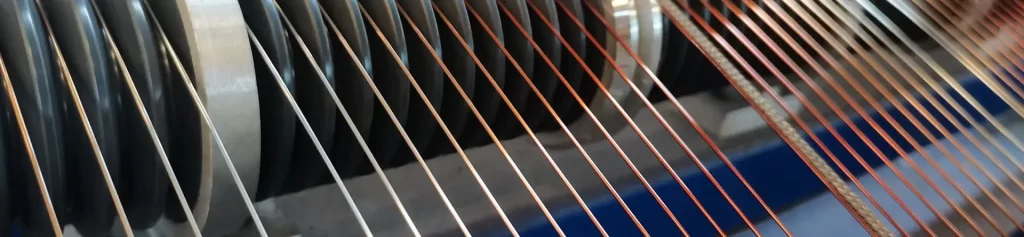
Square aluminum winding wire
Square aluminum winding wire is a type of special insulated conductor with a square or rectangular cross-section, using electrolytic aluminum or aluminum alloy as the conductor material. Compared to traditional round cross-section conductors, square conductors have unique filling efficiency advantages in the manufacture of transformers, inductors, and various coils, making them an important choice for high-power electrical equipment manufacturers. Compared to copper conductors, aluminum conductors have significant advantages in terms of low density and cost-effectiveness. Against the backdrop of increasing volatility in global copper prices, the application scope of square aluminum winding wire continues to expand. This article systematically describes the product classification, technical characteristics, key manufacturing processes, typical applications, and selection considerations of square aluminum winding wire, providing a reference for purchasing engineers and designers.
Product Classification and Specifications System
Classification by Insulation Type
Square aluminum winding wire can be divided into two main categories according to the insulation method: enameled square aluminum wire and paper-insulated (or fiberglass-coated) square aluminum wire. Enameled square aluminum wire uses an insulating varnish coating to form a uniform insulation layer on the conductor surface. Common enamel coating types include polyester varnish, polyester-imide varnish, and polyamide-imide varnish. The enamel coating thickness is divided into two grades: Grade 1 (thin insulation) and Grade 2 (thick insulation). Grade 1 enamel coating is thinner and suitable for high-density windings with limited space; Grade 2 enamel coating offers better mechanical protection and is suitable for applications requiring high breakdown voltage. Paper-insulated square aluminum wire uses cable paper or pre-impregnated paper tape wrapped around the conductor. The paper insulation layer provides excellent voltage resistance and moisture resistance, and is widely used in oil-immersed transformers. Fiberglass-coated square aluminum wire combines the heat resistance advantages of fiberglass and is suitable for high-temperature environments.
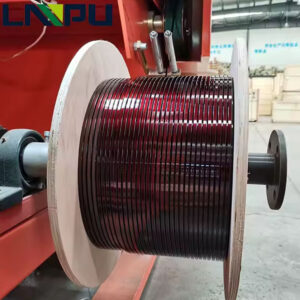
Dimensional Specifications
The dimensions of square aluminum winding wire are expressed in terms of width and thickness. Standard ranges vary depending on the manufacturer’s production capacity. For example, high-quality manufacturers typically produce square aluminum wires with widths ranging from 2.0 mm to 22.0 mm and thicknesses ranging from 0.8 mm to 8.0 mm. Combinations of width and thickness can form hundreds of standard specifications. The international standard IEC 60317-0-3 specifies the dimensional series and permissible deviations for rectangular and square aluminum wires. The standard limits the conductor width-to-thickness ratio within a certain range to ensure the feasibility of the winding process. Wires with excessively large width-to-thickness ratios are prone to twisting or deformation during winding, affecting the winding quality.
Thermal Classification
The thermal class of square aluminum enameled wire is determined by the type of insulation material, classified according to the IEC 60085 standard. Common thermal classes include: Class F (155 degrees C), Class H (180 degrees C), Class C (200 degrees C), and Class R (220 degrees C). The selection of the insulation class is determined based on the operating temperature environment of the equipment. Taking oil-immersed transformers as an example, H-class insulation products are typically selected to ensure reliable insulation performance under fluctuating oil temperatures. For special applications in high-temperature conditions, C-class or R-class products can be selected to obtain a higher temperature margin.
Aluminum Conductor Material Properties
Physical Properties of Aluminum
Aluminum is a light metallic element with a density of 2.70 g/cm3, approximately one-third the density of copper. Replacing copper with aluminum as the winding conductor can significantly reduce the overall weight of the winding, which is of great value for mobile electrical equipment and aerospace applications. The resistivity of aluminum is 2.82 × 10⁻⁸ Ω·m, approximately 1.64 times the resistivity of copper. This means that under the same current carrying conditions, the cross-sectional area of the aluminum conductor needs to be increased to 1.64 times that of the copper conductor to achieve the same resistance value. Therefore, the cross-sectional area of square aluminum winding wire is usually larger than that of copper wire of the same current rating. The coefficient of thermal expansion of aluminum conductors is 23.5 × 10⁻⁶/degrees C, higher than that of copper (17 × 10⁻⁶/degrees C). This characteristic may affect the tightness of the windings under high-temperature conditions, and thermal expansion compensation measures need to be considered in the design.
Advantages of Aluminum Conductors
Compared to copper conductors, aluminum conductors have multiple advantages. First, there is a cost advantage. Aluminum is about 800 times more abundant in the Earth’s crust than copper, and the price of raw materials is significantly lower. Taking 2024 market prices as an example, the price of electrolytic aluminum is about one-quarter to one-fifth of the price of copper. This ratio can be translated into considerable material cost savings in large-scale applications. Second, there is a weight advantage. The weight of aluminum windings with the same electrical performance is about one-third that of copper windings. In transformer design, using aluminum windings can effectively reduce the weight of the core and the overall equipment, which is especially important for mobile substations and vehicle-mounted transformers. In addition, aluminum has excellent processing properties and is easy to draw into conductors of various cross-sectional shapes. The oxide film on the surface of the aluminum conductor has good insulating properties and can enhance the conductor’s corrosion resistance to a certain extent.
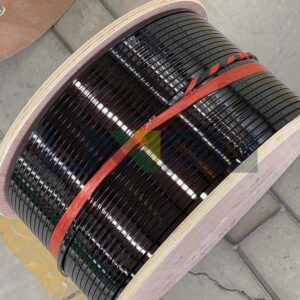
Connection Process Considerations
The connection of the aluminum conductor is an important consideration in application. An aluminum oxide film easily forms on the aluminum surface; this film has high resistance and may affect the quality of electrical connections. Standard connection processes should include: using dedicated aluminum conductor terminals, applying appropriate tightening torque, using anti-oxidation conductive paste, and regularly checking the connection status. In transformer manufacturing, special attention needs to be paid to the connection between the aluminum winding leads and the bushing terminals. Brazing or cold pressing is recommended to ensure low connection resistance and reliable contact. Avoid using direct copper-aluminum stranding to prevent electrochemical corrosion.
Key Technical Indicators
Dimensional Tolerances
Dimensional tolerances of square conductors are an important indicator for evaluating product quality. The IEC 60317-0-3 standard specifies the permissible tolerance range for conductor width and thickness, as well as the maximum limit for the width-to-thickness ratio. Taking a square aluminum wire with a nominal size of 10.0 mm × 5.0 mm as an example, the permissible deviation in width is typically ±0.07 mm, and the permissible deviation in thickness is also ±0.07 mm. Conductors exceeding the permissible deviation range may lead to winding difficulties, a decrease in fill factor, or substandard electrical performance. Reputable manufacturers should provide strict dimensional control capabilities; batch-to-batch dimensional consistency is a key indicator for evaluating supplier quality. Purchasers may request suppliers to provide dimensional inspection data and statistical analysis reports.
Breakdown Voltage Performance
Breakdown voltage is a core indicator for measuring insulation strength. The breakdown voltage test for square aluminum winding wire requires applying a gradually increasing AC voltage between the conductor and the insulation layer until insulation breakdown occurs. Different insulation types and enamel coating thicknesses have different breakdown voltage requirements. For example, for Grade 1 polyester-coated square aluminum wire, the minimum breakdown voltage of a single enamel coating layer is typically not less than 1350 VAC; for Grade 2 products, the minimum breakdown voltage is typically not less than 2350 VAC. For applications with higher requirements, a double-layer enamel coating structure or composite insulation can be selected. Breakdown voltage testing should be performed before winding to avoid performance degradation due to damage to the insulation layer during the winding process. The wound coil requires an overall voltage resistance test to verify the reliability of the insulation system after assembly.
Flexibility and Bending Performance
Square conductors are subjected to bending stress during winding, and the conductor’s flexibility directly affects the feasibility of the winding process. Flexibility can be evaluated through a bending test: bend the wire 180 degrees on a mandrel of a specified diameter and check for cracking or detachment of the insulation layer. The bending performance of a square conductor is related to its cross-sectional area, aspect ratio, and insulation layer thickness. The larger the cross-sectional area and the more extreme the aspect ratio, the more difficult it is to bend. Electrical performance requirements and process feasibility should be comprehensively considered during design to avoid proposing unrealistic specifications.
Resistivity and Conductivity
The resistivity of the aluminum conductor determines the copper loss and heating characteristics of the winding. Standard EN 60194 specifies an upper limit of resistivity of aluminum conductors at 20 degrees C as 2.82 × 10⁻⁸ Ω·m. Actual product resistivity is usually better than this standard value. When designing a transformer, the DC resistance of the windings must be accurately calculated to ensure that load losses meet design requirements. Aluminum windings have higher DC resistance than copper windings. Under the same loss parameters, the efficiency of aluminum winding transformers is slightly lower than that of copper winding transformers, but the material cost advantage can compensate for the efficiency difference.
Key Manufacturing Processes
Conductor Drawing Process
The manufacturing of square aluminum conductors begins with the aluminum rod drawing process. High-quality aluminum rods undergo multiple drawing passes to gradually reduce the cross-sectional area to the target size. Strict control of dimensional accuracy and surface quality is required during the drawing process. The aluminum rods used for drawing are typically made of electrical aluminum (AEC) with an aluminum content of not less than 99.5%, and the content of impurities such as iron and silicon is strictly controlled. Excessive impurity content will reduce the conductor’s conductivity and processing performance. High-quality manufacturers conduct incoming inspections of aluminum rod raw materials to ensure that the chemical composition meets standard requirements.
Insulation Coating Process
The insulation coating of enameled square aluminum wires uses a mold method or felt method to uniformly coat the conductor surface with insulating varnish. After coating, the wire is baked and cured to form a dense enamel coating insulation layer. Key parameters of the coating process include: coating speed, varnish viscosity, baking temperature, and curing time. Optimizing these parameters is crucial for obtaining uniform enamel coating thickness and good electrical performance. Too thin an enamel coating will reduce breakdown voltage performance; too thick an enamel coating will increase material costs and may affect heat dissipation. For double enamel coating structures, a base enamel coating is usually applied first, cured, and then a topcoat is applied. The combination of two enamel coating layers provides better electrical strength and mechanical protection performance.
Dimensional Inspection and Sorting
Finished square wires must undergo strict dimensional inspection and sorting. Inspection items include conductor width, thickness, total insulation layer thickness, and appearance quality. Non-contact measurement using optical measuring instruments or laser micrometers ensures measurement accuracy. The sorting process classifies conductors into different grades based on their dimensional deviation range; high-quality products are used for demanding applications, while qualified products are used for general purposes. This grading system helps maximize the utilization of raw materials and reduce waste caused by over-quality.
Typical Application Areas
Power Transformer
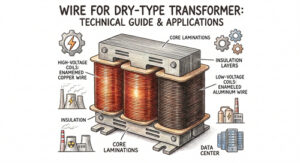
Power transformers are the primary application area for square aluminum winding wires. Oil-immersed power transformers use paper-insulated square aluminum windings and are widely used in power distribution transformers and power transformers. Aluminum winding transformers have a cost-competitive advantage in large-scale power distribution networks. Power distribution transformers typically employ H-class insulation design, with rated capacities ranging from 315 kVA to 2500 kVA. The square aluminum windings, together with the insulating oil, form an insulation system within the tank, providing good voltage resistance and heat dissipation performance. Special transformers such as electric furnace transformers and rectifier transformers also extensively use square aluminum windings. These transformers have large load currents and high capacities, allowing the low resistance and large cross-section advantages of square conductors to be fully utilized.
Inductors and Filter Reactors
Inductors and filter reactors require windings with specific inductance values. The high fill factor of square aluminum windings makes them a preferred solution for large reactors. Smoothing reactors are used in DC transmission systems or high-power rectifier equipment, requiring them to withstand high current and high voltage stress. The large cross-sectional area and good heat dissipation performance of square aluminum windings effectively reduce winding temperature rise and extend equipment life.
High-Efficiency Motors
The drive motors of new energy vehicles are developing towards higher speeds and higher power densities. Hairpin winding technology uses rectangular conductors for high-density winding, improving slot fill factor and power density. In motor stator winding applications, rectangular aluminum conductors can achieve a higher slot fill factor compared to circular conductors. The lightweight advantages of aluminum conductors align perfectly with the energy-saving demands of new energy vehicles, indicating broad future application prospects.
Rail Transit Equipment
Rail transit vehicles have strict requirements on weight and space for transformers and reactors. Aluminum winding transformers, with their weight advantage, are used in high-speed trains and urban rail transit vehicles. Lightweight design can reduce train energy consumption and improve transport capacity utilization. The application of aluminum winding transformers in rail transit equipment is one of the important technical routes to achieve green transportation.
Selection Considerations
Specification Confirmation and Tolerance Verification
During the selection stage, the precise dimensions and allowable deviation range of the required conductors must be clearly defined. Confirm the achievable dimensions with the supplier and verify whether the width-to-thickness ratio is within a feasible range. Avoid proposing theoretically ideal specifications that are difficult to produce in practice. For conductors with width-to-thickness ratios close to the limit, the supplier’s production capacity and quality stability need to be evaluated. If necessary, the supplier can be requested to provide samples to verify the feasibility of the process.
Insulation Class Matching
Select an appropriate insulation class based on the equipment’s operating temperature environment. The insulation class should be 15 degrees C to 20 degrees C higher than the equipment’s maximum operating temperature to ensure sufficient temperature margin and expected lifespan. For applications with special requirements for thermal class, this should be clearly stated in the procurement specifications, and the supplier should be required to provide insulation class certification documents and thermal class test reports.
Electrical Performance Verification
Suppliers should provide complete test data for product samples, including: dimensional inspection records, breakdown voltage test data, flexibility and bending test results, DC resistance measurements, etc. For bulk orders, it is recommended to conduct random sampling and re-inspection upon arrival to verify the consistency of product performance with the data provided by the supplier. Any performance deviations should be promptly communicated and addressed with the supplier.
Supplier Capability Assessment
Assess the supplier’s production equipment and technical capabilities. Advanced drawing equipment and precise testing instruments are fundamental to ensuring product quality. Understand the supplier’s production scale, delivery capabilities, and quality management system certification status. Prioritize suppliers with a sound quality control system and continuous improvement capabilities to establish long-term cooperative relationships. The supplier’s technical support capabilities and response speed are also important evaluation factors.
Conclusion
Square aluminum winding wire, with its excellent filling efficiency, economical material cost, and reliable performance, has wide applications in power transformers, inductors, high-efficiency motors, and rail transit equipment. The cost and weight advantages of aluminum conductors compared to copper conductors are particularly prominent in the current market environment of fluctuating raw material prices. Equipment manufacturers should comprehensively consider electrical performance requirements, process feasibility, material costs, and supply stability when selecting and designing products to choose the most suitable square aluminum winding wire. With the continuous development of the new energy industry and the rail transit sector, the market demand for square aluminum winding wire will maintain a growth trend. Suppliers should continuously improve their manufacturing process level and quality control capabilities to provide downstream customers with better products and services.