

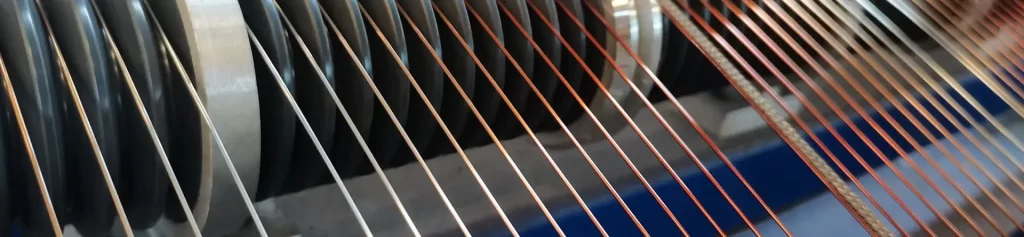
Soft Aluminum Foil for Shunt Reactor
Introduction
Shunt reactors are important reactive power compensation devices in high-voltage and ultra-high-voltage transmission systems, mainly used to absorb capacitive reactive power and regulate system voltage levels. Soft aluminum foil, as an important winding material, is widely used in high-voltage and ultra-high-voltage shunt reactors due to its advantages such as light weight, low cost, and good processing performance.
This article systematically describes the material characteristics of soft aluminum foil, its application advantages in shunt reactors, and key selection points, providing a reference for engineering selection.
I. Basic Principles and Structure of Shunt Reactors
1.1 Working Principle of Shunt Reactors
Shunt reactors are usually installed at the end of high-voltage transmission lines or in intermediate substations. Their function is to absorb the capacitive reactive power generated by the transmission line’s capacitance to ground during operation. When the transmission line is operating under no-load or light-load conditions, the distributed capacitance generates a large amount of capacitive reactive power, leading to increased terminal voltage. Shunt reactors prevent excessive voltage by absorbing this capacitive reactive power.
The reactance of shunt reactors typically ranges from tens to hundreds of henries, with rated voltages reaching 500kV or even higher. In ultra-high voltage transmission systems, shunt reactors are key equipment for ensuring safe and stable power grid operation.
1.2 Structural Types of Shunt Reactors
Dry-type Shunt Reactors: Employs an air-core coil structure, with windings supported by insulating materials and no oil immersion. Suitable for voltage levels of 35kV and below. Advantages include simple structure, convenient maintenance, and no oil contamination.
Oil-immersed Shunt Reactors: Windings are immersed in transformer oil, providing good heat dissipation. Suitable for high and ultra-high voltage levels up to 500kV and above. Has excellent insulation performance but requires oil maintenance.
Controllable Shunt Reactors: These reactors control the reactance value via thyristors, enabling dynamic adjustment of reactive power. Widely used in grid-connected systems for new energy sources such as wind power and photovoltaics.
1.3 The Role of Windings in Shunt Reactors
The windings of a shunt reactor carry the rated voltage and current, and their design directly affects the reactor’s electrical performance and mechanical reliability. Since shunt reactors typically operate on the grid for extended periods, the stability and durability of the winding materials are crucial.
During operation, the windings must withstand:
- Insulation stress under rated voltage
- Thermal effects when load current passes through
- Electrodynamic impacts during short circuits
- Vibration and aging during long-term operation
II. Material Properties of Soft Aluminum Foil
2.1 Basic Parameters of Soft Aluminum Foil
| Performance Indicators | Parameters |
|---|---|
| Material | 1060/1070/1350 Aluminum Alloy |
| Tensile Strength | 60-100 MPa |
| Elongation | 20-35% |
| Conductivity | ≥34 MS/m (61% IACS) |
| Thickness Range | 0.3-3.0 mm |
| Width Range | 20-500 mm |
2.2 Soft Aluminum Alloy System
1060 Aluminum Alloy: Industrial pure aluminum, aluminum content above 99.6%, highest conductivity but lower mechanical strength. Suitable for high current, low voltage applications.
1070 Aluminum Alloy: Aluminum content 99.7%, commonly used conductive aluminum material.
1350 Aluminum Alloy: Electrical aluminum material, specifically designed for conductive applications with high conductivity (61% IACS) and strictly controlled impurity content. The preferred material for high-voltage reactors.
2.3 Performance Advantages of Soft Aluminum Foil
Lightweight: Aluminum’s density is only 1/3 that of copper, significantly reducing winding weight and transportation costs.
Low Cost: Aluminum’s price is approximately 1/3 to 1/4 that of copper, offering significant cost advantage in high-current applications.
Good Processing Performance: Soft aluminum is easy to cut, shape, and weld, with relatively simple winding processes.
Corrosion Resistance: The oxide film on the aluminum surface has excellent corrosion resistance.
III. Application Advantages of Soft Aluminum Foil in Shunt Reactors
3.1 Weight Advantage
In high-voltage and ultra-high-voltage shunt reactors, windings need to withstand high voltage and current, requiring large conductor cross-sections. Using copper leads to excessive winding weight, increasing burden on core and structural components.
The soft aluminum foil solution can reduce weight by approximately 60% compared to copper foil, demonstrating significant economic benefits.
3.2 Heat Dissipation Performance
The flat shape of soft aluminum foil is beneficial for heat dissipation. In oil-immersed reactors, aluminum foil windings are in full contact with transformer oil. With a reasonable oil channel design, winding temperature rise can be effectively controlled.
3.3 Skin Effect
In systems containing harmonic components, the low skin effect of soft aluminum foil is more pronounced. The structural design of soft aluminum foil can effectively reduce the impact of skin effect on AC resistance.
3.4 Comparison with Copper Foil
| Comparison Items | Soft Aluminum Foil | Copper Foil |
|---|---|---|
| Density | 2.7 g/cm³ | 8.9 g/cm³ |
| Conductivity | 61% IACS | 100% IACS |
| Cost | Low | High |
| Weight | Light | Heavy |
| Processability | Good | Average |
IV. Selection Technical Guidelines
4.1 Voltage Rating and Aluminum Foil Specifications
| Voltage Rating | Recommended Thickness | Insulation Method |
|---|---|---|
| 35kV | 0.5-1.0mm | Insulating Paper |
| 110kV | 1.0-2.0mm | Insulating Paper + Insulating Sleeve |
| 220kV | 1.5-2.5mm | Oil Paper Insulation |
| 500kV | 2.0-3.0mm | Oil Paper + Capacitor Shielding |
4.2 Current Capacity and Cross-Section Calculation
Current Density Selection: Oil-immersed reactors typically use 1.5-2.5 A/mm².
Calculation Formula: Cross-sectional area A = I/(J×K)
Where I is the rated current, J is the current density, and K is the window fill factor.
4.3 Alloy Grade Selection
1350 Aluminum Alloy: Preferred for high-voltage and ultra-high-voltage shunt reactors due to high conductivity and stable performance.
1060/1070 Aluminum Alloy: Suitable for distribution shunt reactors (35kV and below).
V. Key Manufacturing Process Points
5.1 Winding Process
- Tension Control: Soft aluminum has low strength; winding tension must be precisely controlled
- Inter-turn Insulation: Insulating strips or paper between aluminum foils to form oil channels
- End Treatment: Ends must be reinforced to prevent discharge and mechanical damage
5.2 Welding Process
Argon Arc Welding: Most commonly used method with reliable quality.
Resistance Welding: Suitable for aluminum foil butt welding.
Silver Soldering: Used for aluminum to other metal connections.
5.3 Quality Inspection
- DC Resistance Measurement
- Insulation Resistance Test
- Withstand Voltage Test
- Partial Discharge Test
- Eddy Current Loss Test
VI. Typical Application Cases
Case 1: 500kV Ultra-High Voltage Shunt Reactor
Application: ±500kV flexible DC transmission project, line length exceeding 800km.
Solution: Oil-immersed ultra-high voltage shunt reactor with 1350 aluminum alloy soft aluminum foil, 2.0mm thick, 300mm wide.
Results: Passed all type tests, operated stably with loss performance better than design value.
Case 2: 220kV Wind Farm Shunt Reactor
Application: Wind farm substation compensating for capacitive reactive power from long-distance transmission.
Solution: Three-phase oil-immersed shunt reactor, 45Mvar rated capacity, with 1060 soft aluminum foil, 1.5mm thick.
Results: Voltage fluctuations effectively controlled, power factor met grid requirements.
Case 3: 35kV Distribution Shunt Reactor
Application: Industrial park distribution system with long cable lines causing excess capacitive reactive power.
Solution: Dry-type iron-core shunt reactor with 0.8mm thick soft aluminum foil.
Results: System voltage returns to normal, low operating noise, simple maintenance.
VII. Common Technical Questions
Q1: What are the advantages and disadvantages of soft aluminum foil compared to copper foil?
The main advantages are light weight and low cost. The main disadvantage is lower conductivity (61% IACS vs 100% IACS). However, for high-current applications, the aluminum foil solution offers better overall economy.
Q2: How is insulation guaranteed in high-voltage shunt reactors?
High-voltage shunt reactors use oil-paper insulation systems. Transformer oil penetrates the insulating paper fibers, forming an excellent oil-paper insulation structure with dielectric strength of 40-80kV/mm.
Q3: What are the precautions for welding soft aluminum foil?
Thoroughly clean the oxide film before welding; use high-purity argon gas protection; control welding heat input; perform non-destructive testing after welding.
Q4: What are the storage requirements?
Store in a dry and ventilated environment, avoid contact with corrosive substances. Storage temperature: -10°C to +40°C.
VIII. Technical Specifications
| Technical Specifications | Indicators |
|---|---|
| Material | 1060/1070/1350 Aluminum Alloy |
| Thickness Range | 0.3-3.0mm |
| Width Range | 20-500mm |
| Tensile Strength | 60-100 MPa |
| Conductivity | ≥34 MS/m (61% IACS) |
| Rated Voltage | 10kV-500kV |
| Standards | IEC 60271, GB/T 12725 |
Conclusion
Soft aluminum foil, with its advantages of light weight, low cost, and good processing performance, shows broad application prospects in high-voltage and ultra-high-voltage shunt reactors. Especially in shunt reactors for high-current, long-distance transmission lines, the soft aluminum foil solution has significant economic benefits and technical advantages.
Our company specializes in manufacturing soft aluminum foil for shunt reactors and offers selection consultation and technical support services.
Contact Information
Email: office@cnlpzz.com
WhatsApp: 0086-19337889070
This article was compiled by Zhengzhou LP Industry Co., Ltd., specializing in the research and manufacturing of magnetic wires and special conductors for thirty years.