

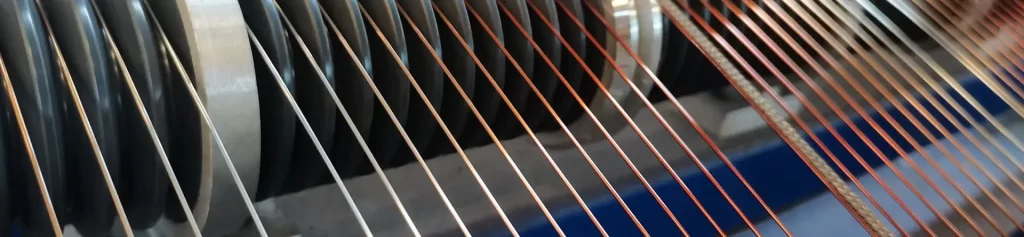
Aerospace telemetry systems are the core technology system for monitoring the status and transmitting data in spacecraft such as launch vehicles, satellites, and spacecraft. Telemetry systems collect physical parameters of key components of the spacecraft through various sensors, and after signal modulation, transmission, and ground reception processing, provide data support for spacecraft status monitoring, fault diagnosis, and mission decision-making. Enameled copper conductors, as the basic material for signal transmission and power supply in the electronic equipment of telemetry systems, directly affect the reliability and service life of the entire system. Aerospace applications place extremely stringent requirements on electronic components. Unlike ordinary industrial environments, spacecraft need to withstand drastic temperature changes, strong mechanical vibrations, high vacuum environments, and cosmic radiation during launch and flight. Enameled copper conductors must meet the stability requirements under these complex operating conditions to ensure the normal operation of the telemetry system.
Basic Requirements for Aerospace Telemetry Systems
High Reliability Requirements
The success or failure of a space mission often depends on the reliability level of its electronic systems. As the “nervous system” of a spacecraft, the telemetry system needs to maintain stable operation throughout the entire mission cycle; any conductor failure could lead to catastrophic consequences. Therefore, the reliability requirements for enameled copper conductors used in aerospace far exceed those for ordinary industrial applications. Conductor reliability is reflected in multiple dimensions. First, the stability of electrical performance—maintaining consistent conductivity and insulation resistance over a wide temperature range; second, the reliability of mechanical performance—able to withstand the severe vibrations and impact loads during launch; and finally, environmental adaptability—not experiencing performance degradation in special environments such as vacuum, temperature fluctuations, and radiation.
Temperature Range Requirements
Spacecraft undergo severe temperature cycles during orbital operation. Taking an Earth-orbiting satellite as an example, the temperature on its sun-facing side can reach above 120°C, while the temperature on its shaded side can drop below -100°C. This wide temperature range places stringent demands on the heat and cold resistance of enameled copper conductors. The conductors typically need to operate within a temperature range of -65°C to +200°C, and should not exhibit issues such as insulation layer cracking, peeling, or significant electrical performance drift during temperature cycling.
Vacuum Environment Characteristics
Spacecraft orbital environments operate in a high vacuum state, typically ranging from 10^-3 to 10^-6 Pascals. In a vacuum environment, materials undergo volatilization and outgassing, potentially leading to insulation layer mass loss and performance degradation. Enameled copper conductors for aerospace applications require specialized vacuum degassing tests to ensure their volatile content meets specified limits under vacuum conditions.
Radiation Resistance
Spacecraft in Earth orbit and deep space missions face continuous exposure to cosmic rays and solar particle radiation. Radiation environments can cause molecular chain breakage or cross-linking reactions in insulation materials, manifesting as brittleness, discoloration, or decreased electrical performance. Aerospace-grade enameled copper conductors should use insulation materials with good radiation resistance.
Technical Advantages of Enameled Copper Wire
Excellent Conductivity
Copper is the most conductive common metal material besides silver. The temperature coefficient of resistance of copper conductor is approximately 0.00393/℃, maintaining a relatively stable resistance value over a wide temperature range, which is crucial for the transmission of precision signals. Copper also possesses excellent thermal conductivity, approximately 397 W/(m·K), helping dissipate heat generated when current flows through the conductor.
Mature Manufacturing Process
The manufacturing process of enameled copper conductors has undergone decades of development and refinement, forming a mature and reliable technical system. From copper billet drawing to enameling coating, from baking and curing to quality inspection, each process has mature process parameters and strict quality control standards.
Comprehensive Specifications
Enameled copper conductors range from micro-wires with a diameter of 0.02mm to medium-thickness wires of several millimeters, from circular to rectangular cross-sections, and from single-layer insulation to multi-layer composite insulation, meeting the diverse application needs of aerospace telemetry systems.
Good Solderability
The development of solderable wires has solved the insulation layer soldering problem. By adding special components to the insulating varnish formulation, the insulation layer can self-crack or be wetted by molten solder at soldering temperatures, allowing for direct soldering without prior removal of the insulation layer.
Key Selection Parameters
Determining Thermal Class
| Thermal Class | Max Operating Temperature | Typical Applications |
|---|---|---|
| Class 120 | 120°C | Interior electronic equipment, conventional applications |
| Class 130-155 | 130-155°C | Power converters, high-frequency switching circuits |
| Class 180+ | 180°C+ | Extreme temperature environments, high-reliability critical systems |
The thermal class of insulation materials is expressed as a temperature value, indicating the material’s ability to operate continuously without significant performance degradation at that temperature. Selection should consider: operating temperature environment, temperature rise caused by current carrying capacity, reliability safety margin requirements, and temperature compatibility with adjacent components.
Insulation Material Types
Different types of insulating varnishes have their own technical characteristics. Polyurethane enameled wire has excellent direct soldering performance. Polyester enameled wire has good heat resistance and mechanical strength. Polyester imide enameled wire offers higher thermal class and chemical stability. Polyamide-imide enameled wire has a maximum thermal class of 220°C.
Conductor selection involves balancing electrical performance and mechanical processing. From an electrical perspective, conductor resistance determines voltage drop and power loss. From a mechanical perspective, conductor flexibility affects wiring within spacecraft. For signal transmission wires, conductor diameter is typically selected in the range of 0.1mm to 0.5mm.
Insulation Thickness
Insulation layer thickness directly affects withstand voltage and dimensions. Thin-insulated wires have smaller outer diameter but limited withstand voltage margin. Standard-insulated wires balance withstand voltage and dimensions. Thick-insulated wires have large withstand voltage margin but increased outer diameter and weight.
Relevant Standards and Certifications
International Standards
Aerospace wire products need to meet international and regional standards. IEC 60317 series specifies technical parameters and test methods for enameled wires. NEMA MW1000 is widely used in North American and aerospace markets. MIL-W-583L specifies technical requirements for aerospace winding wires.
Quality Certification
Aerospace-grade enameled copper conductor suppliers should possess ISO 9001 certification. For aerospace projects, suppliers may need to pass specific aerospace supplier qualification audits including production equipment, process control, testing capabilities, and quality record traceability.
Typical Applications
Sensor Signal Transmission
Telemetry systems collect physical parameters including temperature, pressure, acceleration, attitude angle, current, and voltage. Sensor signal transmission wires should focus on shielding performance and anti-interference capability. Using shielded wires or coaxial cables can effectively suppress external electromagnetic interference on weak signals.
Power Transmission and Distribution
Spacecraft power systems transmit electrical energy from solar cells or batteries to various devices. Power transmission wires need to carry large current based on current carrying capacity calculations. Multi-redundancy design is typically employed, with backup power channels for critical loads.
Circuit Board Interconnection
Circuit boards in aerospace electronic equipment require electrical connections via wiring that must withstand vibration and shock loads. Circuit board interconnecting wires typically use fine-sized products with good flexibility for wiring and fixing within limited space.
RF Signal Transmission
Telemetry systems require transmission of radio frequency signals such as high-frequency telemetry data or RF command signals. RF signal transmission typically uses coaxial cables or dedicated RF wires with characteristic impedance of 50Ω or 75Ω.
Selection Recommendations
Determining Basic Parameters
When selecting conductors, the operating environment should be clearly defined including temperature range, pressure environment, radiation level, and mechanical load. Appropriate safety margins should be included when determining temperature parameters.
Supplier Technical Capabilities
Aerospace conductors place high demands on supplier technical capabilities. Prioritize suppliers with experience in supplying aerospace projects. For batch supplies, pay attention to consistency of products across different batches.
Incoming Inspection
Even with supplier qualification certificates, necessary incoming inspections should be conducted including visual inspection, dimensional measurement, insulation resistance testing, and withstand voltage testing. For high-reliability applications, additional detailed inspections may include insulation layer thickness distribution measurement, flexibility testing, and thermal shock testing.
The selection of enameled copper conductors for aerospace telemetry systems is a technical task requiring comprehensive consideration of multiple factors. Starting with system requirements, clarify operating environment conditions and reliability requirements; determine conductor specifications based on electrical performance requirements; select appropriate product types combining thermal class and insulation material characteristics; and finally, focus on supplier qualifications and product quality consistency. High reliability is a perpetual pursuit in aerospace applications.