

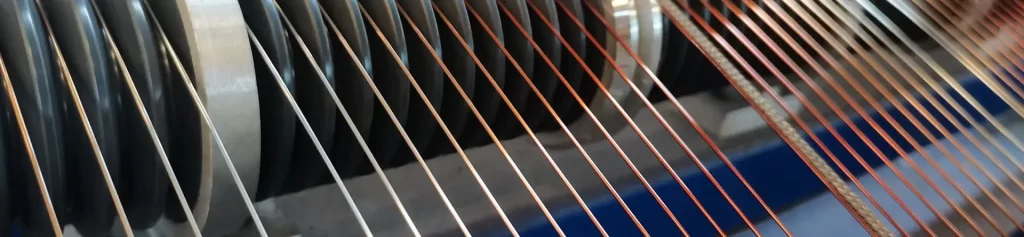
Pure Enameled Copper Wire VS Copper Clad Aluminum Wire Differences
Introduction
In the selection of magnet wire, pure enameled copper wire and copper clad aluminum wire are two common conductor materials. Each has its own characteristics and is suitable for different application scenarios. Understanding the differences between these two materials can help you make more informed decisions when purchasing and meet your specific needs.
This article provides a detailed comparison of pure enameled copper wire and copper clad aluminum wire from multiple dimensions, helping you understand their performance differences and application characteristics, providing reference for your selection.
What is Pure Enameled Copper Wire
Pure enameled copper wire is made from high-purity electrolytic copper through multiple processes including wire drawing, annealing, and enameling. The copper conductor is made of pure copper, wrapped with an insulating varnish film providing electrical insulation protection.
Main Characteristics:
- Excellent electrical conductivity: Copper has one of the highest conductivity among common metals, with low resistivity, enabling efficient current transmission
- High mechanical strength: Pure copper has high tensile strength and good flexibility, with excellent bending resistance
- Good corrosion resistance: In general environments, copper has excellent corrosion resistance, suitable for various applications
- Strong thermal stability: Copper’s melting point is as high as 1083°C, maintaining stable performance at higher temperatures
Pure enameled copper wire is the most common type of magnet wire in the market, widely used in various electrical equipment.
What is Copper Clad Aluminum Wire
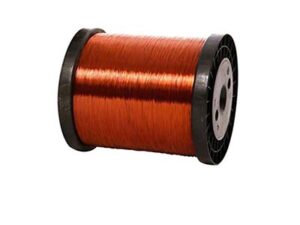
Copper clad aluminum wire is a composite material with conductor made of copper and aluminum. The copper layer covers the aluminum core surface, combining the conductivity of copper with the lightweight advantages of aluminum.
Main Characteristics:
- Lightweight: Copper clad aluminum wire has a density about 30-40% of pure copper, significantly reducing wire weight
- Lower cost: Aluminum price is much lower than copper, significantly reducing material costs
- Retains copper advantages: The outer copper layer maintains copper’s good conductivity and weldability
- Easy to process: Copper clad aluminum wire can be wound and formed like pure copper wire
Copper clad aluminum wire can replace pure copper wire in some specific applications, achieving the goals of weight reduction and cost savings.
Basic Characteristics Comparison
Material Composition Comparison
| Item | Pure Enameled Copper Wire | Copper Clad Aluminum Wire |
|---|---|---|
| Conductor Material | 100% Electrolytic Copper | Copper layer over aluminum core |
| Copper Content | 100% | About 10-20% (by weight) |
| Density | 8.9 g/cm³ | About 3.0 g/cm³ |
| Melting Point | 1083°C | 660°C (aluminum melting point) |
Electrical Conductivity Comparison
| Item | Pure Enameled Copper Wire | Copper Clad Aluminum Wire |
|---|---|---|
| Conductivity | 100% IACS | About 60-65% IACS |
| DC Resistance | Low | Higher (about 1.5x of copper) |
| Skin Effect | Good performance at high frequency | Close to copper at high frequency |
| Contact Resistance | Low | Relatively low (at copper layer surface) |
Weight Comparison
The main advantage of copper clad aluminum wire is its light weight:
- Under the same electrical performance, copper clad aluminum wire weighs about 30-40% of pure copper wire
- Significant weight advantage in large-size conductors and long-distance transmission
- Helps reduce transportation costs and installation burden
Mechanical Properties Comparison
Tensile Strength
| Item | Pure Enameled Copper Wire | Copper Clad Aluminum Wire |
|---|---|---|
| Tensile Strength | 195-245 MPa | 90-140 MPa |
| Elongation | 25-40% | 15-25% |
| Operating Temperature Range | -40°C to 200°C+ | -40°C to 150°C |
Flexibility and Bending Performance
- Pure Enameled Copper Wire: Good flexibility, easy to bend and form, suitable for complex winding processes
- Copper Clad Aluminum Wire: Flexibility slightly lower than pure copper, but still meets most application requirements
Fatigue Resistance
Pure enameled copper wire performs better in repeated bending and vibration environments, more suitable for dynamic application scenarios.
Creep Performance
Copper clad aluminum wire may experience creep under high temperature long-term operation, affecting dimensional stability, which needs to be considered in design.
Thermal Performance Comparison
Heat Resistance
| Item | Pure Enameled Copper Wire | Copper Clad Aluminum Wire |
|---|---|---|
| Short-term Overload Temperature | Up to 300°C | About 200°C |
| Long-term Operating Temperature | Depends on insulation class | Slightly lower than pure copper |
| Heat Dissipation | Excellent | Good |
Thermal Expansion
Copper clad aluminum wire has thermal expansion coefficient close to pure copper, with good dimensional stability during temperature changes.
Thermal Conductivity
Pure enameled copper wire has better thermal conductivity than copper clad aluminum wire, beneficial for heat dissipation in high current density applications.
Cost Analysis
Material Cost
The main advantage of copper clad aluminum wire is lower cost:
- Aluminum price is about 30-40% of copper
- Under the same conductivity, copper clad aluminum wire cost is about 50-60% of pure copper wire
- More significant cost difference for large cross-section conductors
Processing Cost
| Item | Pure Enameled Copper Wire | Copper Clad Aluminum Wire |
|---|---|---|
| Wire Drawing | Standard process | Requires special composite process |
| Enameling | Standard process | Basically the same |
| Annealing | Standard process | Requires control |
| Welding | Conventional welding | Requires special treatment (aluminum core cannot be directly welded) |
Application Scenarios Comparison
Suitable Scenarios for Pure Enameled Copper Wire
Applications where copper wire is preferred:
- High reliability requirement equipment
- Space-constrained high current transmission
- High frequency AC applications
- Frequently bending occasions with high mechanical strength requirements
- High temperature operating environments
- Long-term investment considerations
Typical Applications:
- Precision motors such as servo motors, stepper motors
- Aerospace equipment with extremely high reliability requirements
- Medical equipment where safety is paramount
- High-end electronic equipment
- Industrial automation control
- New energy vehicle drive motors
Suitable Scenarios for Copper Clad Aluminum Wire
Applications suitable for copper clad aluminum wire:
- Large-scale applications sensitive to cost such as building electrical
- Occasions with strict weight limitations such as aviation equipment
- Long-distance transmission with large cross-section conductors
- Fixed installation power transmission
- Applications without extremely demanding heat dissipation requirements
Typical Applications:
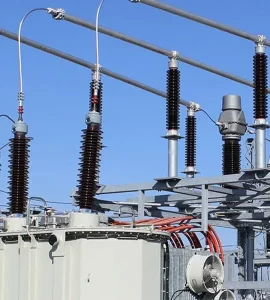
- Power transformers (distribution class) such as pole transformers
- Building electrical wiring, building distribution systems
- Audio equipment such as audio transformers, audio inductors
- Electromagnetic shielding, cable shielding layers
- Power cable conductors, large cross-section power cables
How to Choose
Selection Factor Considerations
| Consideration | Recommendation | Explanation |
|---|---|---|
| High reliability requirement | Pure Enameled Copper Wire | Stable performance, large safety margin |
| Cost control priority | Copper Clad Aluminum Wire | Low material cost |
| Lightweight requirement | Copper Clad Aluminum Wire | Significant weight advantage |
| High frequency application | Pure Enameled Copper Wire | Better electrical performance |
| High current transmission | Pure Enameled Copper Wire | Low resistance, less heat generation |
| Long distance fixed wiring | Copper Clad Aluminum Wire | Obvious cost advantage |
| High temperature environment | Pure Enameled Copper Wire | Better heat resistance |
| Frequent bending application | Pure Enameled Copper Wire | High mechanical strength |
Selection Recommendations
Choose pure enameled copper wire when:
- Equipment has high performance and reliability requirements
- Installation space is limited, requiring maximum conductivity in limited space
- Operating environment temperature is high or heat dissipation conditions are limited
- Long-term stable operation is required with low maintenance cost
Choose copper clad aluminum wire when:
- Project budget is limited and initial investment is important
- Wire weight is a key concern
- Used for long-distance fixed wiring with low maintenance needs
- Weight-sensitive applications such as aviation, rail transit, automotive lightweight
- Large batch standardized products where cost control is crucial
FAQ
Q1: How is the safety of copper clad aluminum wire?
Copper clad aluminum wire is safe when correctly designed and applied. Its outer copper layer provides good conductivity and weldability. However, correct connection processes must be ensured to avoid heating problems caused by poor contact.
Q2: Can copper clad aluminum wire use conventional welding processes?
Welding of copper clad aluminum wire requires some special considerations. Since the aluminum core cannot be directly soldered with conventional solder, the following methods are usually adopted:
- Use specialized copper clad aluminum wire welding processes
- Adopt crimping connection methods instead of welding
- Use mechanical connectors to ensure reliable connection
- Apply special treatment at connections to prevent electrochemical corrosion
Q3: Is there a difference in service life between the two wires?
Under normal use conditions, both wires can achieve a service life of 20-30 years or more. Pure enameled copper wire may have a longer service life in harsh environments due to its higher stability and corrosion resistance.
Q4: Is copper clad aluminum wire suitable for motors?
Copper clad aluminum wire can be used in some motors with low power density requirements, such as certain transformers and large motors. However, for high-performance motors, especially new energy vehicle drive motors with high power density, efficiency and reliability requirements, pure enameled copper wire is usually selected.
Technology Development Trends
Copper Clad Aluminum Wire Technology Progress
With continuous improvement of manufacturing processes, the performance of copper clad aluminum wire is also continuously improving:
- Composite process improvement: New composite processes make the bonding between copper layer and aluminum core tighter, improving overall conductor performance
- Copper layer thickening: Increasing copper layer thickness can improve conductivity and weldability
- Surface treatment technology: Advanced surface treatment technology improves corrosion resistance and weldability of copper clad aluminum wire
New Composite Materials
Besides traditional copper clad aluminum wire, some new composite material conductors have appeared on the market:
- Copper clad steel: Outer layer is copper, inner layer is copper alloy, combining copper advantages
- Aluminum clad copper: Inner layer is copper, outer layer is aluminum, suitable for special applications
- New alloy conductors: Balancing performance and cost through developing new alloy materials
Quality Identification Methods
Appearance Inspection
Pure Enameled Copper Wire: Conductor color is pure copper reddish-brown, surface is smooth with uniform color, color unchanged after bending.
Copper Clad Aluminum Wire: Conductor cross-section shows obvious copper layer and aluminum core layering, end face can clearly see outer copper layer and inner aluminum core, copper layer usually accounts for 10-20% of cross-section.
Simple Testing Methods
- Density test: Measure conductor density, copper clad aluminum wire density is significantly lower than pure copper wire
- Weight comparison: For wires of the same length and specification, copper clad aluminum wire is significantly lighter
- Resistance measurement: Measure DC resistance, copper clad aluminum wire has higher resistance value
Conclusion
Pure enameled copper wire and copper clad aluminum wire each have their own advantages and disadvantages, suitable for different application scenarios. Selection should be based on specific needs with comprehensive consideration.
Choose Pure Enameled Copper Wire: When your application has high requirements for electrical conductivity, mechanical strength, reliability, and heat resistance, pure enameled copper wire is the better choice. Although initial cost is higher, its excellent performance and reliability can reduce long-term operating costs and maintenance risks.
Choose Copper Clad Aluminum Wire: When your primary considerations are cost control or weight reduction, and application scenarios do not have particularly demanding wire performance requirements, copper clad aluminum wire is an economical and practical choice. Especially in large-scale applications, material cost savings are very significant.
The final choice should be based on your specific needs, comprehensively considering factors such as performance requirements, cost budget, usage environment, and safety considerations, making the most suitable decision for you. There is no absolute good or bad, only suitable and unsuitable.
Contact Information
Email: office@cnlpzz.com
WhatsApp: 0086-19337889070
Website: www.lpwindingwire.com
This article was compiled by Zhengzhou LP Industry Co., Ltd., which has focused on the research and manufacturing of electrical magnet wire and special conductors for thirty years.