

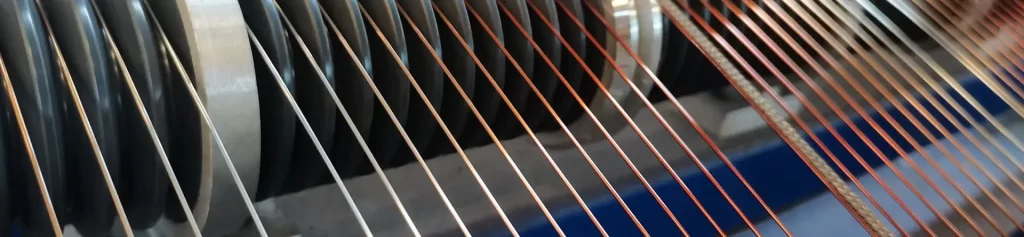
Production Line of Magnet Wire
Introduction
Magnet wire, as a core material for power transmission and motor manufacturing, is widely used in the production and manufacturing of transformers, generators, motors, and other equipment. From household appliances to industrial motors, from distribution transformers to power transformers, magnet wire can be found everywhere. Understanding the complete production and manufacturing process of magnet wire is of great significance for equipment selection, process optimization, and production management.
This article systematically introduces the main manufacturing process flow of magnet wire production line, covering core processes such as wire drawing, annealing, insulation coating, and finished product inspection, providing reference for production management personnel and engineering technicians.
Production Process Overview
Main Product Types
Magnet wire is mainly classified into three types according to insulation method:
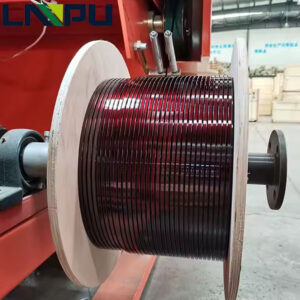
Enameled Wire: The most widely used type of magnet wire, with insulating paint coated on the conductor surface and baked to form a paint film. Enameled wire has advantages of thin insulation layer, high slot fill rate, and high production efficiency, widely used in various motors, transformers, and current transformers.
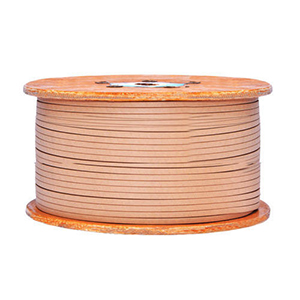
Paper Covered Wire: With insulating paper wrapped around the outside of the conductor, usually requiring transformer oil treatment. Paper covered wire has reliable insulation performance, high voltage resistance, and good heat dissipation, being the main winding material for oil-immersed transformers.
Fiberglass Wire: With fiberglass braid or wrapping on the outer layer, having excellent high temperature resistance and mechanical strength. Fiberglass wire can withstand temperatures up to 550°C, suitable for high temperature environments or special transformers.
Typical Process Flow
The typical production process flow of magnet wire is as follows:
Raw materials (copper rod/aluminum rod) → Wire drawing process → Annealing process → Insulation coating process → Finished product inspection → Packaging and warehousing
Each process is closely connected, forming a complete production line. Each process has its specific technical requirements and quality control points.
Wire Drawing Process
Wire Drawing Principle
Wire drawing is the process of gradually processing metal rods into conductors of required diameter through multiple wire drawing dies. Wire drawing is the first process in magnet wire production, and conductor quality directly affects the processing effect of subsequent processes and the performance of the final product.
Process Flow: Raw material loading → Coarse wire drawing → Medium wire drawing → Fine wire drawing → Finished wire drawing → Inspection → Transfer
Main Equipment: Pay-off stand, wire drawing machine (mostly continuous wire drawing machines), take-up machine, cooling system, lubrication system
Wire Drawing Parameters
Wire Drawing Passes: Determined according to finished product specifications, usually 6-15 passes. Pass design needs to comprehensively consider reduction rate, die life, and production efficiency.
Reduction Rate: Usually 10%-30% per pass. Excessive reduction increases die load, while insufficient reduction reduces production efficiency.
Drawing Speed: Determined according to wire diameter and equipment capacity, usually 500-1500 m/min. High-speed drawing improves efficiency but requires better lubrication and cooling.
Finished Product Specifications
| Conductor Diameter | Typical Passes | Drawing Speed | Application |
|---|---|---|---|
| 8.0-3.0mm | 6-8 passes | 800-1200 m/min | Large motors, transformers |
| 3.0-1.0mm | 8-10 passes | 500-1000 m/min | Medium motors, instrument transformers |
| 1.0-0.1mm | 10-15 passes | 300-800 m/min | Small motors, electronic equipment |
Quality Control Points
Dimensional Accuracy: Conductor diameter deviation should be controlled within the specified range, usually within ±1.5%.
Surface Quality: Surface should be smooth, free from drawing marks, oxidation, and burrs.
Mechanical Properties: Tensile strength and elongation should meet standard requirements.
Annealing Process
Annealing Principle
Annealing is the process of heating drawn conductor to appropriate temperature and holding for a certain time to eliminate work hardening and restore conductor softness. Annealing gives the conductor good mechanical properties for subsequent winding processing, while stabilizing the resistivity value.
Process Flow: Pay-off → Preheating → Heating → Holding → Slow cooling → Unloading → Inspection → Transfer
Main Equipment: Annealing furnace (bell type or continuous type), cooling device, pay-off/take-up device, protective gas system
Annealing Types
Bell Type Annealing: The bobbin wound with conductor is placed inside the annealing furnace for annealing. Suitable for small batch multi-variety production with high flexibility but lower efficiency.
Continuous Annealing: Conductor continuously passes through the annealing furnace online. Suitable for large batch single-variety production with high efficiency but larger equipment investment.
Annealing Parameters
| Material | Annealing Temperature |
|---|---|
| Soft copper | 350-450°C |
| Hard copper | 400-500°C |
| Aluminum | 300-400°C |
Insulation Time: Determined according to wire diameter and furnace type, usually 2-8 hours.
Cooling Method: Natural cooling or forced cooling; better cooling effect under protective gas for brighter surface.
Quality Judgment
Softening Degree: Conductor should be able to easily bend more than 90° without brittle fracture.
Surface Condition: Surface should be smooth, free from oxidation discoloration, oil stains, and impurities.
Resistivity: Should meet the required resistivity range in the standard.
Insulation Coating Process
Enameling Process
Enameling is the core insulation process of coating insulating paint on the conductor surface to form a uniform paint film. Paint film quality directly determines the insulation performance and service reliability of enameled wire.
Process Flow: Pay-off → Preheating → Coating → Baking → First layer curing → Second coating → Baking → Cooling → Take-up
Main Equipment: Enameling machine, paint tank, baking furnace, cooling system, pay-off/take-up device
Coating Methods:
- Felt type coating: Traditional method, with relatively poor paint film uniformity, being gradually eliminated
- Die type coating: Modern mainstream method, controlling paint film thickness precisely through precision dies, with good uniformity
- Spray type coating: Suitable for special specification products, with wide paint film thickness range
Paper Wrapping Process
Paper wrapping is the insulation process of winding insulating paper on the outside of the conductor. Paper covered wire is usually used in oil-immersed transformers and needs vacuum drying and oil immersion treatment to achieve optimal insulation performance.
Process Flow: Pay-off → Paper tape tensioning → Wrapping → Take-up
Main Equipment: Paper wrapping machine, pay-off stand, take-up machine, tension control device
Paper Tape Width: Selected according to insulation thickness requirements, usually 10-50mm.
Overlap Width: 2-5mm to ensure insulation continuity.
Number of Paper Layers: Determined according to voltage class.
| Voltage Class | Number of Paper Layers |
|---|---|
| Low voltage (below 1kV) | 2-4 layers |
| Medium voltage (3-35kV) | 4-8 layers |
| High voltage (66kV and above) | 8 layers and above |
Fiberglass Process
Fiberglass insulation has excellent high temperature resistance and mechanical strength, suitable for high temperature working conditions or special transformers.
Process Flow: Pay-off → Fiberglass yarn feeding → Braiding/wrapping → Take-up
Braiding Density: Determined according to insulation requirements, usually 8-16 braids/inch.
Temperature Resistance: Up to 550°C, far exceeding organic insulation materials.
Finished Product Inspection
Finished product inspection is the final gate for ensuring product quality.
Inspection Items
- Appearance Inspection: Smooth surface, uniform color, no bubbles, particles, or missing coating
- Dimensional Inspection: Conductor diameter, insulation thickness, outer diameter
- Electrical Inspection: Voltage withstand test, insulation resistance test, pinhole detection
- Mechanical Inspection: Tensile strength, elongation, bending performance, abrasion resistance
Inspection Standards
| Inspection Item | Qualification Standard | Test Method |
|---|---|---|
| Voltage withstand | 2000-4000V, no breakdown | Voltage withstand tester |
| Insulation resistance | ≥10MΩ | Insulation resistance meter |
| Pinholes | ≤5/30m | Electrolytic pinhole tester |
| Tensile strength | ≥195MPa (copper) | Universal testing machine |
| Elongation | ≥25% (copper) | Universal testing machine |
Packaging and Warehousing
Packaging Methods
Spool Packaging: Winding magnet wire on plastic or wooden spools for easy transportation and use.
- Specifications: PN16, PN25, PN30, etc.
- Capacity: Usually 50-500kg according to wire diameter and spool specifications
Disc Packaging: Winding magnet wire on iron discs, suitable for heavy products.
- Specifications: PT16, PT25, etc.
Marking Requirements
Each packaging unit should be clearly marked: product model and specifications, net weight and gross weight, production date and batch number, manufacturer information.
Storage Conditions
- Dry, ventilated warehouse
- Temperature: -10°C to 40°C
- Relative humidity: ≤70%
- Avoid direct sunlight and rain
- Avoid contact with corrosive substances
Production Line Layout
Layout Principles
- Smooth Process: Arrange processes in sequence to reduce material handling distance and transfer time
- Process Connection: Keep adjacent processes close for easy material transfer and quality feedback
- Convenient Inspection: Arrange inspection area at appropriate position for timely problem discovery
- Good Ventilation: Annealing and coating processes generate heat and solvent volatilization, requiring good ventilation
Typical Production Line Configuration
| Process | Main Equipment | Area |
|---|---|---|
| Wire drawing | Continuous wire drawing machine | 200-500㎡ |
| Annealing | Annealing furnace (2-4 units) | 150-300㎡ |
| Enameling | Enameling machine (4-12 units) | 300-800㎡ |
| Inspection | Inspection equipment | 50-100㎡ |
Production Capacity and Specification Range
Typical Production Capacity
| Product Type | Annual Capacity | Main Specifications |
|---|---|---|
| Enameled wire | 3000-10000 tons | 0.1-5.0mm |
| Paper covered wire | 1000-5000 tons | 1.0-20mm |
| Fiberglass wire | 500-2000 tons | 0.5-10mm |
Product Specification Range
| Parameter | Range |
|---|---|
| Conductor material | Copper, Aluminum |
| Conductor diameter | 0.05-20mm |
| Insulation thickness | 0.02-5mm |
| Temperature resistance | Class A (105°C) to Class H (180°C) |
Conclusion
The manufacturing of magnet wire is a multi-process, high-precision system. From wire drawing and annealing to insulation coating, each process requires strict control to produce high-quality products.
Reasonable production line layout, advanced production equipment, and perfect process parameter control are the keys to ensuring magnet wire production efficiency and product quality. With the technological progress of the motor and transformer industry, performance requirements for magnet wire are continuously increasing, which will promote the sustainable development of manufacturing technology.
Contact Information
Email: office@cnlpzz.com
WhatsApp: 0086-19337889070
This article was compiled by Zhengzhou LP Industry Co., Ltd., which has focused on the research and manufacturing of electrical magnet wire and special conductors for thirty years.