


In high-volume manufacturing environments where thousands of wire terminations must be completed quickly and reliably, the time and effort required to strip enamel insulation can become a major bottleneck. Traditional enameled wires require mechanical stripping, chemical stripping, or laser ablation before soldering, each adding time, cost, and potential for quality issues. Polyurethane easy soldering enameled copper wire eliminates this bottleneck through a unique insulation chemistry that allows the enamel to be soldered through directly without prior stripping.
What is Polyurethane Enameled Copper Wire?
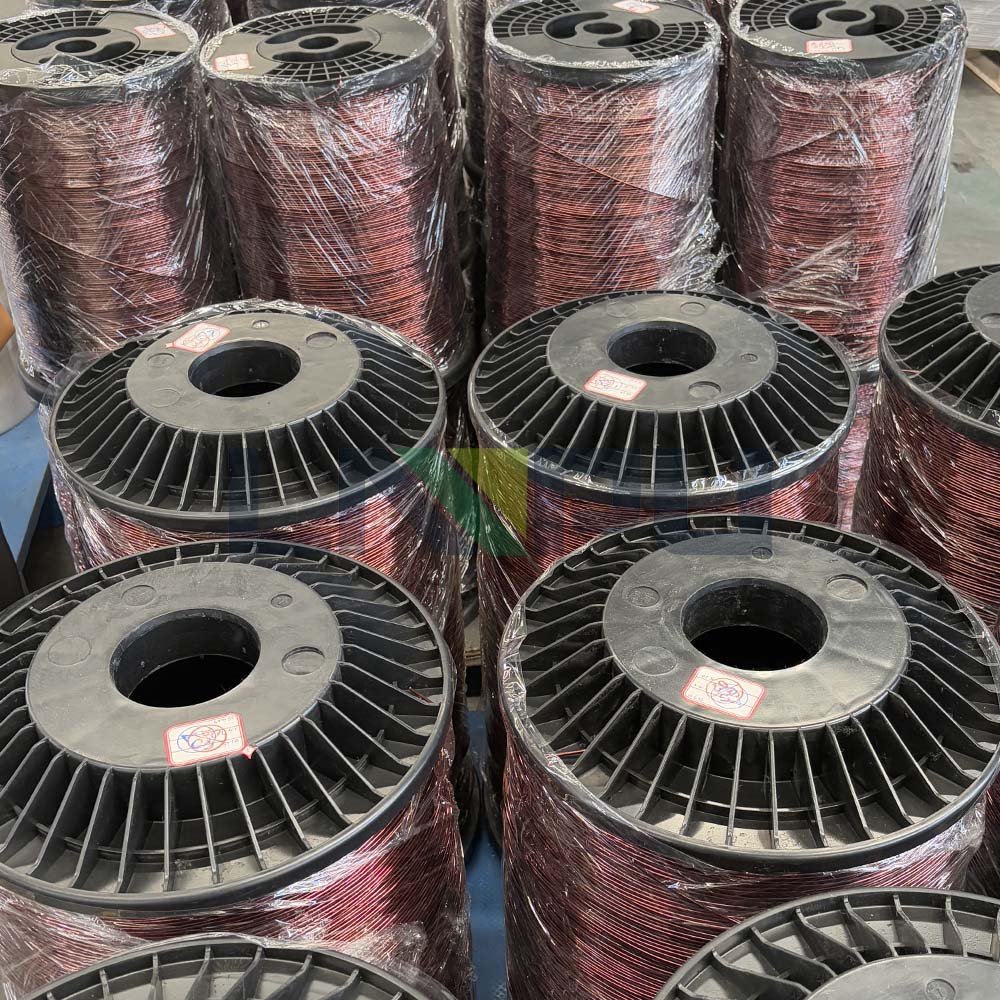
Polyurethane enameled copper wire is a magnet wire insulated with a thin film of polyurethane polymer, designated QA or UEW in international standards. Polyurethane is a versatile polymer that can be formulated with widely varying properties by adjusting the chemistry of the polyol and isocyanate components. In the magnet wire industry, polyurethane formulations are engineered to provide a unique combination of properties: good electrical insulation, mechanical flexibility, thermal endurance, and—most distinctively—the ability to be soldered directly without stripping the enamel.
Polyurethane enameled wire is available in thermal classes from 105°C (Class A) through 155°C (Class F), depending on the specific formulation. The wire is produced in both round and rectangular cross-sections and in a wide range of AWG sizes, from very fine wire below 0.05 mm to heavy magnet wire above 2 mm. Common applications include high-frequency coils, small motor windings, relay coils, solenoid windings, and any application where direct soldering offers significant manufacturing advantages.
What Makes Polyurethane “Easy Soldering”?
The easy soldering property of polyurethane enameled wire results from the thermal decomposition characteristics of the polyurethane polymer at elevated temperatures.
Thermal Decomposition Mechanism
When polyurethane enameled wire is brought into contact with a molten solder bath or a hot soldering iron tip at temperatures of approximately 360°C to 420°C, the polyurethane insulation rapidly decomposes through a thermally-activated breakdown process. The polymer chains break down at the high temperature, producing volatile decomposition products that evaporate from the wire surface. The decomposition occurs within 1 to 2 seconds of contact with the hot solder, leaving the underlying copper surface clean and ready for solder wetting.
Decomposition Temperature
The decomposition temperature of polyurethane enamel is in the range of 320°C to 380°C, which is below the typical soldering temperature of 360°C to 420°C for tin-lead or lead-free solders. This means the polyurethane decomposes as soon as it contacts the molten solder, with no need for separate stripping operations. The decomposition products are volatile and do not leave residue on the copper surface, ensuring clean solder joints.
Self-Cleaning Effect
Unlike mechanical or chemical stripping methods that can leave residual contamination, the thermal decomposition process is inherently self-cleaning. The high temperature of the solder burns off any organic contamination on the copper surface, and the decomposition of the polyurethane occurs uniformly around the wire circumference. The result is a clean, oxide-free copper surface that wets readily with solder.
Key Advantages of Polyurethane Insulated Wire
Polyurethane easy soldering enameled copper wire offers several distinct advantages that have made it the preferred choice for many high-volume manufacturing applications.
Elimination of Stripping Operations
The most significant advantage is the elimination of mechanical or chemical stripping operations. In conventional wire termination, the enamel must be removed from the wire end before soldering, typically using one of the following methods:
- Mechanical stripping with a hand tool or automatic stripper
- Chemical stripping with acid or alkaline solutions
- Abrasive brushing or sandpaper
- Laser ablation
- Heat stripping with a flame or hot element
Each of these methods adds time, cost, and the potential for quality issues. Polyurethane wire eliminates these steps entirely—the same operation that solders the wire also strips the insulation.
Higher Production Throughput
By eliminating the stripping step, polyurethane wire enables significantly higher production throughput. Automated soldering systems can dip the wire end directly into a solder bath or wrap it around a solder-precoated terminal and apply heat, completing the termination in a single operation. This dramatically reduces cycle time compared to conventional strip-then-solder processes.
Lower Labor Costs
Stripping operations often require skilled manual labor, particularly for small wire sizes or unusual terminations. By automating the termination process with polyurethane wire, manufacturers can reduce labor requirements and minimize operator variability. The simplified process also makes it easier to train new operators.
Consistent Solder Joint Quality
Because the thermal decomposition process is highly repeatable and self-cleaning, solder joints made on polyurethane wire tend to be more consistent than those made on mechanically stripped wire. There is no risk of incomplete stripping, copper strand damage, or residual insulation that could affect joint quality. Every joint is made on a clean, oxide-free copper surface.
Reduced Risk of Copper Strand Damage
Mechanical stripping can nick or cut individual copper strands, reducing the cross-sectional area at the termination point and creating stress concentration sites. This is particularly problematic for fine wire and Litz wire, where the small strand size makes them vulnerable to damage. Polyurethane wire eliminates this risk because the stripping is performed thermally rather than mechanically.
Excellent High-Frequency Properties
Polyurethane insulation has a low dissipation factor and excellent dielectric properties at high frequencies, making it ideal for high-frequency coil applications. The low dielectric loss of polyurethane contributes to high Q factor in RF coils, antennas, and resonant circuits. This is a significant advantage in communication equipment and high-frequency power electronics.
Good Mechanical Properties
Polyurethane enameled wire has good flexibility, elongation, and winding properties. The insulation can withstand the mechanical stress of high-speed winding operations without cracking or delaminating. The smooth surface finish and consistent diameter facilitate automated winding and termination processes.
Wide Range of Formulations
Polyurethane chemistry can be tailored to provide a range of properties by adjusting the polymer formulation. Self-bonding versions are available that allow coils to be self-adhered through brief heat treatment. Self-lubricating versions provide improved winding performance. Different thermal classes from 105°C to 155°C are available to match application requirements.
Comparison with Other Insulation Types
Understanding how polyurethane compares to other common magnet wire insulation systems helps in selecting the right wire for specific applications.
Polyurethane vs. Polyester
Polyester enameled wire (PEW, QZ) provides higher thermal class (typically 130°C) and better mechanical properties than standard polyurethane, but cannot be soldered directly. For applications where easy soldering is not required and higher temperature capability is needed, polyester is often the better choice. For applications where easy soldering provides manufacturing advantages and operating temperature stays below the polyurethane thermal class, polyurethane is preferred.
Polyurethane vs. Polyesterimide
Polyesterimide (QZY) provides even higher thermal class (180°C) and excellent thermal endurance, but cannot be soldered directly. Polyesterimide is the standard choice for high-reliability motors, transformers, and other applications where high operating temperatures are encountered. Polyurethane is preferred when manufacturing throughput from easy soldering outweighs the need for higher thermal endurance.
Polyurethane vs. Polyamide-Imide
Polyamide-imide is a high-performance topcoat material typically used over a polyester or polyesterimide base coat. It cannot be soldered directly and is used primarily as an overcoat to provide additional thermal, chemical, and abrasion resistance. Polyurethane alone is suitable for less demanding applications; for severe environments, a dual-layer construction may be preferred even with the loss of easy-soldering capability.
Polyurethane vs. Solderable Polyesterimide
Modified polyesterimide formulations with some polyurethane content (sometimes called “solderable polyesterimide”) provide an intermediate option—better thermal endurance than pure polyurethane (typically 155°C) with some direct soldering capability. The soldering temperature required is somewhat higher than for pure polyurethane, and the decomposition may be slightly less clean. This option provides a compromise between thermal endurance and easy soldering.
Performance Trade-Off Summary
The choice of insulation system involves trade-offs between thermal endurance, mechanical properties, chemical resistance, cost, and easy soldering. Polyurethane provides the best easy soldering capability and excellent high-frequency properties, at the cost of lower thermal endurance than polyester, polyesterimide, or polyamide-imide. For applications where the operating temperature stays within the polyurethane thermal class and easy soldering provides significant value, polyurethane is the optimal choice.
Common Applications
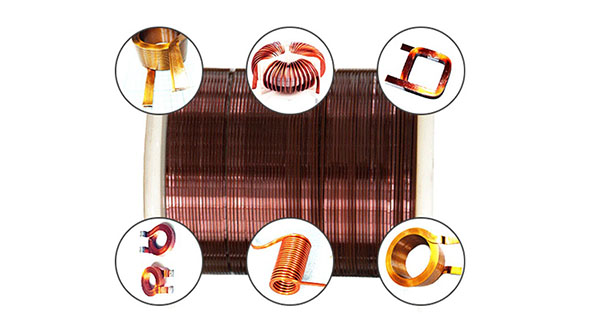
Polyurethane easy soldering enameled copper wire is used in a wide range of applications where its unique combination of properties provides manufacturing or performance advantages.
High-Frequency Coils and Transformers
RF coils, antenna windings, balun transformers, and high-frequency power transformers benefit from polyurethane insulation’s low dielectric loss at high frequencies. The easy soldering capability simplifies the termination of these coils, which often have small wire sizes and complex winding geometries that would be difficult to strip mechanically.
Communication Equipment
Mobile phones, two-way radios, base station equipment, satellite communication devices, and other communication products use polyurethane wire extensively for RF coils, filters, and impedance matching networks. The combination of excellent high-frequency properties and easy soldering makes polyurethane the standard choice for these applications.
Small Motor Windings
Small DC motors, stepper motors, brushless DC motors, and instrument motors use polyurethane wire in their windings. The easy soldering capability simplifies the connection of motor windings to commutators, slip rings, or external leads. The low dielectric loss of polyurethane is also beneficial in motors driven by variable frequency drives.
Relay and Solenoid Coils
Relays, contactors, and solenoids often use polyurethane wire for their coils. The wire must be terminated to external leads or terminal posts, and easy soldering simplifies the manufacturing process. The thermal class of polyurethane is typically adequate for relay and solenoid applications.
Electronic Transformers and Inductors
Small signal transformers, audio transformers, pulse transformers, and various inductor types use polyurethane wire. The easy soldering capability is particularly valuable in transformer manufacturing, where multiple terminations must be made on each transformer.
Measuring Instruments and Sensors
Precision measuring instruments, sensors, and transducers often use fine polyurethane wire for their internal coils. The easy soldering capability is essential for fine wire termination, where mechanical stripping is difficult and can damage the wire. The low dielectric loss of polyurethane also benefits precision measurement circuits.
RFID and Smart Card Applications
RFID antennas, smart card coils, and contactless payment card antennas use polyurethane wire or polyurethane-coated foil for their windings. The easy soldering capability simplifies the connection of these coils to the electronic components in the device.
Consumer Electronics
Headphones, earbuds, hearing aids, and other consumer electronics products use polyurethane wire for voice coils, driver coils, and various internal windings. The combination of easy soldering, high-frequency performance, and fine wire availability makes polyurethane ideal for these applications.
Soldering Process and Best Practices
Achieving reliable solder joints on polyurethane enameled wire requires proper soldering technique and equipment.
Soldering Temperature
The solder bath or soldering iron tip temperature should be maintained at 360°C to 420°C for tin-lead solders, or 380°C to 440°C for lead-free solders. The temperature must be high enough to rapidly decompose the polyurethane insulation but not so high as to damage the copper conductor or the components being soldered.
Contact Time
The wire should be in contact with the molten solder for approximately 1 to 3 seconds, depending on the wire size, insulation thickness, and solder temperature. Larger wire sizes and thicker insulation require longer contact time. Insufficient contact time may result in incomplete decomposition and poor solder wetting, while excessive contact time may damage the copper or surrounding components.
Solder Bath Method
For dip soldering, the wire end is immersed in a static or wave solder bath to a depth of 5 to 15 mm, depending on the application. The wire is held in the bath for the required time, then withdrawn. The thermal mass of the solder bath provides consistent heating regardless of the number of wires processed.
Soldering Iron Method
For hand soldering or selective soldering, a temperature-controlled soldering iron with adequate thermal mass is required. The tip temperature should be set to the appropriate level for the solder alloy, and the wire should be held against the heated terminal with the soldering iron applied until the polyurethane decomposes and the solder flows around the wire.
Flux Selection
In most cases, no additional flux is required when soldering polyurethane wire—the thermal decomposition process removes the insulation and any oxide on the copper surface. However, for highly oxidized copper or difficult-to-solder conditions, a mildly activated rosin flux (RMA) may be applied to improve solder wetting. Highly activated or water-soluble fluxes should be avoided unless subsequent cleaning is performed.
Ventilation
The thermal decomposition of polyurethane produces small amounts of volatile organic compounds that should not be inhaled. Adequate ventilation or local exhaust should be provided at soldering stations to remove decomposition products from the operator’s breathing zone. Modern lead-free soldering stations typically include integrated fume extraction.
Storage and Handling
Polyurethane enameled wire should be stored in a cool, dry environment to prevent moisture absorption and premature aging. Spools should be handled carefully to avoid damage to the insulation. The wire should be used within the manufacturer’s recommended shelf life to ensure consistent soldering performance.
Limitations and Considerations
Polyurethane easy soldering enameled wire has certain limitations that must be considered in application design.
Lower Thermal Class
Polyurethane insulation has a lower maximum operating temperature (105°C to 155°C depending on formulation) than other common magnet wire insulations. Applications requiring higher operating temperatures must use polyester, polyesterimide, or other high-temperature insulation systems.
Limited Chemical Resistance
Polyurethane is susceptible to attack by certain solvents, particularly ketones, esters, and chlorinated solvents. Care must be taken to ensure that polyurethane wire is not exposed to incompatible chemicals during manufacturing, varnishing, or operation. For applications requiring high chemical resistance, a different insulation system should be selected.
Thermal Aging
Like all organic polymers, polyurethane gradually degrades over time at elevated temperature. The thermal aging characteristics of polyurethane are well understood and predictable, but the design must include adequate margin to ensure the wire performs reliably throughout the design life of the equipment.
Soldering Temperature Sensitivity
The soldering process must be carefully controlled to ensure complete insulation decomposition without damaging the copper. Insufficient temperature or contact time results in incomplete decomposition and poor solder joints, while excessive temperature can damage the wire and surrounding components.
Shelf Life
Polyurethane enameled wire has a limited shelf life, typically 1 to 2 years from manufacture, depending on storage conditions. Aged polyurethane may exhibit reduced easy-soldering performance, requiring mechanical stripping of the insulation before soldering. Inventory management practices should ensure that wire is used within its shelf life.
Selection Guide
Selecting polyurethane easy soldering enameled copper wire for a specific application requires consideration of the operating conditions, manufacturing requirements, and performance criteria.
Confirm Operating Temperature
Verify that the maximum operating temperature of the application is within the thermal class of the selected polyurethane formulation. The thermal class should provide a safety margin of at least 10°C to 20°C above the maximum measured operating temperature to account for thermal transients and aging.
Verify Easy Soldering Performance
Confirm that the wire meets the easy soldering requirements of the manufacturing process. This may include verification testing of incoming wire to ensure that the insulation decomposes cleanly at the planned soldering temperature and contact time. Wire from different suppliers may exhibit different easy-soldering performance.
Check Chemical Compatibility
Verify that the polyurethane insulation is compatible with any chemicals the wire will contact during manufacturing (varnishes, potting compounds, cleaning solvents) and in the end-use environment. Replace polyurethane with a more chemically resistant insulation if incompatible chemicals are present.
Match Thermal Class to Application
Select the appropriate polyurethane thermal class (105°C, 130°C, 155°C) based on the maximum operating temperature. Higher thermal class formulations provide additional safety margin at higher cost. The wire supplier can provide thermal class data for their specific polyurethane formulations.
Specify Wire Diameter and Build
Select the conductor diameter based on current load, resistance, and winding window requirements. Specify the enamel build (Grade 1, 2, or 3) based on the voltage stress and dielectric requirements of the application. For high-frequency applications, the thinner builds may provide better high-frequency performance due to lower dielectric losses.
Quality System and Traceability
Select wire suppliers with certified quality management systems (ISO 9001 or higher) and the ability to provide batch traceability and test reports. For critical applications, require Certificates of Compliance with each shipment and conduct periodic verification testing.
Conclusion
Polyurethane easy soldering enameled copper wire provides a unique combination of manufacturing efficiency, electrical performance, and versatility that has made it the preferred choice for many high-volume magnet wire applications. The easy soldering capability eliminates stripping operations, reduces labor costs, increases production throughput, and improves solder joint consistency. The excellent high-frequency properties of polyurethane insulation make it ideal for RF coils, communication equipment, and high-frequency power electronics. The good mechanical properties and wide range of available formulations allow it to be used in applications ranging from fine wire instrument coils to small motor windings.
While polyurethane has lower thermal endurance and chemical resistance than other insulation systems, for applications where operating temperatures stay within its thermal class and chemical compatibility is maintained, polyurethane provides unmatched manufacturing and performance advantages. When the application requires easy soldering, high-frequency performance, and good mechanical properties within the polyurethane thermal class, polyurethane easy soldering enameled copper wire is the optimal choice.
When selecting and using polyurethane easy soldering wire, follow the guidelines and best practices outlined in this guide. Verify operating temperature compatibility, confirm easy soldering performance, check chemical compatibility, and select the appropriate wire diameter and build. With proper specification and application, polyurethane easy soldering enameled copper wire delivers decades of reliable performance in countless consumer, industrial, communication, and instrumentation applications.