

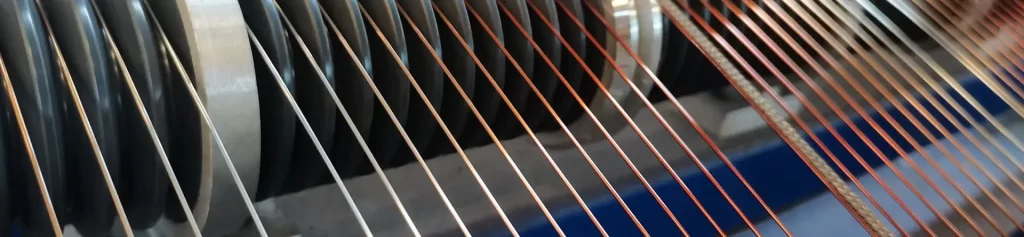
Polyimide Aluminum Magnet Wire is one of the highest temperature-resistant product categories in the electromagnetic wire field. Its insulation layer adopts a polyimide (PI) resin system, with a thermal class reaching Class C (200-240°C), occupying an irreplaceable position in extreme operating condition scenarios such as aerospace, special motors, and new energy vehicle drive systems.
This article provides a complete engineering reference guide focusing on the technical characteristics, performance parameters, application verification, and selection specifications of polyimide aluminum magnet wire.
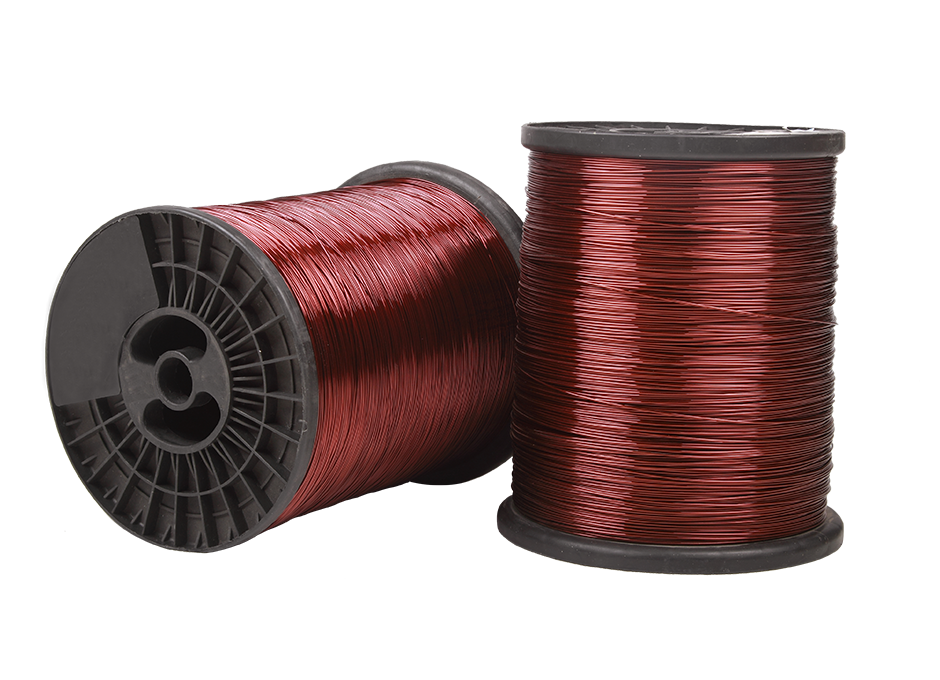
I. Definition and Technical Principle of Polyimide Aluminum Magnet Wire
1.1 Product Structure
Polyimide aluminum magnet wire consists of two layers: an aluminum conductor and a polyimide insulating enamel coating:
- Conductor Layer: High-purity electrolytic aluminum (purity ≥ 99.5%), processed through continuous wire drawing and annealing, with conductivity ≥ 61% IACS
- Insulation Layer: Polyimide (PI) resin enamel coating, formed through multiple coating layers and high-temperature baking and curing
1.2 Polyimide Material Characteristics
Polyimide is a class of high-molecular polymer containing imide rings (-CO-NR-CO-). Its molecular chain structure gives the material the following core characteristics:
- Excellent heat resistance: Long-term operating temperature up to 240°C, short-term resistance above 300°C
- Superior electrical insulation performance: Breakdown voltage ≥ 1200V, volume resistivity ≥ 10¹⁴Ω·cm
- Outstanding mechanical strength: Enamel film tensile strength ≥ 100MPa, excellent flexibility
- Good chemical resistance: Resistant to organic solvents, refrigerants, and transformer oil
- Low thermal expansion coefficient: High matching degree with aluminum conductor thermal expansion coefficient, reducing thermal stress
1.3 Enamel Film Curing Process
The curing of polyimide enamel film is a thermal imidization process that requires completion of the cyclization reaction at 300-400°C high temperature. Precise control of curing temperature and time directly determines the final performance indicators of the enamel film.
II. Technical Standards and Model Classification
2.1 International Compliance
The production and testing of polyimide aluminum magnet wire follow the following international standards:
| Standard Number | Standard Name | Scope of Application |
|---|---|---|
| IEC 60317-24 | Specifications for Particular Types of Winding Wires | Polyimide Enameled Round Wire |
| NEMA MW 1000 | Magnet Wire Standard | Class C Aluminum Wire |
| JIS C 3202 | Japanese Industrial Standard | Winding Wire Technical Specification |
| UL 1446 | Insulation System Certification | Class C Insulation System |
2.2 Model Classification
Polyimide aluminum magnet wire typically corresponds to the following models:
| Model | Thermal Class | Temperature Index | Enamel System | Typical Application |
|---|---|---|---|---|
| EI/AIW (QZY) | Class C | 200-240°C | Polyimide/Polyamide-imide Composite | Aerospace Motors, Nuclear Equipment |
| AIW | Class C | 220°C | Polyimide Composite System | Special Motors, Inverters |
2.3 Specification Range
| Wire Type | Specification Range |
|---|---|
| Round Wire Diameter | 0.016–7.0mm |
| Flat Wire Thickness | 0.8–10mm |
| Flat Wire Width | 2–25mm |
III. Core Performance Parameters and Data Comparison
3.1 Thermal Class Comparison
| Insulation System | Model | Temperature Index | Max Operating Temperature | Thermal Life (Hours) |
|---|---|---|---|---|
| Polyurethane | UEW | 130°C (Class B) | 130°C | 20,000 |
| Polyesterimide | PEW | 155°C (Class F) | 155°C | 20,000 |
| Polyesterimide/Polyamide-imide | EIW | 180°C (Class H) | 180°C | 20,000 |
| Polyimide | AIW/QZY | 200-240°C (Class C) | 240°C | 20,000+ |
3.2 Electrical Performance Comparison
| Parameter | Polyurethane (UEW) | Polyesterimide (PEW) | Polyimide (AIW) |
|---|---|---|---|
| Breakdown Voltage (V) | ≥800 | ≥1000 | ≥1200 |
| Voltage Resistance Level | Medium | Higher | Highest |
| Volume Resistivity (Ω·cm) | 10¹³ | 10¹⁴ | 10¹⁴ |
| Dielectric Loss Factor | 0.03 | 0.02 | 0.01 |
3.3 Mechanical Performance Comparison
| Parameter | UEW | PEW | AIW |
|---|---|---|---|
| Enamel Film Tensile Strength (MPa) | 80 | 120 | ≥100 |
| Abrasion Resistance (cycles) | 50 | 100 | 150+ |
| Flexibility (Mandrel Test) | Good | Excellent | Superior |
| Scratch Resistance (N) | 8 | 12 | 15+ |
3.4 Chemical Resistance Comparison
| Chemical Medium | UEW | PEW | AIW |
|---|---|---|---|
| Transformer Oil | Good | Very Good | Excellent |
| R134a Refrigerant | Fair | Good | Excellent |
| R600a Refrigerant | Fair | Good | Very Good |
| Organic Solvents | Poor | Good | Excellent |
| Acid/Alkali Resistance | Poor | Medium | Very Good |
IV. Core Application Areas Analysis
4.1 Aerospace Motors
The application of polyimide aluminum magnet wire in the aerospace field is the most representative Class C application scenario.
Operating Condition Requirements:
- Operating Temperature: -55°C to +200°C
- Vibration Frequency: Up to 2000Hz
- Altitude: 0–25,000m
- Reliability Requirement: MTBF ≥ 10,000 hours
Why Choose Polyimide:
- Temperature resistance up to 240°C, far exceeding conventional motor operating temperatures
- Enamel film does not easily crack during high-low temperature cycling
- Stable performance in vacuum and low-pressure environments
4.2 New Energy Vehicle Drive Motors
New energy vehicle drive motors are the fastest-growing application direction for polyimide aluminum magnet wire.
Technical Background:
- Drive motor power density continues to increase (from 3kW/kg to 5kW/kg)
- Internal motor temperature rise increases from 120°C to above 180°C
- 800V high-voltage platform普及, placing higher demands on insulation systems
- Lightweight requirements drive aluminum conductor substitution
Performance Verification Data:
| Test Item | Test Conditions | AIW Aluminum Wire Result | PEW Aluminum Wire Result |
|---|---|---|---|
| Thermal Aging Life | 200°C × 2000h | Pass | Failed |
| Refrigerant Resistance | R134a × 168h | No Degradation | Slight Degradation |
| Corona Resistance | 15kV/mm × 1000h | Pass | Pass |
| Thermal Shock (-55°C~200°C) | 500 cycles | No Cracking | Slight Cracking |
4.3 Special Industrial Motors
| Application Type | Operating Temperature Range | Why Choose AIW |
|---|---|---|
| Metallurgical Crane Motors | 80-180°C | Long-term operation in high-temperature environments |
| Mining Traction Motors | 60-160°C | High dust, high humidity environments |
| Marine Propulsion Motors | 40-140°C | High salt spray corrosion environments |
| Nuclear Island Auxiliary Motors | 50-150°C | Material stability under nuclear radiation |
4.4 Inverters and Power Electronic Equipment
With the widespread adoption of variable frequency speed control technology, the high-frequency pulsed voltage (dv/dt) borne by motor windings increases significantly, leading to intensified partial discharge and corona effects. Polyimide enamel film has excellent corona resistance, making it an ideal choice for variable frequency motor windings.
Key Data:
- Inverter output pulse voltage peak: Up to 1500-2000V
- Pulse frequency: 2-20kHz
- AIW enamel film corona resistance life: ≥2000 hours (under 15kV/mm conditions)
4.5 Other Special Applications
- Nuclear Power Equipment: Nuclear island auxiliary motors and transformer windings
- Military Equipment: Radar servo motors, missile attitude control motors
- Medical Equipment: CT machine rotary drive motors
- Oil Drilling: Downhole motors (high temperature and high pressure environments)
V. Polyimide Aluminum Wire vs. Polyimide Copper Wire: Performance Difference Analysis
Although aluminum conductor conductivity is lower than copper conductor, in specific application scenarios, polyimide aluminum wire has the following advantages:
| Comparison Parameter | PI Aluminum Wire | PI Copper Wire | Difference Analysis |
|---|---|---|---|
| Conductivity (IACS%) | 61% | 100% | Copper is better, but aluminum can compensate by increasing cross-section |
| Density (g/cm³) | 2.70 | 8.96 | Aluminum is about 70% lighter |
| Conductivity-to-Weight Ratio | 2.02 | 1.0 | Aluminum wire ratio is 2x that of copper wire |
| Material Cost Ratio | 1 | 3-5 | Aluminum wire has significant cost advantage |
| Thermal Conductivity (W/m·K) | 237 | 401 | Copper is better, but polyimide enamel film itself has similar thermal conductivity |
| Thermal Class | Class C (240°C) | Class C (240°C) | Same (depends on enamel film, not conductor) |
VI. Selection and Process Considerations
6.1 Selection Guide
| Selection Dimension | Recommended Solution | Description |
|---|---|---|
| Operating Temperature ≤ 155°C | PEW Aluminum Wire | Polyimide performance is excessive, not cost-effective |
| Operating Temperature 155-180°C | EIW Aluminum Wire | Best cost-performance ratio |
| Operating Temperature 180-240°C | AIW Aluminum Wire | Only choice |
| High-Frequency Variable Frequency Applications | AIW Aluminum Wire | Corona resistance is critical |
| Vacuum/Aerospace Environments | AIW Aluminum Wire | Low outgassing rate requirement |
6.2 Winding Process Key Points
The following matters need attention during the winding process of polyimide aluminum magnet wire:
- Winding Tension Control: Recommended to be controlled within 15-25% of the conductor’s breaking strength
- Bending Radius: Minimum bending radius should be ≥ 3 times the conductor diameter
- Connection Process: Aluminum wire connections require ultrasonic welding or dedicated aluminum wire terminals to avoid oxidation problems caused by conventional crimping
- Impregnation Treatment: Polyimide enamel film is compatible with most impregnating resins, but specific formulation chemical compatibility must be verified
6.3 Storage Conditions
- Storage Temperature: 15-30°C
- Relative Humidity: ≤ 60%
- Avoid direct sunlight and chemical gas contamination
- Recommended storage period: Use within 12 months from the date of production