

Introduction
High voltage capacitors are key components in power electronics, new energy, and rail transit fields, with working voltages typically ranging from hundreds to thousands of volts. Unlike low voltage capacitors, high voltage capacitors have extremely strict requirements for aluminum foil quality, particularly the “pinhole” issue, which directly affects capacitor voltage withstanding performance and long-term reliability.
The so-called “pinhole” refers to tiny holes or weak areas existing on aluminum foil surface. These pinholes are typically only micron-sized, difficult to detect with the naked eye, but become starting points for dielectric breakdown in high voltage electric fields, leading to capacitor failure. Therefore, for high voltage capacitors, pinhole-free aluminum foil is the key to ensuring product reliability.
The production of pinhole-free aluminum foil involves high purity raw materials, precision rolling processes, strict surface treatment, and advanced inspection technology. This article systematically explains key parameters, selection criteria, and industrial applications for pinhole-free aluminum foil used in high voltage capacitors, serving as a professional reference for high voltage capacitor manufacturers and procurement personnel.
1. High Voltage Capacitor Structure and Pinhole Impact
1.1 Basic Structure of High Voltage Capacitors
High voltage aluminum electrolytic capacitors consist of anode aluminum foil, cathode aluminum foil, electrolytic paper (or electrolyte), lead-out strips, and casing. The anode and cathode aluminum foils are covered with a layer of aluminum oxide dielectric, the integrity of which determines the capacitor’s voltage withstanding performance.
In high voltage capacitors, the working voltage is typically above 400V, and the aluminum oxide dielectric layer needs to withstand extremely strong electric fields. The breakdown strength of the dielectric layer is approximately 10MV/cm, so for 400V working voltage, the dielectric layer thickness needs to reach above 4000Å; for 600V working voltage, above 6000Å is required.
1.2 Causes and Hazards of Pinholes
The causes of aluminum foil pinholes mainly include the following aspects:
Raw material defects: Inclusions, pores, and other microscopic defects in aluminum foil raw materials extend and expand during rolling to form pinholes.
Rolling defects: Surface wear of rolling mills, improper rolling process parameters, etc. may cause local thinness of aluminum foil, forming pinholes.
Corrosion defects: Aluminum foil may contact corrosive media during production, storage, or processing, forming corrosive pinholes.
Foreign object damage: Dust, fibers, and other foreign objects in the production environment may scratch aluminum foil surface, forming pinholes.
Pinholes are extremely harmful to high voltage capacitors:
Dielectric breakdown: The oxide film at pinhole locations is weak, breaking down first under high voltage electric fields, causing capacitor failure.
Increased leakage current: Incomplete dielectric layer at pinhole locations leads to increased leakage current and capacitor heating.
Shortened lifespan: Pinholes easily develop into large-sized breakdown points, accelerating capacitor aging.
Reduced reliability: Pinholes cause significant reduction in capacitor reliability under high voltage working conditions, potentially causing safety incidents.
1.3 Technical Significance of Pinhole-Free Aluminum Foil
Pinhole-free aluminum foil is the fundamental guarantee of high voltage capacitor reliability:
Enhanced voltage withstanding capability: Complete pinhole-free aluminum foil can form uniform oxide film, enhancing actual voltage withstanding capability of capacitors.
Reduced leakage current: Pinhole-free aluminum foil has better oxide film integrity, lower leakage current, and reduced capacitor heating.
Extended service life: Pinhole-free aluminum foil fundamentally eliminates breakdown weak points, significantly extending capacitor lifespan.
Improved product consistency: Pinhole-free aluminum foil has high quality consistency in batches, ensuring consistency of capacitor product performance.
2. Key Specifications and Technical Requirements
2.1 Pinhole Rate and Pinhole Size
Pinhole rate is the most core indicator of pinhole-free aluminum foil.
Pinhole rate definition: The number of pinholes per unit area of aluminum foil, usually expressed in pcs/m².
Pinhole rate requirements for high voltage capacitor aluminum foil are typically:
- General high voltage capacitors: ≤5 pcs/m²
- High reliability applications: ≤1 pcs/m²
- Ultra-high voltage capacitors: ≤0.5 pcs/m²
Pinhole size: Maximum pinhole diameter is typically required to be ≤20μm, with some high-end applications requiring ≤10μm. Smaller pinhole size has less impact on dielectric film, and stronger capacitor voltage withstanding capability.
2.2 Aluminum Foil Purity
Aluminum foil purity directly affects pinhole formation probability and dielectric film quality.
High purity aluminum (99.99%, 4N): Extremely low impurity content, minimal pinhole formation probability, the mainstream choice for high voltage capacitor aluminum foil.
Ultra-high purity aluminum (99.999%, 5N): Used for ultra-high voltage or ultra-high reliability capacitors, with extremely low pinhole rate.
Impurity effects: Impurities such as iron, silicon, and copper may form nucleation points for pinholes; impurity content should be strictly controlled.
2.3 Thickness Selection
Aluminum foil thickness needs to balance mechanical strength and electrical performance.
Thin aluminum foil (30μm–50μm): Suitable for miniaturized, high specific capacitance high voltage capacitors.
Medium aluminum foil (50μm–80μm): Suitable for general high voltage capacitors, the most commonly used specification range.
Thick aluminum foil (80μm–120μm and above): Suitable for high-power, high-reliability high voltage capacitors, such as rail transit, wind power converters, etc.
Selection advice: The higher the working voltage of high voltage capacitors, the higher the requirements for aluminum foil thickness uniformity and mechanical strength. Thick aluminum foil can provide better mechanical support, reducing damage during winding and processing.
2.4 Thickness Uniformity
Thickness uniformity is an important quality indicator of pinhole-free aluminum foil.
Thickness tolerance: Thickness tolerance of aluminum foil for high voltage capacitors is usually required within ±3%, with some high-end applications requiring ±2%.
Local thickness deviation: Local thickness deviation (point-to-point) on aluminum foil should be strictly controlled to avoid weak points formed by local thin areas.
Measurement method: Use precision thickness gauges for multi-point measurement to ensure thickness consistency of the entire coil.
2.5 Surface Quality Requirements
Surface quality directly affects pinhole detection and dielectric film formation.
Surface roughness: Ra is usually required below 0.5μm; smooth surface facilitates uniform oxide film formation.
Surface cleanliness: Surface should be free from oil contamination, dust, fingerprints, and other pollutants to avoid affecting dielectric film integrity.
Edge quality: Aluminum foil edges should be neat, without burrs or tears, avoiding stress concentration points and potential pinhole sources during winding.
3. Production Process and Quality Control
3.1 Aluminum Foil Production Process
The production of pinhole-free aluminum foil is a precision process, with main procedures including:
Melting and casting: Use high purity aluminum ingots (above 99.99%) for melting and casting, controlling impurity content and gas content.
Hot rolling: Hot roll cast ingots into plate billets of certain thickness, requiring precise control of temperature and reduction amount.
Cold rolling: Roll plate billets to target thickness aluminum foil through multiple cold rolling passes, with each pass reduction amount requiring precise control.
Intermediate annealing: Conduct intermediate annealing during cold rolling to restore aluminum foil plasticity and reduce internal stress.
Foil rolling: Roll aluminum foil to final thickness (typically below 0.1mm) through precision foil rolling mills.
Final annealing: Eliminate work hardening generated by foil rolling, making aluminum foil reach required soft or half-hard state.
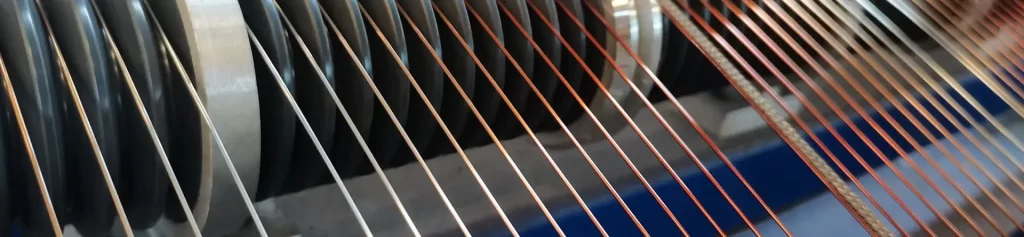
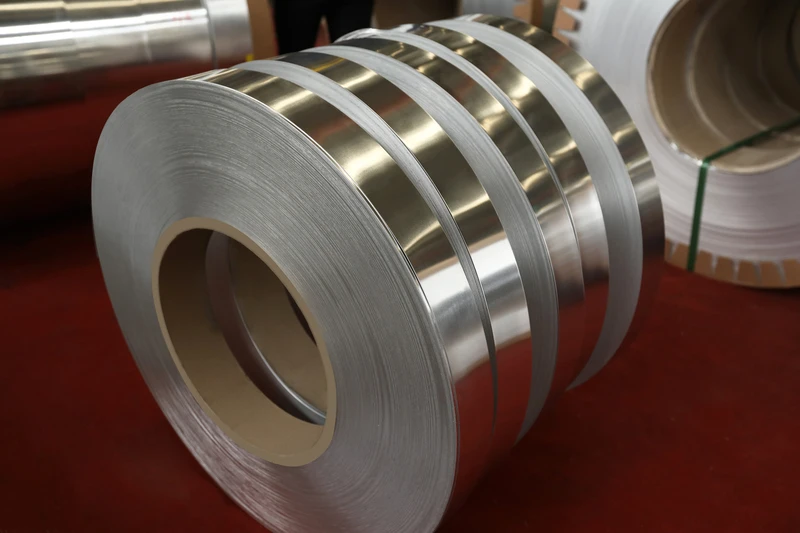
Slitting: Slit aluminum foil to width required by customer, requiring neat edges and no burrs.
3.2 Pinhole Detection Methods
Pinhole detection is a key link in pinhole-free aluminum foil quality control.
Light transmission detection method: Utilize the enhanced light transmission characteristics at pinhole locations to identify pinhole positions through photoelectric detection equipment. This method can detect micron-level pinholes.
Electrolytic detection method: Apply voltage to aluminum foil in electrolyte; pinhole locations will show electrolytic reactions, detecting current changes to identify pinholes. This method has high sensitivity, suitable for high voltage capacitor aluminum foil detection.
Image recognition method: Use high-resolution cameras and image processing algorithms to automatically identify pinholes on aluminum foil surface.
Online detection: Real-time detection during aluminum foil production process, immediately marking or eliminating pinholes found, ensuring pinhole rate of products leaving factory meets requirements.
3.3 Quality Control System
Pinhole-free aluminum foil needs to establish a complete quality control system:
Incoming material inspection: Each batch of aluminum ingots needs to test purity, gas content, inclusion level, and other key indicators.
Process control: Key processes such as rolling, annealing, and slitting need strict control of process parameters.
Finished product inspection: Each coil of aluminum foil needs to test pinhole rate, thickness uniformity, surface quality, etc.
Traceability management: Establish batch traceability system, able to quickly locate quality issues and take corrective measures.
4. Industrial Applications and Selection Recommendations
4.1 Industrial Power Field
Industrial power has extremely high requirements for high voltage capacitor reliability.
Variable frequency drives: Need to use high voltage electrolytic capacitors as DC bus capacitors, with extremely high requirements for aluminum foil voltage withstanding capability and long lifespan. Must use pinhole-free aluminum foil.
PV inverters: Harsh working environment (high temperature, high humidity, vibration), with strict requirements for capacitor reliability and lifespan. Recommended: high purity pinhole-free aluminum foil.
Wind power converters: Need long lifespan (over 20 years) high voltage capacitors, with extremely strict requirements for aluminum foil pinhole rate.
Uninterruptible power supplies (UPS): As safety-related equipment, with extremely high requirements for capacitor reliability.
4.2 Rail Transit Field
Rail transit is a high-end application field for high voltage capacitors.
Traction converters: Use large quantities of high voltage electrolytic capacitors as support capacitors, needing to withstand high temperature, vibration, and wide temperature range. Pinhole-free aluminum foil is the basic requirement.
Auxiliary inverters: High requirements for capacitor reliability, related to train operation safety.
Charging stations: As electric vehicle charging infrastructure, with strict requirements for high voltage capacitor reliability and long lifespan.
4.3 New Energy Vehicle Field
New energy vehicles have special requirements for high voltage capacitors.
Motor controllers: Use high voltage film capacitors or electrolytic capacitors, with high requirements for aluminum foil voltage withstanding and lifespan.
On-board chargers (OBC): Need long-term reliable operation under automotive-grade temperature range and vibration conditions.
DC-DC converters: High voltage side capacitors need to withstand high voltage pulses, with strict requirements for aluminum foil quality.
4.4 Common Selection Problems and Solutions
Early capacitor failure: Check if aluminum foil pinhole rate exceeds standard; confirm if aluminum foil purity and oxide film quality meet requirements; consider selecting higher specification pinhole-free aluminum foil.
Excessive leakage current: Check if aluminum foil surface has micro-pinholes; confirm oxide film integrity and uniformity; consider selecting aluminum foil with lower pinhole rate.
Voltage withstanding test failure: Check if aluminum foil has pinholes; confirm if aluminum foil thickness and oxide film thickness meet rated voltage requirements.
Batch quality fluctuation: Require suppliers to strengthen process control; establish incoming material inspection standards; select suppliers with complete quality systems.
5. Supplier Selection and Quality Control
5.1 Quality Certifications
ISO9001 quality management system certification is the basic requirement. For automotive-grade applications, IATF16949 certification is required. For high voltage capacitors, attention to UL, CE and other relevant product certifications is also needed.
5.2 Technical Capability Evaluation
Pinhole-free aluminum foil production capability: Whether core process capabilities such as precision rolling and pinhole detection are available.
Detection capability: Whether key detection equipment such as electrolytic pinhole detection and light transmission detection is available.
R&D capability: Whether there is a professional R&D team able to continuously improve processes and pinhole rate control levels.
5.3 Production Capacity and Delivery
Stable production capacity is the guarantee for long-term supply. High voltage capacitors have strict quality requirements for aluminum foil, and stable supply capability is crucial. It is recommended to select suppliers with monthly production capacity above 50 tons of pinhole-free aluminum foil.
6. Product Specifications Summary
| Parameter | Specification Range |
|---|---|
| Aluminum Foil Purity | 99.99% – 99.999% |
| Thickness | 30μm – 120μm |
| Width | 50mm – 500mm |
| Pinhole Rate | ≤0.5 pcs/m² (highest requirement) |
| Thickness Tolerance | ±2% – ±3% |
| Surface Roughness | Ra≤0.5μm |
| Standards | IEC / GB / Enterprise Standard |
7. Technical Support and Contact
For detailed product specifications, samples, or technical selection support, please contact Zhengzhou LP Industry Co., Ltd. With years of expertise in electronic aluminum materials exports, our pinhole-free high voltage capacitor aluminum foil products are widely used in industrial power supplies, rail transit, new energy vehicles, and other fields.
- Email: office@cnlpzz.com
- Phone/WhatsApp: 0086-19337889070
- Key Products: Pinhole-free aluminum foil, High voltage capacitor aluminum foil, Anode aluminum foil
This document provides professional guidance for pinhole-free aluminum foil selection in high voltage capacitor applications. For specific projects, please consult with technical professionals based on actual operating conditions.