

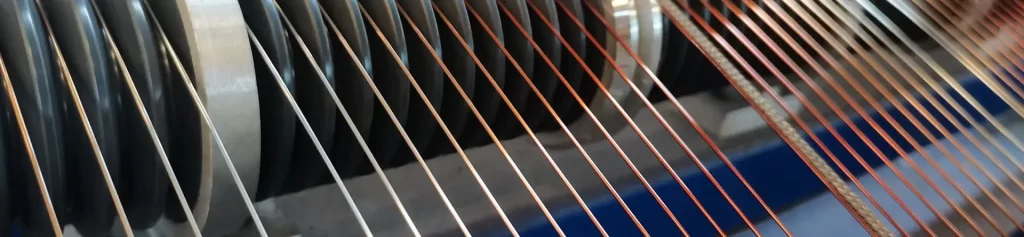
I. Introduction: Paper wrapped wire vs. special insulated wire – a “multifaceted showdown” in the winding wire industry
In the winding manufacturing of transformers, motors, generators, home appliances, new energy and other fields, insulated winding wires are the core materials. Depending on the insulating medium, Paper Covered Wire (PCW) and Specialty Insulated Wire (SIW) are formed in the market.
Paper wrapping is a traditional winding wire with Kraft Paper as an insulating medium, and is the main material for oil-immersed transformers for 100 + years. Special insulated wire includes fiberglass covered wire (FCW), Nomex paper wrapped wire, polyimide (PI) film wrapped wire, polyester film composite wire, double glass wire wrapped wire, ceramic insulated wire, enameled composite wire, etc., which is a modern choice for high temperature, dry, special scenarios.
In this paper, the system compares the 8 dimensions of paper wrapped wire vs special insulation wire -electrical performance, temperature grade, mechanical strength, chemical resistance, processability, cost, application scenarios, and life -and gives a selection decision tree and a typical case .
1.1 Why this comparison matters
- ✅ Large market : Global winding wire market size > $20 billion
- ✅ Wide range of applications : oil-immersed/dry-type transformers, new energy, high-speed rail, military
- ✅ High cost of selection errors : directly determines the life of the device (30-40 years)
- ✅ Significant technical differences : 5-20 times difference in BDV, temperature, cost
1.2 Overview of the 6 Special Insulation Wire Types
| Type | Abbreviation | Temperature Level | Breakdown Voltage | Main Applications |
|---|---|---|---|---|
| Fiberglass Covered Wire | FCW | 155-260°C | 5-15 kV | Dry Type Transformer, Welder |
| Nomex Cable Envelope | NCW | 180-220°C | 18-25 kV | High Temperature Transformer, Dry Transformer |
| Polyimide film coated wire | PI | 220-240°C | 30-50 kV | Special motors, UHV |
| Polyester Film Composite | pet | 130-155°C | 10-20 kV | General Motors, Appliances |
| Double Glass Wire Envelope | DGs | 155-180°C | 5-10 kV | Small to Medium Motor |
| Ceramic Insulated Wire | CM | 500-1000°C | 5-15 kV | Military, UHT |
1.3 Positioning of the two major insulation systems
| Dimension | Paper Covered Wire (PCW) | Special Insulated Wire (SIW) |
|---|---|---|
| Core Positioning | Traditional Workhorse of Oil-immersed Transformers | High Temperature/Dry/Special Scenarios |
| Temperature Rating | 105-120°C (A/E) | 130-260°C (B-N) |
| Breakdown Voltage | 10-30 kV/mm | 5-50 kV/mm |
| Oil Immersion Gain | 3-5 × | 1-2 × |
| Flame retardant | Oil impregnation | Mostly self-extinguishing |
| Cost | Low | Medium – Very High |
| Lifespan | 30-40 years | 20-30 years |
II. Detailed explanation of paper envelope
2.1 Definition and structure of paper envelope
The paper wrapping is a winding wire with copper/aluminum conductors as the core and cable paper as the outer layer.
Structure :
– Conductors: Soft Copper/Semi-hard Copper/Soft Aluminum/Flat Copper/Flat Aluminum
– Insulation: 2-15 layers of cable paper
– Lap: paper tape lap 5-15 mm
– Tightness: the paper layer is tight and has no voids
2.2 5 Core Benefits of Paper Envelopes
Advantage 1: Excellent oil immersion compatibility
– Perfect combination with transformer oil
– 3-5 times increase in BDV after oil immersion (10-15 → 30-50 kV/mm)
– This is the biggest advantage of paper wrapping
Advantage 2: Low cost
– Unit price: 30-60 yuan/kg (cable paper)
– 20-50 times lower than PI film
– 5-10x lower than Nomex paper
Advantage 3: Technology maturity
– 100 + years of application history
– Global transformer industry standard
– IEC 60554, GB/T 7969, etc.
Advantage 4: Repairable
– Local damage is repairable
– Oil can be re-impregnated after drying
Advantage 5: Biodegradation
– Natural cellulose, degradable
– Good environmental performance
2.3 Limitations of paper envelopes
- ❌ Low temperature class : 105-120°C only (A/E class)
- ❌ Flammable : requires oil immersion or flame retardant treatment
- ❌ Strong hygroscopicity : Vacuum drying required
- ❌ Medium mechanical strength : easily torn
- ❌ Poor chemical resistance : Poor acid and alkali resistance
2.4 Typical applications of paper envelopes
| Application | Voltage | Number of layers | Remarks |
|---|---|---|---|
| 35 kV oil-immersed distribution transformer | 35 kV | Layer 4-6 | High voltage winding |
| 110 kV oil-immersed power transformers | 110 kV | 8-10 layers | High voltage windings |
| 220 kV oil-immersed power transformer | 220 kV | 10-12 layers | High voltage winding |
| 500 kV UHV Transformer | 500 kV | Layer 12-15 + Nomex | High Voltage Winding |
| Oil-immersed reactors | < 35 kV | 6-8 layers | Winding |
| Transformer sleeves | < 500 kV | 10-15 layers | Insulation |
2.5 Core Performance Parameters of the Cable
| Parameters | Numeric | Test Criteria |
|---|---|---|
| Thickness | 0.05-0.25 mm | GB/T 7969 |
| Tensile strength | > 8 kN/m (longitudinal) | GB/T 12914 |
| Breakdown voltage | 10-15 kV/mm (dry) | IEC 60243 |
| Oil-immersed breakdown | 30-50 kV/mm | IEC 60243 |
| Moisture Content | < 8% | GB/T 462 |
| Operating Temperature | -40 to +105°C | – |
III. Detailed Explanation of 6 Major Specialty Insulated Wires wires
3.1 Fiberglass Covered Wire (FCW)
Structure : copper/aluminum conductor + glass fiber (1-3 layers) + dipping paint
Benefits :
– ✅ Flame Retardant (Natural Flame Retardant, UL 94 V-0)
– High temperature ✅ resistance (155-260°C)
– High ✅ mechanical strength (tensile > 50 kN/m)
– ✅ Anti-short circuit electric power
– Long ✅ life (> 25 years)
Disadvantages :
– Medium ❌ breakdown voltage (5-15 kV)
– ❌ Low oil immersion gain (1.5-2 ×)
– Complex ❌ processing (weaving)
– High ❌ cost
Typical applications : dry type transformers, arc welding transformers, reactors, special motors
3.2 Nomex Envelope (NCW)
Structure : Copper/Aluminum conductor + Nomex 410/411/414 paper (2-8 layers)
Benefits :
– High temperature ✅ resistance (180-220°C, H/N class)
– ✅ High BDV (18-25 kV/mm)
– ✅ Flame retardant (UL 94 V-0)
– High ✅ mechanical strength (5-8x cable paper)
– Chemical ✅ resistance (acid-alkali, oil-resistant)
Disadvantages :
– High ❌ cost (5-10x cable paper)
– ❌ Low oil immersion gain (1.5-2 ×)
– ❌ Non-degradable
– ❌ Not repairable
Typical applications : SCB dry transformers, traction transformers, wind power transformers, high temperature motors
3.3 Polyimide film coated wire (PI)
Structure : Copper conductor + PI film (Kapton) wrapping 1-3 layers
Benefits :
– ✅ Very high BDV (30-50 kV/mm, PI film)
– UHT ✅ resistant (220-240°C, Class N)
– ✅ Ultra-thin (0.025-0.125 mm)
– ✅ Chemical inertia
– Radiation ✅ resistant
Disadvantages :
– Very high ❌ cost (PI film 500-1,500 yuan/kg)
– General ❌ oil immersion compatibility
– Complex ❌ processing
– Tear ❌ resistance
Typical applications : avionics, UHV special transformers, military, nuclear power
3.4 Polyester film composite wire (PET)
Structure : Copper conductor + pet film (0.012-0.35 mm) 1-3 layers
Benefits :
– Low ✅ cost (pet film 30-80 yuan/kg)
– ✅ Thin
– Good ✅ processability
– High ✅ breakdown voltage (10-20 kV/mm)
– Temperature ✅ resistance 130-155°C (Grade B/F)
Disadvantages :
– Limited temperature ❌ resistance (up to 155°C)
– Poor flame ❌ retardancy
– Oil ❌ intolerant
Typical Applications : General Motors, Home Appliances, Low Voltage Transformers
3.5 Double-glass wire envelope (DGs)
Structure : copper conductor + glass fiber (braided double layer) + dipping paint
Benefits :
– Temperature ✅ resistance 155-180°C (F/H class)
– High ✅ mechanical strength
– ✅ Flame retardant
– ✅ Anti-vibration
Disadvantages :
– Low ❌ breakdown voltage (5-10 kV)
– Large ❌ thickness (0.3-0.5 mm)
– Complex ❌ processing
Typical applications : small and medium-sized motors, home appliance motors
3.6 Ceramic insulated wire (CM)
Structure : copper/nickel conductor + ceramic coating (0.1-0.5 mm)
Benefits :
– ✅ Resistant to ultra-high temperatures (500-1000°C)
– Radiation ✅ resistant
– ✅ Chemical inertia
– ✅ Flame retardant (non-flammable)
Disadvantages :
– Extremely ❌ expensive
– Low ❌ breakdown voltage
– Difficulty ❌ processing
– ❌ Apply Narrow
Typical applications : Military, rocket, nuclear, aero-engine
IV. Paper wrapped wire vs. special insulated wire: Comprehensive comparison of 8 dimensions
4.1 Electrical Performance Comparison
| Metrics | Envelope | FCW | NCW | PI | pet | DGs |
|---|---|---|---|---|---|---|
| Dry breakdown voltage | 10-15 kV/mm | 5-10 kV/mm | 18-25 kV/mm | 30-50 kV/mm | 10-20 kV/mm | 5-10 kV/mm |
| Oil-immersed breakdown voltage | 30-50 kV/mm | 8-15 kV/mm | 30-45 kV/mm | 30-50 kV/mm | 10-20 kV/mm | 8-15 kV/mm |
| Dielectric constant (1 MHz) | 2.0-2.5 | 3.0-4.0 | 1.6-2.5 | 3.0-3.5 | 2.8-3.2 | 3.0-4.0 |
| Media loss (1 MHz) | 0.002-0.005 | 0.01-0.02 | 0.005-0.015 | 0.005-0.01 | 0.01-0.02 | 0.01-0.02 |
| Volumetric resistivity (Ω · cm) | 10 ¹ ² | 10 ¹ ² | 10 ¹ ² | 10 ¹ ² | 10 ¹ ² | 10 ¹ ² |
Core Conclusions :
– Dry BDV max : PI film (30-50 kV/mm) > Nomex (18-25) > Paper wrapping (10-15) > DGs/FCW (5-10)
– Highest oil-immersed BDV : Covered wire, Nomex, PI flat (30-50 kV/mm)
– Media loss : lowest envelope (tanδ 0.002-0.005)
4.2 Comparison of temperature levels
| Metrics | Envelope | FCW | NCW | PI | pet | DGs |
|---|---|---|---|---|---|---|
| Continuous Operating Temperature | 105°C (A) | 155-180°C (F/H) | 180-220°C (H/N) | 220-240°C (N) | 130-155°C (B/F) | 155-180°C (F/H) |
| UL Temperature Index | 105°C | 180°C | 220°C | 240°C | 155°C | 180°C |
| Short Term Temperature Resistance | 130°C | 300°C | 300°C | 400°C | 180°C | 300°C |
| Flame retardant | Flammable | V-0 | V-0 | V-0 | Flammable | V-0 |
| Oxygen Index | 18 | > 28 | > 28 | > 35 | 20 | > 28 |
Core Conclusions :
– Temperature class : PI max (240°C) > NCW (220°C) > FCW/DGs (180°C) > pet (155°C) > Paper wrap (105°C)
– Short-term temperature resistance : PI max (400°C) > FCW/NCW/DGs (300°C) > pet (180°C) > Paper wrapping (130°C)
– Flame retardant : PI/FCW/NCW/DGs self-extinguishing; PET/paper cord flammable
4.3 Comparison of mechanical properties
| Mechanical Indicators | Paper Envelope | FCW | NCW | PI | pet | DGs |
|---|---|---|---|---|---|---|
| Tensile strength (kN/m) | 8-12 | 50-80 | 50-80 | 30-50 | 30-60 | 50-80 |
| Elongation | 2-3% | 3-5% | 5-10% | 30-50% | 50-100% | 3-5% |
| Tear strength | Medium | High | High | Low | Medium | High |
| Wear resistance | Poor | Excellent | Excellent | Medium | Good | Excellent |
| Bending performance | Excellent | Medium | Good | Excellent | Medium |
Core Conclusions :
– Tensile strength : FCW/NCW/DGs (50-80 kN/m) > PI/pet (30-60) > Wrapped wire (8-12)
– Elongation : PET/PI (30-100%) > NCW (5-10) > FCW/DGs (3-5) > Paper Cable (2-3)
– Flexibility : excellent wrapped wire/pet; good PI; in FCW/NCW/DGs
4.4 Chemical resistance comparison
| Chemical Indicators | Paper Wraps | FCW | NCW | PI | pet | DGs |
|---|---|---|---|---|---|---|
| Transformer oil resistance | Excellent | Excellent | Excellent | Poor | Excellent | Excellent |
| Acid resistance (rarefied) | Poor | Excellent | Excellent | Excellent | Medium | Excellent |
| Alkali Resistance (Thin) | Poor | Excellent | Excellent | Excellent | Medium | Excellent |
| Water-resistant | Poor | Good | Good | Good | Good | Good |
| Ozone resistant | Good | Excellent | Excellent | Excellent | Excellent | Excellent |
| Radiation resistance | Moderate | Excellent | Excellent | Excellent | Moderate | Excellent |
Core Conclusions :
– Oil resistant : Excellent paper cables/FCW/NCW/PI/DGs, poor pet
– Acid and alkali resistant : Special insulated wires are generally superior to paper wrapped wires
– Radiation resistant : PI/FCW/NCW/DGs excellent, in paper wrapped/pet
4.5 Resistance to aging vs. longevity
| Aging Indicators | Paper Envelope | FCW | NCW | PI | pet | DGs |
|---|---|---|---|---|---|---|
| Hot Aging Life (180°C) | < 1 year | > 20 years | > 20 years | > 30 years | < 2 years | > 15 years |
| Heat ageing life (130°C) | < 1 year | > 30 years | > 30 years | > 40 years | > 10 years | > 25 years |
| Oil immersion aging | Slow degradation | Stable | Stable | Stable | Not applicable | Stable |
| Shelf life | 1-2 years | > 10 years | > 10 years | > 10 years | > 5 years | > 10 years |
| Design Life | 30-40 years | 25-30 years | 25-30 years | 20-30 years | 10-15 years | 20-25 years |
Core Conclusions :
– High temperature life : PI/FCW/NCW optimal; poor paper envelope/pet
– Oil-immersed life : Long life under oil-immersed paper wires (30-40 years); pet not applicable
– Design life : optimal oil immersion scenario for paper wrapped cables; shortest pet
4.6 Cost Comparison
| Cost Indicators | Paper Envelope | FCW | NCW | PI | pet | DGs |
|---|---|---|---|---|---|---|
| Insulation unit price | 30-60 yuan/kg | 80-150 yuan/kg | 250-500 yuan/kg | 500-1500 yuan/kg | 30-80 yuan/kg | 80-150 yuan/kg |
| Transformer insulation cost share | 5-10% | 15-20% | 15-25% | 30-50% | 10-15% | 15-20% |
| Total cost (500 kVA variation) | 100% | N/A | 150-200% | N/A | N/A | N/A |
| Total cost (500 kVA dry) | N/A | 200-300% | 200-300% | 500-1000% | 150-200% | 200-300% |
Core Conclusions :
– Insulation unit price : PI max (500-1500 yuan/kg) > NCW (250-500) > FCW/DGs (80-150) > PET/paper wrapped wire (30-80)
– Dry change scenario : PI system is 10-20 times higher than paper wrapping system
– Oil change scenario : NCW 50-100% higher than paper envelope system
4.7 Comparison of processing and construction
| Machining Indicators | Paper Envelope | FCW | NCW | PI | pet | DGs |
|---|---|---|---|---|---|---|
| Entanglement | Excellent | Medium | Good | Excellent | Medium | |
| Cut | Easy | Medium | Medium | Easy | Medium | |
| Bend | Easy | Hard | Medium | Medium | Easy | Hard |
| Repairability | Easy | Hard | Hard | Hard | Easy | Hard |
| Vacuum drying | needed | not needed | not needed | not needed | not needed | not needed |
| Impregnation process | Required | Required | Selective | Selective | Selective | Required |
Core Conclusions :
– Processability : excellent wrapped wire/pet; in PI/FCW/NCW/DGs
– Repairability : easy to wrap/pet; remaining difficult
4.8 Environmental vs. Sustainability
| Environmental Indicators | Paper Envelope | FCW | NCW | PI | pet | DGs |
|---|---|---|---|---|---|---|
| Degradable | Yes | No | No | No | No | No |
| Recyclable | Yes | Yes | Yes | Yes | Yes | Yes |
| Carbon Footprint | Low | Medium | Medium-High | High | Medium | Medium |
| Production Energy Consumption | Low | Medium | High | High | Medium | Medium |
| RoHS/reach | Yes | Yes | Yes | Yes | Yes | Yes |
Core Conclusions :
– Degradable : Envelope only
– Carbon footprint : Envelope < pet < FCW/DGs < NCW < PI
V. Selection Decision Tree and Comparison Matrix
5.1 7 Major Selection Principles
1. Oil immersed transformer?→ Envelope (preferred)
2. Dry transformer?→ NCW/FCW
3. Operating temperature > 180°C?→ NCW/PI
4. Operating temperature 130-180°C?→ FCW/DGs
5. High voltage (> 220 kV)?→ Covered Wire + NCW Composite
6. Special motors/military?→ PI/Ceramics
7. Budget sensitive?→ Paper Cable/pet
5.2 Decision trees
Identify scenarios
    ↓
Oil-immersed transformer?
  ├─ Is → the voltage > 110 kV?
  │         ├─ Is → Envelope 8-12 Layers (preferred)/Envelope + NCW Composite (UHV)
  │         └─ No → 35-110 kV?
  │                  ├─ Is → Envelope Layer 4-10 (preferred)
  │                  └─ No → < 35 kV → Envelope Layer 2-6
  └─ No → Dry type transformer → temperature > 180°C?
                              ├─ Is → NCW (preferred)/PI
                              └─ No → Temperature 130-180°C?
                                        ├─ Is → FCW/DGs
                                        └─ No → < 130°C → pet
5.3 8 Application Scenario Selection Comparison
| Scenarios | Voltage | Temperature | Recommended Materials | Priority Reasons |
|---|---|---|---|---|
| 35 kV Oil-immersed Distribution Transformer | 35 kV | 105°C | Paper Envelope | High Oil-immersed Gain, Low Cost |
| 110 kV oil-immersed power transformer | 110 kV | 105 °C | Paper envelope | BDV satisfied, oil-immersed gain high |
| 220 kV Oil-immersed Power Transformers | 220 kV | 105°C | Paper Envelopes | Mature Industry, Cost-Effective |
| 500 kV UHV Transformer | 500 kV | 105°C | Paper Covered + NCW Composite | BDV, Mechanical, Temperature Resistant |
| Dry transformer (small) | < 10 kV | 130-180°C | FCW/DGs | Flame retardant, temperature resistant, mechanical strength |
| SCB Dry Type Transformer | 10-35 kV | 180°C | NCW | Flame Retardant, Temperature Resistant 180°C + |
| High Temperature Motor/Traction | 25 kV | 180-220°C | NCW/PI | Vibration Resistant, High Temperature Resistant |
| Aerospace/Military Motor | < 10 kV | 220-500°C | PI/Ceramics | Extreme Temperature, Reliability |
| General appliance motors | < 1 kV | < 130°C | PET/DGs | Low cost, enough |
| New Energy (PV/Wind) | 35 kV | 180°C | NCW | Weather & Temperature Resistant |
5.4 Transformer Industry Model Selection Control
| Transformer Type | Voltage | Recommended Insulation | Alternatives |
|---|---|---|---|
| Small Power Distribution | < 10 kV | Paper Envelope | PET/DGs |
| Universal Power Distribution | 10-35 kV | Paper Envelope | NCW (Drying) |
| 35 kV Oil-immersed Power Distribution | 35 kV | Envelope 4-6 Layers | – |
| 110 kV oil-immersed power | 110 kV | 8-10 layers of envelopes | – |
| 220 kV oil-immersed power | 220 kV | 10-12 layers of envelopes | – |
| 500 kV UHV | 500 kV | Envelope + NCW Composite | – |
| Dry (Small) | < 10 kV | FCW/DGs | NCW |
| SCB Dry | 10-35 kV | NCW | PI (Special) |
| Traction | 25 kV | NCW | – |
| Wind Power | 35 kV | NCW | – |
| Test | < 1,000 kV | Covered wire + oil | – |
VI. Composite insulation: “golden combination” of paper wrapped wires + special insulated wires
6.1 Why composite insulation is needed
A single insulating material is difficult to meet all the requirements of an UHV (220-1,000 kV) transformer. Envelope + NCW Composite is the current mainstream solution:
– Paper envelope : high oil immersion gain and low cost
– NCW : high temperature resistance, high mechanical strength
– Compound use : take advantage of the shortcomings
6.2 Typical applications of composite insulation
| Transformer | Voltage | Paper wrapping | NCW | Composite |
|---|---|---|---|---|
| 220 kV oil-immersed power transformer | 220 kV | 8-10 layers | 2-4 layers | NCW outer layer/paper envelope inner layer |
| 500 kV UHV Transformer | 500 kV | 10-12 Layers | 4-6 Layers | NCW Outer Layer/Paper Envelope Inner Layer |
| 1,000 kV UHV Transformer | 1,000 kV | 12-15 layers | 6-8 layers | Multilayer NCW wrapped paper wrap |
6.3 Design principles for composite insulation
Inner layer (close to conductor): paper envelope → provides BDV + combined with oil
Middle layer: paper wrapped wire → high BDV + oil immersion gain
Outer layer (by iron core): NCW temperature → resistance, mechanical protection, flame retardant
6.4 Cost-effectiveness of composite insulation
| Plan | Unit Price | Lifetime | Consolidated Cost |
|---|---|---|---|
| Full paper wrapping | 100% | 30-40 years | 100% |
| All NCWs | 500-700% | 25-30 years | 200-300% |
| Wrapped + NCW Composite | 200-300% | 35-40 years | 120-180% |
Core conclusion : Composite solutions strike the best balance between performance and cost .
VII. 6 Typical Application Cases
7.1 Case 1: 35 kV oil-immersed distribution transformer (paper cladding preferred)
Application : 35 kV oil-immersed distribution transformer for a power company
Specifications :
– Capacity: 5,000 kVA
– Voltage: 35 kV/10 kV
– Insulation class: Class A (105°C)
Insulation design :
– High voltage winding: 6 layers of wrapped wire (cable paper)
– Low voltage winding: enameled wire grade H grade 2
– Regulating winding: paper wrapped wire 4 layers
– Insulation medium: 25 # transformer oil
Running results :
– 25 years of operation
-Good insulation
– Failure rate < 0.1%
Why paper wrapping :
– ✅ 35 kV oil immersion, optimal oil immersion gain for paper wrapped wires
– Low ✅ cost, 70% savings over NCW
– ✅ Longer lifespan of 30-40 years
7.2 Case 2: SCB epoxy cast dry transformer (NCW preferred)
Application : SCB dry transformer at a subway station
Specifications :
– Capacity: 2,500 kVA
– Voltage: 10 kV/0.4 kV
– Insulation class: Class H (180°C)
Insulation design :
– High voltage windings: NCW 4-layer (Nomex 410) + epoxy casting
– Low voltage windings: NCW 4-layer (Nomex 410) + epoxy casting
– Copper foil + NCW
– Vacuum casting of epoxy resin
Running results :
– 12 years of operation
– Flame retardant and reliable
– Suitable for subway environment
Why NCW :
– ✅ Dry type transformer, paper wrapped wires need to be soaked in oil is not suitable
– High flame ✅ retardant requirements, NCW V-0 self-extinguishing
-Temperature ✅ resistance of 220°C, far exceeding the 180°C requirement
7.3 Case 3: 500 kV UHV Transformer (Paper Covered Wire + NCW Composite)
Application : A transformer for a 500 kV UHV substation
Specifications :
– Capacity: 1,000 MVA
– Voltage: 500 kV/220 kV
– Insulation class: Class A (105°C)
Insulation design :
– High voltage winding: Wrapped wire 12 layers + NCW 6 layers (composite)
– Medium voltage winding: 8 layers of paper wrapped wire
– Low voltage winding: paper wrapped wire 6 layers
– Electrostatic screen: paper wrapped wire + aluminum foil
– Insulating medium: high-purity transformer oil
Running results :
– 10 years of operation
– BDV > 1,000 kV
– Design life: 40 years
– Failure rate < 0.02%
Why compound :
– ✅ 500 kV UHV, very demanding BDV
– ✅ Inner paper envelope provides oil immersion gain
– ✅ Outer NCW provides mechanical protection and temperature resistance
– ✅ Full paper wrapping low cost but insufficient mechanical strength
– ✅ NCW-wide costs are too high
7.4 Case 4: Aeromotor (PI preferred)
Application : an aeromotor winding
Specifications :
– Capacity: 100 kW
– Voltage: 270 V
– Temperature: 220°C (300°C for short periods)
– Radiation requirements: High
Insulation design :
– High voltage winding: PI film 2 layer (Kapton)
– Low voltage winding: PI film 1 layer
– Impregnation: silicone paint
Running results :
– 5 years of operation
– Reliable temperature extremes
– Failure rate < 0.1%
Why PI :
– ✅ 220°C high temperature, PI only optional
– Radiation ✅ resistant
– ✅ Lightweight
7.5 Case 5: Wind Power Transformer (NCW + Corrosion Resistant Enclosure)
Application : An offshore wind power transformer
Specifications :
– Capacity: 5 MVA
– Voltage: 35 kV/0.69 kV
– Temperature: 180°C
– Corrosion Resistance: High
Insulation design :
– High voltage windings: NCW Layer 4 (Nomex 410)
– Low voltage windings: NCW 2 layers + copper foil
– Corrosion resistant housing
– Elastic cushion damping
Running results :
– 6 years of operation
– Harsh environment at sea is trouble-free
– Failure rate < 0.1%
Why NCW :
– Severe salt spray corrosion at ✅ sea
– ✅ NCW weather and temperature resistant
– ✅ Anti-vibration
7.6 Case 6: General appliance motors (pet preferred)
Application : A household appliance motor (washing machine motor)
Specifications :
– Capacity: 500W
– Voltage: 220 V
– Temperature: < 130°C
– Economical Requirements: High
Insulation design :
– Main winding: pet film 1 layer (0.05 mm)
– Sub-winding: pet film 1 layer (0.05 mm)
– Impregnation: epoxy paint
Running results :
– Mass production for 5 years
– Reliable insulation
– Lowest cost
Why pet :
– Low temperature of ✅ appliances and motors
– Low ✅ pet costs
– Mature ✅ workmanship
VIII. Quality control and future development
8.1 6 Insulated Wire Incoming Inspection
| Inspection Items | Envelope | FCW | NCW | PI | pet | DGs |
|---|---|---|---|---|---|---|
| Thickness | ✓ | ✓ | ✓ | ✓ | ✓ | ✓ |
| Tensile strength | ✓ | ✓ | ✓ | ✓ | ✓ | |
| Breakdown Voltage | ✓ | ✓ | ✓ | ✓ | ✓ | |
| Moisture Content | ✓ | – | – | – | – | – |
| Flame Retardancy | – | ✓ | ✓ | ✓ | – | ✓ |
| Appearance | ✓ | ✓ | ✓ | ✓ | ✓ |
8.2 Key points of the manufacturing process
| Craft | Envelope | FCW | NCW | PI | pet | DGs |
|---|---|---|---|---|---|---|
| Winding tension | 5-50 N/mm ² | 5-50 N/mm ² | 5-50 N/mm ² | 5-30 N/mm ² | 5-30 N/mm ² | 5-50 N/mm ² |
| Vacuum Drying | Must | Not | Not | Not | Not | Not |
| Impregnation Process | Must | Must | Selective | Selective | Selective | Must |
| Immersion | Must | Selective | Selective | Selective | Unnecessary | Selective |
| Drying temperature | 80-105°C | 150-180°C | 180-220°C | 200-240°C | 130-150°C | 150-180°C |
8.3 Future directions
Direction 1: Localization of PI films
– Reduced PI film prices
– Scenario expansion
– Domestic substitution acceleration
Direction 2: Standardization of composite insulation
– Envelope + NCW Composite Standard
-Paper Covered Wire + PI Composite Standard
– Perfect design specifications
Direction 3: Eco-friendly insulation
– Vegetable insulating oil (alternative mineral oil)
– Bio-based paper (alternative to wood pulp paper)
– Degradable pet
Direction 4: Smart Insulation
– Integrated sensors (temperature, strain)
– Online monitoring
– AI Predictive Maintenance
Direction 5: 1,000 kV UHV special insulation
– Multilayer Composite
– Nano-modified
– Ultra high BDV
IX. 20 Glossary of Terms
| Chinese | English | Abbreviations | Definitions |
|---|---|---|---|
| Paper Covered Wire | PCW | Cable Paper Covered Winding Wire | |
| Specialty Insulated Wire | SIW | Winding wire for unconventional insulated media | |
| Cable Paper | Kraft Paper/Cable Paper | – | Wood Pulp Insulation Paper |
| Fiberglass Covered Wire | FCW | Fiberglass Covered Winding Wire | |
| Nomex Covered Wire | Nomex Covered Wire | NCW | Nomex Paper Covered Winding Wire |
| Polyimide | Polyimide | PI | High Temperature Resistant Polymer Film |
| Polyester Film | pet | Polyester Insulated Film | |
| Double Glass Covered Wire | DGs | Double Glass Fiber Braid | |
| Ceramic Insulated Wire | Ceramic Insulated Wire | CM | Ceramic Coated Insulation |
| Breakdown Voltage | Breakdown Voltage | BDV | Insulated Breakdown Critical Voltage |
| Oil-Immersed Insulation | – | Composite Insulation of Oil + Paper | |
| Partial Discharge | PD | Discharge caused by excessive local electric field | |
| Dielectric Constant | Dielectric Constant | ε | Ability of the dielectric to store electric fields |
| Dielectric Loss | tan δ | Dielectric Loss in AC Field | |
| Oxygen Index | OI | Indicators for flame retardancy of materials | |
| UL 94 V-0 | – | UL 94 | Flame retardant rating (self-extinguishing) |
| Vacuum Pressure Impregnation | Vacuum Pressure Impregnation | VPI | Impregnation Insulating Paint Process |
| Transformer Oil | – | Mineral or Vegetable Oil | |
| Composite Insulation | – | Combination of multiple insulation materials | |
| Nomex 410 | – | – | DuPont Universal |
X. Introduction to LP Winding Wire
LP Winding Wire is an international enterprise specializing in the R&D, production and sales of high-performance winding wires. Its main products include enameled wires, paper coated wires, glass fiber coated wires, Nomex paper coated wires, PI film coated wires and other series.
Full range :
– Paper Cable Wrap (PCW) :
– Round copper/aluminium wrapped 0.3-5.0 mm
– Flat copper/aluminium wrapped 1.0-10.0 mm
– Cable paper 2-15 layers
– Temperature class A/E class (105-120°C)
– Fiberglass Covered Wire (FCW) :
– Single/double/triple fiberglass
– Temperature class F/H/R/C class (155-260°C)
– Suitable for dry transformers, welders
– Nomex Envelope (NCW) :
– DuPont Nomex 410/411/414 Authorized
– Temperature class H/N (180-220°C)
– Suitable for SCB drying, traction, wind power
– PI film coated wire :
– DuPont Kapton PI film
– Temperature class N/C (220-240°C)
– Applicable to aviation, UHV, special motors
– pet film composite wire :
– Single-layer/double-layer pet
– Temperature class B/F (130-155°C)
– Applicable to general motors, home appliances
– Double Glazed Wire (DGs) :
– Braided double glazing
– Temperature class F/H (155-180°C)
– Suitable for small and medium-sized motors
Transformer industry-specific products :
– Paper cable for 35 kV oil-immersed transformer
– Paper cables for 110 kV oil-immersed power transformers
– High-performance paper envelope for 220 kV oil-immersed power transformers
– Composite paper envelope for 500 kV UHV transformers
– Dry transformer class H NCW/FCW
– NCW composite wire for SCB dry transformer
– NCW for Traction/Wind Power Transformers
– PI cladding cable for aviation/military motors
Core strengths :
– Full temperature class coverage (A/C class)
– Full voltage level coverage (220 V – 1,000 kV)
– Fully insulated type coverage (6 specials + paper wrapped wires)
– DuPont Nomex Authorized Partner
– DuPont Kapton Authorized Partner
– UL, VDE, TÜV, CCC, CSA full certification
– Annual capacity of 50,000 tons
Contact :
– Official Website : https://www.lpwindingwire.com
– Email : sales@lpwindingwire.com
XI. Summary and outlook
Paper wrapped wire vs. special insulated wire is the two mainstream winding wire industry. This paper compares the performance, advantages and disadvantages, and application scenarios of paper wrapped wires and six special insulated wires (FCW/NCW/PI/PET/DGs/CM) from the 8 large-dimensional system.
Key conclusions
| Scenarios | Recommended Insulation | Priority Reasons |
|---|---|---|
| 35-500 kV oil-immersed transformer | Paper wrapping | Oil-immersed gain 3-5 ×, low cost, long life |
| Dry transformer (small) | FCW/DGs | Flame retardant, mechanical strength |
| SCB Dry Type Transformer | NCW | Flame Retardant, Temperature Resistant 180°C + |
| Traction/Wind Power Transformer | NCW | Vibration & Temperature Resistant |
| UHV Transformer (> 220 kV) | Paper Cable + NCW Composite | Comparison of strengths and weaknesses, comprehensive optimization |
| Aviation/Military Motor | PI | 220°C + Heat, Reliability |
| General appliance motors | pet | Low cost, enough |
| Budget-sensitive scenarios | Paper envelopes/pet | Low cost, mature technology |
Future directions :
1. PI localization : cost reduction, application expansion
2. Composite insulation standardization : Perfect paper wiring + NCW standard
3. Eco-friendly insulation : vegetable oil + bio-based paper
4. Smart Insulation : Sensor + AI Monitoring
5. 1,000 kV UHV special insulation : multilayer composite + nano-modified
11.1 Selection Decision Tree
Identify scenarios
    ↓
Oil-immersed transformer?
  ├─ Is → the voltage > 110 kV?
  │         ├─ Is → Envelope Layer 8-12 (preferred)
  │         └─ No → 35-110 kV?
  │                  ├─ Is → Envelope Layer 4-10 (preferred)
  │                  └─ No → < 35 kV → Envelope Layer 2-6
  └─ No → Dry type transformer → temperature > 180°C?
                              ├─ Is → NCW (preferred)/PI
                              └─ No → 130-180°C?
                                        ├─ Is → FCW/DGs
                                        └─ No → < 130°C → pet
11.2 5 Tips for Action
- Clear application scenarios : oil-impregnated → paper wrapping; dry → NCW/FCW
- Specify the operating voltage : 35-500 kV → paper wrapping; dry → NCW
- Clear operating temperature : > 180°C → NCW/PI; 130-180°C → FCW; < 130°C → pet
- Clear budget : Adequate → NCW/PI; sensitive → paper wrapping/pet
- Clear operating environment : vibration/chemical/radiation → special insulation line; conventional oil-impregnated → paper wrapping line
LP Winding Wire is willing to work with global transformer, motor and electrical equipment manufacturers to provide a complete solution of paper wrapped wires + 6 special insulated wires , contributing to the global energy transition and power development.
XII. Appendix: Quick Check of Key Parameters
12.1 Breakdown voltage quick checklist
| Breakdown Voltage | Paper Envelope | FCW | NCW | PI | pet | DGs |
|---|---|---|---|---|---|---|
| Dry state (0.1 mm per layer) | 1.0-1.5 kV | 0.5-1.0 kV | 1.8-2.5 kV | 3.0-5.0 kV | 1.0-2.0 kV | 0.5-1.0 kV |
| Dry State (Tier 4 0.4 mm) | 4.0-6.0 kV | 2.0-4.0 kV | 7.2-10.0 kV | 12.0-20.0 kV | 4.0-8.0 kV | 2.0-4.0 kV |
| Dry (8-layer 0.8 mm) | 8.0-12.0 kV | 4.0-8.0 kV | 14.4-20.0 kV | 24.0-40.0 kV | 8.0-16.0 kV | 4.0-8.0 kV |
| Oil Immersion (4 Tier 0.4 mm) | 12.0-20.0 kV | 3.2-6.0 kV | 12.0-18.0 kV | 12.0-20.0 kV | N/A | 3.2-6.0 kV |
| Oil Immersion (8-layer 0.8 mm) | 24.0-40.0 kV | 6.4-12.0 kV | 24.0-36.0 kV | 24.0-40.0 kV | N/A | 6.4-12.0 kV |
| Oil immersion (12 layer 1.2 mm) | 36.0-60.0 kV | 9.6-18.0 kV | 36.0-54.0 kV | 36.0-60.0 kV | N/A | 9.6-18.0 kV |
12.2 Temperature Level Checklist
| Temperature Rating | Paper Envelope | FCW | NCW | PI | pet | DGs |
|---|---|---|---|---|---|---|
| 105°C (A) | ✅ Preferred | Available | Available | Available | Available | Available |
| 120°C (E) | ✅ Available | Available | Available | Available | Available | Available |
| 130°C (B) | ❌ | Available | Available | Available | ✅ Preferred | Available |
| 155°C (F) ❌ | ✅ Preferred | Available | Available | ✅ Available | ✅ Preferred | |
| 180°C (H) ❌ | ✅ Preferred | ✅ Preferred | Available ❌ | ✅ Preferred | ||
| 200°C (R) | ❌ | Available | Available | Available | ❌ | Available |
| 220°C (N) ❌ | Available | ✅ Preferred | ✅ Preferred | ❌ | Available | |
| 240-260°C (C) | ❌ | Available | Available | ✅ Preferred | ❌ | Available |
12.3 Cost Comparison Cheat Sheet
| Cost Indicators | Paper Envelope | FCW | NCW | PI | pet | DGs |
|---|---|---|---|---|---|---|
| Insulation Unit Price (RMB/kg) | 30-60 | 80-150 | 250-500 | 500-1500 | 30-80 | 80-150 |
| Unit price multiple (paper wrapper = 1) | 1 × | 2-3 × | 5-10 × | 10-30 × | 1-1.5 × | 2-3 × |
| Total cost of transformer insulation | 5-10% | 15-20% | 15-25% | 30-50% | 10-15% | 15-20% |
| Consolidated Cost (500 kVA Variable) | 100% | N/A | 150-200% | N/A | N/A | N/A |
| Combined cost (500 kVA drying) | Not applicable | 200-300% | 200-300% | 500-1000% | 150-200% | 200-300% |
12.4 Certification Standard Cheat Sheet
| Standard | Scope | Applicable Products |
|---|---|---|
| IEC 60554 | Electrical cellulose paper | Paper wrapping (cable paper) |
| IEC 60819 | Non-cellulose paper for electrical applications | NCW (Nomex paper) |
| IEC 60317 | Enameled wire specification | Enameled wire |
| IEC 60851 | Enameled wire test method | Enameled wire |
| IEC 60076 | Power transformers | Transformer units |
| IEC 60093 | Volume resistivity | Various insulations |
| IEC 60250 | Dielectric constant testing | Various insulations |
| GB/T 7969 | Cable Paper | China Cable Paper |
| GB 1094 | Power Transformer | China Transformer |
| GB 6450 | Dry Transformer | China Dry Transformer |
| UL 1441 | Enameled wire | UL Enameled wire |
| UL 1561 | Dry Transformer | UL Dry Transformer |
| ASTM D149 | Breakdown Voltage | ASTM Testing |
| ASTM D286 | Oxygen Index | Flame Retardant Testing |
| UL 94 | Flame Retardant Rating | Combustion Testing |
| NEMA MW 1000 | Enameled wire | Enameled wire USA |
XIII. Comprehensive Comparison Table of Application Scenarios
13.1 Summary table of the selection of the 6 major application scenarios
| Scenarios | Voltage | Capacity | Recommended Insulation | Preferred | Alternative | Reasons for Priority |
|---|---|---|---|---|---|---|
| 35 kV oil-immersed distribution transformer | 35 kV | 50 kVA – 2.5 MVA | paper wraps | paper wraps | – | high oil-immersion gain, low cost |
| 110 kV oil-immersed power transformer | 110 kV | 2.5 – 50 MVA | paper wraps | paper wraps | – | BDV satisfied, oil-immersed gain high |
| 220 kV oil-immersed power transformer | 220 kV | 50 – 200 MVA | paper wrapping | paper wrapping | – | industry mature, cost-effective |
| 500 kV UHV Transformer | 500 kV | 200 – 1,000 MVA | Paper Cable + NCW Composite | Composite | NCW | BDV, Mechanical, Temperature Resistant |
| 1,000 kV UHV Transformer | 1,000 kV | 500 – 1,500 MVA | Wrapped + NCW + PI Composite | Composite | PI | Ultra High BDV, Ultra High Withstand Voltage |
| Small Dry Type Transformer | < 10 kV | 50 kVA – 2.5 MVA | FCW/DGs | FCW | NCW | Flame Retardant, Mechanical Strength |
| SCB Dry Type Transformer | 10 – 35 kV | 1 – 25 MVA | NCW | NCW | PI | Flame Resistant, Temperature Resistant 180°C |
| High Temperature Motor/Traction Transformer | 25 kV | 5 – 100 MVA | NCW/PI | NCW | PI | Vibration Resistant, High Temperature Resistant |
| Wind Power Transformers | 35 kV | 2 – 10 MVA | NCW | NCW | – | Weather & Temperature Resistant |
| Mining Transformer | < 35 kV | 50 kVA – 5 MVA | NCW | NCW | – | Explosion Proof, Temperature Resistant |
| Test Transformer | > 100 kV | 50 kVA – 3 MVA | Paper Cable + Oil | Paper Cable | – | Oil Immersed BDV |
| Rectifier Transformer | < 110 kV | 100 kVA – 50 MVA | Paper Cable/NCW | Depending on type | – | Depending on oil immersion/dry type |
| Aeromotors | < 10 kV | < 500 kW | PI |
13.2 Comparison of transformer type and insulated wire selection
| Transformer Type | Voltage Level | Capacity Range | Preferred Insulation | Alternatives |
|---|---|---|---|---|
| Small Distribution Transformer | < 35 kV | < 1 MVA | Paper/enameled wire | PET/DGs |
| Medium Distribution Transformer | 35 kV | 1-10 MVA | Paper Cable Envelope | – |
| Large Distribution Transformer | 35 kV | 10-25 MVA | Paper Envelope | – |
| Power Transformer (Medium) | 110 kV | 10-50 MVA | Paper Cable Envelope | – |
| Power Transformers (Large) | 220 kV | 50-200 MVA | Paper Cables | – |
| UHV Transformer | 500 kV | 200-1,000 MVA | Paper Cable + NCW Composite | – |
| UHV Transformer | 1,000 kV | 500-1,500 MVA | Paper Cable + NCW + PI | – |
| Dry transformer (small) | < 10 kV | < 2.5 MVA | FCW/DGs | NCW |
| SCB Dry Type Transformer | 10-35 kV | 1-25 MVA | NCW | PI (Special) |
| Rectifier Transformer | < 110 kV | 100 kVA – 50 MVA | Paper Cable/NCW | View Type |
| Electric furnace transformer | 6-110 kV | 1-100 MVA | Paper wrapping | – |
| Traction Transformer | 25 kV | 5-100 MVA | NCW | – |
| Wind Power Transformer | 35 kV | 2-10 MVA | NCW | – |
| Test Transformer | < 1,000 kV | 50 kVA – 3 MVA | Paper Cable + Oil | – |
13.3 Comprehensive comparison of 8 special insulated wires vs paper wrapped wires
| Parameters | Envelope | FCW | NCW | PI | pet | DGs |
|---|---|---|---|---|---|---|
| Temperature Rating | 105°C (A) | 180°C (H) | 220°C (N) | 240°C (C) | 155°C (F) | 180°C (H) |
| Dry BDV | 10-15 kV/mm | 5-10 | 18-25 | 30-50 | 10-20 | 5-10 |
| Oil-immersed BDV | 30-50 kV/mm | 8-15 | 30-45 | 30-50 | N/A | 8-15 |
| Media Loss | 0.002-0.005 | 0.01-0.02 | 0.005-0.015 | 0.005-0.01 | 0.01-0.02 | 0.01-0.02 |
| Tensile Strength | 8-12 kN/m | 50-80 | 50-80 | 30-50 | 30-60 | 50-80 |
| Flame Retardant | Flammable | V-0 | V-0 | V-0 | Flammable | V-0 |
| Oil resistance | Excellent | Excellent | Excellent | Poor | Excellent | |
| Temperature Life | < 1 year (180°C) | > 20 years | > 20 years | > 30 years | < 2 years | > 15 years |
| Design Life | 30-40 years | 25-30 years | 25-30 years | 20-30 years | 10-15 years | 20-25 years |
| Unit Price Multiplier | 1 × | 2-3 × | 5-10 × | 10-30 × | 1-1.5 × | 2-3 × |
| Degradable | Yes | No | No | No | No | No |
| Oil Immersion Gain | 3-5 × | 1.5-2 × | 1.5-2 × | 1 × | N/A | 1.5-2 × |
| Processability | Excellent | Medium | Good | Excellent | Medium | |
| Repairability | Easy | Hard | Hard | Hard | Easy | Hard |
| Main Applications | Oil-immersed Transformers | Dry Transformers, Welders | SCB Drying, Traction | Aviation, UHV | Appliances, General | Small and Medium Motors |