


Introduction
The selection of appropriate insulation for magnet wire applications represents a critical decision that significantly influences the performance, reliability, and cost-effectiveness of electrical equipment. Two prominent insulation types that serve demanding applications are paper covered wire and polyimide insulated wire, each offering distinct characteristics that make them suitable for different operating conditions and equipment requirements. Paper covered wire has been used in electrical equipment for over a century, particularly in transformer applications where its combination of electrical properties, cost effectiveness, and proven reliability has established it as a standard material. The paper insulation in these applications is typically cellulose-based and may be used alone or in combination with oil impregnation in transformer applications.
Polyimide insulated wire represents a more recent development in magnet wire technology, utilizing high-performance polymer materials that provide exceptional thermal capability and electrical properties. Polyimide insulation has become essential in applications requiring sustained operation at elevated temperatures or exposure to demanding environmental conditions. This comprehensive comparison examines the characteristics, advantages, limitations, and appropriate applications for both paper covered wire and polyimide insulated wire. The information presented here supports informed material selection decisions for engineers and designers working across the broad landscape of electrical equipment manufacturing.
Material Composition and Construction
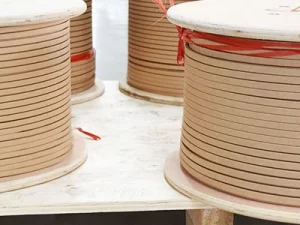
Paper covered wire consists of a conductive core, typically copper or aluminum, wrapped with one or more layers of electrical grade paper insulation. The paper is specifically manufactured for electrical insulation applications and undergoes processing to achieve the necessary purity and electrical properties. The paper insulation in these products is typically made from cellulose fibers derived from wood pulp or cotton linters. The manufacturing process removes impurities and treats the paper to achieve consistent thickness and electrical properties.
Multiple layers may be applied to achieve the desired insulation thickness and voltage withstand capability. The paper wrapping may be applied in various configurations including multiple overlapping wraps, crepe paper for enhanced flexibility, or specially treated papers with improved moisture resistance or thermal capability. The specific construction depends on the application requirements and the balance of properties needed. Paper covered wire may be used in dry form or may be impregnated with transformer oil, varnish, or other insulating liquids that enhance electrical properties and provide moisture protection.
Oil-impregnated paper insulation represents one of the most reliable and widely-used insulation systems in high-voltage equipment.
Polyimide Insulated Wire Construction
Polyimide insulated wire utilizes polyimide film as the primary insulation material. Polyimide is a high-performance polymer known for its exceptional thermal stability, mechanical strength, and electrical properties. The material maintains these properties across an extremely wide temperature range, from cryogenic temperatures to well above 400 degrees Celsius. The polyimide insulation is typically applied as a wrapped film around the conductor, similar to paper covered wire construction.
The film may be applied in single or multiple layers depending on the voltage rating and thermal class requirements. Polyimide film insulation provides excellent dielectric strength and cut-through resistance. Different polyimide products offer varying characteristics. Standard polyimide provides excellent all-around performance, while specialty formulations may offer enhanced flexibility, improved adhesion, or other property modifications for specific applications.
Polyimide insulated wire may be used alone or in combination with other insulation materials to achieve specific performance objectives. The compatibility of polyimide with other materials and processes must be verified for each specific application.
Comparative Construction Considerations
The physical construction of paper covered wire and polyimide insulated wire differs in ways that influence both manufacturing processes and end-use performance characteristics. Thickness for equivalent voltage rating typically differs between the two materials due to their different dielectric properties. Polyimide insulation can generally achieve equivalent voltage withstand in thinner constructions compared to paper, contributing to more compact coil designs. The flexibility of the finished wire differs significantly, with polyimide insulated wire generally offering better flexibility for a given insulation thickness.
This flexibility advantage enables tighter winding geometries and more compact designs in space-constrained applications. Terminations and connections require different considerations for the two materials, with polyimide insulation potentially requiring different termination techniques due to its different surface properties and temperature capability.
Electrical Properties Comparison
Dielectric strength represents one of the most important electrical properties for insulation material comparison. This property determines the maximum electric field intensity the insulation can withstand before electrical breakdown occurs. Polyimide insulation demonstrates excellent dielectric strength, typically ranging from 150 to 300 volts per micron depending on the specific product grade and test conditions. This high dielectric strength enables thin insulation layers while maintaining adequate voltage withstand capability.
Paper insulation provides good dielectric strength that is enhanced significantly by oil impregnation. The dielectric strength of oil-impregnated paper can exceed that of the dry paper by factors of three to five, making impregnation essential for high-voltage applications. For equivalent applications, polyimide insulated wire can often achieve the same voltage rating with thinner insulation, enabling smaller coil dimensions and reduced material costs. However, paper covered wire with oil impregnation provides excellent voltage withstand that has been proven in countless high-voltage applications over many decades.
Insulation Resistance
Insulation resistance measures the resistance to current flow through the insulation, providing an important indicator of insulation quality and the ability to prevent leakage current flow during operation. Both paper and polyimide insulation provide high insulation resistance under normal conditions. The specific values depend on the insulation thickness, moisture content, and temperature conditions during measurement. Paper insulation is more susceptible to moisture absorption than polyimide, and moisture significantly reduces insulation resistance.
Oil impregnation protects paper insulation from moisture absorption and maintains high insulation resistance in service. Polyimide insulation provides inherently good moisture resistance and maintains stable insulation resistance across humidity ranges commonly encountered in electrical equipment applications. This moisture resistance advantage simplifies storage and handling requirements.
Dielectric Loss Characteristics
Dielectric loss, often measured as dissipation factor or tan delta, indicates the energy dissipated in the insulation when subjected to alternating voltage stress. Lower dielectric loss values indicate better insulation efficiency. Paper insulation exhibits moderate dielectric loss that is highly dependent on moisture content and temperature. Dry paper demonstrates relatively low losses, while moisture absorption significantly increases dissipation factor.
Oil-impregnated paper insulation shows very low dielectric loss when properly processed and maintained. The combination of dry paper and clean oil provides excellent dissipation factor characteristics that have been optimized through decades of application experience. Polyimide insulation demonstrates consistently low dissipation factor across a wide temperature range, contributing to minimal dielectric heating under AC voltage stress. This stable loss characteristic simplifies thermal design for equipment using polyimide insulated windings.
Thermal Properties and Performance
Maximum operating temperature represents one of the most significant differentiators between paper covered wire and polyimide insulated wire. This capability determines the application range and design margins for each insulation type. Paper covered wire is typically classified for thermal classes up to 105°C to 120°C for standard products, though specialized papers and treatments can extend this to approximately 130°C for certain applications. The cellulose paper undergoes significant thermal degradation above these temperatures.
Oil-impregnated paper provides excellent thermal capability in the 105°C to 130°C range, with the oil helping to dissipate heat and prevent localized overheating. The combination has been optimized through extensive research and field experience. Polyimide insulated wire provides exceptional thermal capability, with standard products rated for continuous operation at temperatures up to 220°C to 240°C. Specialty polyimide formulations can extend this further, with some products rated for intermittent service above 300°C.
The thermal class advantage of polyimide becomes decisive in applications where elevated temperature operation is unavoidable due to power density requirements, poor cooling conditions, or exposure to high ambient temperatures.
Thermal Aging Behavior
Long-term thermal aging determines the expected service life of insulation systems at elevated temperatures. Understanding aging behavior is essential for accurate life prediction and warranty determination. Paper insulation ages through oxidative degradation and cellulose breakdown, with the rate of property change depending strongly on temperature and oxygen availability. Arrhenius modeling allows life prediction based on accelerated aging test data.
Oil-impregnated paper ages more slowly than dry paper due to the protective effect of the oil, which excludes oxygen and conducts heat away from hot spots. However, the oil itself undergoes oxidation and can produce aging byproducts that affect insulation performance. Polyimide insulation demonstrates excellent thermal aging resistance, with properties changing very slowly at rated temperatures. The polymer structure is inherently more thermally stable than cellulose, providing much longer life at equivalent temperatures.
The life advantage of polyimide at elevated temperatures can translate to either extended equipment life or reduced insulation requirements for a given life objective.
Thermal Conductivity
Thermal conductivity influences the rate at which heat can be transferred from the conductor through the insulation to the cooling medium. Better thermal conductivity enables more efficient heat dissipation and lower conductor temperatures. Paper insulation has relatively low thermal conductivity, though oil impregnation significantly improves heat transfer by filling void spaces and providing better thermal contact between paper layers and between insulation and adjacent surfaces. Polyimide film insulation also has moderate thermal conductivity, but the thin insulation layers possible with polyimide can result in lower overall thermal resistance compared to thicker paper insulation for equivalent voltage ratings.
The effective thermal resistance of the complete winding insulation system depends on many factors beyond the base material conductivity, including void content, interface conditions, and the presence of impregnating materials.
Mechanical Properties
The flexibility of insulated wire determines how tightly it can be bent during winding without damaging the insulation. Flexibility influences both manufacturing process capability and the minimum coil dimensions achievable. Paper covered wire provides good flexibility, particularly with crepe paper constructions designed specifically for winding applications. The paper wrapping conforms to bends without cracking or delaminating when properly processed.
Polyimide insulated wire offers excellent flexibility in many constructions, though the specific polyimide product must be selected for the required bend radius. Specialty flexible polyimide formulations are available for demanding winding applications. Both materials can be wound successfully using appropriate equipment and process parameters. The specific flexibility requirements of the application determine which material is more suitable.
Abrasion and Cut-Through Resistance
Abrasion resistance protects insulation from mechanical damage during handling, winding, and in service where vibration or movement might cause the wire to rub against adjacent surfaces. Polyimide insulation provides excellent abrasion resistance due to the inherent toughness of the polymer material. This resistance protects the insulation during manufacturing and throughout the equipment service life. Paper insulation provides moderate abrasion resistance that is generally adequate for most applications when properly handled and processed.
Additional protection may be needed in particularly harsh service conditions. Cut-through resistance, the ability to withstand mechanical pressure that could penetrate the insulation, is generally better for polyimide than for paper insulation at equivalent thicknesses.
Vibration and Dynamic Stress Resistance
Resistance to vibration and dynamic mechanical stress determines reliability in applications such as motors and generators where continuous vibration is encountered during operation. Paper insulation, particularly when impregnated with varnish or resin, provides adequate vibration resistance for most transformer and reactor applications where vibration levels are moderate. Polyimide insulated windings that are properly impregnated demonstrate excellent vibration resistance. The high strength and toughness of polyimide helps the insulation withstand vibration-induced stresses throughout the equipment life.
Both materials benefit significantly from proper impregnation, which bonds individual wires together and prevents the relative movement that can cause insulation damage.
Environmental Resistance
Moisture resistance affects storage requirements, handling procedures, and long-term reliability in humid environments. This characteristic significantly influences maintenance requirements and equipment lifecycle costs. Paper insulation absorbs moisture readily when not protected by oil or other impregnants. This moisture absorption degrades electrical properties and must be addressed through drying procedures before energization of any equipment using paper insulation.
Polyimide insulation provides inherently good moisture resistance and maintains stable properties even when exposed to humid conditions. This moisture resistance simplifies storage and handling requirements. For applications where moisture exposure cannot be avoided, polyimide may provide advantages in reliability without the complexity of oil-impregnated systems.
Chemical Resistance
Resistance to chemical attack from substances that may be encountered in service affects the range of applications where each material can be reliably used. Paper insulation can be degraded by exposure to certain chemicals, including strong acids, bases, and some solvents. Chemical compatibility must be verified for specific applications involving chemical exposure. Polyimide demonstrates excellent chemical resistance to most substances encountered in electrical equipment applications.
The material maintains its properties when exposed to typical industrial environments, oils, and many solvents. The superior chemical resistance of polyimide extends its applicable range to environments where paper insulation would be quickly degraded.
Radiation Resistance
Specialized applications in nuclear power, aerospace, or radiation environments impose unique requirements on insulation materials. Paper insulation is susceptible to radiation damage that degrades mechanical and electrical properties. The cellulose structure is particularly vulnerable to radiation-induced chain scission. Polyimide provides excellent radiation resistance compared to cellulose-based materials.
The aromatic polymer structure provides inherent radiation tolerance that makes polyimide suitable for radiation environments where paper would rapidly degrade.
Application Suitability
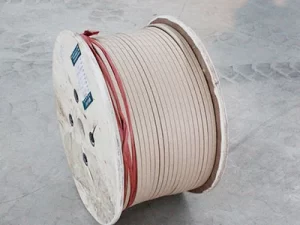
Transformer applications represent the primary use case for paper covered wire, where decades of proven performance have established it as the material of choice for most power and distribution transformer applications. Large power transformers almost universally use oil-impregnated paper insulation due to its excellent combination of electrical properties, thermal capability, proven reliability, and cost effectiveness. The transformer tank provides containment for the oil system that protects the paper insulation. Small and medium transformers may use paper covered wire in dry orvarnished configurations, particularly for applications where oil-filled transformers are not appropriate.
These dry-type transformers typically operate at lower temperatures and voltages than oil-filled units. The transformer application represents an area where paper insulation has been optimized through extensive research and field experience, making it difficult for alternative materials to displace polyimide on a cost-performance basis for standard transformer designs.
High-Temperature Applications
Applications involving sustained elevated temperature operation favor polyimide insulated wire due to its significantly higher thermal class rating. Aerospace equipment, metal-working machinery, and high-power density electronics often operate at temperatures that would rapidly degrade paper insulation. Polyimide provides reliable operation in these demanding thermal environments. Evaporators, heating equipment, and other applications involving high ambient temperatures benefit from the thermal margin that polyimide provides above the actual operating temperature.
The selection of polyimide for high-temperature applications often represents the only viable technical solution when temperature requirements exceed paper capability.
Specialized and Harsh Environment Applications
Applications involving exposure to demanding environmental conditions may favor polyimide due to its superior moisture and chemical resistance. Marine environments, outdoor installations in humid climates, and process industry applications may benefit from polyimide wire where moisture and chemical exposure could compromise paper insulation reliability. Nuclear power applications, where radiation resistance is required, strongly favor polyimide over paper insulation for any application where radiation exposure is anticipated. The cost premium for polyimide may be justified in these specialized applications where the consequences of insulation failure are severe.
Cost Considerations
Direct material costs for polyimide insulated wire significantly exceed those for paper covered wire due to the higher cost of polyimide film compared to cellulose paper. Manufacturing costs for both materials are comparable when similar equipment and processes are used. The choice of material does not inherently require different manufacturing approaches. For high-volume applications, the unit cost difference can be substantial and may influence material selection even when technical factors favor polyimide.
Total Cost of Ownership
Total cost of ownership analysis considers not only initial material and manufacturing costs but also lifecycle costs including maintenance, reliability, and equipment downtime. Paper insulation in oil-filled transformers provides extremely reliable service when properly designed and maintained, with life expectancies of decades. This proven reliability supports the initial cost investment. Polyimide provides reliability advantages in specific applications where its properties are essential, but does not necessarily provide lifecycle cost advantages in applications where paper would perform adequately.
A comprehensive total cost analysis should consider all relevant cost factors before making material selection decisions based primarily on initial cost differences.
Conclusion
The comparison between paper covered wire and polyimide insulated wire reveals that both materials offer distinct advantages that make them suitable for different application requirements. Neither material is universally superior; the optimal choice depends on the specific application conditions and performance requirements. Paper covered wire, particularly in oil-impregnated configurations, provides an excellent combination of electrical properties, thermal capability, proven reliability, and cost effectiveness that has been optimized through over a century of continuous development and field experience. For transformer and similar applications where paper insulation is technically appropriate, it remains the material of choice based on its comprehensive balance of properties.
Polyimide insulated wire provides exceptional thermal capability, moisture resistance, chemical resistance, and radiation tolerance that make it essential for demanding applications where paper insulation cannot meet performance requirements. The higher cost of polyimide is justified when its unique properties are necessary for the application. Application requirements should drive material selection, with both materials being evaluated against the specific performance, reliability, cost, and environmental requirements of the intended service. Engineering judgment, supported by consultation with material suppliers and equipment manufacturers, guides the final material selection decision.