

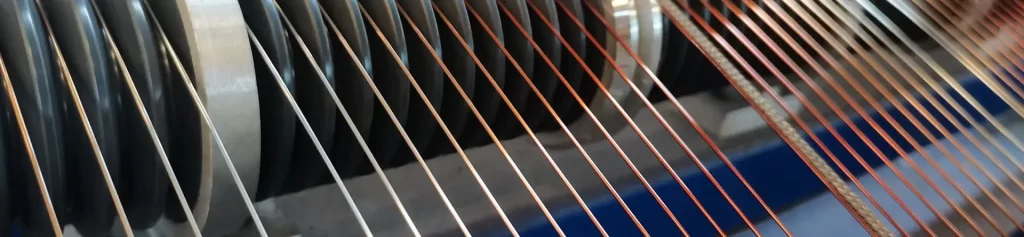
Paper-sheathed wire uses a copper conductor or aluminum conductor as the matrix, with an outer layer of cellulose insulating paper, and forms a complete insulation system after drying and oil impregnation.
In the power transformer field, paper-sheathed wire, with its excellent insulation properties, mature manufacturing process, and reliable historical performance, has become the preferred material for oil-immersed transformer windings.
From high-voltage transmission transformers to distribution transformers, from power transformers to special transformers, paper-sheathed wire plays an irreplaceable role in various transformer products.
This article will systematically elaborate on the insulation characteristics of paper-sheathed wire, its application advantages in transformers, key performance indicators, and selection points, providing professional reference for transformer design engineers and purchasing decision-makers.
Chapter 1Basic Characteristics of Paper-Sheathed Wire Cellulose Insulation Paper Material Cellulose insulation paper is the core insulation material of paper-sheathed wire: Cellulose paper is made from natural cellulose through pulping, papermaking, calendering, and other processes.
The cellulose molecular chain contains a large number of hydroxyl groups, exhibiting good polarity and hygroscopicity.
The thickness of the insulation paper is typically between 0.05mm and 0.20mm, with different thicknesses suitable for different insulation levels.
Different types of insulation paper, such as cable paper, transformer paper, and high-density paper, have different electrical and mechanical properties.
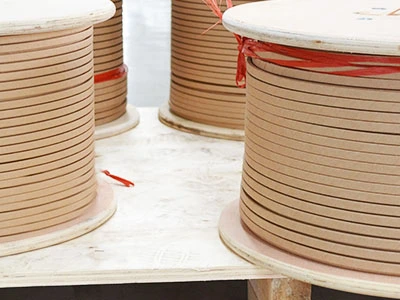
Structural Types of Paper-Sheathed Wire Paper-sheathed wire has several structural types: Ordinary paper-sheathed wire uses a single layer of paper tape wrapped around the wire, with a tape width typically between 10mm and 25mm and a wrapping angle controlled between 25° and 45°.
High-voltage paper-sheathed wire uses multiple layers of paper tape wrapped around the wire, with the number of layers determined according to the voltage level, typically 2 to 6 layers.
Composite paper-sheathed wire is further coated with insulating varnish on the outside of the paper tape to further improve insulation performance.
Insulation Mechanism The insulation mechanism of paper-insulated wire is reflected in several aspects: Cellulose paper has a high dielectric constant, effectively distributing electric field stress under an electric field.
The fibrous structure of the insulating paper forms complex micropores, which facilitates the penetration and filling of insulating oil.
After drying and oil impregnation, the insulating paper and insulating oil form a composite insulation system, significantly improving insulation strength.
Insulation Performance of Paper-Insulated Wire Electrical Performance The electrical performance of paper-insulated wire is its most crucial technical indicator: The dielectric loss tangent is an important parameter for measuring insulation quality.
The dielectric loss factor of high-quality paper-insulated wire is typically between and 0.005.
Breakdown voltage is an important indicator of insulation strength.
The breakdown voltage of high-voltage paper-insulated wire can reach tens of kilovolts, meeting the insulation requirements of high-voltage transformers.
Partial discharge characteristics directly affect the operating life of transformers.
The partial discharge of paper-insulated wire at rated voltage should be controlled within the allowable range.
Thermal Performance The thermal performance of paper-insulated wire affects the temperature rise and lifespan of the transformer: The maximum continuous operating temperature of cellulose paper is 105°C; exceeding this temperature accelerates thermal aging.
Thermal aging of insulating paper manifests as a decrease in polymerization degree, reduced mechanical strength, and increased dielectric loss.
In oil-immersed transformers, the operating temperature of paper-insulated wire is typically controlled between 80°C and 105°C.
Chemical Performance The chemical stability of paper-insulated wire significantly impacts transformer lifespan: Cellulose paper undergoes oxidative degradation under high temperatures and oxygen.
Acidic substances in insulating oil corrode the insulating paper, leading to a decrease in polymerization degree.
Moisture is a major enemy of paper-insulated wire insulation; even trace amounts can significantly reduce insulation strength.
Application Advantages in Transformers High Reliability The application of paper-insulated wire in transformers has a long history and mature technology: Decades of application experience have proven the reliability of paper-insulated wire insulation systems.
Under proper design and specified operating conditions, paper-insulated transformers can operate safely for over 30 years.
The failure modes of paper-insulated wire systems are clear and predictable, which is beneficial for condition monitoring and maintenance of the transformer.
Excellent Compatibility and Perfect Match with Oil-Immersed Transformers The combination of paper-insulated wire and insulating oil is the most classic insulation solution for oil-immersed transformers: the insulating oil can penetrate into the fiber pores of the insulating paper, forming a complete composite insulation.
The insulating oil also plays a role in cooling and arc extinguishing, improving the thermal stability and short-circuit withstand capability of the transformer.
Paper-insulated wire and insulating oil have good chemical compatibility, resulting in stable performance during long-term operation.
Repairability Compared with other new insulation materials, paper-insulated wire has the advantage of repairability: when a transformer winding fails, the paper-insulated wire winding can be partially repaired.
Replacing the damaged paper-insulated wire winding section restores the normal operation of the transformer.
This characteristic makes paper-insulated wire transformers have lower maintenance costs throughout their entire life cycle.
Key Performance Indicators and Quality Control Conductor The conductor material for paper-insulated wire can be copper or aluminum: Copper conductor: Paper-insulated wire has excellent conductivity and is suitable for high-capacity transformers.
Aluminum conductor: Paper-insulated wire has lower cost and is suitable for medium-capacity transformers.
Conductivity, dimensional tolerances, and surface quality are all important control parameters.
Paper Tape The paper tape directly affects insulation performance: The thinner the paper tape, the higher the insulation strength, but the greater the manufacturing difficulty.
The width of the paper tape affects wrapping efficiency and insulation uniformity.
The density, tensile strength, elongation, and other mechanical properties of the paper tape also need to be strictly controlled.
Wrapping Quality Quality control of the wrapping process is crucial: Wrapping should be tight, flat, wrinkle-free, and bubble-free.
The wrapping angle and overlap rate must meet process requirements.
The outer diameter after wrapping should be within tolerance.
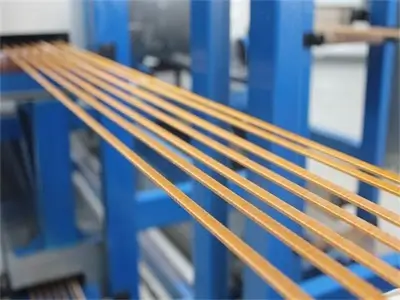
Selection Guide Selection Based on Voltage Level Voltage level is the primary consideration in selecting paper-insulated wire: For transformers with voltage levels below 35kV, ordinary paper-insulated wire is sufficient. For transformers with voltage levels between 35kV and 110kV, high-voltage paper-insulated wire, typically with 3 layers or more, is required. For ultra-high-voltage transformers with voltage levels above 110kV, specially designed high-voltage paper-insulated wire, along with other insulation measures, is required. Selection Based on Capacity Transformer capacity affects the selection of paper-insulated wire specifications: Large-capacity transformers have high winding currents, requiring conductors with larger cross-sections. Large-capacity transformers have high heat dissipation requirements, necessitating a reasonable design for the insulation thickness of the paper-insulated wire. Transformer capacity also affects the selection of cooling methods, requiring comprehensive consideration. Selection Based on Operating Environment The operating environment has special requirements for paper-insulated wire: High-temperature environments require paper-insulated wire products with higher thermal class. High-altitude environments require consideration of the impact of air pressure on insulation strength. Special chemical environments necessitate the use of paper-insulated wire with protective coatings. — Chapter Six: Technological Development Trends Improvements in Insulation Paper: New insulation paper materials are constantly emerging: High-density insulation paper possesses superior electrical properties and mechanical strength. Synthetic fiber papers such as aramid paper offer better heat resistance. Nanocellulose paper is one of the future development directions. Optimization of Insulation Structure: The insulation structure of paper-insulated wire continues to be optimized: Thinner, fewer-layer high-voltage paper-insulated wires are constantly being developed. Combined insulation structures combine the advantages of paper-insulated wire with other insulation materials. The application of computational simulation technology makes insulation structure design more precise. Intelligent Monitoring Technology: Online monitoring technology improves the reliability of transformer operation: Partial discharge online monitoring can promptly detect insulation defects. Dissolved gas analysis in oil can determine the degree of insulation aging. Fiber optic temperature measurement technology can monitor winding temperature distribution in real time.
Conclusion: As the most mature and widely used insulation material in transformer manufacturing, paper-insulated wire plays an irreplaceable role in power systems.
Its superior insulation performance, perfect compatibility with insulating oil, and mature and reliable manufacturing process make it the preferred material for oil-immersed transformer windings.
With the development of power systems and increasing demands for equipment reliability, paper-insulated wire technology continues to advance.
The research and development of new insulation materials, the optimization of insulation structures, and the application of intelligent monitoring technologies are all driving paper-insulated transformers towards higher voltage levels, larger capacities, and longer lifespans.
In the foreseeable future, paper-insulated wire will remain the mainstream choice in transformer insulation, providing a solid guarantee for the safe and stable operation of power systems.