


Paper Covered Wire in Renewable Energy Transformers
Introduction
With the accelerated global energy transition, new energy industries such as wind power, photovoltaic power, and energy storage systems are developing rapidly. As the core equipment of new energy power generation systems, new energy transformers face more complex working environments and higher reliability requirements.
Compared with traditional thermal power transformers, new energy transformers need to adapt to frequent load fluctuations, harsh environmental conditions, and high harmonic content, among other special challenges. Paper covered wire, as the core winding material of new energy transformers, is widely used due to its unique structure and excellent comprehensive performance. This article systematically describes the technical characteristics and typical applications of paper covered wire.
I. Structure and Classification of Paper Covered Wire
1.1 Basic Structure of Paper Covered Wire
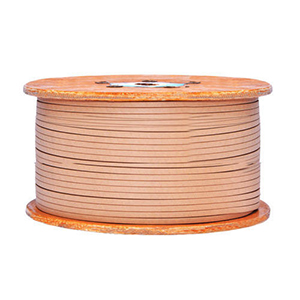
Paper covered wire is a composite conductor material composed of a conductor and an insulating paper layer.
Conductor Part: Responsible for conductivity, it is usually made of oxygen-free copper rod or electrical aluminum rod. The conductor’s cross-sectional shape can be circular, flat, or rectangular. Copper conductor has low resistivity, approximately 1.72 × 10⁻⁸ Ω·m.
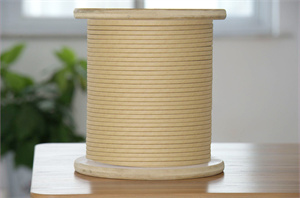
Insulating Paper Layer: Cable paper is the primary insulating material, made from high-quality sulfate wood pulp. The paper tape is wrapped around the conductor surface in an overlapping manner, with an overlap rate controlled above 30%.
Paper Tape Specifications: Width: 10-35mm, Thickness: 0.05-0.20mm.
1.2 Classification of Paper Covered Wire
By Conductor Material:
- Copper conductor: High conductivity and good mechanical strength, the mainstream choice for high-voltage transformers.
- Aluminum conductor: Lightweight and low cost, resistivity approximately 1.64 times that of copper.
By Insulation Structure:
- Single-sided paper covered wire: For low-voltage motors or distribution transformers.
- Double-sided paper covered wire: Better insulation performance.
- Enamelled paper wrapped wire: Enhanced moisture resistance and adhesion.
- Semi-conductive paper wrapped wire: For electric field homogenization in high-voltage windings.
By Paper Covering Form:
- Round wire: Most common form, diameter from 1mm to 10mm+.
- Flat wire: Higher fill factor for high-current windings.
- Cable paper wrapped wire: Simple and reliable process.
1.3 Technical Characteristics of Insulating Paper
Chemical Composition: Main component is cellulose, molecular formula (C₆H₁₀O₅)n.
Electrical Properties: Dielectric constant 3.5-4.5, dielectric loss factor tanδ approximately 0.002-0.003, volume resistivity approximately 10¹³-10¹⁴ Ω·cm.
Mechanical Properties: Tensile strength 50-100MPa, elongation at break 3-8%.
Moisture Absorption: Storage relative humidity should be controlled below 70%.
II. Special Requirements of New Energy Transformers
2.1 Major Challenges
Large Load Fluctuations: Need to adapt to frequent load fluctuations, requiring excellent thermal cycling performance.
Harsh Environmental Conditions: Built in areas with large temperature differences (deserts, Gobi, offshore wind farms).
High Reliability Requirements: Installed in remote areas with high maintenance costs.
High Harmonic Content: Power electronic equipment generates high-order harmonics affecting insulation.
2.2 Applicability of Paper Covered Wire
The oil-paper insulation system has excellent electrical performance and thermal stability: strong harmonic tolerance; can withstand temperature cycling; high structural strength to withstand vibration loads.
III. Typical Applications in Renewable Energy Transformers
3.1 Wind Power Transformer
Selection: F-class insulated paper covered round wire. The paper layer structure effectively absorbs vibration energy.
Insulation Design: Offshore wind power needs enhanced sealing and protective sheath.
Typical Specifications: Capacity 2-10MVA, voltage 10-35kV.
3.2 Photovoltaic Power Station Transformer
Selection: F-class insulated paper covered round wire. Enamelled paper wrapping provides better thermal stability.
Harmonic Considerations: Increase insulation thickness or use enamelled paper wrapped wire for better harmonic resistance.
Typical Specifications: Capacity 0.5-5MVA, voltage 10-35kV.
3.3 Energy Storage System Transformer
Selection: H-class insulated heat-resistant paper covered wire (enamelled paper wrapped structure) for frequent charge-discharge thermal cycling.
Typical Specifications: Capacity 1-10MVA, voltage 10-35kV.
IV. Selection Technical Guidelines
4.1 Selection by Transformer Type
| Transformer Type | Recommended Wire | Insulation Class | Special Requirements |
|---|---|---|---|
| Wind Power Transformer | Paper covered flat/round wire | Class F | Vibration resistance |
| PV Boost Transformer | Paper covered round wire | Class F | Thermal cycling |
| Energy Storage Bidirectional Transformer | Heat-resistant paper covered wire | Class H | Thermal cycling |
4.2 Selection by Voltage Level
| Voltage Level | Paper Layers | Insulation Thickness |
|---|---|---|
| 10kV | 2-3 layers | 0.5-0.8mm |
| 35kV | 4-6 layers | 1.0-1.5mm |
| 66kV | 6-8 layers | 1.5-2.0mm |
4.3 Selection by Environmental Conditions
High Temperature: Choose Class F or H insulation paper.
High Humidity: Enhance sealing, consider enamelled paper wrapping structure.
Salt Spray: Add protective sheath, use corrosion-resistant conductors.
Vibration: Dense wrapping structure; flat wire has better vibration resistance.
V. Manufacturing Process and Quality Control
5.1 Winding Process
Uniform tension control; inter-turn insulating pads to form oil channels; end insulation with corner rings and screens.
5.2 Impregnation Treatment
Vacuum impregnation with transformer oil removes air from paper fibers, improving dielectric strength by 2-3 times.
5.3 Quality Inspection
DC resistance, insulation resistance, power factor, withstand voltage, and partial discharge tests.
VI. Typical Application Cases
Case 1: 2MW Wind Turbine Box Transformer
F-class insulated paper covered round wire. Stable operation for over 10 years under vibration conditions.
Case 2: 1.25MW PV Grid-Connected Inverter Transformer
F-class insulated paper covered round wire with increased insulation thickness for harmonic resistance. Normal temperature rise in summer.
Case 3: 2.5MVA Energy Storage Step-Up Transformer
H-class insulated heat-resistant paper covered wire (enamelled paper wrapped). Stable performance after 3 years with 1-2 daily charge-discharge cycles.
VII. Common Technical Questions
Q1: Special requirements for new energy transformers?
Higher thermal class; better vibration resistance; stronger harmonic tolerance; higher reliability.
Q2: Specifications for offshore wind power?
F-class or H-class insulated paper covered wire with enhanced sealing and protective sheath.
Q3: How to improve temperature cycling lifespan?
Use Class F or H insulation paper; optimize transformer oil quality; allow sufficient insulation margin; conduct regular testing.
Q4: Harmonic current tolerance?
Oil-paper insulation has good harmonic tolerance. Increase thickness or use enamelled paper wrapped structure to improve resistance.
VIII. Technical Specifications
| Parameter | Specification |
|---|---|
| Insulation Material | Cable paper, insulating varnish, heat-resistant paper |
| Insulation Class | A (105°C), B (130°C), F (155°C), H (180°C) |
| Conductor Material | Copper, Aluminum |
| Paper Covering Form | Round wire, flat wire, enamelled paper wrapped |
| Tape Thickness | 0.05-0.20mm |
| Tape Width | 10-35mm |
| Voltage Rating | 6kV, 10kV, 35kV, 66kV |
| Standards | IEC 60250, GB/T 7674, NEMA MW 1000 |
Conclusion
Paper covered wire, with its excellent insulation performance, good thermal resistance, and reliable structural strength, plays a vital role in wind power, photovoltaic, and energy storage transformers.
Our company has 30 years of experience in manufacturing magnetic wires and special conductors, providing high-quality paper covered wire and technical support for renewable energy transformer manufacturers.
Contact Information
Email: office@cnlpzz.com
WhatsApp: 0086-19337889070
This article was prepared by Zhengzhou LP Industry Co., Ltd., specializing in the research and manufacturing of magnetic wires and special conductors for thirty years.