


In the design and manufacture of oil-immersed power transformers, the insulation quality of the winding conductors directly determines the transformer’s electrical performance, mechanical strength, and service life. Paper covered wire, as one of the most widely used insulated conductors in power transformer windings, has long dominated high-voltage winding insulation solutions due to its mature manufacturing process, excellent dielectric properties, good thermal stability, and compatibility with transformer oil. From distribution transformers to ultra-high-voltage power transformers, from step-up transformers to converter transformers, paper covered winding wire plays an irreplaceable role in various application scenarios of the power industry.
What is Paper Covered Wire for Power Transformer Windings?
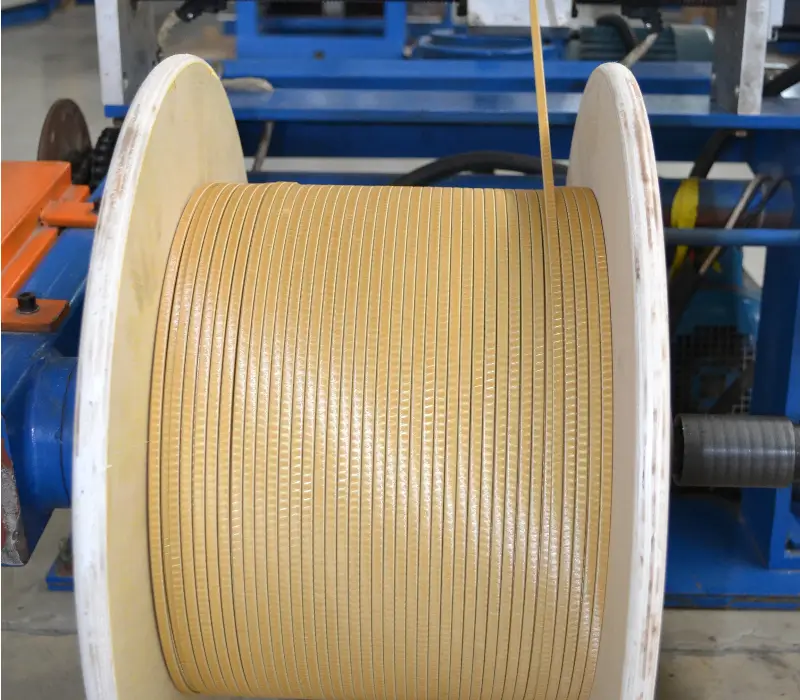
Paper covered wire for power transformer windings is an insulated conductor specifically designed for oil-immersed transformer windings. It consists of a high-purity copper or aluminum conductor wrapped with multiple layers of insulating paper. The insulating paper is typically made of kraft paper or crepe paper, spirally wound onto the conductor surface with precise tension and overlap ratio using a specialized paper wrapping machine. The number of paper layers varies from a single layer to multiple layers depending on the voltage rating, with common configurations of 2-ply, 3-ply, 4-ply, 5-ply, 6-ply, and even higher ply counts. After the paper wrapping is completed, the wire typically undergoes drying and oil impregnation treatment to allow the insulating paper to fully absorb the transformer oil, forming a paper-oil composite insulation system.
The core principle of this insulation structure is that the insulating paper provides the solid skeleton for mechanical support and electrical isolation, while the transformer oil fills the gaps between the paper layers and impregnates the paper fibers, creating a composite insulating medium with minimal air gaps and extremely high dielectric strength. This paper-oil combined insulation system achieves a dielectric strength of approximately 30-50 kV/mm, far exceeding that of any single material, making it an ideal choice for high-voltage power transformer insulation.
Paper covered wire for power transformer windings is available in various cross-sectional shapes, including round, rectangular, and flat profiles. Round paper covered wire is mainly used in the high-voltage windings of small and medium-sized transformers. Rectangular and flat paper covered wire, due to their high fill factor and superior space utilization, are widely used in the low-voltage and high-voltage windings of large power transformers. Regarding conductor materials, copper conductors are the preferred material for power transformer windings due to their high electrical conductivity, excellent mechanical strength, and strong short-circuit current withstand capability. Aluminum conductors are also used in certain power transformer applications due to their lighter weight and lower cost.
Construction and Insulation System
The construction of paper covered wire for power transformer windings, from the inside outward, consists of three main layers: the conductor, the insulating paper layer, and the impregnation treatment layer. These three components work together to form a complete insulation system.
Conductor Section
The conductor is the core of the paper covered wire, responsible for current transmission. The conductors used in paper covered wire for power transformers are typically high-purity electrolytic copper (purity ≥99.9%) or pure aluminum (purity ≥99.5%) to ensure good conductivity and mechanical properties. Copper conductors achieve 100% IACS (International Annealed Copper Standard) conductivity, while aluminum conductors reach approximately 61% IACS. The conductor cross-sectional shape is selected according to the transformer design requirements, with common shapes including round, rectangular, and flat. High dimensional accuracy is required, with tolerances typically controlled within ±0.02 mm.
Insulating Paper Layer
The insulating paper is the key insulating medium for paper covered wire. Commonly used insulating papers for power transformers include kraft paper, crepe paper, and high-density paper. Kraft paper is made from unbleached sulfate wood pulp and offers good mechanical strength, dielectric properties, and oil absorption capacity. Crepe paper undergoes a creping process that provides better elasticity and extensibility, making it suitable for irregularly shaped conductors. High-density paper has higher dielectric strength and better heat resistance, making it suitable for ultra-high voltage transformers. The thickness of the insulating paper typically ranges from 0.05 mm to 0.13 mm, selected according to voltage class and design requirements. The paper layers are spirally wound onto the conductor using a specialized paper wrapping machine with a controlled overlap ratio (typically 30%-50%), with each layer stabilized by adhesion or mechanical interlocking.
Impregnation Treatment Layer
Impregnation treatment is one of the key processes in paper covered wire manufacturing. After the paper wrapping is completed, the winding undergoes vacuum pressure impregnation (VPI) treatment, allowing the insulating paper to fully absorb the transformer oil under vacuum conditions. The impregnated paper-oil composite insulation system achieves extremely high dielectric strength, with a dielectric constant of approximately 2.2-2.5, extremely low dielectric loss tangent (tanδ), and excellent insulation performance. Impregnation treatment also effectively removes moisture and air from the paper layers, preventing partial discharge and bubble formation during operation, ensuring the long-term safe operation of the transformer.
Paper Grades and Ply Configurations
The grade of insulating paper and the number of plies configured are key parameters in paper covered wire design, directly affecting the transformer’s insulation strength, heat dissipation capability, and overall dimensions.
Common Insulation Paper Types
The common insulation paper grades used in paper covered wire for power transformers include:
- Kraft Paper: Standard kraft paper is typically available in thicknesses of 0.08 mm, 0.10 mm, and 0.13 mm. It is the most widely used insulation paper type, suitable for transformers rated at 35 kV and below.
- High-Density Kraft Paper: This grade has higher density and better dielectric strength, suitable for transformers rated at 110 kV and above.
- Crepe Paper: Crepe-treated for enhanced elasticity and extensibility, primarily used for irregularly shaped conductors and end insulation.
- Thermally Stabilized Paper: Thermally stabilized for better heat resistance and long-term stability, suitable for transformers operating in high-temperature environments.
- Nomex Paper: A polyaramid fiber paper with excellent high-temperature resistance (up to 220°C), suitable for dry-type transformers with insulation class H and above, or for special applications.
Ply Configuration Principles
The number of paper plies is determined primarily by the transformer’s voltage class, operating voltage, insulation distance, and design margin. Generally speaking:
- 1-2 plies: Suitable for low-voltage windings or control windings below 1 kV.
- 3-4 plies: Suitable for distribution transformer windings rated at 10 kV to 35 kV.
- 5-6 plies: Suitable for power transformer windings rated at 35 kV to 110 kV.
- 6 or more plies: Suitable for high-voltage and ultra-high-voltage power transformer windings above 110 kV.
In actual configurations, designers must perform precise calculations and optimizations based on the specific voltage class, insulation distance, winding structure, and other factors to ensure the transformer has sufficient insulation strength and safety margin.
Key Electrical and Mechanical Properties
The performance indicators of paper covered wire for power transformer windings serve as the critical basis for evaluating product quality and applicability, primarily encompassing electrical performance and mechanical performance.
Electrical Performance
- Dielectric Strength: The dielectric strength of paper covered wire is a key indicator of its insulation capability, typically expressed as breakdown voltage (kV). High-quality paper covered wire achieves a breakdown voltage of 20-50 kV in oil-immersed condition, far exceeding the actual operating voltage requirements.
- Dielectric Loss Tangent (tanδ): The dielectric loss tangent reflects the energy loss characteristics of the insulating material in an alternating electric field. The lower the tanδ value, the better the insulation performance. High-quality paper covered wire typically has a tanδ value between 0.002 and 0.005.
- Insulation Resistance: Insulation resistance reflects the ability of an insulating material to impede direct current, typically measured in MΩ·km. High-quality paper covered wire should have an insulation resistance greater than 1000 MΩ·km.
- Partial Discharge Performance: Under high-voltage electric fields, partial discharge may occur inside or on the surface of the insulation. High-quality paper covered wire should have low partial discharge inception voltage (PDIV) and extinction voltage (PDEV) to ensure that insulation aging is not caused by partial discharge during long-term operation.
Mechanical Properties
- Tensile Strength: Paper covered wire is subjected to tensile forces during manufacturing, transportation, and winding processes, requiring sufficient tensile strength to prevent the insulation paper from breaking or wrinkling.
- Elongation: Elongation reflects the material’s ability to undergo plastic deformation. Paper covered wire must withstand certain bending and tension during winding and operation, and good elongation prevents the insulation paper from cracking.
- Adhesion: The adhesion between the insulating paper and the conductor affects the overall performance of the paper covered wire. Insufficient adhesion can lead to loosening and wrinkling of the paper layer, compromising the insulation effect.
- Bending Resistance: Paper covered wire undergoes repeated bending during the winding process. Paper covered wire with poor bending resistance is prone to insulation layer damage at bends, potentially leading to partial discharge or breakdown.
- Thermal Shock Resistance: Transformers are affected by temperature changes during operation. Paper covered wire must have good thermal shock resistance to prevent the insulation layer from cracking or delaminating due to temperature variations.
Manufacturing Process
The manufacturing process of paper covered wire for power transformer windings involves multiple precision steps, each of which has a significant impact on the quality of the final product.
Conductor Pretreatment
Before entering the paper wrapping process, the conductor requires strict pretreatment, including surface cleaning, annealing, and dimensional inspection. Surface cleaning employs chemical cleaning or mechanical wiping methods to remove oil, oxide layers, and impurities from the conductor surface. Annealing softens the conductor through heating, reducing hardness and increasing elongation. Dimensional inspection utilizes precision equipment such as laser diameter gauges to ensure that the conductor dimensions meet design requirements.
Paper Wrapping Process
Paper wrapping is the core process in paper covered wire manufacturing. Paper wrapping machines typically employ a multi-head linkage design, capable of simultaneously wrapping 2 to 6 insulating paper tapes. The paper tapes maintain constant tension through a tension control system, forming a uniform and dense insulation layer on the conductor. Parameters such as tape overlap ratio, tension, and winding speed require precise control to ensure the uniformity and stability of the paper layer. Real-time monitoring of the paper layer quality is necessary during the wrapping process to promptly detect and address defects such as wrinkles, breaks, and misalignments.
Drying and Oil Impregnation
After paper wrapping is completed, the paper covered wire undergoes drying to remove moisture from the paper layer, typically using vacuum drying or hot air circulation drying. After drying, the paper covered wire enters the vacuum pressure impregnation (VPI) stage. Under high vacuum conditions, air is expelled from the paper layers, and then transformer oil that has undergone rigorous degassing treatment is injected to fully impregnate the insulating paper. The oil-impregnated paper covered wire exhibits excellent dielectric properties and long-term stability.
Post-Processing and Inspection
The oil-impregnated paper covered wire requires post-processing steps such as draining, surface cleaning, and quality inspection. Quality inspection includes multiple items, including visual inspection, dimensional measurement, electrical performance testing, and mechanical performance testing. Only paper covered wire that passes all inspection items can proceed to the next process or be stored.
Applications in Different Transformer Types
Paper covered wire for power transformer windings is widely used in various types of oil-immersed power transformers. The requirements for paper covered wire vary slightly across different application scenarios.
Step-Up Transformers
Step-up transformers are located on the power plant output side, increasing the generator’s output voltage to the transmission voltage level. Step-up transformers typically feature high voltage and large capacity, placing extremely stringent requirements on winding insulation. Paper covered wire is used primarily in both the high-voltage and low-voltage windings of step-up transformers, requiring high dielectric strength, low dielectric loss, and excellent heat resistance. Since step-up transformers generally operate at high temperatures, the paper covered wire requires special treatment to withstand these high-temperature environments.
Step-Down Transformers
Step-down transformers are located in substations or distribution systems, reducing the transmission voltage to the distribution voltage level. Step-down transformers span a wide range of capacities and voltage levels, from distribution transformers to large power transformers. The application of paper covered wire in step-down transformers is similar to that in step-up transformers, but the number of paper plies and the grade of insulation paper will vary depending on the specific voltage class and capacity.
Distribution Transformers
Distribution transformers convert high-voltage distribution voltage to low-voltage user voltage and are typically installed at the middle to back end of the distribution network. Distribution transformers have relatively small capacities, with voltage levels usually between 10 kV and 35 kV. Paper covered wire is used primarily in the high-voltage and low-voltage windings of distribution transformers, typically with 3-4 plies and standard kraft paper as the insulation material.
Converter Transformers
Converter transformers are key equipment in high-voltage direct current (HVDC) transmission systems, connecting the AC system and the converter. Converter transformers withstand combined AC and DC voltages, placing extremely stringent requirements on winding insulation, particularly the ability to withstand the electric field distribution and space charge effects under DC voltage. The application of paper covered wire in converter transformers requires special consideration of DC insulation performance, typically using high-density kraft paper or multiple layers of specially treated insulation paper.
Special Transformers
Special transformers include electric furnace transformers, rectifier transformers, and traction transformers, used in specific industrial applications. The requirements for paper covered wire in these transformers vary according to the application scenario. For example, electric furnace transformers must withstand frequent overloads and short circuits, rectifier transformers must withstand the effects of harmonic currents, and traction transformers must withstand vibration and shock. The application of paper covered wire in these special transformers requires customized design and manufacturing based on specific requirements.
Selection Criteria and Specifications
Correct selection and proper specification definition are prerequisites for ensuring that paper covered wire meets transformer design requirements, involving the determination of multiple technical parameters.
Conductor Specifications
Conductor specifications include technical parameters such as conductor material, cross-sectional shape, nominal dimensions, dimensional tolerances, conductivity, and elongation. The selection of conductor material mainly considers factors such as conductivity, mechanical strength, cost, and weight. Copper conductors are suitable for the vast majority of applications, while aluminum conductors are suitable for cost-sensitive or weight-critical applications. The cross-sectional shape is selected based on winding design and manufacturing process. Round conductors are easier to wind, while rectangular and flat conductors offer higher fill factors.
Insulating Paper Specifications
Insulating paper specifications include technical parameters such as paper type, nominal thickness, thickness tolerance, density, tensile strength, elongation, dielectric strength, and moisture content. The selection of paper type is primarily determined by voltage class, operating temperature, and insulation requirements. The selection of thickness and density must balance insulation strength and heat dissipation capability.
Number of Paper Plies and Overlap Ratio
The number of paper plies is determined based on voltage class and insulation strength requirements. The overlap ratio is typically controlled between 30% and 50%. Too low an overlap ratio results in insufficient insulation strength between paper layers, while too high an overlap ratio increases the outer diameter of the paper covered wire and material cost.
Electrical Performance Requirements
Electrical performance requirements include dielectric strength, dielectric loss tangent, insulation resistance, and partial discharge performance. These requirements must be determined based on the transformer’s voltage class, capacity, and operating conditions, and clearly specified in the procurement specifications.
Mechanical Performance Requirements
Mechanical performance requirements include tensile strength, elongation, adhesion, bending resistance, and thermal shock resistance. These requirements must meet the various mechanical stress conditions encountered during transformer manufacturing, transportation, operation, and maintenance.
Environmental Adaptability Requirements
Environmental adaptability requirements include operating temperature range, humidity range, oil resistance, and chemical resistance. Power transformers typically operate in outdoor or indoor environments and must withstand various environmental factors such as temperature variations, humidity changes, and oil aging.
Installation and Handling Best Practices
The installation and handling of paper covered wire during transformer manufacturing and operation directly affect the transformer’s final performance and service life, requiring strict adherence to process specifications.
Storage and Transportation
Paper covered wire must be protected from moisture, damage, and contamination during storage and transportation. The storage environment should be kept dry, with temperature controlled between 10°C and 30°C and relative humidity not exceeding 60%. Paper covered wire should be transported using dedicated packaging racks or boxes to avoid compression, collision, and vibration. Storage time should not be excessive, generally not exceeding 6 months.
Winding Process
Winding paper covered wire is one of the core processes in transformer manufacturing, requiring the use of specialized winding machines and winding molds. During the winding process, parameters such as winding speed, tension, and turn spacing must be controlled to ensure the tightness and uniformity of the winding. Before winding, the paper covered wire requires visual inspection and dimensional verification. After winding, turn-to-turn insulation testing and visual inspection are required.
Drying and Oil Impregnation
After assembly, transformer windings require vacuum drying and oil impregnation. The purpose of vacuum drying is to remove moisture from the windings, and the purpose of oil impregnation is to fully impregnate the insulating paper with transformer oil. The drying and oil impregnation processes require strict control of parameters such as temperature, vacuum level, pressure, and time to ensure effective treatment.
Operation and Maintenance
Paper covered wire requires regular insulation testing and condition assessment during transformer operation. Common testing methods include insulation resistance testing, dielectric loss testing, partial discharge testing, and oil quality testing. Regular testing can promptly detect problems such as insulation aging, partial discharge, and oil deterioration, allowing appropriate maintenance measures to ensure the long-term safe operation of the transformer.
Fault Handling
Faults that may occur in paper covered wire during operation include insulation aging, partial discharge, breakdown, and short circuits. After a fault is detected, fault diagnosis, cause analysis, and corrective action are required. Common corrective measures include winding replacement, insulation repair, and re-oiling. For severe faults, the transformer must be returned to the factory for repair or replacement.
Quality Standards and Testing
Quality control and testing of paper covered wire for power transformer windings must comply with relevant international and domestic standards, primarily including IEC (International Electrotechnical Commission), IEEE (Institute of Electrical and Electronics Engineers), and GB (Chinese National Standards).
International Standards
- IEC 60317-0-1: General rules for special winding wire product standards.
- IEC 60317-27: Product standard for paper covered rectangular winding wire.
- IEC 60216: Standard for evaluating the thermal endurance of electrical insulating materials.
- IEEE Std 1: General principles for temperature limits in the rating of electrical equipment.
- IEEE C57.12.00: Standard general requirements for liquid-immersed distribution, power, and regulating transformers.
- NEMA MW 1000: Standards for magnet wire.
Domestic Standards
- GB/T 7673: Product standard for paper covered winding wire.
- GB/T 10579: Standard for cable paper and insulating paper.
- GB 1094: Power transformer standard.
- GB/T 1094.11: Dry-type transformer standard.
- JB/T 8754: Standard for paper covered winding wire for transformers.
Testing Items and Methods
The quality inspection of paper covered wire includes multiple aspects, including visual inspection, dimensional measurement, electrical performance testing, mechanical performance testing, and environmental adaptability testing. Specific testing items include:
- Visual Inspection: Visual examination of the paper covered wire surface quality, including whether the paper layer is uniform and whether there are defects such as damage, wrinkling, and contamination.
- Dimensional Measurement: Use of measuring tools such as micrometers and calipers to measure dimensional parameters such as conductor diameter, paper covered outer diameter, and paper layer thickness.
- Electrical Performance Testing: Includes dielectric strength testing, dielectric loss tangent testing, insulation resistance testing, and partial discharge testing.
- Mechanical Performance Testing: Includes tensile strength testing, elongation testing, adhesion testing, bending resistance testing, and thermal shock resistance testing.
- Environmental Adaptability Testing: Includes temperature resistance testing, humidity resistance testing, oil resistance testing, and chemical resistance testing.
- Aging Testing: Includes thermal aging testing, electrical aging testing, and mechanical aging testing.
Quality Control Systems
The quality control system for paper covered wire manufacturers must cover all aspects, including raw material procurement, production processes, finished product inspection, and after-sales service. Common quality management systems include ISO 9001 Quality Management System, ISO 14001 Environmental Management System, and ISO 45001 Occupational Health and Safety Management System. Manufacturers must establish comprehensive testing laboratories equipped with advanced testing equipment and staffed by professional testing personnel to ensure stable and reliable product quality.
Conclusion
Paper covered wire for power transformer windings serves as a core component of oil-immersed transformer insulation systems, with its quality directly affecting the electrical performance, mechanical strength, operational reliability, and service life of the transformer. This guide has systematically elaborated on the definition, construction, insulation system, paper grades and ply configurations, key performance characteristics, manufacturing processes, application scenarios, selection specifications, installation handling, and quality standards of paper covered wire. When designing transformers, engineers must reasonably select the conductor specifications, insulation paper type, number of paper plies, and technical parameters of the paper covered wire based on factors such as specific voltage class, capacity, operating conditions, and application scenarios. Manufacturing personnel must strictly control the production process to ensure the stable and reliable quality of the paper covered wire. Operation and maintenance personnel must conduct regular insulation testing and condition assessments to promptly identify and address potential faults, ensuring the long-term safe operation of the transformer. With the continuous development and technological advancement of the power industry, paper covered wire will continue to innovate in materials, processes, and testing, providing a more solid guarantee for the reliable operation of power transformers.