

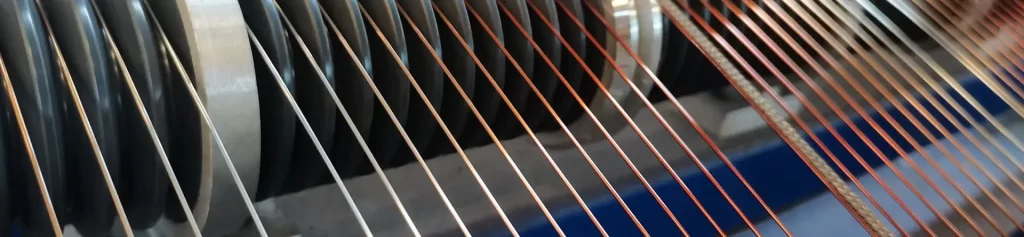
When specifying conductors for oil-immersed transformers, dry-type distribution transformers, and other high-voltage winding applications, the choice between paper covered copper wire and paper covered aluminum wire (or bare aluminum wire) is one of the most fundamental design decisions. Each conductor material offers distinct advantages and limitations in terms of conductivity, weight, cost, mechanical properties, and long-term reliability. The wrong choice can result in oversized equipment, excessive losses, premature failure, or unnecessary cost premiums.
What is Paper Covered Copper Wire?
Paper covered copper wire is an insulated conductor consisting of a high-purity copper conductor wrapped with one or more layers of high-quality insulating paper, typically kraft paper or crepe paper. The paper insulation is applied by serving or wrapping the paper tape around the conductor in overlapping layers, often with a final varnish or oil impregnation treatment to enhance the dielectric strength and moisture resistance. Paper covered copper wire is primarily used in oil-immersed transformers, where the combination of paper insulation and mineral oil provides exceptional dielectric strength and long-term reliability.
The paper covering serves as the primary solid insulation, while the oil that permeates the paper and fills the tank provides additional dielectric strength and heat dissipation. This combination of paper and oil has been the industry standard for power and distribution transformers for over a century, offering proven long-term performance, well-understood aging characteristics, and compatibility with standard transformer oil.
Paper covered copper wire is available in round, rectangular, and strip forms, in a wide range of cross-sectional sizes. The paper insulation can be applied in multiple layers, with thicker insulation providing higher dielectric strength for higher voltage applications. The standard paper layers include 1-ply, 2-ply, 3-ply, and 4-ply constructions, with the number of plies selected based on the voltage class of the transformer.
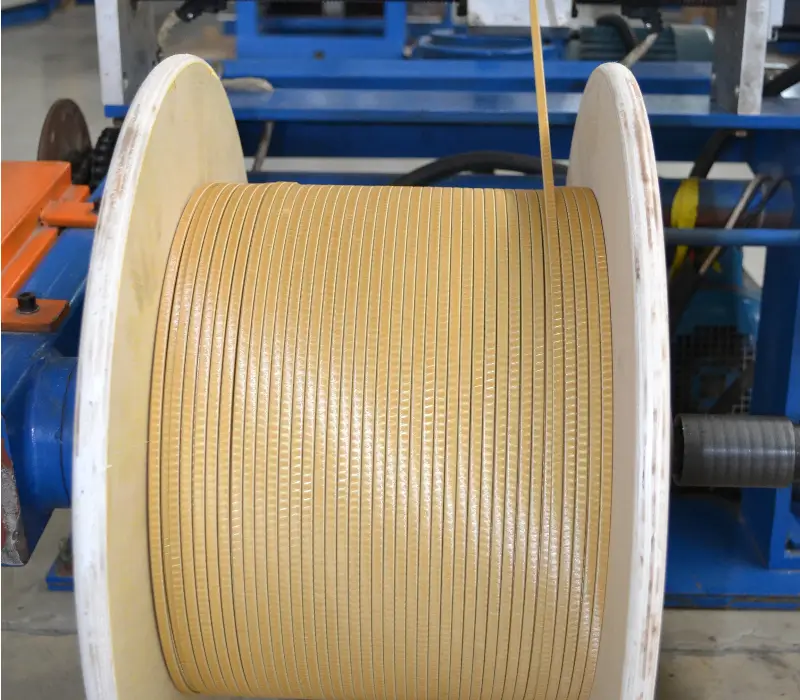
What is Paper Covered Aluminum Wire?
Paper covered aluminum wire follows the same construction principles as paper covered copper wire, but uses high-purity aluminum (typically 99.5% to 99.7% pure) as the conductor material. The aluminum conductor is wrapped with the same kraft or crepe paper insulation, with the same number of plies and the same final oil impregnation treatment. The result is an insulated conductor with the same paper-oil dielectric system but with aluminum’s characteristic weight, cost, and conductivity properties.
Paper covered aluminum wire is widely used in oil-immersed distribution transformers, particularly in the residential and light commercial market segments where cost and weight are primary design drivers. The use of aluminum in distribution transformers has grown significantly over the past several decades, driven by the substantial cost advantage of aluminum over copper and the weight reduction that simplifies installation.
Aluminum conductors in transformer applications require careful attention to termination and joint design because aluminum has different mechanical and electrical properties from copper. The oxide layer that forms on aluminum surfaces can compromise the integrity of electrical connections if not properly addressed. Modern aluminum transformer windings use specialized termination techniques, anti-oxidant compounds, and properly designed joint interfaces to ensure reliable long-term performance.
Key Properties Comparison
The fundamental properties of copper and aluminum differ significantly, and these differences directly affect transformer performance, size, and cost.
Electrical Conductivity
Copper has an electrical conductivity of 100% IACS (International Annealed Copper Standard), while aluminum has approximately 61% IACS. This means that for the same cross-sectional area, copper has roughly 64% lower resistance than aluminum. To achieve the same DC resistance, the aluminum conductor must have a cross-sectional area approximately 1.6 times larger than the equivalent copper conductor.
Weight and Density
Copper has a density of 8.96 g/cm³, while aluminum has a density of approximately 2.70 g/cm³—about one-third the density of copper. This means that even when the aluminum cross-section is increased by 1.6 times to match the copper resistance, the aluminum conductor still weighs roughly half as much as the equivalent copper conductor. For a typical distribution transformer, this weight reduction can amount to several hundred kilograms, with corresponding benefits in transportation, installation, and structural support requirements.
Mechanical Properties
Copper has higher tensile strength, better elongation, and superior fatigue resistance compared to aluminum. Copper’s ductility allows it to be formed and bent without cracking, while aluminum is more prone to mechanical damage during winding and handling. The softer nature of aluminum requires more careful winding tension control and may limit the use of aluminum in applications with severe mechanical stress or vibration.
Thermal Properties
Copper has higher thermal conductivity (approximately 400 W/m·K) than aluminum (approximately 235 W/m·K), allowing copper windings to dissipate heat more effectively. The lower thermal conductivity of aluminum means that aluminum windings may run at slightly higher temperatures for the same power dissipation, requiring careful thermal design to ensure that the paper-oil insulation system stays within its temperature limits.
Cost
Aluminum costs significantly less than copper on a per-kilogram basis. While the price ratio varies with market conditions, aluminum typically costs 70% to 85% less per kilogram than copper. Combined with the weight advantage, the cost savings per unit length of aluminum conductor are even greater than the per-kilogram differential, making aluminum a very attractive option for cost-sensitive applications.
Coefficient of Thermal Expansion
Aluminum has a higher coefficient of thermal expansion than copper (approximately 23 × 10⁻⁶/°C versus 17 × 10⁻⁶/°C for copper). This difference must be considered in transformer design, particularly for windings that experience significant temperature variations during loading. The higher expansion of aluminum can lead to mechanical stress at the interface with the paper insulation and the transformer structural components, requiring design accommodations to prevent long-term reliability issues.
Performance Differences
The performance differences between paper covered copper and aluminum wire directly affect transformer efficiency, size, thermal performance, and service life.
Resistance and Load Losses
When transformers are designed with equivalent DC resistance (achieved by increasing the aluminum cross-section by 1.6x), the I²R losses at operating temperature are essentially the same. However, the larger cross-section of aluminum means that the transformer window area may need to be larger to accommodate the bigger conductors, potentially requiring a larger core and more iron losses. In well-designed transformers, the total loss difference between copper and aluminum windings is typically small, with copper having a slight edge in efficiency at the cost of higher material expense.
Short-Circuit Withstand
Copper windings have substantially better short-circuit withstand capability than aluminum windings. The higher tensile strength and elongation of copper allow copper windings to withstand the enormous mechanical forces generated during a short-circuit event without permanent deformation. Aluminum windings, with their lower mechanical strength, may deform or fail under severe short-circuit conditions if not properly designed and braced. This is particularly important for transformers connected to high-fault-current power systems.
Thermal Endurance
The paper-oil insulation system limits the maximum operating temperature of both copper and aluminum windings to the same level (typically 105°C for standard oil-immersed designs). The conductor material itself does not significantly affect the maximum operating temperature, but the thermal conductivity differences may result in slightly different hot-spot temperatures for equivalent loading. Modern transformer designs with directed oil flow and improved cooling can compensate for these differences, achieving equivalent thermal performance with either material.
Aging and Service Life
The aging of paper insulation is the primary life-limiting factor in oil-immersed transformers, regardless of the conductor material. The aging rate of paper is determined by temperature, moisture content, oxygen exposure, and acid content of the oil, not by the conductor material. Properly designed and maintained transformers with either copper or aluminum windings can achieve service lives of 30 to 50 years or more. The conductor material affects aging indirectly through hot-spot temperature differences, with higher hot-spot temperatures accelerating paper aging.
Overload Capability
Copper windings generally have better overload capability than aluminum windings due to their higher thermal conductivity and slightly better mechanical stability at elevated temperatures. Aluminum windings can carry short-term overloads, but the design must ensure that the hot-spot temperature does not exceed safe limits and that the mechanical stress from thermal expansion does not cause winding deformation.
Cost and Weight Analysis
The cost and weight differences between copper and aluminum windings are often the primary drivers of material selection decisions.
Material Cost Comparison
For a typical 500 kVA three-phase distribution transformer, the material cost savings of using aluminum windings instead of copper windings can range from 30% to 50% of the total conductor cost. The savings are proportionally larger for higher-rated transformers where the absolute conductor mass is greater. For utility-scale transformers in the multi-MVA range, the cost difference can amount to tens of thousands of dollars per unit.
Total Transformer Cost
The total transformer cost is influenced by the winding cost, the core cost (which may increase to accommodate larger aluminum windings), the tank and structural cost (which may decrease due to lighter weight), and the labor cost (which is similar for either material). The net cost advantage of aluminum is typically 20% to 35% of the total transformer cost, depending on the rating and design. This cost advantage is the primary driver for the widespread use of aluminum in distribution transformers.
Weight and Transportation
Aluminum-wound transformers weigh 20% to 30% less than equivalent copper-wound units. This weight reduction translates into lower transportation costs (especially for international shipping charged by weight), easier handling and installation, and reduced structural support requirements. For pole-mounted and pad-mounted distribution transformers, the weight reduction can be substantial enough to allow the use of lighter mounting hardware and less expensive installation equipment.
Cost Volatility
Copper prices have historically been more volatile than aluminum prices, with significant price swings driven by global supply and demand. This volatility makes long-term cost forecasting more challenging for copper-wound designs. Aluminum prices are generally more stable, making aluminum-wound transformers more predictable from a cost standpoint.
Application Suitability
Different transformer applications favor different conductor materials based on the specific requirements of the application.
Distribution Transformers
Distribution transformers, particularly in the 10 kVA to 2,500 kVA range, represent the largest market for paper covered aluminum wire. The combination of moderate performance requirements, cost sensitivity, and weight considerations makes aluminum the preferred choice for most utility and commercial distribution transformer applications. Copper is used in distribution transformers only when specific requirements (such as severe short-circuit duty, critical reliability, or customer specifications) demand its higher performance.
Power Transformers
Large power transformers in the multi-MVA range typically use copper windings because the higher performance, better short-circuit withstand, and greater design margin justify the higher cost. Power transformers for critical applications (such as generation step-up transformers and large transmission transformers) almost always use copper. Aluminum is occasionally used in lower-rated power transformers where cost considerations are paramount.
Specialty Transformers
Specialty transformers for rectifier applications, furnace transformers, traction transformers, and other specialized applications may use either copper or aluminum based on the specific requirements. Rectifier transformers often use copper to handle the high harmonic content and DC biasing. Furnace transformers typically use copper for thermal and mechanical robustness. Traction transformers for railway applications often use aluminum for weight reduction, with carefully designed mechanical bracing to handle the severe vibration and shock of railway service.
Pad-Mounted and Pole-Mounted Transformers
Pad-mounted and pole-mounted distribution transformers, where weight and cost are critical considerations, are predominantly aluminum-wound. The weight reduction from aluminum windings simplifies the mounting and installation, while the cost savings make these transformers affordable for widespread deployment.
Network Transformers
Network transformers used in urban underground distribution systems typically use copper windings because of the critical reliability requirements, the difficulty of replacing failed units, and the need for maximum short-circuit withstand capability in the high-fault-current network environment.
Pros and Cons of Each Option
A balanced view of the advantages and disadvantages of each conductor material helps in making informed selection decisions.
Paper Covered Copper Wire: Advantages
- Higher electrical conductivity, allowing smaller windings
- Lower resistance and slightly higher efficiency
- Superior mechanical strength and short-circuit withstand
- Better thermal conductivity for heat dissipation
- Easier and more reliable termination
- Better resistance to thermal cycling fatigue
- Higher overload capability
- Proven long-term reliability in critical applications
Paper Covered Copper Wire: Disadvantages
- Higher material cost (significantly more expensive than aluminum)
- Heavier weight (roughly twice the weight of equivalent aluminum)
- Higher transportation and installation costs
- More volatile raw material pricing
- Potential supply chain concerns in some regions
Paper Covered Aluminum Wire: Advantages
- Significantly lower material cost
- Substantially lighter weight (about half the weight of equivalent copper)
- Lower transportation and installation costs
- More stable raw material pricing
- Well-established application in distribution transformers
- Compatible with standard transformer oil
Paper Covered Aluminum Wire: Disadvantages
- Lower conductivity, requiring larger conductor size
- Lower mechanical strength and short-circuit withstand
- More challenging termination requirements
- Higher coefficient of thermal expansion (potential mechanical stress issues)
- Galvanic corrosion risk when connected to copper components
- Requires more careful handling during winding and installation
- More limited overload capability
Selection Guide: Which to Choose
Selecting between paper covered copper wire and aluminum wire requires systematic evaluation of the application’s specific requirements and constraints.
Choose Paper Covered Copper Wire When:
- The transformer is for a critical application where failure would have severe consequences
- Short-circuit withstand is a primary concern (high fault current environment)
- Maximum efficiency and minimum losses are required
- Severe thermal cycling or overload conditions are expected
- Minimum size and weight are not primary concerns
- Customer specifications or industry standards mandate copper
- Long service life with minimal maintenance is essential
- Reliable termination in field conditions is required
Choose Paper Covered Aluminum Wire When:
- Cost is a primary design driver
- Weight reduction provides significant installation or transportation benefits
- The application is a standard distribution transformer with moderate performance requirements
- The fault current level is moderate and within aluminum’s short-circuit capability
- Termination can be performed in controlled manufacturing conditions with proper techniques
- Customer specifications and industry standards permit aluminum
- Stable, predictable raw material costs are important for long-term planning
Decision Framework
Apply the following decision framework when selecting between copper and aluminum transformer windings:
- Step 1: Determine the maximum short-circuit current the transformer will experience and verify that the selected conductor material can withstand the resulting mechanical forces.
- Step 2: Calculate the lifecycle cost difference between copper and aluminum designs, including material cost, operating losses, and maintenance requirements.
- Step 3: Evaluate the weight constraint and determine whether the lighter aluminum design provides meaningful benefits for installation, transportation, or structural support.
- Step 4: Review customer specifications and applicable industry standards to determine if either material is mandated or excluded.
- Step 5: Assess the manufacturing and termination capabilities to ensure that the selected material can be properly processed.
- Step 6: Make the final selection based on the balance of technical performance, cost, and application requirements.
Specification Considerations
When specifying the conductor material, include the following information in the transformer specification:
- Conductor material (copper or aluminum) and required purity
- Conductor cross-sectional dimensions and tolerance
- Number of paper plies and paper grade
- Maximum DC resistance at 20°C
- Required short-circuit withstand level
- Temperature class of the insulation system
- Applicable industry standards (IEEE, IEC, etc.)
- Quality system and traceability requirements
Conclusion
The choice between paper covered copper wire and aluminum wire is a fundamental transformer design decision that affects cost, weight, performance, and reliability. Copper offers superior electrical conductivity, mechanical strength, short-circuit withstand, and termination reliability at significantly higher cost and weight. Aluminum offers substantial cost savings and weight reduction with adequate performance for most distribution transformer applications, but with lower mechanical strength, more challenging termination, and reduced short-circuit capability.
For critical applications, severe short-circuit environments, and maximum reliability requirements, copper remains the preferred choice. For standard distribution transformer applications where cost and weight are primary drivers, aluminum provides proven, cost-effective performance when properly designed and manufactured.
Regardless of the conductor material selected, proper design, quality manufacturing, and appropriate termination techniques are essential to achieving reliable long-term transformer performance. The paper-oil insulation system has been the industry standard for over a century, and its proven performance and well-understood aging characteristics apply equally to copper and aluminum windings. With proper specification, design, and application, both copper and aluminum paper covered wire can provide decades of reliable transformer service in their respective target applications.