


Multi-layer coated aluminum wire is a high-performance electromagnetic wire product. It consists of multiple layers of insulating varnish with different functions coated on the surface of the aluminum conductor. Each layer plays a different role, ultimately optimizing overall performance. Compared to single-layer coated aluminum wire, multi-layer coated aluminum wire offers significant improvements in electrical insulation performance, mechanical strength, heat resistance, chemical resistance, and environmental resistance.
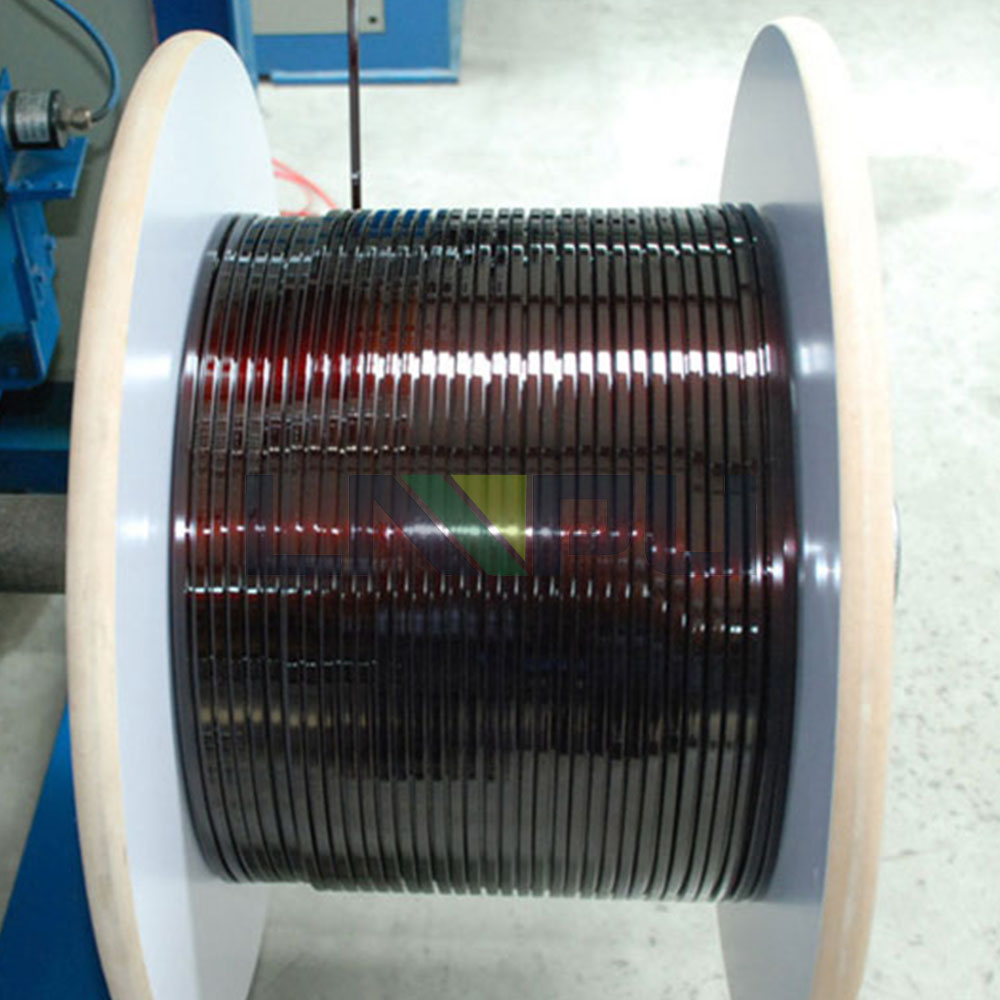
Multi-layer coated aluminum wire is widely used in high-performance motors, transformers, and special electromagnetic equipment, representing an important direction in the development of modern electromagnetic wire technology. This article provides a systematic technical guide for electromagnetic wire design engineers and purchasing decision-makers, covering seven dimensions: product definition, insulation system, manufacturing process, performance advantages, application scenarios, quality control, and selection guidelines.
I. Product Definition of Multi-Layer Coated Aluminum Wire
Multi-layer coated aluminum wire is a composite electromagnetic wire product formed by sequentially coating multiple layers of insulating varnish with different functions on the surface of aluminum conductor, with each layer of insulating varnish independently baked and cured.
Typical Structure:
- Primer Layer: Provides good adhesion and basic electrical insulation
- Functional Layer: Provides specific functions (e.g., corona resistant, heat resistant, chemical resistant, etc.)
- Topcoat Layer: Provides mechanical protection, abrasion resistance, and environmental resistance
Number of Layers:
- Double Coating: Primer + Topcoat, suitable for general applications
- Triple Coating: Primer + Functional Layer + Topcoat, suitable for high-performance applications
- Four or More Layers: Suitable for special applications
II. Insulation System
2.1 Primer Layer
The primer layer is the first layer of the multi-layer coating on the aluminum wire, directly contacting the aluminum conductor:
Functions:
- Provides good adhesion, ensuring a tight bond between subsequent coatings and the conductor
- Provides basic electrical insulation
- Prevents conductor oxidation
Common Materials:
- Polyester (PE): Low cost, good adhesion
- Polyester Imide (PEI): Good adhesion, excellent heat resistance
2.2 Functional Layers
Functional layers are the core of multi-layer coated aluminum wire, providing specific performance advantages:
Common Functional Layer Types:
| Functional Layer Type | Material | Function |
|---|---|---|
| Corona Resistant Layer | Nanocomposite Material | Suppresses partial discharge, extends insulation life |
| Heat Resistant Layer | Polyimide (PI) | Improves thermal class, suitable for high-temperature conditions |
| Chemical Resistant Layer | Polyamide-Imide (PAI) | Resists chemical corrosion, suitable for harsh environments |
| Self-Adhesive Layer | Thermoplastic Resin | Provides self-adhesive function, suitable for hollow coils |
2.3 Topcoat Layer
The topcoat layer is the outermost layer of multi-layer coated aluminum wire, directly in contact with the external environment:
Functions:
- Provides mechanical protection, preventing wear and scratches
- Provides environmental resistance (moisture resistance, salt spray resistance, etc.)
- Provides a smooth surface, facilitating winding
Common Materials:
- Polyamide-Imide (PAI): High mechanical strength, good chemical resistance
- Modified Polyester: Low cost, good overall performance
2.4 Insulation Classes
Commonly used insulation classes for multi-layer coated aluminum wire:
| Insulation Class | Maximum Operating Temperature | Typical Structure |
|---|---|---|
| Class F (155°C) | 155°C | PEI primer + functional layer + PAI topcoat |
| Class H (180°C) | 180°C | PEI primer + PI functional layer + PAI topcoat |
| Class 200 (200°C) | 200°C | PI primer + PI functional layer + PAI topcoat |
III. Key Manufacturing Processes
3.1 Conductor Preparation
Aluminum Conductor Requirements:
- Purity ≥99.5%
- Smooth surface, free from oxidation and scratches
- Dimensional Accuracy: ±0.002mm
3.2 Multi-Layer Coating Process
The manufacturing process of multi-layer coated aluminum wire is a core technology:
Coating Sequence:
- Primer Coating: Apply primer to the surface of the aluminum conductor and bake to cure
- Functional Layer Coating: Apply a functional layer to the primer layer and bake to cure
- Topcoat Coating: Apply a topcoat to the functional layer and bake to cure
Key Process Points:
- Thin Coatings Multiple Times: Apply each layer of paint thinly multiple times to ensure uniformity and density
- Independent Baking: Each layer of paint is baked and cured independently to avoid mutual interference between layers
- Temperature Control: The baking temperature of each layer of paint is precisely controlled according to the characteristics of the paint
- Interlayer Adhesion: Ensure good interlayer adhesion and avoid delamination
3.3 Baking and Curing
Temperature Curve Control:
- Primer Baking Temperature: Set according to the type of primer (usually 300-500°C)
- Functional Layer Baking Temperature: Set according to the material of the functional layer
- Topcoat Baking Temperature: Set according to the type of topcoat (usually 400-600°C)
Time Control:
- Baking time is set according to coating thickness and temperature
- Ensure each layer of paint is fully cured before applying the next layer
3.4 Quality Inspection
Interlayer Inspection:
- After each layer is coated, inspect the thickness and uniformity of the enamel coating
- Interlayer adhesion test
Finished Product Inspection:
- Breakdown voltage
- Flexibility
- Enamel coating continuity (spark test)
- Heat resistance
- Chemical resistance
IV. Performance Advantages
4.1 Comparison with Single-Layer Coated Aluminum Wire
| Performance Indicators | Single-Layer Coating | Multi-Layer Coating |
|---|---|---|
| Electrical Insulation | Good | Excellent |
| Mechanical Strength | Average | High |
| Heat Resistance | Average | Excellent |
| Chemical Resistance | Average | Excellent |
| Corona Resistance | Average | Excellent (if containing corona resistant layer) |
| Cost | Low | Medium-High |
4.2 Core Advantages
Excellent Comprehensive Performance:
- Each layer of insulating varnish performs different functions, achieving complementary performance
- High comprehensive electrical, mechanical, thermal, and chemical properties
High Thermal Class:
- Through functional layer design, high thermal class such as Class H/200 can be achieved
- Suitable for high-temperature operating conditions
Long Service Life:
- Multi-layer protection extends insulation life
- Corona resistant layer effectively suppresses partial discharge
V. Application Scenarios
5.1 High-Performance Motors
New Energy Vehicle Drive Motors:
- Insulation Class: Class H/200
- Requirements: High temperature resistance, corona resistant, vibration resistance
- Advantages of multi-layer coated aluminum wire: Excellent comprehensive performance
Industrial Motors:
- Insulation Class: Class F/H
- Requirements: Long life, high reliability
- Advantages of multi-layer coated aluminum wire: High mechanical strength
5.2 Transformers
Dry-Type Transformers:
- Insulation Class: Class F/H
- Requirements: Heat and moisture resistant
- Advantages of multi-layer coated aluminum wire: Excellent overall insulation performance
Special Transformers:
- Insulation Class: Class H/200
- Requirements: High temperature resistance, chemical resistance
- Advantages of multi-layer coated aluminum wire: Customizable functional layers
5.3 Special Electromagnetic Equipment
High-Frequency Transformers:
- Insulation Class: Class F/H
- Requirements: Good high-frequency characteristics
- Advantages of multi-layer coated aluminum wire: Excellent interlayer insulation
Reactors:
- Insulation Class: Class F/H
- Requirements: Heat and vibration resistant
- Advantages of multi-layer coated aluminum wire: High mechanical strength
VI. Quality Control
6.1 Raw Material Inspection
Aluminum Conductor Inspection:
- Purity ≥99.5%
- Conductivity ≥61% IACS
- Surface Quality: No oxidation, scratches
Insulating Varnish Inspection:
- Solid content and viscosity of each varnish layer
- Breakdown voltage
- Heat resistance
- Interlayer adhesion
6.2 Production Process Inspection
| Process | Control Points | Inspection Items |
|---|---|---|
| Conductor Preparation | Surface Quality, Dimensional Accuracy | Purity, Conductivity, Dimensions |
| Primer Coating | Enamel Coating Thickness, Uniformity | Adhesion, Breakdown Voltage |
| Functional Layer Coating | Enamel Coating Thickness, Uniformity | Functional Performance, Interlayer Adhesion |
| Topcoat Coating | Enamel Coating Thickness, Uniformity | Mechanical Strength, Environmental Resistance |
| Baking and Curing | Temperature Profile, Time | Enamel Coating Curing Degree |
6.3 Factory Inspection
Multi-layer coated aluminum wire must undergo strict inspection before leaving the factory:
| Inspection Items | Requirements |
|---|---|
| Conductor Dimensions | Meets tolerance requirements |
| Breakdown Voltage | ≥ Specified Value |
| Flexibility | Passes Bending Test |
| Enamel Coating Continuity | Spark Test No Breakdown |
| Heat Resistance | Passes Thermal Aging Test |
| Interlayer Adhesion | Passes Interlayer Peel Test |
VII. Selection Guide
7.1 Insulation Class Selection
Based on operating temperature:
- Class F (155°C): General high-performance applications
- Class H (180°C): High-temperature conditions
- Class 200 (200°C): Special high-temperature conditions
7.2 Functional Layer Selection
Based on application requirements:
- Corona Resistant Layer: Variable frequency motors, high-voltage applications
- Heat Resistant Layer: High-temperature conditions
- Chemical Resistant Layer: Harsh environments
- Self-Adhesive Layer: Hollow core coils, frameless coils
7.3 Number of Layers Selection
Based on performance requirements and cost budget:
- Double Coating: General applications, lower cost
- Triple Coating: High-performance applications, excellent overall performance
- Four Layers and Above: Special applications, customized performance
7.4 Certification Requirements
Ensure products meet relevant certification requirements:
- UL: North American market
- IEC: International market
- CCC: Chinese market
- RoHS: Environmental requirements
Conclusion
Multi-layer coated aluminum wire, with its excellent overall performance, has been widely used in high-performance motors, transformers, and special electromagnetic equipment. Through reasonable insulation system design, manufacturing process control, and quality inspection, multi-layer coated aluminum wire can achieve higher electrical insulation performance, mechanical strength, heat resistance, and chemical resistance than single-layer coated aluminum wire.
For electromagnetic wire applications that pursue high performance and high reliability, multi-layer coated aluminum wire is a technology solution worthy of special attention. Collaborating with professional multi-layer coated aluminum wire manufacturers and selecting appropriate insulation systems, functional layers, and the number of layers according to specific application requirements is an effective way to ensure product quality and performance.