


I. Introduction
The distinction between magnet wire and normal wire represents one of the most fundamental considerations in electrical engineering and manufacturing. While both types of wire serve the essential function of conducting electrical current, their applications, properties, and manufacturing requirements differ substantially. Understanding these differences is crucial for engineers, designers, and procurement professionals who must select the appropriate wire type for specific applications. Magnet wire, also known as winding wire or enameled wire, is a copper or aluminum conductor coated with a thin layer of electrical insulation specifically designed for use in electromagnetic devices such as motors, transformers, generators, and inductors.
The insulation coating allows the wire to be wound tightly around itself without short-circuiting, enabling the creation of efficient electromagnetic coils. Normal wire, often referred to as insulated wire, building wire, or power wire, is designed for the transmission of electrical power and signals across distances. It typically features thicker insulation designed for mechanical protection, environmental resistance, and safety compliance rather than the extremely thin, precise insulation required for electromagnetic applications. This comprehensive comparison examines the key differences between magnet wire and normal wire in terms of construction, materials, performance characteristics, applications, and manufacturing processes.
By understanding these differences, professionals can make informed decisions when selecting wire products for their specific requirements.
II. Fundamental Definitions and Basic Concepts
2.1 What is Magnet Wire
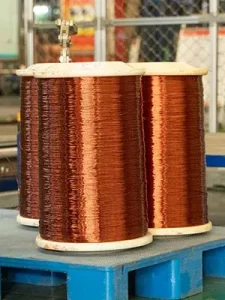
Magnet wire is a copper or aluminum conductor with a thin layer of enamel insulation specifically formulated for use in electromagnetic coils. The term “magnet wire” derives from its primary application in creating electromagnets, where the wire is wound to form a coil that generates a magnetic field when current flows through it. However, the applications extend far beyond simple electromagnets to include motor windings, transformer coils, inductor windings, and many other electromagnetic devices. The enamel insulation on magnet wire is typically made from polymer materials such as polyester, polyesterimide, polyamideimide, or polyimide.
These materials are chosen for their excellent electrical insulation properties, thermal resistance, and mechanical durability. The insulation is applied in multiple thin coats, with each coat being baked to cure before the next is applied, creating a pinhole-free, uniform insulation layer. Magnet wire is characterized by its extremely precise dimensional tolerances and consistent electrical properties. The wire must have a perfectly round cross-section to ensure uniform winding and predictable electrical characteristics.
The insulation thickness is carefully controlled to maximize the conductor area within a given overall dimension, which is critical for achieving the desired electrical performance in electromagnetic devices.
2.2 What is Normal Wire
Normal wire, also called insulated wire, building wire, or power wire, encompasses a broad category of electrical conductors designed for power transmission and distribution applications. Normal wire is used to connect electrical devices to power sources, distribute electricity throughout buildings and infrastructure, and enable the transmission of electrical signals and data. The insulation on normal wire serves multiple purposes: it prevents accidental contact with live conductors, provides protection against environmental factors such as moisture and chemicals, and ensures compliance with electrical safety codes and standards. Normal wire insulation is typically much thicker than magnet wire insulation and is often made from materials such as polyvinyl chloride (PVC), cross-linked polyethylene (XLPE), or rubber.
Normal wire comes in various types including single conductor wire, multi-conductor cable, armored cable, and shielded cable. The specific construction depends on the application requirements including voltage rating, current capacity, environmental conditions, and mechanical protection needs.
2.3 Key Distinctions at a Glance
The fundamental distinction between magnet wire and normal wire lies in their primary functions. Magnet wire is designed for electromagnetic conversion, where the wire itself becomes part of a magnetic circuit. The insulation must be as thin as possible while still providing adequate electrical isolation between adjacent turns in a coil. This maximizes the conductor cross-sectional area within the winding space, improving the electromagnetic efficiency of the device.
Normal wire is designed for power transmission and distribution, where the primary function is to conduct current safely over distances while providing protection against electric shock and environmental damage. The insulation can be much thicker because dimensional efficiency within a coil is not a concern. Another critical distinction is the precision of manufacturing. Magnet wire requires extremely tight tolerances on conductor diameter, insulation thickness, and concentricity.
Even small variations can significantly affect the performance of electromagnetic devices. Normal wire has more relaxed tolerances because its primary function is safe current transmission rather than optimized electromagnetic performance.
III. Physical and Electrical Characteristics
3.1 Conductor Materials
Both magnet wire and normal wire can use copper or aluminum as the conductor material, but the specific alloys and temper conditions may differ based on the application requirements. Copper is the most common conductor material for both wire types due to its excellent electrical conductivity. For magnet wire, oxygen-free copper is often specified to ensure consistent electrical properties and minimize impurities that could affect the insulation adhesion or electrical performance. The copper conductor in magnet wire is typically annealed to provide the flexibility required for winding tight coils without cracking the insulation.
Aluminum conductors are used in some magnet wire applications, particularly in large transformers and motors where weight reduction is important. Aluminum has only about 61% of the conductivity of copper, so larger conductor areas are required to carry the same current. However, aluminum magnet wire is significantly lighter, which can be advantageous in weight-sensitive applications. For normal wire, copper is also the predominant conductor material, though aluminum is commonly used in building wire for long-distance power distribution where its lower cost and lighter weight provide economic advantages.
The copper or aluminum used in normal wire is typically electrolytic tough pitch (ETP) copper, which offers good conductivity at a lower cost than the oxygen-free varieties used for magnet wire.
3.2 Insulation Materials and Properties
The insulation systems used in magnet wire and normal wire differ substantially in composition, thickness, and performance characteristics. Magnet wire insulation is typically based on film-forming polymers that can be applied in very thin layers. The common types include:
Polyester enamel provides good electrical insulation and moderate thermal resistance (Class 130°C), with excellent film flexibility and adhesion. It is widely used in general-purpose motors and transformers where cost-effectiveness is important.
Polyesterimide enamel offers improved thermal performance (Class 155°C) and better resistance to refrigerants and solvents. It is commonly used in hermetic motors and appliances. Polyamideimide enamel provides exceptional thermal capability (Class 200°C) and chemical resistance, making it suitable for severe duty applications in motors and aerospace equipment. Polyimide enamel represents the highest thermal class (above 220°C) and is used in the most demanding high-temperature applications where long-term reliability at elevated temperatures is critical.
Normal wire insulation materials include:
Polyvinyl chloride (PVC) is the most common insulation material for building wire due to its low cost, good electrical properties, and excellent mechanical protection. PVC insulation is rated for temperatures up to 75°C to 90°C depending on the specific formulation. Cross-linked polyethylene (XLPE) offers improved thermal performance (up to 105°C or higher) and better resistance to environmental stress cracking compared to PVC. It is commonly used in power cables and applications requiring higher temperature capability.
Thermoplastic elastomers (TPE) and rubber compounds provide flexibility and resistance to oils, chemicals, and outdoor exposure. These materials are used in portable cords, welding cable, and other applications requiring superior flexibility and environmental resistance.
3.3 Electrical Performance Comparison
The electrical performance characteristics of magnet wire and normal wire reflect their different design objectives and application requirements. Dielectric strength is the ability of the insulation to withstand high voltages without breaking down. Magnet wire typically has very high dielectric strength per unit thickness because the thin enamel layers are carefully formulated and applied to be free of pinholes and voids. The dielectric strength of quality magnet wire can exceed 100 kV/mm, enabling reliable operation at high voltages despite the minimal insulation thickness.
Normal wire has lower dielectric strength per unit thickness but is designed to meet specific voltage ratings required by electrical codes and standards. The thicker insulation provides additional safety margins and protection against mechanical damage during installation and use. Insulation resistance is extremely high for both wire types when properly formulated and applied. Magnet wire insulation resistance typically exceeds 10^14 ohm-centimeters, ensuring minimal leakage current even under high voltage stress.
Normal wire insulation resistance also meets or exceeds code requirements, typically exceeding 10^12 ohm-centimeters for quality products. The frequency response characteristics of magnet wire are particularly important in high-frequency applications. At elevated frequencies, skin effect causes current to flow primarily near the conductor surface, reducing the effective cross-sectional area and increasing effective resistance. Magnet wire designs such as Litz construction, which uses multiple insulated strands to distribute current more evenly, address this issue in high-frequency applications.
3.4 Thermal Performance
Thermal performance is a critical consideration for both wire types, as excessive temperature can cause insulation degradation and failure. Magnet wire is available in multiple thermal classes ranging from Class 130°C to above Class 220°C, allowing selection of the appropriate grade for the expected operating temperature. The thermal aging characteristics of magnet wire insulation are well-characterized through standardized testing, allowing engineers to predict insulation lifetime at various operating temperatures. Normal wire thermal ratings are typically specified by applicable standards such as UL or NEC.
Building wire insulation is commonly rated at 60°C, 75°C, or 90°C, with the rating indicating the maximum permissible conductor temperature for continuous operation. Exceeding these ratings can cause insulation deterioration, premature failure, and safety hazards. Heat dissipation considerations differ between the two wire types. In magnet wire applications, heat generated by current flow (I²R losses) must be conducted through the winding to the surrounding environment or cooling medium.
The thin insulation on magnet wire actually facilitates heat transfer from the conductor, which is beneficial for thermal management in motors and transformers. In normal wire applications, the thicker insulation provides thermal isolation between the conductor and the external environment. Heat dissipation is generally not a limiting factor for normal wire because the wire is typically installed with adequate spacing for convection cooling. However, current-carrying capacity (ampacity) is determined by the maximum allowable temperature rise, which depends on the insulation thermal rating and the surrounding environmental conditions.
IV. Physical Dimensions and Tolerances
4.1 Conductor Dimensions
The conductor dimensions of magnet wire and normal wire reflect their different application requirements and manufacturing processes. Magnet wire conductors are manufactured to extremely tight tolerances because small variations in diameter can significantly affect the electrical properties of the winding. The conductor diameter is typically controlled to within ±0.001 mm or better for precision applications. Standard magnet wire tolerances are specified in standards such as NEMA MW 1000 and IEC 60317, which define acceptable diameter variations based on wire size.
The roundness of magnet wire conductor is critical because any eccentricity will cause non-uniform winding and potentially stress the insulation at thin points. Quality magnet wire is produced with perfect roundness, verified through optical measurement systems during production. Normal wire conductors have more relaxed dimensional tolerances because small variations in diameter do not significantly affect current-carrying capacity or safety. Standard building wire tolerances typically allow ±5% variation in conductor diameter, which is acceptable for power transmission applications.
4.2 Insulation Thickness
The insulation thickness represents one of the most significant differences between magnet wire and normal wire. Magnet wire insulation is intentionally very thin to maximize the conductor cross-sectional area within a given winding space. A typical magnet wire might have an insulation thickness of only 0.02 mm to 0.10 mm, depending on the voltage rating and thermal class. Despite this thinness, the insulation must be completely pinhole-free and provide reliable electrical isolation between adjacent turns in the winding.
The insulation thickness on magnet wire is often specified using NEMA build levels: single build (thin), heavy build (medium), triple build (thick), and quadruple build (very thick). Each build level approximately doubles the insulation thickness, allowing selection of the appropriate grade for the voltage stress the winding will experience. Normal wire insulation is much thicker than magnet wire insulation because its primary function is personal safety and environmental protection rather than maximizing conductor area. A typical building wire might have insulation thickness of 0.5 mm to 2.0 mm or more, depending on the voltage rating and specific product type.
This thickness provides mechanical protection during installation and use, resistance to abrasion and impact, and a safety barrier against electric shock.
4.3 Overall Dimensions
The overall dimensions of magnet wire and normal wire differ substantially due to their different insulation systems. Magnet wire overall diameter is tightly controlled because windings must fit precisely within the slot or cavity of the motor, transformer, or other electromagnetic device. Any variation in overall diameter can cause fitting problems, reduced fill factor, or insulation damage during insertion into the winding space. Normal wire dimensions are less critical for most applications because the wire is typically routed through raceways, conduits, or cable trays rather than being wound into tight spaces.
Standard normal wire sizes are defined by AWG (American Wire Gauge) or metric cross-sectional area designations, with overall dimensions varying based on insulation thickness and type.
V. Manufacturing Processes and Quality Control
5.1 Magnet Wire Manufacturing
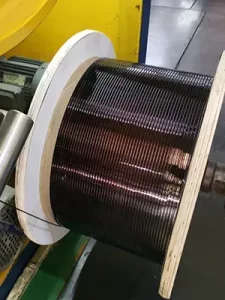
The manufacturing of magnet wire is a highly specialized process that requires precise control of multiple parameters to achieve consistent quality. Conductor manufacturing begins with high-purity copper or aluminum rod that is drawn down to the final conductor size through a series of dies. Intermediate annealing restores ductility and achieves the required electrical conductivity. The conductor surface must be perfectly clean and smooth to ensure good adhesion of the enamel insulation.
The enamel coating process involves applying multiple thin coats of enamel to the conductor, with each coat being baked to cure before the next is applied. The coating head (die or applicator) controls the precise enamel thickness, and the baking oven temperature profile is carefully controlled to achieve proper cure without overheating or undercuring. Quality control during magnet wire production includes continuous monitoring of conductor diameter, insulation thickness, and electrical properties. Each production lot is tested for dielectric breakdown voltage, insulation resistance, flexibility, and other performance characteristics.
Statistical process control ensures that variations are kept within specified tolerances.
5.2 Normal Wire Manufacturing
Normal wire manufacturing differs from magnet wire production in scale, materials, and process complexity. Conductor manufacturing for normal wire follows similar principles to magnet wire but with more relaxed tolerances. The copper or aluminum rod is drawn to the target size and may be either annealed or left in a harder temper depending on the product requirements. Insulation application for normal wire typically involves extrusion, where molten plastic material is forced through a die around the moving conductor.
The extrusion process must control insulation thickness, concentricity, and surface quality. Some normal wire products may include additional layers such as jackets, shields, or armor. Quality control for normal wire focuses on ensuring compliance with applicable standards such as UL, CSA, or IEC. Testing includes dielectric withstand voltage, insulation resistance, physical properties (tensile strength, elongation), and dimensional verification.
The testing is typically performed on samples from each production lot rather than continuously throughout production.
5.3 Testing and Certification Requirements
Both magnet wire and normal wire undergo rigorous testing and certification to ensure they meet applicable standards and performance requirements. Magnet wire certification is typically based on standards such as NEMA MW 1000, IEC 60317, or JIS C 3003. These standards specify requirements for conductor dimensions, insulation thickness, electrical properties, thermal performance, and mechanical characteristics. Manufacturers conduct ongoing testing to verify compliance, and products may be listed or certified by testing laboratories.
Normal wire certification requirements are typically mandated by electrical codes such as the NEC (National Electrical Code) in the United States or the IEE Wiring Regulations in the United Kingdom. Products must meet standards such as UL 83 for thermoplastic-insulated wire, UL 44 for rubber-insulated wire, or relevant IEC standards. Certification testing verifies compliance with safety requirements including flame resistance, dielectric withstand, and physical properties.
VI. Applications and Use Cases
6.1 Applications of Magnet Wire
Magnet wire is essential in virtually all electromagnetic devices where electrical energy is converted to magnetic energy or vice versa. Electric motors represent the largest application for magnet wire. From tiny motors in toys and electronics to massive industrial motors driving pumps, compressors, and machinery, magnet wire windings enable the electromagnetic conversion that makes motors possible. The motor type, power rating, and operating conditions determine the specific magnet wire grade required.
Transformers use magnet wire in both primary and secondary windings to step voltages up or down as required. Power transformers in electrical distribution systems, isolation transformers in electronic equipment, and pulse transformers in communications systems all rely on magnet wire for efficient electromagnetic coupling. Generators and alternators work on the reverse principle of motors, converting mechanical energy to electrical energy using magnet wire windings. The generator winding must withstand mechanical stresses from rotation as well as thermal and electrical stresses during operation.
Inductors and electromagnetic coils represent another major application area for magnet wire. These devices store energy in magnetic fields and are essential components in power supplies, motor drives, and many other electronic systems.
6.2 Applications of Normal Wire
Normal wire serves primarily in power transmission, distribution, and electrical installation applications. Building wiring is the most common application for normal wire. Electrical circuits in residential, commercial, and industrial buildings use normal wire to distribute power from the service entrance to outlets, switches, lighting fixtures, and equipment. Standard building wire types include NM (non-metallic sheathed cable), UF (underground feed cable), and individual conductor wires in conduit.
Power distribution cables carry electrical power over longer distances, from generating stations to substations and from substations to end users. These cables may be installed underground or overhead and must withstand environmental exposure, mechanical stresses, and high voltage stress. Control and instrumentation wiring connects sensors, switches, and control devices in industrial process control systems, building automation systems, and infrastructure monitoring applications. These wires are often shielded or twisted to minimize electrical interference.
Portable cords and flexible cables provide power connections for tools, equipment, and portable devices that must be moved or repositioned. These cables require excellent flexibility and durability to withstand repeated flexing and physical abuse.
6.3 When to Use Each Type
Selecting between magnet wire and normal wire depends on the specific application requirements. Use magnet wire when:
The wire will be wound into a coil or winding for electromagnetic effect. The tight tolerances and thin insulation maximize conductor area within the winding space, enabling efficient electromagnetic conversion. Typical applications include motors, transformers, generators, inductors, solenoid coils, and relay windings.
Use normal wire when:
The wire is used for power transmission or distribution rather than electromagnetic conversion. The thicker insulation provides better mechanical protection and safety barriers. Typical applications include building wiring, power cables, control wiring, and portable cords. It is important to note that magnet wire should never be used as a substitute for normal wire in building wiring applications.
The thin enamel insulation is not designed for the mechanical stresses, environmental exposures, or safety requirements of permanent electrical installations. Similarly, normal wire is not suitable for winding electromagnetic coils because the thick insulation wastes valuable winding space and does not provide the precise dimensional control required for efficient electromagnetic devices.
VII. Cost Considerations and Selection Criteria
7.1 Cost Comparison
The cost of magnet wire versus normal wire varies based on materials, manufacturing complexity, and performance requirements. Magnet wire is generally more expensive per unit length than normal wire because the manufacturing process is more precise and the insulation materials (particularly high-temperature grades) are more costly. The multiple coating and baking cycles required for magnet wire production add to manufacturing cost compared to simple extrusion of normal wire insulation. However, the total cost of a magnetic device depends on more than just the wire price.
The efficient use of winding space enabled by thin magnet wire insulation can reduce the size and cost of the magnetic core and other components, potentially offsetting higher wire costs. The choice of magnet wire grade also affects cost, with higher thermal class materials commanding premium prices. Normal wire cost depends on the conductor material (copper vs aluminum), insulation type, and any special features such as shielding or armor. Commodity building wire is relatively inexpensive, while specialized cables with advanced performance characteristics can be significantly more costly.
7.2 Performance-to-Cost Ratios
Evaluating the cost-effectiveness of magnet wire versus normal wire requires considering the performance delivered relative to the cost. For electromagnetic applications, the performance of magnet wire is measured by how efficiently it enables electromagnetic conversion. Higher thermal class magnet wire allows smaller, lighter device designs for a given power rating, which can reduce overall system cost despite the higher wire price. The reliability benefit of higher temperature capability may also justify premium pricing for demanding applications.
For power distribution applications, normal wire performance is measured by safe, reliable power transmission over the expected service life. The lowest-cost wire meeting applicable code requirements is typically the best choice unless special conditions (high ambient temperature, chemical exposure, etc.) require upgraded materials.
7.3 Selection Guidelines
When selecting between magnet wire and normal wire, consider the following factors:
Application type: Determine whether the wire is for electromagnetic conversion (use magnet wire) or power transmission (use normal wire). This is the most fundamental selection criterion. Voltage rating: Verify that the wire insulation system is rated for the maximum voltage the application will experience, including any transient overvoltages or insulation stress from switching events. Temperature requirements: Select wire with appropriate thermal class or temperature rating for the maximum sustained operating temperature plus appropriate safety margin.
Environmental conditions: Consider exposure to moisture, chemicals, sunlight, mechanical stress, and other environmental factors that may affect wire performance and longevity. Compliance requirements: Ensure the wire meets applicable standards and code requirements for the specific application and installation location. Mechanical requirements: Evaluate flexibility needs, abrasion resistance, and any mechanical stresses the wire must withstand during installation and service.
VIII. Conclusion
The comparison between magnet wire and normal wire reveals fundamental differences in design philosophy, manufacturing processes, and application requirements that reflect their distinct roles in electrical systems. Magnet wire is a precision-engineered product specifically designed for electromagnetic applications where efficient energy conversion depends on maximizing conductor area within tight winding spaces. Its thin, pinhole-free enamel insulation enables the tight coil windings that make motors, transformers, and other electromagnetic devices possible. The multiple thermal classes available allow selection of appropriate grades for applications ranging from consumer appliances to aerospace equipment.
Normal wire is designed for safe, reliable power transmission and distribution, with thicker insulation providing mechanical protection, environmental resistance, and safety barriers against electric shock. Its more relaxed tolerances and simpler insulation systems make it suitable for the wide range of building wiring, power distribution, and industrial applications where electromagnetic conversion is not the primary function. Understanding when to use each type is essential for engineers, designers, and installers. Using magnet wire for building wiring applications would provide inadequate mechanical protection and safety, while using normal wire for motor windings would waste valuable winding space and reduce electromagnetic efficiency.
The selection between magnet wire and normal wire ultimately comes down to matching the wire characteristics to the application requirements. Both types represent highly developed, standardized products that serve critical roles in modern electrical systems, and the continued advancement of materials and manufacturing processes promises further improvements in performance and cost-effectiveness for both categories.
—
*Keywords: Magnet Wire, Normal Wire, Enameled Wire, Insulated Wire, Comparison, Electrical Wire, Winding Wire, Motor, Transformer, Wire Selection, Electrical Engineering*