

This is the title and introduction section. The body content follows.
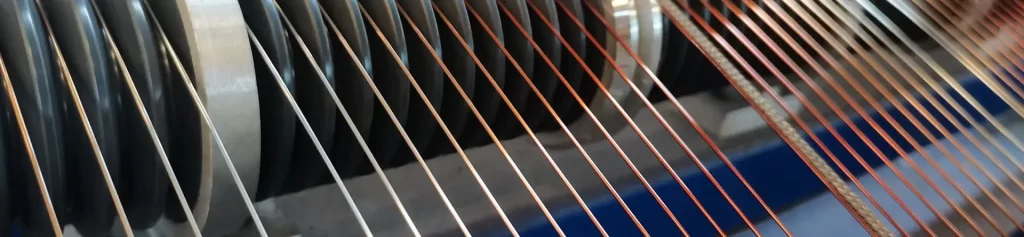
Magnet Wire, also known as Enameled Wire, is the “blood vessel” of all rotating electrical machines, transformers, and coil electrical products. In the home appliance industry, from refrigerator compressors to shaver micromotors, from air conditioner external fans to microwave oven transformers, almost every home appliance with a motor requires magnetic wires.
However, there are essential differences between magnetic wires for home appliances and industrial motors and EV motors:
- Home appliance operating conditions: frequent starts and stops (10-50 times a day), low vibration, noise sensitivity, lifespan of 10-15 years, narrow temperature range (mostly -20°C to +130°C)
- Home appliances are cost-sensitive: Home appliances are consumer goods and are extremely sensitive to BOM costs (CCAW copper-clad aluminum replaces pure copper in some applications)
- Home Appliance Safety Certification: Must comply with household safety standards such as UL 1446 / IEC 60335-1 / GB 4706.1 / CQC
- High environmental requirements: Must comply with RoHS 2.0 / REACH / California Proposition 65 and other environmental regulations
This article fills the gap of “magnetic wire for home appliances” in the existing 66+ articles – the difference from Post 2708 (industrial equipment), Post 2744 (DIY / AWG 22), Post 3322 (high-speed motor), Post 3486 (oil-immersed motor) is: This article specializes in magnet wire selection, temperature grade, insulation system, reliability and certification for home appliances.
All contents refer to IEC 60335-1 (Household Appliance Safety)/UL 1446 (Insulation System)/IEC 60851 (Enameled Wire Test Method)/NEMA MW 1000/GB 4706.1 and other international and domestic standards.
Frequently Asked Questions (FAQ)
1. Is CCAW magnet wire suitable for home appliances?
Yes, but with limits. CCAW (Copper-Clad Aluminum Wire) works well in low-power fan motors (10-50W) and budget appliances where cost is critical. It should NOT be used in high-power motors (>500W), high-frequency applications, or high-temperature zones due to higher resistance, severe skin effect, and CTE mismatch respectively.
2. What is the most common magnet wire for refrigerators?
The most common refrigerator magnet wire is PEW (Polyester) base coat + PAI (Polyamide-imide) top coat, dual-layer construction. This combination provides excellent resistance to refrigeration oils (ester oils, alkylbenzene oils) and refrigerant corrosion (R22, R410A, R32). Thermal class is typically F (155°C) for the compressor motor.
3. What magnet wire is used in microwave oven transformers?
Microwave oven high-voltage transformers require H-class (180°C) or higher thermal class magnet wire, typically PEI (Polyester-imide) or composite coating. The primary winding uses wire diameter 0.80-1.50 mm, while the secondary uses 0.50-0.80 mm. Breakdown voltage must exceed 3 kV for the primary and 6 kV for the secondary.
4. Can magnet wire be used for food-contact applications?
Yes, food-contact-grade magnet wire is available, certified to FDA 21 CFR (US), EU Regulation 1935/2004, and GB 4806.1 (China). These wires have no heavy-metal migration (Pb, Cd, Hg, Cr⁶⁺), no plasticizers (phthalates), and low extractables (total migration < 10 mg/dm²). They are commonly used in electric kettles and rice cooker inner pots.
5. What’s the difference between Class F and Class H magnet wire?
Class F magnet wire has a maximum operating temperature of 155°C with a hot-spot temperature rise of 115 K. Class H magnet wire has a maximum operating temperature of 180°C with a hot-spot rise of 140 K. The two main differences are: (1) H-class wire uses higher-performance enamel coatings such as PAI or composite PEW+PAI; (2) H-class wire costs 20-40% more than F-class wire. For most indoor appliances F-class is sufficient; for outdoor units (air conditioner outdoor), microwave oven transformers, and high-temperature zones H-class is required.
6. How long does magnet wire last in home appliances?
Using the Arrhenius model, a magnet wire that survives 10,000 hours at 180°C will last approximately 80,000-120,000 hours at 155°C (Class F application), which equals 9-14 years of continuous use. Most appliances don’t run continuously, so actual service life often exceeds 15 years, matching typical appliance design life.
7. Is self-bonding magnet wire better than traditional wire + VPI?
Self-bonding magnet wire is preferred for BLDC (Brushless DC) motors and bobbin-less coils where VPI (Vacuum Pressure Impregnation) is impractical. Advantages: no varnish contamination, simplified process, no VPI equipment needed. Disadvantages: bonding layer adds 5-15% to outer diameter, temperature limited by bonding layer (typically below main enamel rating). For large home-appliance motors with stator windings, traditional wire + VPI is still standard.
8. What certifications are mandatory for home-appliance magnet wire?
For North American market: UL 1446 (insulation systems) + RoHS + California Proposition 65 are mandatory. For EU: EN 60335-1 (IEC 60335-1 conversion) + CE + RoHS 2.0 + REACH SVHC compliance are mandatory. For China: GB 4706.1 + CQC + GB/T 26125 (RoHS) are mandatory. Japanese PSE and Korean KC certifications apply to specific appliance categories.
1. Overview of home appliance product matrix and magnetic wire usage
1.1 Magnetic wire usage scenarios for major home appliances
The home appliance industry covers a very wide range, from white appliances to kitchen appliances to small household appliances, and the demand for magnetic wires in each type of product varies greatly.
| Product categories | Typical products | Magnetic wire application parts | Annual demand (tons) |
|---|---|---|---|
| White appliances | Refrigerators, washing machines, air conditioners | Compressors/motors/fans | >50,000 |
| Kitchen Appliances | Microwave ovens, rice cookers, ovens, range hoods | Transformers/heating/motors | >30,000 |
| Small appliances | Vacuum cleaners, hair dryers, shavers, food processors | Micromotors/heating wires | >20,000 |
| Bathroom | Electric water heater, bathroom heater, dryer | Heating/motor | >15,000 |
| AV | Speakers, headphones, projectors | Voice coils/transformers | >10,000 |
| Smart Home | Sweeping robots, air purifiers, fresh air | BLDC motors/sensors | >5,000 |
1.2 Annual consumption of magnetic wires by major home appliance categories
| Category | Single unit usage | China’s annual output | Annual magnetic wire demand |
|---|---|---|---|
| Refrigerator | 50-150 g/unit | 100 million units | 7,500-15,000 t |
| Washing machine | 80-200 g/unit | 90 million units | 7,200-18,000 t |
| Air conditioning | 100-300 g/unit | 220 million units | 22,000-66,000 t |
| Microwave oven | 30-80 g/unit | 80 million units | 2,400-6,400 t |
| vacuum cleaner | 15-40 g/unit | 150 million units | 2,250-6,000 t |
| Hair dryer | 8-20 g/unit | 250 million units | 2,000-5,000 t |
Summary: The home appliance industry alone consumes more than 150,000 tons of magnet wire every year, accounting for 25-30% of the total global magnet wire production.
1.3 Core requirements for magnetic wires in home appliances
The requirements for magnetic wires of home appliances can be divided into 5 major dimensions:
| Dimensions | Key indicators | Typical requirements |
|---|---|---|
| Electrical Properties | Withstand voltage, insulation resistance | Breakdown voltage ≥1.5 kV (home appliance standard) |
| Thermal Properties | Temperature resistance grade, thermal life | Grade B (130°C) / Grade F (155°C) |
| Mechanical properties | Flexibility, adhesion | Bending ≥3× No cracking in outer diameter |
| Environmental Resistance | Moisture, oil, and chemical resistance | 85°C/85% RH 1000h |
| Compliance | RoHS, REACH, UL | All certified |
2. Detailed explanation of magnetic wire selection for typical home appliance products
2.1 Refrigerator
Refrigerators are one of the categories that use the largest amount of magnetic wires among home appliances.
- Compressor Motor: Stator winding (the most important magnet wire application)
- Fan motor: evaporator fan, condensing fan
- Defrost heater: PTFE insulated wire or silicone wire (high temperature area)
Magnetic wire usage area:
Core Requirements:
| Parameters | Typical requirements |
|---|---|
| Conductor | Copper (Cu-ETP1, purity ≥99.9%) |
| Paint film type | Polyester (PEW) / Polyesterimide (PEI) / Polyamideimide (PAI) |
| Temperature Resistance Class | Class F (155°C) or Class H (180°C) |
| Wire diameter range | 0.30-1.20 mm |
| Withstand voltage | ≥1.8 kV (1 minute) |
| Special Requirements | Resistant to R22/R410A refrigerants, resistant to refrigeration oil |
- Primer + Topcoat Dual Coat: Polyester + Polyamide-Imide (PEW + PAI)
- Advantages: Resistant to refrigeration oil (ester oil, alkylbenzene oil), resistant to refrigerant corrosion
- Typical suppliers: ESSEX / Furukawa / Korean LS / Domestic Jingda
Recommended Paint Film Combinations:
2.2 Washing Machine
Washing machines are one of the home appliances with the most complex magnetic conditions (high humidity, vibration, frequent starts and stops, heating).
- Drive Motor: Stator Winding (Direct Drive or Belt Drive)
- Drain Pump Motor: AC or DC
- Heating tube: nickel-chromium wire/stainless steel heating (not included in the magnetic wire range)
Magnetic wire usage area:
Core Requirements:
| Parameters | Typical requirements |
|---|---|
| Conductor | Copper (Cu-ETP1) or CCAW (Cost Sensitive Model) |
| Paint film type | Polyesterimide (PEI) / Polyamideimide (PAI) / Polyurethane (UEW, weldable) |
| Temperature Resistance Class | Class F (155°C) or Class H (180°C) |
| Wire diameter range | 0.40-1.50 mm |
| Withstand voltage | ≥2.0 kV |
| Special Requirements | Resistant to detergent (alkaline), hot water (90°C), vibration resistant |
- High frequency welding: polyurethane (UEW) + direct welding type
- HIGH VIBRATION: Polyamide-imide (PAI) single layer or polyester + PAI double layer
- BLDC inverter washing machine: Polyimide (PI) has higher temperature resistance (up to 200°C)
Recommended Paint Film Combinations:
2.3 Air Conditioner
The magnetic wire requirements of air conditioners come from compressors, indoor and outdoor fans, and four-way valve coils.
- Compressor Motor: Stator winding (core, with the largest amount of magnetic wire)
- Indoor fan: BLDC DC motor
- Outdoor Fan: AC motor or BLDC
- Four-way valve coil: Solenoid valve coil
Magnetic wire usage area:
Core Requirements:
| Parameters | Typical requirements |
|---|---|
| Conductor | Copper (required, not applicable for CCAW) |
| Paint film type | Polyesterimide (PEI) / Polyamideimide (PAI) |
| Temperature Resistance Class | Class F (155°C) or Class H (180°C) |
| Wire diameter range | 0.40-1.20 mm |
| Withstand voltage | ≥1.8 kV |
| Special Requirements | Resistant to R32 / R410A refrigerant, high temperature resistance (outdoor unit 70°C+ environment) |
- Outdoor unit: high ambient temperature (up to 70°C in summer), must use H-class (180°C) paint film
- Indoor unit: High noise requirements, requiring low-noise winding technology
- Inverter air conditioner: BLDC special paint film must be used (resistant to PWM impulse voltage)
Key process points:
2.4 Microwave Oven
The magnetic wires of microwave ovens are mainly used in high-voltage transformers.
- High voltage transformer: primary coil + secondary coil (boost to 2,000-4,000V)
- Magnetron: filament coil (special specifications)
Magnetic wire usage area:
Core Requirements:
| Parameters | Typical requirements |
|---|---|
| Conductor | Copper (required) |
| Paint film type | Polyester (PEW) / Polyurethane (UEW) / Polyesterimide (PEI) |
| Temperature Resistance Class | Class H (180°C) or Class C (220°C) |
| Wire diameter range | 0.50-2.00 mm (primary 0.80-1.50 mm, secondary 0.50-0.80 mm) |
| Withstand voltage | ≥3.0 kV (primary), ≥6.0 kV (secondary) |
| Special Requirements | High frequency resistance (20-50 kHz), low loss, high insulation reliability |
Key Tips: Microwave oven transformers operate at extremely high temperatures (actual temperature of paint film 130-180°C), must be grade H or higher, and ensure the quality of the impregnating paint (VPI) process.
2.5 Vacuum Cleaner
Vacuum cleaner magnet wires are mainly used in high-speed series motors or BLDC motors.
- Motor rotor: Series motor (conventional) or BLDC (high end)
- Motor stator: Same as above
- Duct heating (part): PTC heating
Magnetic wire usage area:
Core Requirements:
| Parameters | Typical requirements |
|---|---|
| Conductor | Copper (required, not applicable for CCAW) |
| Paint film type | Polyesterimide (PEI) / Polyamideimide (PAI) |
| Temperature Resistance Class | Class F (155°C) or Class H (180°C) |
| Wire diameter range | 0.20-0.80 mm |
| Withstand voltage | ≥1.5 kV |
| Special Requirements | High speed (10,000-30,000 rpm), low noise, high strength |
- Series motor: The commutator has large sparks and requires corona-resistant paint film
- BLDC motor: high speed, the paint film can withstand large centrifugal force
- Cordless Vacuum Cleaner: Battery powered, large voltage fluctuations, the paint film needs to withstand voltage shock
Key process points:
2.6 Other small household appliances (hair dryer, shaver, food processor)
- Motor: Series or BLDC (200W-2000W)
- Heating wire: nickel-chromium wire (not included in the enameled wire range)
- Paint line requirements: Class F (155°C), high temperature resistance (air outlet temperature can reach 100°C+)
Hair Dryer (Hair Dryer):
- Motor: Micro DC motor (3-5W)
- Paint wire requirements: low voltage (3-12V), but extremely fine wire diameter (0.05-0.15 mm)
- Typical paint films: UEW (polyurethane) or PEW
Shaver (Shaver):
- Motor: Series excited (300-1000W)
- Paint line requirements: Class F (155°C), moisture resistant (contact with water during cleaning)
Cooking Machine/Juicer:
3. Selection Guide for Home Magnet Wire Temperature Resistance Level
3.1 IEC temperature resistance level standard (Class 6)
The International Electrotechnical Commission (IEC) divides insulation systems into six levels according to their temperature resistance. Home appliances commonly use three levels: Class B, Class F, and Class H.
| Class | Maximum allowable operating temperature | Hot spot temperature rise | Typical appliance applications |
|---|---|---|---|
| Class E | 120°C | 80 K | Old appliances, cheap products |
| Class B | 130°C | 90 K | Ordinary fans, popular household appliances |
| Class F | 155°C | 115 K | Mainstream home appliances (refrigerators, washing machines, air conditioners) |
| Class H | 180°C | 140 K | High-end home appliances, outdoor units, microwave oven transformers |
| Class N | 200°C | 155 K | Ovens, special kitchen appliances |
| R-rated | 220°C | 165 K | High-end ovens, electric water heaters |
3.2 Selection of temperature resistance levels for typical parts of home appliances
| Home appliance parts | Ambient temperature | Hot spot temperature rise | Recommended temperature resistance level |
|---|---|---|---|
| Refrigerator Compressor | 30-60°C | 95 K | Class F (155°C) |
| Air conditioning outdoor unit | 50-70°C | 85 K | Class H (180°C) |
| Microwave oven transformer | 100-150°C | 50 K | Class H (180°C) or higher |
| WASHING MACHINE MOTOR | 30-70°C | 85 K | Class F (155°C) |
| Vacuum Cleaner Motor | 50-80°C | 75 K | Class F/H |
| Oven Fan Motor | 100-180°C | 40 K | Class H/N |
3.3 Correspondence between temperature resistance grade and paint film material
| Paint Materials | IEC Ratings | Typical Temperature Resistance | Advantages | Limitations |
|---|---|---|---|---|
| PEW polyester | B/F | 130-155°C | Low cost, weldable | Poor thermal shock resistance |
| UEW Polyurethane | B/F | 130-155°C | Weldable (380°C) | Thin paint film, low mechanical strength |
| PEI Polyesterimide | F/H | 155-180°C | Resistant to thermal shock and chemicals | Moderate cost |
| PAI polyamideimide | H/N | 180-200°C | High temperature resistance, wear resistance | Not weldable, high cost |
| PI Polyimide | N/R | 200-220°C | Extremely high temperature resistance | Extremely high cost |
| Composite Coating | F/H/N | Any | Best overall performance | Complex process |
5. Special enameled wire types for home appliances
5.1 Self-Bonding Wire
Definition: Apply a layer of self-adhesive layer (hot melt adhesive) on top of the conventional paint film. After heating, the paint films adhere to each other without impregnation.
- Brushless Motor (BLDC): The stator does not need to be dipped in paint and is directly heated and cured.
- Voice coil: Headphones, speaker voice coil
- Special Coil: No bobbin coil
Home Appliance Application:
- Hot melt adhesive type: Polyamide hot melt adhesive (activated at 140-180°C)
- Thermoset: Epoxy self-adhesive layer (cured at 200°C)
- Solvent Activated: Alcohol/Acetone Dissolved Bonding
Self-adhesive layer material:
- ✅ No impregnation paint pollution (environmental protection)
- ✅ Process simplification (no VPI equipment required)
- ✅ Suitable for bobbinless coils
Advantages:
- ❌ Self-adhesive layer increases outer diameter (5-15%)
- ❌ Temperature resistance is limited by the self-adhesive layer (usually lower than the main paint film)
Limitations:
5.2 Solderable enameled wire (Solderable Wire)
Definition: The paint film can be soldered directly under a soldering iron at 380±10°C without the need for mechanical scraping.
- Small household appliances micromotors: shavers, electric toothbrushes
- DC Motor: 5-24V low voltage motor
- PCB Direct Soldering Coil: Smart Home Sensor
Home Appliance Application:
- Polyurethane (UEW): 380°C weldable, most economical
- Direct weldable polyester: 360°C weldable
- Polyurethane + direct welding layer: double layer weldable (380°C + 360°C)
Weldable paint film materials:
- ✅ Simplified welding process (saving labor)
- ✅ Little damage to the paint film (no need for mechanical scraping)
- ✅ Suitable for automated production
Advantages:
- ❌ Thin paint film (cannot be used in high voltage applications)
- ❌ Not resistant to high temperatures (>155°C)
Limitations:
5.3 Low-Odor Wire
Application: Closed space home appliances (rice cooker liner, water purifier, air purifier)
Requirement: The paint film does not release odor gas at high temperatures (TVOC < 50 μg/m³)
- Low VOC paint formula
- Fully cured (degree of cure >98%)
- Post-treatment process (vacuum degassing)
Implementation:
5.4 Food-Contact Grade enameled wire
Application: Home appliance components in contact with food (such as electric kettle heating tube, rice cooker inner coil)
- FDA 21 CFR: United States Food and Drug Administration
- EU 1935/2004: European Union Regulation on Food Contact Materials
- GB 4806.1: China safety standard for food contact materials
Certification Standards:
- No heavy metal migration (Pb, Cd, Hg, Cr⁶⁺)
- No plasticizers (phthalates)
- Low extractables (total migration < 10 mg/dm²)
Requirements:
6. Home electromagnetic wire certification system
6.1 International Certification
| Certification | Standard number | Scope | Mandatory/voluntary |
|---|---|---|---|
| UL Safety Certification | UL 1446 | Insulation Systems | Voluntary (mandatory in North America) |
| IEC Safety Standard | IEC 60335-1 | Household appliance safety | Mandatory after conversion by various countries |
| IEC Magnetic Wire Test | IEC 60851 | Enameled Wire Test Method | Voluntary |
| ASTM Magnet Wire | ASTM B286 | Copper Enameled Wire | Voluntary |
| NEMA Magnetic Wire Standard | NEMA MW 1000 | Magnet Wire | Voluntary |
6.2 China Certification
| Certification | Standard number | Scope | Mandatory/voluntary |
|---|---|---|---|
| CQC Certification | CQC11-462131 | Enameled Wire | Voluntary |
| National Standard (GB) | GB/T 6109 | Enameled wire | Recommended |
| National Standard Safety | GB 4706.1 | Household Appliance Safety | Mandatory |
| RoHS National Standard | GB/T 26125 | Restriction of Hazardous Substances | Mandatory |
| REACH SVHC | National Standard Conversion | Substances of Very High Concern | Mandatory |
6.3 Environmental protection regulatory requirements
RoHS 2.0 (2011/65/EU + 2015/863): Restriction of 10 hazardous substances
| Substances | Limit values | Test methods |
|---|---|---|
| Lead (Pb) | <1000 ppm | ICP-OES |
| Cadmium (Cd) | <100 ppm | ICP-OES |
| Mercury (Hg) | <1000 ppm | ICP-OES |
| Hexavalent Chromium (Cr⁶⁺) | <1000 ppm | UV-Vis |
| PBB / PBDE | <1000 ppm | GC-MS |
| 4 Phthalates (DEHP/BBP/DBP/DIBP) | <1000 ppm | GC-MS |
REACH SVHC: As of 2026, the restricted substance list has exceeded 240 items and requires continuous tracking.
7. Home electromagnetic wire cost optimization strategy
7.1 Cost composition analysis
The cost of home magnet wire mainly consists of 4 parts:
| Cost items | Proportion | Optimization space |
|---|---|---|
| Copper | 60-75% | ★★★★★ (maximum optimization space) |
| Paint Liquid | 15-25% | ★★★ |
| Manufacturing Technology | 5-10% | ★★ |
| Testing and Certification | 1-3% | ★ |
7.2 Copper cost optimization
| Strategy | Savings ratio | Applicable scenarios |
|---|---|---|
| Copper Clad Aluminum (CCAW) | -30% to -50% | Fan motors, low power motors |
| Aluminum enameled wire | -50% to -65% | Disposable home appliances, DIY toys |
| Wire diameter optimization | -5% to -15% | Full scene |
| Copper Recycling | -10% to -20% | Recycled Copper Enameled Wire |
- ✅ Fan motor (10-50W)
- ✅ Popular home appliance motors
- ❌ High power motor (>500W, resistance too high)
- ❌ High frequency motor (severe skin effect)
- ❌ High temperature parts (CTE mismatch)
CCAW application boundary in home appliances:
7.3 Paint film cost optimization
| Strategy | Savings Ratio | Risk |
|---|---|---|
| Single coat instead of double coat | -15% to -25% | Performance degradation |
| PEW replaces PEI | -20% to -30% | Reduced temperature resistance |
| Domestic paint liquid replaces imports | -30% to -40% | Consistency needs to be verified |
| Thin paint film | -10% to -20% | Pressure reduction |
7.4 Process cost optimization
| Strategy | Savings ratio | Applicable scenarios |
|---|---|---|
| Multi-line co-coating | -10% to -20% | Mass production |
| Self-adhesive wire alternative to impregnation | -5% to -15% | No bobbin coil |
| Direct welding wire instead of scraped paint | -5% to -10% | Small household appliances and micro motors |
| Continuous online detection | Reduce return costs | Full scenario |
8. Reliability test of electromagnetic wires
8.1 Required test items (standard requirements for home appliances)
| Test items | Standards | Qualification conditions |
|---|---|---|
| Breakdown Voltage | IEC 60851-3 §5 | ≥1.5 kV (wire diameter 0.30 mm) |
| Insulation resistance | IEC 60851-3 §6 | ≥500 MΩ·m |
| Flexibility (winding) | IEC 60851-3 §7 | ≥3× No cracking in outer diameter |
| Adhesion (tensile) | IEC 60851-3 §8 | ≥2 N/mm |
| Thermal Shock | IEC 60851-6 §9 | 130-180°C × 30 min No cracking |
| Solvent Resistant | IEC 60851-3 §11 | The paint film will not swell or fall off |
| Softening breakdown | IEC 60851-3 §12 | ≥250°C (PEW) / 300°C (PEI) |
8.2 Exclusive testing of home appliances
| Test items | Simulation scenarios | Qualification conditions |
|---|---|---|
| Refrigerant resistant | Soaked in R22/R410A for 24h | No swelling of the paint film |
| Refrigeration oil resistant | Soaked in oil at 60°C for 168h | No swelling of the paint film |
| Detergent resistant | Soaked in pH 10-12 alkaline solution for 24h | No peeling of the paint film |
| Hot water resistant | Soaked in water at 90°C for 100h | No peeling of paint film |
| Heat and Humidity Cycle Resistance | 85°C/85% RH × 1000h | Insulation resistance ≥100 MΩ |
| Hot and cold cycle | -20°C ↔ 80°C × 100 times | The paint film will not crack |
8.3 Lifetime prediction (Arrhenius model)
The Arrhenius model is commonly used to predict the life of electromagnetic wires:
Formula: L = L₀ × exp[E/R × (1/T_use – 1/T_test)]
| Parameters | Meaning | Typical values |
|---|---|---|
| L | Lifetime at actual operating temperature | To be calculated |
| L₀ | Lifetime at test temperature | Tested |
| E | Activation energy | 1.0-1.5 eV (paint film) |
| R | Gas constant | 8.314 J/(mol·K) |
| T_use | Actual use temperature | K |
| T_test | Test temperature | K |
- Test conditions: 10,000 hours at 180°C
- Actual use: Class F (155°C)
- Calculated life: approximately 80,000-120,000 hours (i.e. 9-14 years)
Example:
9. Home electromagnetic wire selection decision-making process (5-step method)
9.1 Step 1: Clarify the categories and application areas of home appliances
- Product Category (White Appliances/Kitchen Appliances/Small Home Appliances)
- Working condition characteristics (continuous operation/frequent starts and stops/vibration/high temperature/high humidity)
The magnetic wire requirements for different home appliances vary greatly. The first step must be clear: -Application parts (compressor/motor/transformer/heating/micromotor)
9.2 Step 2: Determine the temperature resistance level
The IEC class (B/F/H/N) is determined based on the maximum operating temperature of the application site + safety margin (typically +10-15°C).
9.3 Step 3: Select paint film type
Select the appropriate paint film material (PEW / UEW / PEI / PAI / PI / composite coating) based on temperature resistance + process + cost + certification requirements.
9.4 Step 4: Determine Conductor Material
Depending on performance requirements (conductivity, strength, heat dissipation) and cost budget, choose Pure Copper, Copper Clad Aluminum (CCAW) or Aluminum enameled wire.
9.5 Step 5: Verify Authentication and Reliability
Confirm that the selected magnetic wire complies with the target market’s safety certification (UL / IEC / CQC), environmental regulations (RoHS / REACH), and passes reliability testing (life prediction, special working conditions testing).
10. Future Trend of Home Electromagnetic Wires
10.1 High-efficiency motor promotes paint film upgrade
- BLDC motor penetration rate increases: The penetration rate of BLDC for home appliances has reached 35% in 2025, and is expected to be 60% in 2030
- The paint film needs to be resistant to high-frequency PWM: Partial discharge-resistant paint film (PAI, PI)
- The paint film needs to withstand high rotational speeds: centrifugal force causes the paint film to deform (high-strength paint film is required)
10.2 Promotion of new environmental protection regulations
- PFAS Restrictions: EU plans to restrict perfluorinated compounds (common materials in paint films)
- Recycled Materials: The proportion of recycled copper and recycled paint liquid will be increased
- Carbon Footprint: Home appliance manufacturers require enameled wire suppliers to provide carbon footprint reports
10.3 Intelligent Manufacturing
- Online 100% Inspection: 100% online laser peeling strength and breakdown voltage inspection for each roll of wire
- Digital Twin: The magnetic wire factory establishes a digital twin model to predict the life of the paint film
- AI Defect Identification: AI visually identifies paint film defects, replacing manual spot inspections
10.4 New material breakthroughs
- Nano-modified paint film: Add SiO₂ / Al₂O₃ nanoparticles to improve the strength of the paint film
- Water-based paint: environmentally friendly water-based paint film (replacing solvent-based paint liquid)
- UV curable paint film: Cured in seconds, energy saving 60%+
Summary
Magnetic wire for home appliances is a large market with an annual output of 150,000 tons, accounting for 25-30% of global magnetic wire. When selecting, you must consider:
1. Application part (compressor/motor/transformer/micromotor) 2. Temperature resistance grade (Grade F/H is the mainstream) 3. Paint film type (PEW / UEW / PEI / PAI / PI / composite) 4. Conductor Selection (Pure Copper / CCAW / Aluminum) 5. Certification Compliance (UL 1446/IEC 60335-1/GB 4706.1) 6. Environmental Compliance (RoHS 2.0 / REACH SVHC) 7. Reliability verification (accelerated aging, special working conditions test) 8. Cost Optimization (wire diameter optimization, paint film optimization, CCAW replacement)
Only by taking these 8 dimensions into consideration can the most economical, reliable, and compliant home appliance video cable product be selected.