

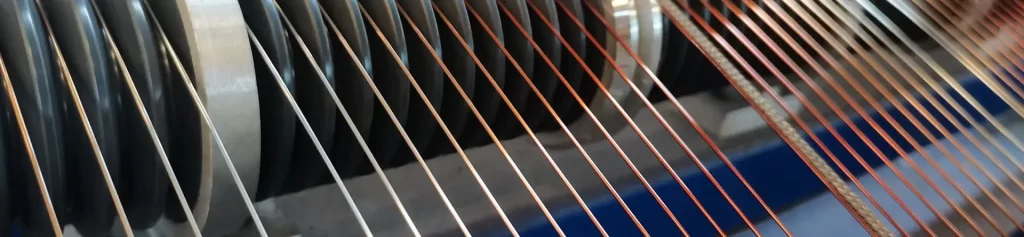
Enameled copper wire is one of the most commonly used winding materials in the electrical industry, widely applied in motors, transformers, inductors, household appliances, and many other fields. However, many people have concerns about safety when handling or using enameled copper wire, particularly regarding whether the coating contains harmful substances. Enameled copper wire consists of two main parts: the high-purity copper conductor inside and the insulating coating on the surface. As an essential trace element for the human body, copper is safe under normal conditions. However, the chemical composition of coating materials varies, and whether toxicity exists requires analysis based on specific material types.
Basic Structure of Enameled Copper Wire
Conductor Section
The interior of enameled copper wire is a high-purity copper conductor, typically using oxygen-free copper or electrolytic copper with copper content above 99.9%. As an essential trace element for the human body, copper participates in various physiological processes including hemoglobin synthesis and enzyme activation. Adults require approximately 0.9 mg of copper intake daily. Solid metallic copper does not release copper ions at room temperature, therefore not causing direct harm to the human body. The real risk mainly comes from the insulating coating.
Insulating Coating
| Coating Type | Main Features |
|---|---|
| Polyurethane Coating (UEW) | Excellent direct solderability |
| Polyester Coating (PEW) | Good heat resistance |
| Polyester-Imide Coating (EIW) | Higher thermal class |
| Polyamide-Imide Coating (AIW) | Premium high-temperature material |
Insulating coating is an important component of enameled copper wire, providing electrical insulation and environmental protection functions. Coating chemical composition varies by type, with common coating materials including: Polyurethane coating (UEW): Based on polyurethane resin with direct solderability; Polyester coating (PEW): Based on polyester resin with good heat resistance; Polyester-imide coating (EIW): Based on polyester-imide resin with higher thermal class; Polyamide-imide coating (AIW): Based on polyamide-imide resin, a premium high-temperature material; Polyvinyl formal coating: Early-used coating material with 120°C thermal class.
Chemical Composition of Coating Materials
Polyurethane Coating
Polyurethane coating is one of the most commonly used insulation materials for enameled wire. Its chemical foundation is polyurethane resin, formed by the reaction of polyols and isocyanates. Main features of polyurethane coating include: excellent direct solderability, weldable directly without scraping; good mechanical strength; good chemical resistance. Polyurethane coating is widely used in electronic transformers, relays, small motors, and other applications. In cured state, polyurethane coating is chemically stable and does not release harmful substances. However, under manufacturing and combustion conditions, specific chemical risks need to be noted.
Polyester Coating
Polyester coating is made from saturated polyester resin and is the most commonly used coating type in industrial motors and transformers. Polyester coating has good heat resistance, mechanical strength, and electrical performance. Under normal operating conditions, it is chemically stable, non-toxic and harmless. The thermal class of polyester coating is typically 130°C or 155°C, with some modified products reaching 180°C.
Polyester-Imide and Polyamide-Imide Coatings
Polyester-imide and polyamide-imide coatings are commonly used materials for high-end enameled wire, with thermal class reaching 200°C or higher. These materials have excellent heat resistance, chemical resistance, and wear resistance, mainly used in high-temperature environments and high-reliability applications such as new energy vehicle drive motors and aerospace equipment. Polyamide-imide coating is chemically stable at room temperature, but may release nitrogen-containing harmful gases when burned.
Modified Coatings
To improve specific properties, manufacturers have developed various modified coatings such as nylon overcoating and self-bonding coating. Nylon overcoating can improve the mechanical properties of coating, facilitating high-speed winding. Self-bonding coating can bond coils together under heat or solvent action, without requiring additional binding.
Safety Analysis
Safety Under Normal Operating Conditions
Under normal electrical operating conditions, enameled copper wire is completely harmless. After curing, the coating forms a stable cross-linked structure that does not release harmful substances at room temperature. When enameled copper wire in motors, transformers, and other equipment operates at rated conditions, the coating remains stable. Even when operating temperature rises to 130°C or higher, qualified coating will not release toxic substances. Therefore, enameled copper wire used in household appliances, consumer electronics, and office equipment is safe to humans under normal use.
Risks Under High-Temperature Conditions
When temperature exceeds the coating’s thermal class or approaches decomposition temperature, the coating may begin to decompose and release gases. Polyurethane coating begins to decompose above 200°C, potentially releasing isocyanate gases. Polyester coating decomposes at higher temperatures, potentially producing aldehydes, ketones, and other organics. Polyamide-imide coating decomposes above 300°C, potentially releasing nitrogen compounds. These decomposition products will not cause significant harm to the human body in well-ventilated environments, but may cause respiratory irritation in enclosed spaces or sustained high-temperature environments.
Combustion Risks
Combustion of enameled copper wire is an extremely dangerous situation requiring special attention. The coating releases various harmful gases when burned. Polyurethane coating combustion may produce hydrogen cyanide, carbon monoxide, nitrogen oxides. Polyester coating combustion produces carbon dioxide, carbon monoxide, and organic volatiles. Nitrogen-containing polymer combustion may produce cyanides and nitrogen oxides. Copper itself does not burn at high temperatures, but its oxides may irritate the respiratory system. The smoke environment at fire scenes is complex, and inhalation of any combustion products should be avoided.
Physical Contact Risks
Direct skin contact with enameled wire typically does not cause health hazards. Cured coating is water-insoluble and chemically stable. However, the following situations need to be noted: prolonged contact may cause skin allergies in some individuals; dust generated when cutting or stripping coating may irritate the respiratory tract; mouth contact with enameled wire (such as child ingestion) requires immediate medical attention.

Environmental Regulations and Standards
RoHS Directive
The EU RoHS Directive (Restriction of Hazardous Substances) is an important environmental regulation for electrical and electronic equipment. RoHS 2.0 Directive restricts the use of six hazardous substances: lead, mercury, cadmium, hexavalent chromium, polybrominated biphenyls, and polybrominated diphenyl ethers. Modern enameled copper wire coating materials have passed RoHS certification and do not contain hazardous substances. Manufacturers ensure products meet RoHS requirements by selecting environmentally friendly raw materials and improving processes.
REACH Regulation
The EU REACH Regulation (Registration, Evaluation, Authorisation and Restriction of Chemicals) imposes stricter requirements on chemical use. Enameled copper wire coating materials need to undergo chemical registration and safety assessment under the REACH framework. Manufacturers need to provide Safety Data Sheets (SDS) detailing the product’s chemical composition and safety information.
UL Certification
UL (Underwriters Laboratories) certification in the United States is an important standard for electrical product safety. UL-certified enameled wire products undergo rigorous testing in electrical safety, heat resistance, and flame retardancy. UL standards have clear specifications for enameled wire’s thermal class, breakdown voltage, and chemical resistance. Products with UL certification can be used with confidence.
Other International Standards
The IEC 60317 series standards are international standards for enameled wire products established by the International Electrotechnical Commission, specifying technical requirements and test methods for various enameled wire types. NEMA MW1000 is the American National Electrical Manufacturers Association standard for enameled wire, with broad influence in the North American market. China GB/T 6109 series standards are Chinese national standards for enameled wire, corresponding to IEC standards.
Safe Handling Recommendations
Protection During Manufacturing
Appropriate protective measures are needed during enameled wire manufacturing. Operators should wear protective gloves to avoid prolonged skin contact with coating and copper conductor. Work in well-ventilated environments to avoid inhaling dust generated when cutting or stripping coating. Wear protective masks and goggles when handling coating solvents.
Waste Disposal
Waste disposal of enameled wire needs to comply with environmental regulations. Small amounts of enameled wire waste can be disposed of as general industrial waste. Large amounts of waste should be collected by category and entrusted to qualified units. Coating materials containing hazardous substances should be treated as hazardous waste.
Fire Emergency
Emergency response to enameled wire-related fires requires special attention. When a fire occurs, first cut off power to avoid electric shock risks. Use suitable fire extinguishing equipment such as carbon dioxide extinguishers or dry powder extinguishers. When escaping fire scenes, cover mouth and nose with wet towel to avoid inhaling toxic fumes.
Ingestion or Inhalation
Ingestion or inhalation of enameled wire requires immediate medical attention. Coating is not easily decomposed in gastric acid and may be excreted intact. Swallowed copper wire may cause digestive tract damage, requiring X-ray examination. Large amounts of ingestion should seek immediate medical attention.
Children and Pet Safety
Enameled wire is widely used in household appliances, but exposed enameled wire may pose risks to children and pets. Children may contact or play with enameled wire out of curiosity. The small diameter of enameled wire may cause accidental ingestion. Sharp wire ends may cause skin cuts. Pets may also be attracted to enameled wire, especially the taste containing copper. Household appliance manufacturers should ensure all enameled wire is enclosed in the casing, avoiding direct exposure. Parents should place waste appliances containing enameled wire out of reach of children.
Industry Development Trends
Environmentally Friendly Coatings
Environmentally friendly coating materials are an important development direction for the enameled wire industry. Water-based coatings use water as solvent, reducing VOC emissions. Solvent-free coatings do not use organic solvents at all, with better environmental performance. Biodegradable coating materials are also a research hotspot. These environmentally friendly coatings have performance equivalent to traditional coatings, while having better environmental friendliness.
New Low-Toxicity Materials
Research on new low-toxicity coating materials is advancing. By selecting low-toxicity raw materials and optimizing processes, products safer to humans can be manufactured. Bio-based coating materials utilize renewable resources, reducing dependence on petrochemical products.
Strict Environmental Regulation
Global environmental regulation is becoming increasingly stringent, driving the enameled wire industry toward more environmentally friendly directions. The EU REACH regulation continues to improve, with increasingly strict restrictions on chemicals. China’s environmental regulations are also strengthening, with higher environmental requirements for industrial products. These regulatory changes drive the industry to adopt safer materials and production processes.
Summary
Enameled copper wire is safe under normal operating conditions. The copper conductor itself is an essential trace element for the human body, and normal contact is non-toxic. Cured coating is chemically stable and does not release harmful substances at room temperature. The real risks mainly come from extreme situations: coating decomposition at high temperatures may release irritants; combustion may produce toxic gases; physical contact may cause allergies in some individuals. Modern enameled wire products have passed multiple environmental and safety certifications including RoHS, REACH, and UL, with widely recognized material safety. Research on environmentally friendly coatings and low-toxicity materials continues to advance, and the safety of enameled wire products will continue to improve. For ordinary users and engineers, there is no need to worry about enameled copper wire toxicity under normal use conditions. Appropriate protective measures and correct handling methods can effectively avoid potential risks.