

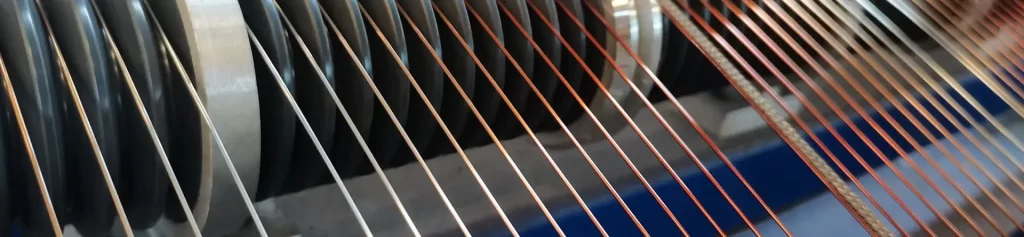
Magnet wire is an indispensable key material in motors, transformers, and electromagnetic equipment. From procurement and warehousing to production line usage, the storage quality of magnet wire in the production facility or warehouse directly affects its insulation performance and the quality of the final product.
Improper storage conditions can lead to a series of problems including enamel film moisture absorption, oxidation, enamel softening or adhesion, and reduced mechanical strength. These issues may not be immediately apparent during winding, but during the long-term operation of motors or transformers, they can gradually evolve into serious failures such as insulation breakdown, increased partial discharge, or even winding short circuits.
This article provides a systematic and actionable magnet wire storage technical guide for warehouse management personnel and engineering technicians from six dimensions: storage environment requirements, packaging specifications, warehouse management, storage differences between enamel systems, common problem troubleshooting, and quality inspection.
I. Basic Environmental Requirements for Magnet Wire Storage
1.1 Temperature Control
The recommended storage temperature range for magnet wire is 15-30°C.
Excessively high temperatures can cause enamel softening, especially during summer high-temperature conditions, where the surface temperature of magnet wire spools may exceed 40°C. Long-term exposure to high-temperature environments can cause physical changes in the enamel film, reducing flexibility and making the film prone to cracking during winding.
While low temperatures have a relatively smaller impact on enamel performance, extreme cold (below 0°C) can cause the enamel film to become brittle, making it susceptible to micro-cracking under bending stress during winding. These micro-cracks can expand during subsequent impregnation or use, ultimately leading to insulation failure.
1.2 Humidity Control
Relative humidity should be controlled within the ≤ 60% range, which is the most critical environmental indicator for magnet wire storage.
The impact of high humidity environments on magnet wire is reflected in the following aspects:
- Enamel Film Moisture Absorption: Most enamel systems have a certain degree of hygroscopicity. In high humidity environments, the enamel film absorbs moisture from the air, leading to decreased volume resistivity and increased dielectric loss factor. These changes directly affect the insulation performance of the winding.
- Conductor Oxidation: For aluminum magnet wire, high humidity environments accelerate oxidation of the aluminum conductor surface. While aluminum’s natural oxide film provides protection, excessive oxidation increases conductor surface resistance and affects connection process quality.
- Packaging Corrosion: High humidity environments accelerate rusting of metal spools, particularly steel spools. Rusting not only affects spool appearance and service life but can also contaminate the magnet wire surface.
1.3 Ventilation Requirements
Warehouses should maintain good ventilation conditions to avoid localized humidity accumulation caused by poor air circulation. It is recommended to use a combination of natural ventilation and mechanical ventilation to ensure uniform temperature and humidity distribution throughout the warehouse.
During humid seasons or rainy seasons, it is recommended to close doors and windows and use dehumidification equipment to prevent high humidity outdoor air from entering the warehouse.
II. Environmental Factors to Avoid
2.1 Avoid Direct Sunlight
Ultraviolet rays have a significant aging effect on magnet wire enamel film. Magnet wire exposed to sunlight for extended periods will experience photo-oxidative degradation of the enamel film, leading to reduced flexibility and insulation performance deterioration.
Magnet wire spools should be stored indoors or in areas with sunshades. Open-air storage is strictly prohibited. Warehouse windows are recommended to use blackout curtains or UV-protective glass to reduce ultraviolet exposure to magnet wire.
2.2 Keep Away from Chemical Gases
Magnet wire enamel film is sensitive to certain chemical gases such as acid mist, alkali mist, and organic solvent vapors. These chemical gases can react chemically with the enamel film, causing softening, dissolution, or embrittlement.
Magnet wire warehouses should be kept away from painting workshops, pickling workshops, chemical storage areas, and other areas that may produce harmful gases. Storage of paints, thinners, acid and alkali solutions, and other chemicals within the warehouse is strictly prohibited.
2.3 Prevent Rainwater and Water Accumulation
Magnet wire is strictly prohibited from contact with rainwater and accumulated water. Even with outer packaging protection, rainwater seeping into the packaging can cause enamel film moisture and spool rusting.
Warehouse floors should be kept dry, and spools should be elevated on pallets to avoid direct contact with the ground. Warehouses should have drainage systems to prevent water accumulation flooding during rainy seasons.
III. Packaging Specifications and Warehouse Management
3.1 Packaging Requirements
The packaging of magnet wire from the factory typically includes the following layers:
Inner Layer Packaging: Moisture-proof plastic bags or moisture-proof paper, directly wrapping the spool to prevent moisture ingress.
Outer Layer Packaging: Corrugated cardboard boxes or wooden boxes, providing mechanical protection and dust-proof functions.
For export orders or long-term storage of magnet wire, enhanced moisture-proof packaging is recommended, such as aluminum foil composite film vacuum packaging or desiccant + moisture-proof bag combination packaging.
3.2 Stacking Specifications
The stacking of magnet wire spools must follow the following specifications:
- Pallet Stacking: Spools should be placed on standard pallets with uniform spacing to ensure even force distribution.
- Stacking Layers: Based on spool specifications and packaging strength, stacking layers typically should not exceed 3-5 layers. Excessive stacking can cause deformation of bottom spools, affecting pay-off quality.
- Labels Facing Outward: Product labels on spools (specifications, batch numbers, production dates, etc.) should face outward for easy identification and management.
- First In, First Out (FIFO): Strictly implement the FIFO principle to ensure that magnet wire stored first is used first, avoiding storage.
3.3 Warehouse Zone Division
It is recommended to divide the warehouse into the following zones:
- Inspection Pending Zone: Temporary storage area for newly arrived goods, awaiting quality inspection.
- Qualified Products Zone: Formal storage area for inspected and qualified products, classified by specifications and batches.
- Non-Conforming Products Zone: Isolated storage area for non-conforming products, preventing mixing with qualified products.
- Shipping Zone: Temporary storage area for packaged products ready for dispatch.
IV. Storage Differences Between Different Types of Magnet Wire
4.1 Polyurethane Enameled Wire (UEW)
Polyurethane enameled wire has a relatively thin enamel film with moderate sensitivity to environmental humidity. During storage, focus on moisture-proof and sun protection measures. Since its enamel film softens easily at high temperatures, special attention to warehouse temperature control is needed during summer high-temperature seasons.
4.2 Polyesterimide/Polyamide-imide Composite Enameled Wire (EI/EIW/AIW)
This enamel system has good heat resistance and chemical resistance, but limited tolerance to long-term high temperature and high humidity environments. Storage conditions are basically the same as other magnet wires, but the shelf life is relatively longer, extendable to 18 months under correct storage conditions.
4.3 Paper Covered Wire
Paper covered wire has the strictest storage environment requirements. Insulating paper has extremely strong hygroscopicity and rapidly absorbs moisture in high humidity environments, leading to excessive moisture content.
Storage requirements for paper covered wire:
- Relative humidity strictly controlled at ≤ 50% (lower than 60% for enameled wire)
- Must use sealed moisture-proof packaging, recommended aluminum foil composite film vacuum packaging
- Storage environment temperature 15-30°C, avoid dramatic temperature fluctuations
- Moisture content requirement ≤ 0.5%, moisture content testing required before dispatch
4.4 Aluminum Foil Winding Wire
Aluminum foil winding wire storage requirements are similar to paper covered wire, with focus on moisture prevention and mechanical damage prevention. Aluminum foil surfaces oxidize easily, and long-term exposure to air reduces welding performance.
V. Common Problems During Storage and Troubleshooting
5.1 Enamel Film Adhesion
Phenomenon: During magnet wire pay-off, adjacent turns adhere to each other, causing unsmooth pay-off or enamel film damage.
Causes: Excessive storage temperature causes enamel softening; or storage time too long, causing cold flow phenomenon in the enamel film under sustained pressure.
Solutions: Reduce warehouse temperature; shorten storage cycle; check adhesion before pay-off, return to supplier for severe cases.
5.2 Enamel Film Cracking
Phenomenon: Micro-cracks or flaking of enamel film during winding.
Causes: Storage temperature too low causes enamel embrittlement; or enamel aging (overdue storage); or ultraviolet exposure.
Solutions: Check if storage temperature is within 15-30°C range; confirm whether product is overdue; check warehouse for direct sunlight exposure.
5.3 Conductor Oxidation
Phenomenon: White powdery oxide appears on aluminum magnet wire surface, dark spots appear on copper magnet wire surface.
Causes: Storage environment humidity too high; or packaging damage allowing moisture ingress.
Solutions: Strengthen warehouse humidity control; check packaging integrity; return severely oxidized products.
5.4 Spool Deformation
Phenomenon: Spool deformation causes uneven tension during pay-off, affecting winding quality.
Causes: Excessive stacking layers; or substandard spool quality; or collision during transportation.
Solutions: Strictly observe stacking layer limits; inspect spool appearance upon receipt; ensure proper protection during transportation.
VI. Quality Inspection During Storage
6.1 Incoming Inspection
The following inspections should be conducted before magnet wire is received into the warehouse:
Visual Inspection: Spools without deformation, packaging without damage, product labels clear.
Specification Confirmation: Wire diameter, enamel grade, color, etc. match the purchase order.
Document Verification: Supplier-provided COA (Certificate of Analysis) reports are complete, and all indicators meet standard requirements.
6.2 Storage Period Patrol Inspection
It is recommended to conduct a monthly patrol inspection of inventory magnet wire, focusing on:
- Packaging Integrity: Check moisture-proof packaging for damage or air leakage.
- Environmental Parameters: Record warehouse temperature and humidity data, confirm whether within required ranges.
- Product Condition: Spot-check spool appearance, confirm no enamel discoloration, spool rusting, or other abnormalities.
6.3 Pre-Dispatch Inspection
The following inspections should be conducted before magnet wire is dispatched for use:
- Conductor Resistivity: Confirm conductivity meets requirements (copper wire 100% IACS, aluminum wire 61% IACS).
- Enamel Film Continuity: Detect enamel film defects through spark testing.
- Flexibility: Confirm no enamel cracking through mandrel wrapping test.
- Moisture Content (Paper Covered Wire): Confirm moisture content ≤ 0.5%.
Conclusion
Proper storage of magnet wire is an important to ensure product quality and motor/transformer performance. Controlling temperature (15-30°C), humidity (≤ 60%), avoiding direct sunlight and chemical gas contamination, and strictly implementing packaging specifications and warehouse management requirements can effectively prevent enamel deterioration and conductor oxidation.
For different types of magnet wire, storage strategies need to be adjusted based on material characteristics. Particularly for paper covered wire and aluminum foil winding wire, storage environment requirements are more stringent, requiring focus on moisture control.
Establishing incoming inspection, storage period patrol inspection, and pre-dispatch inspection systems is an effective means of ensuring magnet wire storage quality. Through scientific warehouse management, the service life of magnet wire can be maximized, reducing quality risks and economic losses caused by improper storage.