

How to Choose the Right Thermal Class for Enameled Copper Wire
Enameled copper wire is the core material for electrical insulation conductors, and the proper selection of its thermal class directly determines the operational reliability, service life, and overall cost of motors and transformers. Incorrect thermal class selection can lead to premature insulation aging and frequent failures, or even equipment damage and safety accidents. This article, based on the IEC and NEMA international standards systems, systematically explains the technical connotation, classification, selection methods, and key engineering practice points of enameled copper wire thermal class, providing electrical design engineers and procurement technicians with directly applicable selection references.
Technical Connotation and Industry Significance of Thermal Class
Definition of Thermal Class
The thermal class of enameled copper wire refers to the maximum allowable operating temperature that no part of the winding can exceed during long-term operation under normal working conditions. This parameter does not refer to the instantaneous maximum temperature that the insulation material can withstand under laboratory conditions, but rather to the upper limit of continuous operating temperature determined based on long-term aging tests, ensuring the expected service life (typically 20,000 to 30,000 hours).
The thermal class is based on the science of material thermal aging. Each insulation material has two core thermal performance indicators: Rated Temperature and Temperature Index (TI). The rated temperature is the upper limit of the normal operating temperature promised by the manufacturer; the temperature index is determined through accelerated thermal aging tests—the sample is placed at different temperatures for periodic aging, and the time required for the insulation performance (usually defined as the breakdown voltage or elongation at break decreasing to a certain percentage of the initial value as the failure threshold) to drop to a specified level is measured, and then the corresponding thermal class is extrapolated.
Thermal Aging Laws and the Influence of Temperature on Insulation Life
The thermal aging of insulation materials follows the Arrhenius law. Engineering practice shows that within a certain temperature range, for every 10°C increase in temperature, the aging rate of the insulation material approximately doubles, and the service life is correspondingly halved. This empirical rule means that an insulation material rated for 130°C will have only half the expected lifespan when used at 140°C, and only a quarter at 150°C. Therefore, the selection of the thermal class must be based on rigorous thermal calculations, not simple empirical estimations. Once the actual operating temperature exceeds the design thermal class, insulation failure will evolve from gradual aging to rapid failure, and the risk of equipment operation will increase sharply.
International Standard System
Currently, there are two main globally accepted insulation class standard systems:
IEC 60034-1 (International Electrotechnical Commission standard): This uses letter-based class designations (Y, A, E, B, F, H, C, C+), representing temperatures increasing from 90°C to 220°C. This system is the industry standard for most countries and regions in Europe, Southeast Asia, the Middle East, and South America.
NEMA MW 1000 (Institute of Electrical Manufacturers, USA) Standard): Uses direct temperature numerical designation (105, 130, 155, 180, 200, 220, 240), with a clear correspondence to IEC standards. This system forms the basis of technical specifications for the North American market.
The temperature values in both systems are identical; only the labeling method differs. In international engineering projects, the system selected must be based on the one explicitly specified in the tender documents; they cannot be used interchangeably.
Comparison of IEC and NEMA Insulation Classes
IEC Standard Insulation Classes
| Insulation Class | Maximum Temperature (°C) | Maximum Temperature (°F) | Main Insulation Material |
|---|---|---|---|
| Y | 90 | 194 | Cellulose paper/cotton cloth (rarely used for enameled wire) |
| A | 105 | 221 | Oil-based enameled wire (rarely used in industrial applications) |
| E | 120 | 248 | Polyvinyl alcohol formaldehyde (PVF) |
| B | 130 | 266 | Polyester (PET/PETP) |
| F | 155 | 311 | Modified polyester, polyester imide |
| H | 180 | 356 | Polyester imide, polyamide imide |
| C | 200 | 392 | Polyamide-imide (PAI) |
| C+ | 220 | 428 | Polyimide (PI) and composite coatings |
In the industrial application of enameled copper wire, grades E (120°C) and below are rarely used due to their small temperature margin; grades B and above have wide industrial practical value.
NEMA Standard vs. IEC Comparison
| NEMA Temperature Labels | Corresponding IEC Levels | Maximum Temperature (°C) |
|---|---|---|
| 105 | A | 105 |
| 130 | B | 130 |
| 155 | F | 155 |
| 180 | H | 180 |
| 200 | C | 200 |
| 220 | C+ | 220 |
| 240 | — | 240 |
Selection Points: When specifying NEMA standards in project technical documents, NEMA temperature values must be followed; when specifying IEC standards, IEC letter levels must be followed. The two systems should not be mixed to avoid ambiguity in specifications.
Material Characteristics and Applicable Scenarios of Different Thermal Classes
120 Grade (E Grade) – Polyvinyl Formal (PVF)
Representative Models: UEW (QAEW), Solderable Polyvinyl Formal Enameled Copper Wire
Material Characteristics:
- Insulation layer is based on polyvinyl formal resin
- Excellent resistance to transformer oil
- Good flexibility, suitable for automated high-speed winding
- Limited thermal shock resistance
Advantages:
- Low manufacturing cost, outstanding economic efficiency
- Good processing performance, high winding efficiency
- Good welding performance, good flux compatibility
Limitations:
- Small temperature margin, insufficient reliability under harsh conditions
- Moderate moisture resistance, insulation resistance decreases significantly in humid environments
- Limited chemical resistance, not resistant to strong acids and alkalis
Typical Applications: Motors for ordinary household appliances (electric fans, range hoods), low-power power tool motors, lightweight transformer windings, and consumer electronics products with low temperature requirements.
Grade 130 (Grade B) – Polyester (PET/PETP)
Representative Models: PEW (QZ), Polyester enameled copper wire
Material Characteristics:
- Insulation layer based on polyethylene terephthalate (PET) resin
- Balanced overall performance, balancing mechanical strength and heat resistance
- Excellent solvent resistance, good compatibility with most impregnation varnishes
Advantages:
- Moderate price, stable and sufficient supply
- High mechanical strength, good abrasion resistance
- Good compatibility with impregnation resins, significantly improved electrical performance after impregnation
Limitations:
- Moderate thermal shock resistance, prone to cracking under sudden temperature changes
- Performance degrades during long-term operation in a closed and humid environment
Typical Applications: Household air conditioner compressor motors, refrigerator compressor motors, washing machine drive motors, water pump motors, general industrial small-power motors. This grade is the most widely used thermal class in the domestic white goods industry.
Grade 155 (Grade F) – Modified Polyester or Polyester Imide
Representative Models: PEW modified (QZ modified), polyester imide enameled copper wire
Material Characteristics:
- Uses modified polyester or polyester imide as the main insulation material
- Significantly better thermal shock resistance than Grade B
- Can withstand intermittent overload and temperature fluctuation conditions
Advantages:
- Sufficient temperature margin, actual operating temperature can reach 155°C for continuous operation
- Excellent thermal shock resistance, does not crack under sudden temperature changes
- Widest industrial application, mature supply chain
Limitations:
- Market price is 15-20% higher than Grade B
- Some modified polyester models are not solderable and require special soldering processes
- Processing tension control requirements are higher than Class B
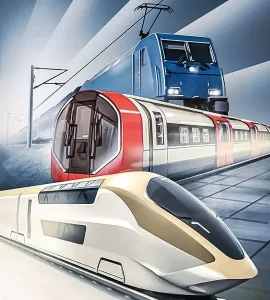
Typical Applications: Industrial transformer windings (medium to large power distribution and power transformers), medium to large industrial motors (power above 1kW), welding machine transformers, reactors, auxiliary motors for rail vehicles, and motors for hoisting machinery. This class has the widest range of industrial applications globally.
Grade 180 (Grade H) – Polyester Imide and Polyamide Imide
Representative Models: EIW (QZY), polyester imide enameled wire; AIW, polyamide imide enameled copper wire
Material Characteristics:
- The insulation layer is based on polyester imide or polyamide imide resin
- Excellent thermal shock resistance
- High mechanical strength, excellent wear and scratch resistance
Advantages:
- Continuous operating temperature of 180°C with ample margin
- Can withstand severe temperature shocks and mechanical vibrations
- Maintains stable insulation performance under high temperature and high humidity conditions
Limitations:
- Price is 25-30% higher than Grade F
- Higher processing requirements and stricter tension control precision
- Some models are not weldable and require laser welding or resistance welding
Typical Applications: New energy vehicle drive motors (widely used in passenger cars and commercial vehicles), high-speed rail traction motors, urban rail transit traction motors, wind power generators (especially direct-drive types), special industrial motors (high temperature resistance, explosion-proof, and other special working conditions), and photovoltaic inverter transformers. This class is a hallmark of the new energy era.
Grade 200 (Grade C) – Polyamide-Imide (PAI)
Representative Models: AIW (QZY-XY), Polyamide-Imide Enameled Copper Wire
Material Characteristics:
- Insulation layer based on polyamide-imide resin
- Continuous operating temperature up to 200°C
- Excellent chemical and oil resistance
- Excellent mechanical properties, wear-resistant, scratch-resistant, and radiation-resistant
Advantages:
- Currently the absolute mainstream grade in the automotive industry
- Outstanding resistance to harsh environments, salt spray, oil, and coolant resistance
- Good compatibility with various impregnating resins
Limitations:
- Price 2-3 times that of Grade F
- Flexibility lower than Grade H, higher requirements for tension control during winding
- Some processes require specialized equipment
Typical Applications: Automotive starter motors, automotive alternators, new energy vehicle drive motors (high-end models above 200°C), rail transportation traction motors (high-speed rail, subway), military equipment motors, aerospace motors. Designated Tier 1 suppliers for European, American, Korean, and Japanese automakers, this is also the entry threshold for entering the international automotive supply chain.
Class 220 (C+) and Class 240 – High-end Special Materials
Representative Models: PIW (Polyimide Wire); Composite Coating Magnet Wire
Material Characteristics:
- Uses polyimide (PI) as the main insulation material, or employs composite coating technology
- An irreplaceable choice in extreme high-temperature environments
- Excellent radiation and low-temperature resistance
Advantages:
- Continuous operating temperature of 220-240°C with a large margin
- The only reliable insulation solution in extreme temperature environments
- Excellent radiation resistance, still usable in nuclear radiation environments
Limitations:
- Only a few manufacturers worldwide have mass production capabilities
- Long delivery cycle and extremely high price
- Complex processing technology, requiring specialized winding equipment
Typical Applications: Aerospace motors and generators, key equipment in nuclear power plants, deep-sea exploration motors, oil exploration downhole equipment, motors for high-temperature industrial furnaces, military equipment, medical MRI equipment.
Methodology for Selecting Enameled Copper Wire Thermal Class
Core Calculation Formula
The first step in selecting the thermal class is to determine the actual operating temperature. The engineering calculation formula is as follows:
Actual Operating Temperature = Ambient Temperature + Temperature Rise + Safety Margin
These three variables must be determined based on the specific project conditions and cannot be simply applied using empirical values.
Determination of Ambient Temperature
Ambient temperature refers to the temperature of the medium surrounding the equipment during operation and must be determined comprehensively based on the equipment installation location, geographical area, and heat dissipation conditions.
| Installation Environment | Recommended Design Temperature (°C) |
|---|---|
| Standard Indoor Environment (Air-conditioned Room) | 30-35 |
| General Industrial Plant (With Ventilation) | 35-40 |
| Outdoor with Shading | 40-45 |
| Outdoor Direct Sunlight | 45-55 |
| Enclosed Cabinet (Without Forced Cooling) | 50-60 |
| Engine Compartment (Near Cylinder Block) | 100-150 |
| Tropical/Subtropical Outdoor Summer | 50°C (Design Basis) |
Important Note: For exported equipment, the design must be based on the most unfavorable ambient temperature of the equipment’s intended use location, not the climate conditions of the equipment’s manufacturing location. For equipment exported to high-temperature regions such as the Middle East, Southeast Asia, and South Asia, the ambient temperature value should be carefully considered.
Determination of Temperature Rise
Temperature rise refers to the temperature increase caused by heat generated by copper and iron losses in the windings of electrical equipment during operation. Temperature rise is closely related to equipment power, heat dissipation method, and duty cycle.
| Equipment Type | Typical Temperature Rise Design Value (K) |
|---|---|
| Naturally Cooled Small Motor (<1kW) | 60-80 |
| Forced Air Cooled Medium Motor | 80-100 |
| Water Cooled Motor | 40-60 |
| Oil-Immersed Power Transformer | 60-80 (Oil Top Layer) |
| Dry-Type Power Distribution Transformer | 100-130 |
| High-Frequency Switching Power Supply Transformer | 100-150 (High Power Density) |
| Intermittent Duty Load | Calculated Based on Maximum Load Condition |
Relationship between Temperature Rise and Insulation Class: With Class B (130°C) insulation and an 80K temperature rise, the actual usable ambient temperature is only 50°C; with Class F (155°C) insulation and a 100K temperature rise, the ambient temperature can reach 55°C. The insulation class, temperature rise design, and ambient temperature must be calculated together during the design process.
Determination of Safety Margin
IEC 60034-1 standard stipulates that the design temperature of the insulation system must not be lower than the calculated value of “maximum permissible operating temperature = ambient temperature + temperature rise + 15°C”. This 15°C is the minimum safety margin specified by IEC.
In engineering practice, the recommended safety margin values are as follows:
| Application Category | Recommended Safety Margin |
|---|---|
| General Industrial Use | 15-20°C |
| Important Production Equipment (High Downtime Losses) | 20-30°C |
| Safety-Critical Equipment (Involving Personnel Safety) | Above 30°C |
| Harsh Environments (High Temp/High Humidity/Strong Vibration) | Above 30°C |
Selection Calculation Examples
Example 1: Outdoor Industrial Motor (Export to Southeast Asia)
- Application Scenario: 7.5kW three-phase asynchronous motor exported to Thailand, outdoor installation
- Ambient Temperature: Based on the highest summer ambient temperature in Southeast Asia, take 50°C
- Temperature Rise: Standard industrial motor, F-class design, temperature rise 80K
- Safety Margin: General industrial use, take 20°C
- Calculation Result: Actual Required Temperature = 50 + 80 + 20 = 150°C
- Selection Conclusion: Grade F (155°C) enameled copper wire meets the requirements; Grade B (130°C) has insufficient margin and cannot be used.
Example 2: New Energy Vehicle Drive Motor
- Application Scenario: New energy passenger vehicle drive motor, rated power 120kW
- Ambient Temperature: 40°C (conservative value) based on typical engine compartment temperature
- Temperature Rise: Drive motor has high power density and high-frequency operation, temperature rise approximately 120K
- Safety Margin: Safety-critical equipment, 25°C
- Calculation Result: Actual Required Temperature = 40 + 120 + 25 = 185°C
- Selection Conclusion: Grade H (180°C) is the minimum requirement, 200°C (Grade C) is the recommended selection for higher reliability.
Example 3: Residential Inverter Air Conditioner Compressor
- Application Scenario: 3HP inverter air conditioner compressor motor
- Ambient Temperature: 40°C based on high-temperature operating indoor temperature
- Temperature Rise: Compressor design operating temperature rise approximately 65K
- Safety Margin: For household appliances, take 15°C
- Calculation Result: Actual required temperature = 40 + 65 + 15 = 120°C
- Selection Conclusion: Class B (130°C) meets the requirements and has a reasonable margin; high-end inverters can choose Class F (155°C) to improve reliability and lifespan.
Thermal Class Selection Guide Based on Industry Applications
Motor Industry
| Sub-applications | Recommended Thermal Class | Selection Instructions |
|---|---|---|
| General industrial motors (<100kW) | Class F (155°C) | Widely used, best cost performance |
| Large industrial motors (≥100kW) | Class F/H (155-180°C) | Large motors have relatively good heat dissipation conditions |
| New energy vehicle drive motors | Class H/C (180-200°C) | High power density, high temperature rise |
| Servo motor | Class F/H (155-180°C) | Small size, high power density |
| Stepper motor | Class F (155°C) | Standard type is sufficient |
| Wind power generators | Class H (180°C) | Direct-drive offshore wind turbines may require 200°C |
| Special motors (diving/explosion-proof/corrosion-resistant) | Class F/H (155-180°C) | Special working conditions require higher reliability |
| Power tool motors | Class B/F (130-155°C) | High-load tools such as impact drills use Class F |
Transformer Industry
| Sub-applications | Recommended Thermal Class | Selection Guide |
|---|---|---|
| Oil-immersed power transformer | Class F (155°C) | Good oil cooling effect, standard design |
| Dry-type power distribution transformer | Class F/H (155-180°C) | Depends on power density design |
| High-frequency switching power supply transformer | Class H (180°C) | High switching loss, concentrated heat |
| Photovoltaic/wind power inverter transformer | Class H/C (180-200°C) | High power density, high operating temperature |
| Charging station transformer | Class H/C (180-200°C) | High power charging station heat dissipation challenges |
| Electric furnace transformer | Class H/C+ (180-220°C) | Harsh operating conditions, strong overload capacity |
New Energy Vehicle Industry
New energy vehicles are currently the application field with the most stringent requirements for enameled wire thermal class. The high power density, high speed, and frequent acceleration and deceleration of the drive system cause the motor temperature rise to generally exceed 120°C.
| Sub-applications | Recommended Thermal Class | Selection Guide |
|---|---|---|
| Drive motor (Passenger Vehicles) | Class H/C (180-200°C) | Mainstream Selection |
| Drive motor (Commercial Vehicles) | Class C (200°C) | High power density |
| Drive motor (High-End Passenger Vehicles) | Class C+ (220°C) | Pursuing ultimate performance and reliability |
| OBC On-Board Charger | Class H/C (180-200°C) | High heat dissipation requirements |
| DC-DC Converter | Class H (180°C) | High-frequency switching applications |
| Motor Controller Inductor | Class H/C (180-200°C) | High IGBT switching frequency |
| Energy Storage System PCS | Class H (180°C) | High-power bidirectional converter |
Home Appliance Industry
| Sub-applications | Recommended Thermal Class | Selection Guide |
|---|---|---|
| Air Conditioner Compressor (Fixed Frequency) | Class B (130°C) | Standard fixed frequency unit |
| Air Conditioner Compressor (Variable Frequency) | Class F (155°C) | Higher power density |
| Refrigerator Compressor | Class B (130°C) | Power density lower than air conditioner |
| Washing Machine Motor | Class B/F (130-155°C) | Spin-dry motors may require Class F |
| Vacuum Cleaner Motor | Class F (155°C) | High power density, high heat generation |
| Fan Motor | Class B/F (130-155°C) | Ceiling fans can use Class B, floor fans Class F |
Rail Transit and Defense
| Sub-applications | Recommended Thermal Class | Selection Guide |
|---|---|---|
| Metro/Light Rail traction motor | Class H (180°C) | Absolute mainstream in urban rail |
| High-Speed Railway traction motor | Class C (200°C) | Higher speed means greater temperature rise |
| Maglev Train Motor | Class C+ (220°C) | Extreme operating conditions |
| Military Vehicle Motor | Class C/C+ (200-220°C) | Wide temperature range, high reliability |
| Ship Propulsion Motor | Class H/C (180-200°C) | Salt spray corrosion environment |
Standard Certification and Compliance Requirements
Thermal class selection must consider the certification requirements of the target market simultaneously. Products lacking necessary certifications will not be able to enter the corresponding regional market.
UL Certification (North American Market)
UL 1446: Insulation system certification standard. Complete certification for the entire motor/transformer insulation system.
UL File: The manufacturer’s UL-registered insulation material file, containing complete data such as thermal class, flame retardancy rating, and compatibility.
UL Yellow Card: A UL database containing searchable material performance data.
Enameled copper wire entering the North American market must have a valid UL file number; otherwise, the OEM cannot complete UL certification.
IEC Standards (Internationally Used)
IEC 60317: Specific technical specifications for various enameled wire products, defining model naming, dimensional tolerances, electrical performance, mechanical performance, and test methods.
IEC 60034-1: Standard for rotating electrical machines, including the classification and definition of insulation thermal classes.
IEC 60296: Standard for transformer oils used in electrical equipment, compatible with oil-immersed transformers.
REACH/RoHS (EU Market)
RoHS Directive: Restricts hazardous substances such as lead (Pb), cadmium (Cd), mercury (Hg), hexavalent chromium (Cr6+), polybrominated biphenyls (PBBs), and polybrominated diphenyl ethers (PBDEs).
REACH Regulation: Registration, evaluation, authorization, and restriction of chemicals; the SVHC (Substances of Very High Concern) list is continuously updated.
Quality and Environmental Management Systems
ISO 9001: Quality Management System Certification
ISO 14001: Environmental Management System Certification
ISO 45001: Occupational Health and Safety Management System Certification
Analysis of Common Misconceptions in Engineering Selection
Misconception 1: Passing Sample Testing Means Batch Reliability
Sample testing is usually conducted under standard laboratory conditions (room temperature, rated load), which cannot fully simulate the actual use environment. Operating condition verification testing before batch supply is indispensable.
Recommendation: Conduct thermal aging tests simulating actual working conditions during the sample stage; proceed to mass production only after small-batch trial production verification.
Misconception 2: Higher Thermal Class Equals Greater Safety
Insulation materials with higher thermal class usually have poorer flexibility and adhesion. High-grade materials used in non-extreme high-temperature conditions may crack and peel.
Recommendation: Select based on calculation results; “choose the right one” rather than “choose the highest.”
Misconception 3: Ignoring the Matching of Thermal Class and Breakdown Voltage
Under high-temperature conditions, the breakdown voltage of insulation materials will decrease significantly. A material with 5000V at room temperature may drop below 2000V at 180°C.
Recommendation: Under high-temperature conditions, the breakdown voltage design must consider the temperature derating factor and retain sufficient margin.
Misconception 4: Confusing the Selection Logic of Copper Conductor and Aluminum Conductor
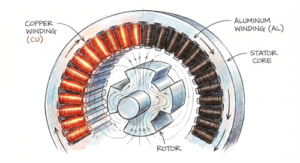
The resistivity of aluminum conductor is approximately 1.6 times that of copper. Aluminum’s softening temperature is only about 150°C, far lower than copper’s (approximately 300°C).
Recommendation: Aluminum wire must undergo independent thermal calculations; the selection results for copper wire cannot be simply applied.
Misconception 5: Confusing Insulation Class with Insulation System Concepts
An insulation system refers to a complete system including the wire, insulation frame, insulation paper, and impregnating resin. Poor compatibility between the wire and the impregnating resin can lead to significant performance decrease.
Recommendation: Select a UL-certified insulation system, or confirm the compatibility of each component with the insulation system supplier.
Product Supply and Technical Support
Zhengzhou LP Industry Co., Ltd. is a professional manufacturer of enameled copper wire for export, specializing in the field of electrical wire for 30 years, possessing a complete thermal class product line and full international certifications.
Core Qualifications:
- ISO 9001 / ISO 14001 / ISO 45001 triple system certification
- UL certification (UL documents verifiable)
- REACH / RoHS compliance
- SGS factory audit certification
Product Capabilities:
- Round wire specifications: 0.016–7.0mm (full specifications coverage)
- Flat wire specifications: Thickness 0.8–10mm, Width 2–25mm
- Models: UEW(QA), PEW(QZ), EIW(QZY), EIW(QZXY), AIW(QZY-XY)
- Thermal class: 155°C, 180°C, 200°C, 220°C, 240°C
Technical Services: Free product selection support provided. Please provide the following parameters: rated power, voltage rating, application scenario, environmental conditions, load type, duty cycle, and target certification system. Our technical team will provide specific recommendations and a quote within 24 hours.
Contact Information:
- Email: office@cnlpzz.com
- WhatsApp: 0086-19337889070