

How to Choose Magnet Wire
Overview
Magnet wire is a core material for motors, transformers, generators, and various electromagnetic devices. Its correct selection directly affects equipment performance, operational reliability, and service life. Faced with diverse product specifications and complex application requirements, engineers and purchasing personnel often need systematic selection guidance. This article systematically explains the selection methods and considerations for magnet wire from five dimensions: conductor material, thermal class, insulation type, size specifications, and certification standards. It also provides specific selection suggestions for common application scenarios to help readers quickly grasp the core technical points of magnet wire selection.
Clarify Application Requirements: The Starting Point for Selection
Different Equipment Types and Power Ratings
Different equipment types and power ratings have significantly different performance requirements for magnet wire. Small and medium-sized motors typically use 130-class or 155-class polyester magnet wire; high-voltage power distribution transformers need to consider insulation strength and partial discharge characteristics; precision electronic instruments have strict requirements for dimensional accuracy and consistency. Power rating directly determines the conductor cross-sectional area selection. The higher the rated power, the larger the required conductor cross-sectional area, and correspondingly, the nominal diameter or width and thickness of the magnet wire also need to be increased. When selecting a model, the rated power, voltage rating, and operating mode of the equipment should be clearly defined first.
Working Environment Considerations
The working environment is a key factor influencing magnet wire selection. High-temperature environments require high-thermal-class products; humid or chemically corrosive environments require consideration of the insulation layer hydrolysis and corrosion resistance; frequent start-stop or load-changing conditions place higher demands on the flexibility and adhesion of the enamel coating. Special applications such as rail transportation, aerospace, and medical equipment have stricter standards for the reliability and durability of magnet wire, requiring the selection of specially certified products.
Cost and Performance Balance
Magnet wire cost accounts for a certain proportion of the total cost of electrical equipment, but selecting too low a grade product may lead to reliability problems, while selecting too high a grade product results in unnecessary cost waste. The selection should achieve the best balance between performance and cost while meeting technical requirements.
Conductor Material Selection: Copper vs. Aluminum
Copper Conductor Enameled Wire
Copper conductor is the most commonly used conductor material for magnet wire, characterized by low resistivity, excellent conductivity, and high mechanical strength. The resistivity of copper conductor is 1.72 × 10⁻⁸ Ω·m, providing better current carrying capacity under the same cross-sectional area. Copper conductor is suitable for applications with high conductivity requirements, such as large motors, precision instruments, and aerospace equipment. Copper conductor has good weldability and reliable electrical connections.
Aluminum Conductor Magnet Wire
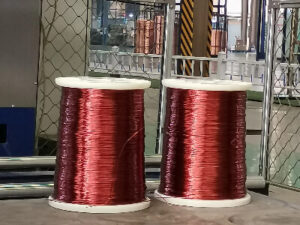
Aluminum conductor replaces copper as the conductor material. The resistivity of aluminum is approximately 1.64 times that of copper. The advantage of aluminum conductor is that its density is only one-third that of copper, and its material cost is approximately one-quarter to one-fifth that of copper. Aluminum conductors and magnet wires are widely used in cost-sensitive or weight-sensitive applications, such as HVAC equipment, small transformers, lighting ballasts, relays, and solenoid valves. When selecting aluminum conductors and magnet wires, it is important to consider the increased cross-sectional area required due to their higher resistivity, and the connection process requirements of the alumina film.
Material Selection Criteria
The choice between copper conductors and aluminum conductors should consider the following factors: equipment performance requirements, design space constraints, weight limitations, cost budget, operating conditions, and expected lifespan. High-end applications prioritizing performance typically choose copper conductors; large-scale, cost-sensitive applications may consider aluminum conductors.
Thermal Class Determination: Matching Operating Temperature
Thermal Class System Analysis
The thermal class of insulating materials is classified according to the IEC 60085 standard, expressing the maximum permissible operating temperature of the insulating material in degrees Celsius. Common thermal classes for magnet wire include 120, 130, 155, 180, and 200. Class 130 corresponds to a maximum operating temperature of 130°C, and the insulation material is typically polyurethane or conventional polyester. This class is economical and suitable for small to medium-sized motors, relays, solenoid valves, etc., operating at lower temperatures. Class 155 corresponds to a maximum operating temperature of 155°C, and the insulation material is typically modified polyester or polyester imide. This class has a wide range of applications and is a common choice for industrial motors and power distribution transformers. Class 180 corresponds to a maximum operating temperature of 180°C, and the insulation material is typically polyester imide or polyester imide composite. This class is suitable for high-temperature conditions, large motors, and applications requiring a long expected lifespan. Class 200 corresponds to a maximum operating temperature of 200°C, and the insulation material is typically polyamide-imide or polyamide-imide composite. This is the highest thermal class among magnet wire products, suitable for extreme high-temperature environments.
Thermal Class Selection Principles
When selecting a thermal class, the rated temperature of the insulated wire should be 15°C to 20°C higher than the equipment maximum operating temperature to allow for adequate thermal aging margin. This principle ensures that the insulation layer does not fail prematurely due to thermal aging within the equipment expected service life. Determining the equipment maximum operating temperature requires consideration of factors such as ambient temperature, internal temperature rise, load rate, and heat dissipation conditions. If necessary, it can be determined through thermal calculations or actual measurements.
Thermal Class and Application Scenarios
For small and medium-sized motors in conventionally ventilated environments, the operating temperature is typically between 80°C and 120°C; a class 130 or 155 product is sufficient. For enclosed motors or high-voltage motors, the operating temperature may reach above 130°C, requiring a class 155 or higher product. The operating temperature of the transformer winding is typically between 100°C and 140°C; a class 155 or 180 product is recommended. High-temperature equipment such as electric arc furnaces (transformers) require Class 200 insulation.
Insulation Type Selection: Performance and Process Trade-offs
Overview of Main Insulation Types
The insulation type of magnet wire is classified according to the chemical composition of the insulating varnish. Different insulation types have different characteristics in terms of heat resistance, chemical stability, mechanical strength, and processing performance. Polyurethane magnet wire uses polyurethane resin as the main insulation material. Its biggest advantage is that it can be directly soldered without scraping off the enamel coating. This characteristic gives it a unique advantage in applications requiring simple soldering processes, such as electronic transformers, relays, and ignition coils. The thermal class of polyurethane magnet wire is usually Class 120 or 130. Polyester magnet wire uses polyester resin as the main insulation material and is characterized by cost-effectiveness and excellent processing performance. The thermal class of conventional polyester magnet wire is Class 130, while modified polyester can reach Class 155. This product is widely used in small and medium-sized motors, transformers, lighting ballasts, and other fields. Polyamide-imide wire introduces an imide structure into the polyester molecular chain, significantly improving thermal class and chemical stability. Thermal class can reach 180, suitable for applications with high operating temperatures or harsh conditions. Polyamide-imide wire is currently the commercially available wire insulation type with the best heat resistance, achieving thermal class of 200 or even 220. This product has excellent chemical resistance, abrasion resistance, and thermal shock resistance, suitable for applications in extreme high-temperature and harsh environments.
Key Points for Insulation Type Selection
When selecting an insulation type, the following factors should be considered: equipment operating temperature, operating environment (humidity, chemical corrosion, etc.), processing technology (winding, welding, etc.), cost budget, and expected lifespan. For applications with low operating temperatures and requiring direct welding, polyurethane wire is an ideal choice. For general industrial applications, polyester or modified polyester magnet wire can meet most needs. For high-temperature or harsh environments, polyester imide or polyamide-imide products are more suitable.
Introduction to Special Insulation Types
Fully insulated film wire (FIW) is a special type of magnet wire whose insulation layer is made of a high-grade polyester imide or polyamide-imide film, rather than a traditional enamel coating. FIW wires have excellent electrical and heat resistance properties, making them particularly suitable for applications with stringent insulation requirements, such as high-voltage motors and inverter-powered motors.
Size Specifications Determination: Design and Manufacturing Connection
Round Wire Specifications Representation
Round wire magnet wire specifications are expressed in nominal diameter, usually in millimeters (mm). Common round wire diameters range from 0.05 mm to over 10.0 mm. Round wires of different diameters are suitable for different applications: micro-round wires (0.05 mm to 0.20 mm) are used in electronic transformers, relays, and precision instruments; fine round wires (0.20 mm to 1.00 mm) are used in small motors, solenoid valves, and instruments; medium-sized round wires (1.00 mm to 3.00 mm) are used in small and medium-sized motors and transformers; and thick round wires (above 3.00 mm) are used in large motors and generators.
Flat Wire Specifications
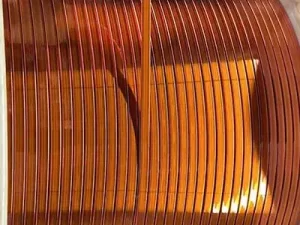
The specifications of flat wires (rectangular conductors) are indicated by their width and thickness. Standard flat wires typically range in width from 2.0 mm to 25.0 mm and thickness from 0.8 mm to 10.0 mm. Flat wires offer advantages such as high fill factor and good heat dissipation in transformer windings, making them a common conductor type for distribution transformers and reactor windings. When selecting a wire, the final dimensions need to be determined by adding the insulation layer thickness to the bare conductor dimensions specified in the design. This information is crucial for coil design and mold making.
Dimensional Tolerances and Consistency
Dimensional tolerances of wire affect the winding fill factor and electrical performance. Reputable manufacturers use advanced process control to ensure that product dimensional tolerances are within standard limits and that consistency is good. For precision instruments and high-frequency applications, dimensional consistency and stability are also important.
Certification Standards and Procurement Requirements
Introduction to Major Standard Systems
Magnet wire products follow international and regional standards systems, and different markets have different requirements for standards. IEC 60317 is a magnet wire product standard developed by the International Electrotechnical Commission (IEC), covering the technical requirements for round wire, flat wire, and various insulation types. It is a widely recognized authoritative standard in the international market. The NEMA MW 1000 series standards are wire standards developed by the National Electrical Manufacturers Association (NEMA) and hold an important position in the North American market. This standard provides detailed specifications for product classification, testing methods, and the representation of specifications. GB/T 23312 is a Chinese national standard, equivalent to IEC 60317, and supplemented with technical requirements applicable to the Chinese market. It is an important basis for procurement in the Chinese market.
Importance of UL Certification
UL certification is a crucial entry requirement for the US market. Products with UL certification demonstrate that they have undergone rigorous testing and comply with relevant US safety standards. For electrical equipment manufacturers planning to enter the North American market, selecting UL-certified suppliers is essential. Procurement documents should clearly specify the requirements for UL certification, including the UL file number, certified product models, and the scope of specifications.
Quality Management System Certification
ISO 9001 quality management system certification is a fundamental proof of a supplier quality management capabilities. ISO 9001 certification indicates that the supplier has established an effective quality management system and can consistently provide products that meet requirements. For high-reliability applications, such as rail transportation, aerospace, and medical equipment, specialized certifications such as IRIS (International Railway Industry Standard) and AS9100 (Aerospace Quality Management System) may also be required.
Preparation of Procurement Technical Requirements Documents
Procurement technical requirements documents should include the following: product name and specifications (conductor type, insulation type, thermal class, size specifications); applicable standards (IEC 60317, GB/T 23312, NEMA MW 1000, etc.); certification requirements (UL certification, RoHS compliance, etc.); packaging and labeling requirements; delivery time and quantity; payment method. Complete technical requirements documents help suppliers accurately understand procurement needs and avoid quality problems and delivery disputes caused by unclear communication.
Supplier Evaluation and Selection
Supplier Evaluation Dimensions
Suppliers should be evaluated comprehensively from multiple dimensions. Production capacity includes production equipment level, production capacity, and delivery cycle; quality control includes testing equipment, quality management system, and batch stability; technical support includes pre-sales consultation, after-sales service, and technical cooperation capabilities; business terms include price competitiveness, payment methods, and delivery reliability.
Sample Verification and Batch Confirmation
When introducing a new supplier or developing a new product, the supplier should be required to provide samples for testing and verification. Testing typically includes: dimensional measurement, insulation layer thickness, dielectric strength, flexibility, adhesion, and other basic performance indicators. After sample verification is successful, batch confirmation should be conducted for the first batch purchase to confirm the performance stability and consistency of the batch products. On-site inspection or third-party testing can be arranged if necessary.
Establishing Long-Term Partnerships
For customers making continuous purchases, establishing long-term and stable partnerships with suppliers is beneficial for: obtaining more favorable prices and payment terms; ensuring supply priority and timely delivery; obtaining better technical support and customized development services; and establishing a quality information feedback mechanism for continuous improvement.
Common Selection Misconceptions and Solutions
Selecting Too High or Too Low Thermal Class
Some purchasing personnel believe that a higher thermal class equates to greater safety, blindly choosing high-thermal-class products. In reality, an excessively high thermal class means higher costs, and when the actual operating temperature of the equipment is far below the insulation temperature resistance level, this selection is wasteful. Conversely, some applications fail to adequately assess the operating temperature, resulting in the selection of a thermal class that is too low, leading to premature aging of the insulation layer and a shortened equipment lifespan. The correct approach is to select a thermal class with a 15°C to 20°C margin based on the actual operating temperature of the equipment.
Ignoring the Impact of Dimensional Tolerances
Coil designs are typically calculated based on nominal dimensions, but the actual dimensions of the magnet wire have tolerances. Ignoring tolerance factors can lead to: a lower-than-expected filler coefficient, affecting power output; coil outer diameter exceeding design limits, affecting assembly; and excessive conductor cross-sectional deviation, affecting electrical performance. The impact of tolerances should be considered during the design phase, and the actual dimensional range should be confirmed with the supplier. If necessary, the supplier can be requested to provide measured dimensional data.
Ignoring Standard Differences
Different standard systems have different technical requirements for the same type of product. For example, IEC standards and NEMA standards are not entirely consistent in terms of size series, testing methods, etc. Ignoring standard differences may result in products not meeting their intended use. When purchasing, the specific standards to be followed should be clearly identified, and it should be confirmed that the products provided by the supplier meet the requirements of that standard.
Using Price as the Sole Selection Basis
Cost accounts for a certain proportion of the total equipment cost, but cheaper is not always better. Low-priced products may have problems such as unstable quality, large batch variations, and short weight, posing risks to equipment quality and brand reputation. The selection of equipment should be based on technical compliance, comparing prices among products that meet the technical requirements, and comprehensively considering quality stability, service capabilities, and supply reliability.
Conclusion
Selecting the right winding wire is a systematic process that requires comprehensive consideration of multiple dimensions, including application requirements, conductor material, thermal class, insulation type, size specifications, and certification standards. The core principle of selection is matching: the thermal class must match the equipment operating temperature, the insulation type must match the operating environment, the size specifications must match design requirements, and the certification standards must match market access standards. Based on this matching, the optimal balance between performance and cost should be pursued. Establishing standardized selection processes and procurement technical requirement documents helps avoid common selection errors, improves procurement efficiency, and reduces supply chain risks. Building long-term partnerships with reliable suppliers ensures continuous quality improvement and cost optimization for the equipment.