

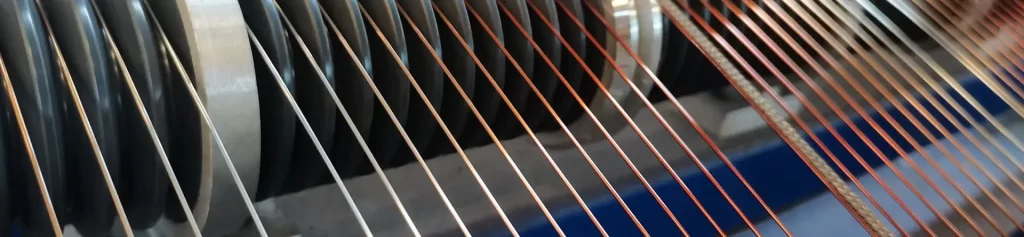
Power transformers are core equipment in power systems, and their performance and reliability directly affect the efficiency of the power grid. As a key material for transformer windings—high-purity copper foil—its quality directly impacts the transformer’s energy efficiency, heat dissipation, and service life. This article will systematically analyze the core requirements for high-purity copper foil for power transformers from the perspectives of technical specifications, selection considerations, industry standards, and practical applications.
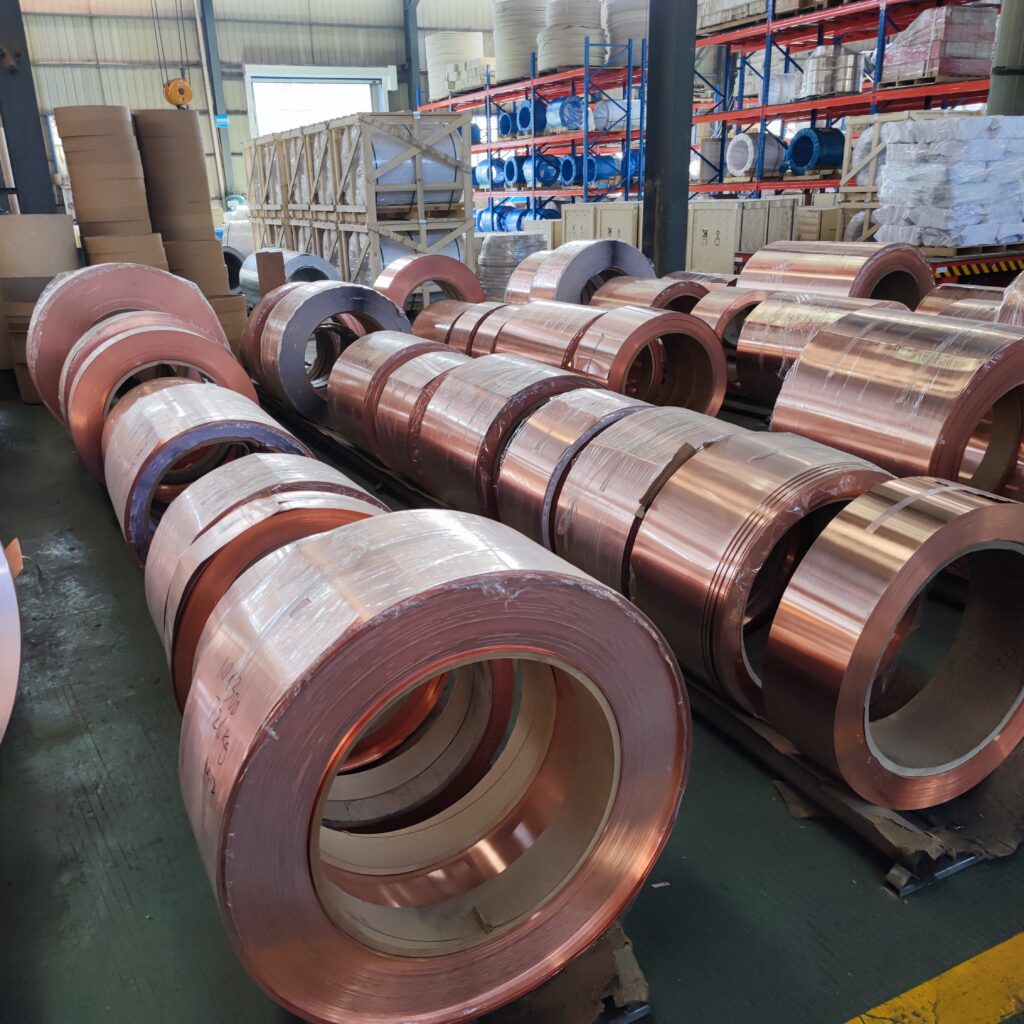
I. Technical Definition of High-Purity Copper Foil
High-purity copper foil refers to electrolytic copper or rolled copper foil materials with a purity of not less than 99.9%, specifically used for power transformer windings. Compared to ordinary copper materials, its core differences are reflected in the following aspects:
1.1 Electrical Performance
- Conductivity: IACS value ≥101% in annealed state (100% for pure copper), directly determining the copper loss level during transformer operation.
- Temperature Coefficient of Resistance: 0.00393/°C (0-200°C range), affecting the transformer’s temperature rise characteristics.
- Density: Uniform grain structure, free from defects such as pores and inclusions, ensuring stable current carrying capacity.
1.2 Geometric Accuracy
- Thickness Range: 0.05mm to 3.0mm, thickness tolerance ±3% to ±5%.
- Width Accuracy: ±0.5mm to ±1.0mm, ensuring consistency in automated winding processing.
- Surface Roughness: Ra≤0.8μm, reducing skin effect losses.
1.3 Mechanical Performance
- Tensile Strength: 200-280 MPa (annealed state), meeting winding tension requirements.
- Elongation: ≥15% (A50mm gauge length), ensuring no cracking during bending.
- Hardness: 35-65 HV, balancing machinability and mechanical strength.
1.4 Heat and Corrosion Resistance
- Operating Temperature Range: -40°C to +200°C, short-term temperature resistance up to 250°C.
- Oxidation Resistance: Surface passivated to prevent oxidation and discoloration at high temperatures.
- Coefficient of Thermal Expansion: 17×10⁻⁶/°C, good thermal compatibility with insulating materials.
II. Industry Standards and Certification Requirements
2.1 Major Domestic and International Standards
| Standard System | Related Standards | Core Requirements |
|---|---|---|
| IEC | IEC 60076, IEC 60325 | Electrical properties, dimensional tolerances, test methods |
| GB | GB/T 10988, GB/T 5231 | Purity ≥ 99.9%, Chemical Composition Specifications |
| JIS | JIS H3100, JIS H3140 | Copper Foil Grade, Mechanical Property Classification |
| ASTM | ASTM B152/B187 | General Specifications for Copper Materials, Including Copper Foil Specific Specifications |
2.2 Key Certification Indicators
Copper foil for power transformers must pass the following certification systems:
- ISO 9001: Quality Management System Certification
- UL Certification: US Market Access, Flame Retardant Performance Verification
- RoHS/REACH: EU Environmental Directive, Hazardous Substance Restriction
III. Key Selection Parameters and Process Matching
3.1 Core Indicators for Copper Foil Selection
In actual engineering, the following parameters need to be considered comprehensively when selecting copper foil:
Purity Grade: Power transformers typically require Cu-ETP (Cu-DHP) grade, with a purity of 99.90%-99.95%, balancing conductivity and processability.
Thickness Selection: Calculated based on transformer capacity and design flux density. Small power distribution transformers typically use 0.5-1.5mm thickness, while medium to large power transformers use 1.0-3.0mm.
Winding Conditions: Soft condition (O condition) is suitable for complex winding shapes; semi-hard condition (H26-H38) is suitable for straight-line windings, balancing formability and rigidity.
3.2 Winding Process Matching
| Process Type | Copper Foil State | Elongation Requirement | Surface Treatment |
|---|---|---|---|
| Automatic Winding Machine | Semi-hard State | ≥15% | Bright/Natural Color |
| Hand Winding | Soft State | ≥20% | Painted/Oxidized |
| Foil Winding | Soft State | ≥25% | Low Roughness |
3.3 Common Quality Problems and Identification
- Uneven Thickness: Thickness fluctuation along the roll direction > ±5%, leading to local overheating
- Surface Oxidation: Copper foil turns black/green, increasing contact resistance
- Inclusion Defects: Affects current-carrying cross-section, causing local temperature rise to exceed limits
- Edge Burrs: Damages insulation during winding, causing short circuit faults
IV. Industry Applications and Case Analysis
4.1 Typical Application Scenarios
Power Distribution Transformer: 10kV-35kV level, oil-immersed or dry-type transformer, copper foil thickness 0.8-2.0mm.
Power Transformer: 110kV-500kV level, large power transformer, copper foil thickness 1.5-3.0mm, using hard-state high-strength grade.
Special Transformer: Electric furnace transformer, rectifier transformer, copper foil customized according to overload requirements.
4.2 Case Study: Process Improvement of a Large Power Transformer Manufacturer
Project Background: A 220kV power transformer manufacturer originally used ordinary copper foil, with a winding process yield of approximately 85%. The main problems were excessive thickness tolerance and surface quality fluctuations.
Solution: Switched to our high-purity copper foil (Cu-ETP, thickness 2.0±0.05mm), and simultaneously optimized tension parameters.
Implementation Results:
- Thickness tolerance: reduced from ±3% to ±1.5%
- Yield rate: increased from 85% to 97.5%
- Copper loss reduction: overall energy efficiency improved by approximately 0.3%
- Annual cost savings: rework due to defects reduced by approximately 40%
V. Key Points for Supplier Selection
A stable supply of high-quality copper foil requires careful evaluation of the following supplier capabilities:
5.1 Production Qualifications
- Possess a complete copper production line (smelting → hot rolling → cold rolling → annealing → slitting)
- Comprehensive testing equipment: spectrometer, X-ray thickness gauge, tensile testing machine
- Certified by ISO 9001/14001/45001 system
5.2 Technical Support
- Able to provide material reports, dimensional inspection reports, and third-party re-inspection reports
- Supports small-batch sampling, shortening the certification cycle
- Has non-standard customization capabilities
5.3 Delivery and Production Capacity
- Sufficient standard inventory, delivery cycle 3-7 days
- Monthly production capacity ≥ 500 tons, ensuring stable bulk supply
- Mature export experience, packaging conforms to international shipping standards
VI. Product Specifications (Reference)
The following are our company’s standard specifications for copper foil used in power transformers; special specifications can be customized:
| Grade | Thickness Range (mm) | Width Range (mm) | Purity | Tensile Strength (MPa) | Elongation (%) |
|---|---|---|---|---|---|
| Cu-ETP | 0.05-3.0 | 10-600 | ≥99.90% | 200-280 | ≥15 |
| Cu-DHP | 0.10-3.0 | 10-600 | ≥99.90% | 200-260 | ≥20 |
| OFC | 0.05-1.0 | 10-300 | ≥99.95% | 180-250 | ≥25 |
Surface Conditions: Bright, Semi-bright, Oxidized
Packaging: Wooden crate/pallet, lined with moisture-proof paper, wrapped in sheet metal
Conclusion
High-purity copper foil is a core conductive material for power transformers, and its quality control must be integrated throughout the entire process of material selection, process matching, and supplier management. Transformer manufacturers are advised to focus on material consistency testing data, third-party testing reports, and actual batch application cases when evaluating suppliers.
Our company, as a source manufacturer specializing in the export of magnetic wire and copper materials for 30 years, can provide high-quality copper foil solutions for power transformers. Samples can be shipped worldwide. Inquiries are welcome.
Contact Information:
Email: office@cnlpzz.com
WhatsApp: 0086-19337889070
The technical parameters described in this document are general reference values. Please consult with our technical team to confirm specific selections based on your actual design requirements.