

High Flexible Frequent Bending Enameled Copper Wire Working Scenes
I. Introduction
In modern industrial automation and intelligent manufacturing, many application scenarios require electrical components to operate stably under continuous vibration, frequent bending, or reciprocating motion. The requirements for winding materials in motors, robots, and automation equipment have gone beyond basic electrical insulation performance, demanding excellent flexibility and bending fatigue resistance.
High flexible frequent bending enameled copper wire is a high-end magnetic wire product specifically developed to meet these demanding application requirements. Through special conductor design, insulation formulation, and process control, it achieves flexibility and bending fatigue resistance that ordinary enameled wire cannot match.
This article systematically elaborates on the basic concepts, technical characteristics, key parameter requirements, and main working scene applications of high flexible frequent bending enameled copper wire, providing professional reference for equipment design engineers and procurement technicians.
II. Basic Concepts of High Flexible Frequent Bending Enameled Copper Wire
2.1 Definition
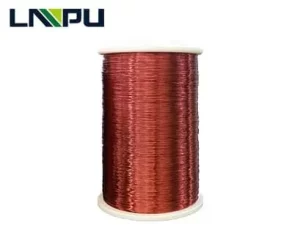
High flexible frequent bending enameled copper wire refers to enameled copper wire products that have undergone special annealing treatment on the conductor and flexible formulation design on the insulation layer, possessing excellent flexibility, bending resistance, and bending fatigue resistance.
Compared with conventional enameled wire, high flexible frequent bending enameled copper wire has higher conductor elongation and more flexible insulation layer, capable of maintaining insulation layer integrity under continuous bending, vibration, or reciprocating motion conditions without cracking or peeling.
2.2 Differences from Conventional Enameled Wire
| Comparison Items | High Flexible Frequent Bending Enameled Copper Wire | Conventional Enameled Copper Wire |
|---|---|---|
| Conductor Elongation | ≥35% | 25% – 35% |
| Insulation Layer Flexibility | Excellent | Average |
| Bending Fatigue Resistance | Can withstand hundreds of thousands of bending cycles | Typically thousands to tens of thousands of cycles |
| Applicable Conditions | Vibration/bending/reciprocating motion | Stationary or low-speed motion |
| Typical Applications | Robot joints, automation equipment | Fixed installation motors |
2.3 Technical Approaches to Achieve High Flexibility
- Conductor Optimization: Using high-purity oxygen-free copper conductor, through special annealing process control, to obtain fine grain structure and uniform mechanical properties, preventing crack formation in the conductor during bending.
- Insulation Layer Formulation: Using flexible modified insulation varnish formulation to increase the toughness and elasticity of the insulation layer, reducing stress concentration during bending.
- Coating Process Control: Optimizing the baking temperature curve to ensure the insulation layer does not over-cure during the curing process, maintaining a certain degree of flexibility.
III. Core Technical Characteristics and Parameter Requirements
3.1 Core Technical Characteristics
- High Ductility: Conductor elongation can typically reach over 35%, far higher than the 25% – 35% level of conventional enameled wire, allowing the conductor to withstand greater bending deformation without breaking.
- Excellent Flexibility: The insulation layer has excellent flexibility, maintaining insulation layer integrity even at small bending radii without cracking or peeling.
- Superior Bending Fatigue Resistance: Verified through dedicated bending fatigue tests, high flexible enameled wire can withstand over 100,000 repeated bending cycles, far exceeding the thousands to tens of thousands of cycles of conventional products.
- Compatibility with Stranded Conductors: High flexible enameled copper wire can be used with multi-strand fine copper wire stranded structures to further improve flexibility and bending resistance.
3.2 Key Parameter Requirements
| Parameter | Requirements | Description |
|---|---|---|
| Conductor Elongation | ≥35% | Ensure high flexibility |
| Conductor Tensile Elongation | ≥35% | After annealing treatment |
| Bending Cycles | ≥100,000 cycles | Tested under specific conditions |
| Insulation Layer Adhesion | Excellent | No coating peeling after bending |
| Bending Radius | ≥3 times wire diameter | Minimum bendable radius |
3.3 Common Specification Ranges
| Conductor Structure | Diameter Range | Applicable Scenarios |
|---|---|---|
| Single solid conductor | 0.10 mm – 0.50 mm | Light bending applications |
| 7-strand stranded conductor | 0.20 mm – 0.80 mm | Moderate bending applications |
| Multi-strand fine wire stranding | 0.30 mm – 1.00 mm | Severe bending applications |
IV. Main Working Scene Applications
4.1 Industrial Robot Field
Robot Joint Motors: Motor windings at robot joints need to withstand frequent reciprocating motion in confined spaces. High flexible enameled copper wire can endure continuous bending and torsional stress from joint movements, ensuring stable operation of the winding throughout the robot’s working cycle.
Collaborative Robots: Collaborative robots (cobots) designed for human-robot cooperation require frequent start-stop and direction changes, demanding higher flexibility from the windings.
Welding Robots: Motors and cables in welding torch areas work in high-temperature, high-vibration environments. High flexible frequent bending enameled wire can maintain reliable performance under such harsh conditions.
4.2 Automated Production Equipment
Automated Guided Vehicles (AGV/AMR): AGVs and AMRs travel on complex paths, with motors and drive systems subjected to continuous vibration and multidirectional bending. High flexible enameled wire is a key material ensuring their reliable operation.
Automated Production Lines: Various reciprocating motion components, vibrating feeders, and pneumatic actuators in automation equipment all require motors wound with high flexible enameled copper wire.
CNC Machine Tools: Although spindle motors and feed motors primarily have rotational motion, frequent start-stop and load changes also place high demands on winding reliability.
4.3 Medical Equipment Field
Surgical Robots: High-end medical equipment such as da Vinci surgical robots require extremely high motion precision and reliability. Joint motor windings must withstand millions of precise motions.
Rehabilitation Medical Equipment: Motors in exoskeleton robots and walking assistance robots need to work stably under frequent human-machine interaction.
Diagnostic Equipment: CT machine rotating frames, MRI equipment cooling systems, and similar applications also require highly reliable windings.
4.4 Aerospace and Defense
Aircraft Electromechanical Systems: Various actuators and regulator motors in aircraft and helicopters need to work reliably in vibration and high-altitude low-temperature environments.
Satellite Deployment Mechanisms: Satellite solar wing deployment mechanisms and antenna pointing mechanisms are one-time-use precision devices with extremely stringent requirements for winding reliability.
Unmanned Aerial Vehicle Systems: Rotor motors and landing gear retraction mechanisms in UAVs all require lightweight, highly reliable high-flexibility windings.
4.5 New Energy Equipment
New Energy Vehicles: Although drive motors in new energy vehicles are primarily for rotational motion, vehicle vibration and road bump-induced bending stress cannot be ignored.
Charging Equipment: Cables and connectors inside charging guns need to withstand frequent bending in daily use. High flexible enameled wire is an important material for improving charging equipment reliability.
Wind Power Equipment: Motors in pitch systems and yaw systems of wind turbine generators need to operate stably for long periods in harsh outdoor environments.
4.6 Other Application Fields
Elevator Traction Systems: Although elevator motors are installed in fixed positions, start-stop load impacts still require reliable winding design.
Stage Machinery: Stage lighting suspension systems and lifting stages require frequent speed changes and positioning during performances.
Port Lifting Equipment: Various motion mechanisms in port cranes are subjected to both heavy loads and vibration.
V. Selection Guide
5.1 Selection Based on Bending Conditions
| Bending Conditions | Recommended Product Type | Bending Cycle Requirements |
|---|---|---|
| Light bending (occasional bending) | Conventional flexible enameled wire | ≥30,000 cycles |
| Moderate bending (frequent bending) | High flexible enameled wire | ≥100,000 cycles |
| Severe bending (continuous reciprocating motion) | Ultra-high flexible enameled wire | ≥500,000 cycles |
| Extreme conditions | Special custom products | ≥1,000,000 cycles |
5.2 Selection Based on Conductor Structure
| Conductor Structure | Flexibility | Applicable Scenarios |
|---|---|---|
| Single solid conductor | Medium | Larger bending radius, lower frequency |
| 7-strand stranded conductor | High | Moderate bending conditions |
| Multi-strand fine wire stranding | Very high | Extreme bending conditions, such as robot joints |
5.3 Selection Based on Thermal Class
- Class B (130°C): Suitable for ordinary industrial environments.
- Class F (155°C): Suitable for conditions with higher temperature rise.
- Class H (180°C): Suitable for high-temperature environments or high power density designs.
VI. Conclusion
High flexible frequent bending enameled copper wire, as a type of high-end special magnetic wire product, plays an irreplaceable role in modern industrial automation, intelligent manufacturing, medical health, and new energy fields.
Through special conductor annealing processes and flexible insulation layer formulations, high flexible enameled copper wire can achieve ≥100,000 cycles of bending fatigue resistance, a qualitative leap compared to the thousands to tens of thousands of cycles of conventional enameled wire, effectively ensuring the reliability and service life of motor windings under frequent bending conditions.
With the increasing pursuit of high reliability and long service life in equipment, the market demand for high flexible frequent bending enameled copper wire will continue to grow. Upstream manufacturers should continuously optimize materials and processes to provide more reliable and durable product solutions for various demanding applications.
Zhengzhou LP Industry Co., Ltd. is a professional manufacturer specializing in the R&D, production, and sales of magnetic wire for over 30 years. We offer a full range of high flexible frequent bending enameled copper wire products, with bending resistance exceeding 100,000 cycles and conductor elongation exceeding 35%, widely used in industrial robots, automation equipment, medical devices, aerospace, new energy, and other fields.
Our factory is certified by ISO9001/ISO14001/ISO45001, and our products comply with IEC/GB/JIS/NEMA international standards, and have been exported to over 50 countries and regions worldwide.
Contact us for a professional quote:
Email: office@cnlpzz.com | WhatsApp: 0086-19337889070