

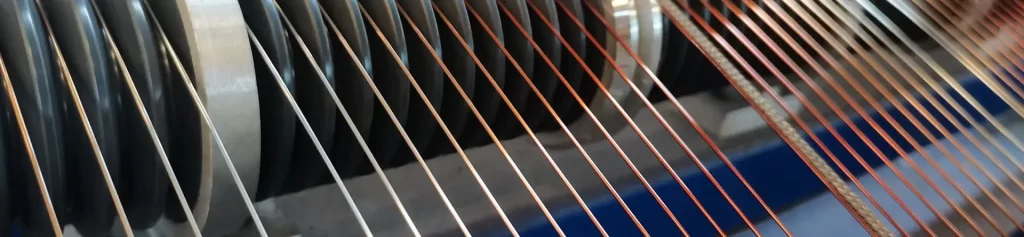
IntroductionHigh conductivity oxygen-free enameled copper wire is a high-end product category in the enameled wire industry, specifically designed for applications with stringent electrical performance requirements.
Oxygen-free copper has an extremely low oxygen content, and its copper purity typically exceeds 99.99%, giving it excellent conductivity and machinability.
In enameled wire manufacturing, the conductor&39;s conductivity directly determines the coil&39;s copper loss and energy efficiency.
High conductivity oxygen-free enameled copper wire, with its superior purity and microstructure, plays an irreplaceable role in high-end fields such as precision electronics, medical equipment, communication base stations, and aerospace.
This article will systematically describe the technical characteristics, manufacturing process, typical applications, and selection points of high conductivity oxygen-free enameled copper wire, providing professional reference for high-end electrical equipment design engineers and purchasing decision-makers.
Chapter 1Basic Characteristics of Oxygen-Free Copper Definition and Standards of Oxygen-Free Copper Oxygen-free copper refers to pure copper material with extremely low oxygen content, adhering to strict technical standards: Oxygen content is the key distinguishing indicator between oxygen-free copper and ordinary copper.
The oxygen content of oxygen-free copper is usually controlled below 10-20 ppm, far lower than the 100-300 ppm level of ordinary copper rods.
In terms of copper purity, high-quality oxygen-free copper has a copper content of not less than 99.99%, with extremely low impurity element content.
Representative grades of oxygen-free copper include OFE (Oxygen-Free Electronic, for electronic grade) and OFHC (Oxygen-Free High Conductivity, high-conductivity oxygen-free copper), etc.
High Conductivity High conductivity is the most prominent technical advantage of oxygen-free copper: The conductivity of oxygen-free copper can reach over 101% IACS (International Annealed Copper Standard), far exceeding the 100% IACS benchmark of ordinary electrolytic copper.
The impurity content has a very significant impact on conductivity.
Even trace amounts of elements such as iron, phosphorus, and arsenic can significantly reduce the conductivity of copper.
Oxygen-free copper achieves optimized conductivity through strict impurity control.
In enameled wire applications, high conductivity means lower resistance, less copper loss, and higher energy efficiency.
Excellent Machining Performance Oxygen-free copper also possesses excellent machinability: Excellent ductility.
Oxygen-free copper has a uniform grain structure, free of oxide inclusions, and can withstand significant cold working deformation without cracking.
Good surface quality.
Oxygen-free copper has a high surface finish and minimal oxide film, which is beneficial for uniform adhesion of enamel coatings and stable insulation performance.
Stable wire drawing performance.
Oxygen-free copper has a low breakage rate and good dimensional consistency during fine wire drawing, which helps improve the yield and quality stability of enameled wire.
Chapter 2Comparison of Oxygen-Free Copper and Ordinary Copper Differences in Composition and Purity Oxygen-free copper and ordinary copper differ fundamentally in composition: Ordinary copper rods are typically smelted using pyrometallurgical or electrolytic processes, resulting in a relatively high oxygen content and a certain amount of oxide inclusions.
Oxygen-free copper is smelted using vacuum melting or protective atmosphere melting, resulting in an extremely low oxygen content, with impurities strictly controlled to extremely low levels.
This difference in composition directly determines the gap in electrical conductivity and mechanical properties between the two.
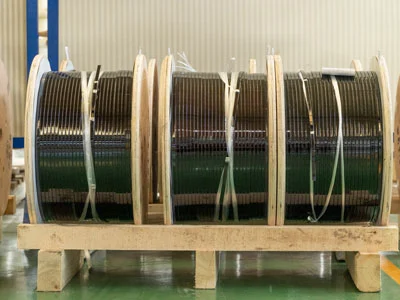
Comparison of Electrical Conductivity Electrical conductivity is the most significant advantage of oxygen-free copper over ordinary copper: Under standard conditions at 20°C, the conductivity of oxygen-free copper can reach 101-102% IACS, while ordinary copper is typically 100% IACS or slightly lower.
Although a 2% difference may seem small, in high-current or long-distance transmission applications, this difference accumulates to bring considerable energy efficiency improvements.
Microstructure Comparison The microstructures of oxygen-free copper and ordinary copper differ significantly: Ordinary copper has a relatively coarse grain structure with numerous grain boundaries and oxide inclusions.
Oxygen-free copper has fine and uniform grains, with numerous but clean grain boundaries, which is beneficial for obtaining excellent overall performance.
Chapter 3Manufacturing Process of High-Conductivity Oxygen-Free Wire Raw Material Selection The manufacturing of high-conductivity oxygen-free wire begins with the selection of high-purity oxygen-free copper rods: OFE or OFHC grade oxygen-free copper ingots are preferred, with a copper purity of not less than 99.99%.
Strict incoming material inspection ensures that the oxygen content, impurity element content, mechanical properties, and other indicators meet the standard requirements.
Wire Drawing Process Oxygen-free copper rods need to undergo multiple wire drawing processes to become the fine conductors used in wire drawing: The rough drawing process draws the copper ingot into copper rods of appropriate thickness.
The intermediate drawing process continues to reduce the diameter to near the finished product.
The fine drawing process draws the copper rod to the final required wire diameter, typically below 0.1mm.
Enameling Process Enameling is the core process in the manufacturing of oxygen-free enameled copper wire: After cleaning and surface pretreatment, the bare copper conductor enters the enameling machine for insulation coating.
The high cleanliness of the oxygen-free copper surface facilitates the uniform adhesion of the insulating varnish, forming a continuous and complete enamel coating.
The enamel coating is cured in a high-temperature oven, ensuring the adhesion and electrical properties of the insulation layer. —
Chapter 4Typical Application Areas Precision Electronic Instruments High-conductivity oxygen-free enameled copper wire has irreplaceable advantages in the field of precision electronics: In precision measuring instruments, even small changes in coil resistance can affect measurement accuracy.
High-conductivity oxygen-free wire ensures minimal resistance deviation.
In high-end speaker crossover networks in audio equipment, oxygen-free wire reduces signal transmission loss and improves sound quality.
Medical Electronic Equipment Medical equipment has stringent requirements for reliability and performance: High-end sensor coils in medical imaging equipment such as MRI and CT scanners use oxygen-free wire to achieve optimal signal transmission performance.
Precision coils in implantable medical devices also rely on the high conductivity and stability of oxygen-free wire.
Communication Infrastructure Modern communication equipment has increasingly higher requirements for energy efficiency and stability: In the power amplifiers and filter modules of 5G base stations, high-frequency coils require low-loss conductor materials.
Precision inductors in fiber optic communication equipment also use oxygen-free wire to optimize performance.
Aerospace Aerospace applications have extremely high requirements for material performance: Precision coils in satellite and spacecraft electronic equipment use oxygen-free wire to ensure stable performance even in extreme environments.
Aerospace electronic equipment also requires highly reliable oxygen-free wire. —
Chapter 5Selection Guide Selection Based on Conductivity Requirements: Select the appropriate wire based on the application&39;s conductivity requirements.
For precision applications with extremely high conductivity requirements, high-conductivity oxygen-free wire is the best choice.
For general industrial applications, ordinary wire is usually sufficient, eliminating the need for additional oxygen-free copper.
Selection Based on Wire Diameter: Oxygen-free wire is available in various diameters: Fine wires (below 0.1mm) are commonly used in precision coils.
Medium wires (0.1-0.5mm) are suitable for general electronic equipment.
Coarse wires (above 0.5mm) can be used in power electronics.
Selection Based on Insulation Type: Select the insulation type based on operating temperature and environmental resistance requirements.
Polyester insulation is suitable for general applications below 130°C.
Polyimide insulation is suitable for harsher conditions below 180°C.
Polyimide insulation is suitable for high-temperature environments above 200°C. —
ConclusionHigh-conductivity oxygen-free enameled copper wire, with its superior conductivity, excellent machinability, and stable product quality, has become an ideal choice for high-end applications such as precision electronics, medical equipment, communication base stations, and aerospace.
Although oxygen-free copper is more expensive than ordinary copper, its advantages in conductivity and product reliability provide high-end equipment with a longer service life and more stable performance.
In applications with stringent electrical performance requirements, the selection of high-conductivity oxygen-free enameled copper wire is a worthwhile investment.