

Power generation systems are the power source of modern industrial society. From traditional thermal, hydro, to emerging wind and solar power, generators as the core equipment for electrical energy conversion, the performance of their internal insulation materials directly relates to the safety, reliability, and service life of the power generation system.
Fiberglass covered wire, with its excellent high temperature resistance, flame retardant properties, and mechanical strength, plays an increasingly important role in power generation system winding insulation. Particularly in large generators, wind turbines, and special power generation equipment, fiberglass covered wire has become a key insulation material meeting stringent operating environment requirements.
This article systematically analyzes the application technology of fiberglass covered wire in power generation systems from five dimensions: insulation requirements of power generation systems, technical characteristics of fiberglass covered wire, applications in different types of power generation systems, selection specifications, and quality control, providing a practical technical guide for power generation equipment engineers and procurement decision-makers.
I. Insulation Requirements of Power Generation Systems
1.1 High Temperature Environment
Generators produce significant heat during operation, mainly including:
Copper Losses (I²R Losses): Resistance losses when current passes through winding conductors, converted to heat.
Iron Losses: Hysteresis losses and eddy current losses in the iron core, also an important heat source.
Mechanical Losses: Heat generated by bearing friction, windage, etc.
In large generators, winding temperatures can reach 120-150°C, with local hot spots possibly exceeding 180°C. Ordinary insulation materials accelerate aging under prolonged high temperatures, leading to decreased insulation performance. Therefore, power generation system windings require insulation materials with higher thermal classes.
1.2 Electrical Stress
Generator windings must withstand electrical stress from high voltages and high-frequency pulse voltages:
Operating Voltage: Large generators typically operate at 6.6-24kV.
Transient Overvoltage: Switching operations, lightning strikes, etc. may produce transient overvoltages, requiring insulation materials with sufficient breakdown strength.
Partial Discharge: In high-voltage windings, partial discharge is one of the main causes of insulation aging, requiring insulation materials with good partial discharge resistance.
1.3 Mechanical Stress
During generator operation, windings must withstand various mechanical stresses:
Electromagnetic Forces: Electromagnetic forces generated by high currents cause winding vibration and deformation.
Thermal Expansion Forces: Thermal expansion and contraction due to temperature changes generate mechanical stress.
Centrifugal Forces: High-speed rotating rotor windings enormous centrifugal forces.
Therefore, winding insulation materials must have sufficient mechanical strength to resist vibration, impact, and deformation.
1.4 Environmental Factors
Different types of power generation systems face different environmental challenges:
Humid Environments: Hydro generators and offshore wind turbines face high humidity and salt spray corrosion.
Chemical Corrosion: Chemical gases in certain industrial environments may erode insulation materials.
UV Radiation: Outdoor-installed power generation equipment face UV aging.
II. Technical Characteristics of Fiberglass Covered Wire
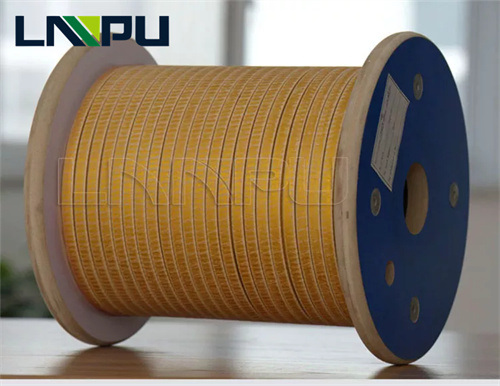
Fiberglass covered wire is an insulated conductor with copper or aluminum wire as the conductor, an outer layer of fiberglass braiding, and varnish impregnation treatment. Based on the insulation system, it can be divided into pure fiberglass covered wire and fiberglass + resin composite insulation types.
2.1 High Temperature Resistance
The thermal class of fiberglass covered wire is typically Class H (180°C) or Class C (>220°C), meeting the high temperature operating requirements of power generation system windings.
Fiberglass itself is an inorganic material with a melting point exceeding 1000°C, and does not soften or melt at high temperatures. Compared to organic insulation materials, fiberglass covered wire has better dimensional stability at high temperatures and is less prone to thermal deformation.
2.2 Flame Retardancy
Fiberglass is a naturally flame-retardant material that does not burn and does not produce toxic smoke. This characteristic is crucial for the safety of power generation systems, particularly in enclosed spaces or underground power stations, where flame retardant properties can effectively reduce fire risk.
2.3 Arc Resistance
Fiberglass has good arc resistance and can maintain structural integrity under arc action. When a generator experiences a short circuit fault, windings may produce arcs, and fiberglass covered wire can delay fault spread, buying time for protective device operation.
2.4 Mechanical Strength
The fiberglass braiding layer provides excellent mechanical protection for the conductor:
- Tensile Strength: The fiberglass braiding layer can withstand significant tensile force, preventing winding deformation under electromagnetic forces.
- Abrasion Resistance: The fiberglass braiding layer has good abrasion resistance, resisting friction generated by winding vibration.
- Impact Resistance: The fiberglass braiding layer can absorb a certain amount of impact energy, protecting the conductor from damage.
2.5 Chemical Resistance
Fiberglass has good corrosion resistance to most chemical substances, able to resist erosion from acids, alkalis, solvents, and other chemical media. This characteristic makes fiberglass covered wire suitable for power generation equipment in harsh environments such as chemical plants and offshore platforms.
| Performance Indicator | Fiberglass Covered Wire | Ordinary Polyester Enameled Wire | Advantage Description |
|---|---|---|---|
| Thermal Class | Class H (180°C) | Class B (130°C) | Heat resistance 50°C+ higher |
| Flame Retardancy | Non-flammable | Flammable (requires flame retardant additives) | Inherently flame retardant, safer |
| Arc Resistance | Excellent | Average | Strong arc resistance |
| Mechanical Strength | High (braiding protection) | Moderate | Resistant to vibration and impact |
| Chemical Resistance | Excellent | Average | Resistant to acid/alkali corrosion |
III. Applications in Different Types of Power Generation Systems
3.1 Wind Power Generation Systems
Wind turbines are an important application area for fiberglass covered wire. Wind turbines are typically installed at high altitudes or offshore, with harsh operating environments and extremely high reliability requirements for insulation materials.
Application Locations:
- Stator windings
- Rotor windings (doubly-fed generators)
- Converter connection cables
Technical Requirements:
- Thermal class Class H or above
- UV resistance (outdoor applications)
- Salt spray corrosion resistance (offshore wind)
- Good flexibility (adapting to turbine vibration)
Industry Trends:
With the continuous growth of wind power installed capacity, particularly the rapid development of offshore wind, demand for fiberglass covered wire continues to increase. The winding insulation systems of large wind turbines (5MW and above) are increasingly fiberglass covered wire combined with other insulation materials in composite structures to meet higher reliability requirements.
3.2 Hydro Power Generation Systems
Hydro generators are typically installed in humid environments, with high requirements for insulation material moisture resistance. Fiberglass covered wire, after varnish impregnation treatment, has good moisture resistance and can operate reliably in hydro generators.
Application Locations:
- Stator windings
- Excitation windings
- Auxiliary motor windings
Technical Requirements:
- Good moisture resistance
- Water pressure resistance
- Good thermal conductivity (beneficial for heat dissipation)
3.3 Thermal Power Generation Systems
Steam turbine generators are the core equipment of thermal power plants, with high power, high speed, and high temperatures, placing extremely strict requirements on the comprehensive performance of insulation materials.
Application Locations:
- Stator windings (large steam turbine generators)
- Rotor windings
- Exciter windings
- Auxiliary motor windings
Technical Requirements:
- Thermal class Class H or above
- High breakdown strength (withstanding high voltage)
- Good thermal conductivity (high heat dissipation requirements)
- Electromagnetic force resistance (withstanding electromagnetic forces from high currents)
3.4 Gas Power Generation Systems
Gas turbine generators operate at high temperatures and start frequently, with high requirements for the thermal shock performance of insulation materials. Fiberglass covered wire can withstand frequent temperature changes without easily cracking due to thermal shock.
3.5 Special Power Generation Systems
Diesel Generators: Commonly used as backup power and emergency power, the flame retardant properties of fiberglass covered wire make it a preferred insulation material for diesel generator windings.
Nuclear Power Generators: Have special requirements for the radiation resistance of insulation materials; fiberglass covered wire can meet nuclear power application requirements after special treatment.
Marine Power Generation Systems: Face challenges including high humidity, salt spray corrosion, and vibration; the chemical resistance and mechanical strength of fiberglass covered wire make it an ideal choice for marine generators.
IV. Selection Specifications
4.1 Conductor Selection
Copper Conductor: High conductivity (100% IACS), large current-carrying capacity, is the mainstream choice for power generation system windings.
Aluminum Conductor: Lightweight, low cost, suitable for weight-sensitive or cost-sensitive applications, but requires larger cross-sectional area to achieve the same current-carrying capacity.
4.2 Insulation Class
Select the insulation class based on the maximum operating temperature of the power generation system:
- Class H (180°C): Suitable for most wind turbines, hydro generators, and small/medium steam turbine generators
- Class C (>220°C): Suitable for large steam turbine generators, gas turbine generators, and special generators in high-temperature environments
4.3 Insulation Structure
Fiberglass covered wire insulation structures mainly come in two types:
Pure Fiberglass Braiding: Relying solely on the fiberglass braiding layer for insulation protection, suitable for low voltage, low temperature applications.
Fiberglass + Varnish Composite Insulation: The fiberglass braiding layer is impregnated with resin (such as silicone resin, epoxy resin, etc.), forming a dense composite insulation layer with higher breakdown strength and better moisture resistance, suitable for high voltage, high temperature applications.
4.4 Specification Selection
Select the conductor cross-sectional area based on the rated current and allowable voltage drop of the power generation system. Large generator windings typically use flat wire to improve space utilization and heat dissipation.
4.5 Certification Requirements
Fiberglass covered wire for power generation systems should meet relevant certification requirements, such as UL, IEC, IEEE, NEMA, and other standards. For export products, specific regulatory requirements of the target market must also be met.
V. Quality Control Key Points
5.1 Raw Material Inspection
Fiberglass Yarn: Inspect linear density, breaking strength, moisture content, and other indicators.
Conductor Material: Inspect conductivity, dimensional precision, surface quality.
Impregnation Resin: Inspect viscosity, solid content, curing characteristics.
5.2 Production Process Control
Braiding Quality: Check braiding density, uniformity, no broken threads.
Varnish Impregnation Process: Control impregnation temperature, time, vacuum degree to ensure full resin penetration.
Curing Process: Control curing temperature curve to ensure complete resin curing.
5.3 Factory Inspection
Finished fiberglass covered wire must undergo comprehensive performance testing before leaving the factory:
- Conductor Resistivity: Confirm conductivity meets requirements
- Breakdown Voltage: Test insulation strength, typically requiring ≥1000V
- Heat Resistance: Thermal aging test confirms thermal class
- Mechanical Strength: Tensile test confirms braiding layer strength
- Moisture Resistance: Moisture absorption test confirms moisture resistance capability
Conclusion
With its excellent high temperature resistance, flame retardancy, arc resistance, and mechanical strength properties, fiberglass covered wire has become an important material for power generation system winding insulation. In wind power, hydro power, thermal power, and special power generation systems, fiberglass covered wire can meet the comprehensive requirements of insulation materials under stringent operating environments.
When selecting fiberglass covered wire, the appropriate conductor material, insulation class, and insulation structure should be chosen based on the specific operating conditions of the power generation system (temperature, voltage, environment, etc.), and ensure that the product meets relevant certification requirements. Through scientific selection and strict quality control, fiberglass covered wire can provide strong for the safe, reliable, and long-term operation of power generation systems.