

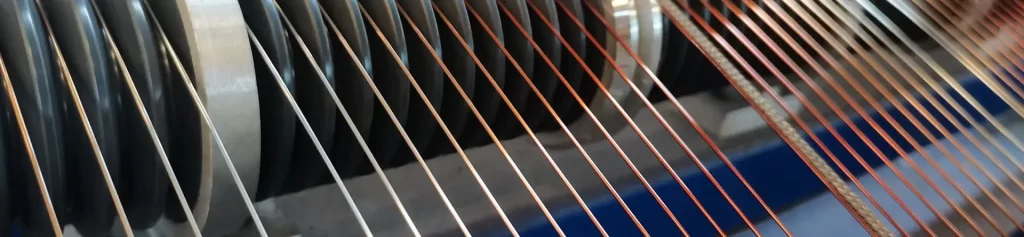
I. Introduction: Glass fiber covered wire – the “high temperature armor” of welding machine windings
Welding is one of the core processes of modern industrial manufacturing. From automobile manufacturing and shipbuilding to bridge engineering and pressure vessels, welding quality directly affects the structural strength and safety of the product. Welding machine (welding power source)is the core equipment of the welding system, and the working environment of its internal windings is extremely harsh -continuous high temperature, frequent thermal cycles, strong magnetic field, and high current impact.
Fiberglass Covered Wire (FCW)is thepreferred winding materialfor welding machine transformers and reactors. With its excellent high temperature resistance (155-260°C), mechanical strength and electrical insulation properties, it has become an indispensable key material in the welding machine manufacturing industry.
1.1 Core requirements of welding machines for winding wires
| Performance | Requirements | Reasons |
|---|---|---|
| High temperature resistance | 155-260°C | The welding machine continues to operate at high temperatures |
| Thermal shock resistance | -40 to 180°C | Frequent start and stop |
| Mechanical Strength | Tensile, bending, and wear resistance | Winding tension, vibration |
| Electrical Insulation | High BDV, flame retardant | Strong electric field, high safety requirements |
| Chemical Resistant | Oil and flux resistant | Industrial environment |
| Heat dissipation | Good | High power density |
1.2 Common wire types for welding machine windings
| Type | Temperature Class | Breakdown Voltage | Features |
|---|---|---|---|
| Enameled Wire (PEW) | 130-200°C | 4-12 kV | High slot full rate, low price |
| Fiberglass covered wire (FCW) | 155-260°C | 5-15 kV | High temperature resistance, flame retardant, impact resistance |
| Mica wrapped wire | 200-500°C | 6-20 kV | Extremely high temperature resistance |
| Ceramic covered wire | 500-1000°C | > 20 kV | Ultra-high temperature scenarios |
| Nomex paper covered wire | 220°C | 12-16 kV | High temperature resistance, high BDV |
1.3 The core value of glass fiber covered wire
- ✅High temperature resistance: 155-260°C full temperature grade
- ✅ High mechanical strength: tensile, bending and wear resistance
- ✅ Excellent electrical insulation: BDV 5-15 kV
- ✅ Flame Retardant: Natural flame retardant material
- ✅ Chemical Stability: Oil-resistant, flux-resistant, acid-alkali resistant
- ✅ Thermal Stability: Low thermal expansion coefficient
- ✅ Good heat dissipation: Porous structure facilitates heat dissipation
- ✅ Long service life: > 20 years design life
II. Core types and working principles of welding machines
2.1 5 major types of welding machines
| Type | Power supply type | Operating frequency | Typical applications |
|---|---|---|---|
| Arc welding transformer (AC) | Power frequency 50/60 Hz | 50/60 Hz | Manual arc welding |
| Rectifier welding machine (DC) | Power frequency + rectifier | 50/60 Hz | DC arc welding |
| Inverter welding machine (high frequency) | High frequency inverter | 20-100 kHz | Precision welding |
| TIG welding machine (argon arc welding) | High frequency pulse | 50/60 Hz+ pulse | Stainless steel, aluminum welding |
| MIG/MAG welding machine (melting pole) | Constant voltage/constant current | 50/60 Hz | Semi-automatic welding |
2.2 The core role of welding machine transformers and reactors
There are two core magnetic components inside the welding machine:
1. Main Transformer (Power Transformer)- Convert grid voltage (220V/380V) to welding voltage (20-80V)
– Voltage reduction, high current (hundreds of amps)
– Usually power frequency or medium frequency2. Reactor/Choke- Adjust welding current
– Smooth current waveform
– Energy storage components
2.3 Working environment challenges of welding machines
Welding machine windings face4 severe challenges:
| Challenges | Impact | Solutions |
|---|---|---|
| Continuous High Temperature | 80-180°C Continuous Operation | Fiberglass Grade H/C |
| Frequent Thermal Cycling | Temperature difference 100°C cycling | Thermal shock resistant fiberglass |
| Strong magnetic field vibration | Conductor vibration under force | Glass fiber has high mechanical strength |
| Flux contamination | Chemical corrosion | Glass fiber chemical stabilization |
III. Detailed explanation of glass fiber covered wire
3.1 Core structure of glass fiber covered wire
Glass fiber covered wire is composed of conductor + paint film + glass fiber , and its structure is as follows:
        ┌──────────────────┐
        │ Fiberglass braid │ ← 1-3 layers
        │ ┌─────────────┐ │
        │ │ ┌───────┐ │ │
        │ │ │ │ │ │
        │ │ │ │ │ │
        │ │ └───────┘ │ │
        │ └─────────────┘ │
        └──────────────────┘
3.2 5 major types of fiberglass covered wires
| Type | Insulation Construction | Temperature Rating | Breakdown Voltage | Features |
|---|---|---|---|---|
| Single layer fiberglass cladding | Fiberglass + insulating paint | 155°C | 5-7 kV | Economical |
| Double-layer fiberglass cladding | Double-layer fiberglass + insulating paint | 180°C | 8-12 kV | Universal type |
| Three layers of fiberglass cladding | Three layers of fiberglass + insulating paint | 220°C | 10-15 kV | High strength |
| Glass fiber + mica composite | Glass fiber + mica + insulating paint | 260°C | 12-18 kV | Extremely high temperature resistance |
| Glass fiber + ceramic coating | Glass fiber + ceramic | 300-500°C | > 15 kV | Ultra high temperature |
3.3 Production process of glass fiber covered wire
Copper/aluminum wire → Paint film coating → Baking → Fiberglass braiding → Impregnated with insulating paint → Baking → Finished product
Key process parameters:
– Braiding angle: 30-60°
– Knitting overlap rate: 30-50%
– Impregnating paint: polyester, polyesterimide, silicone
– Number of dips: 1-3 times
– Baking temperature: 150-200°C
3.4 Breakdown voltage of glass fiber covered wire
| Type | Breakdown voltage (kV) | Dielectric strength (kV/mm) |
|---|---|---|
| Single layer fiberglass | 5-7 | 4-6 |
| Double layer fiberglass | 8-12 | 5-8 |
| Triple-layer fiberglass | 10-15 | 6-9 |
| Glass fiber + mica | 12-18 | 8-12 |
| Glass fiber + ceramic | > 15 | > 10 |
Core advantages: Glass fiber + multi-layer structure significantly improves BDV, three layers can reach 15 kV.
3.5 Temperature Class of Glass Fiber Covered Wire
| Temperature class | Paint material | Fiberglass braid | Impregnating paint |
|---|---|---|---|
| 130°C (B) | PE | Single layer | Modified polyester |
| 155°C (F) | Modified PE | Single/double layer | Modified polyester |
| 180°C (H) | PEI | Double layer | Polyesterimide |
| 200°C (R) | PAI | Double/Triple Layer | Polyesterimide |
| 220°C (N) | PAI | Three layers | Silicone |
| 240°C | PI | Three layers | Silicone |
| 260°C | PI | Three layers + mica | Silicone |
3.6 Advantages and Disadvantages of Glass Fiber Covered Wire
Advantages:
– ✅ High temperature resistance: up to 260°C
– ✅ High mechanical strength: tensile, bending and wear resistance
– ✅ Flame Retardant: Natural flame retardant material
– ✅ Chemically Stable: Oil and flux resistant
– ✅ Good heat dissipation: porous structure
– ✅ Thermal Stable: Low thermal expansion
– ✅ Excellent electrical insulation: BDV high
– ✅ Long service life: > 20 years
Disadvantages:
– ❌ Larger diameter (occupies space)
– ❌ The slot full rate is low (60-70%)
– ❌ Complex process (braiding + impregnation)
– ❌ Not suitable for ultra-high speed winding
IV. Application of glass fiber covered wire in arc welding transformer
4.1 Working principle of arc welding transformer
The arc welding transformer is the core component of the power frequency AC welding machine, which converts the high voltage of the power grid (220V/380V) into the low voltage of welding (20-80V).
Core Parameters:
– Input voltage: 220V/380V/440V
– Output voltage: 20-80V (no load)
– Welding current: 100-500 A
– Operating frequency: 50/60 Hz
– Duty cycle: 60-80%
4.2 Requirements for arc welding transformer winding wires
| Performance | Requirements |
|---|---|
| Temperature resistance | 155-180°C |
| Breakdown voltage | > 5 kV |
| Mechanical strength | Resistance to short circuit current impact |
| Cooling | Good |
| Lifespan | > 15 years |
4.3 Selection of glass fiber covered wire
| Arc welding transformer | Recommended wire | Reasons |
|---|---|---|
| 100A small welding machine | Single layer fiberglass covered wire 155°C | Low cost and sufficient |
| 200A general purpose welding machine | Double layer fiberglass covered wire 180°C | Comprehensive optimal |
| 315A medium-sized welding machine | Double-layer fiberglass covered wire 180°C | Temperature resistant, impact resistant |
| 500A large welding machine | Three-layer fiberglass covered wire 200°C | Extremely high temperature resistance |
| 1000A heavy duty welding machine | Three layers + mica covered wire 220-260°C | Extremely high temperature resistance |
4.4 Typical winding design of arc welding transformer
100A arc welding transformer winding:
– Primary side: 220V/380V → Enameled wire PEW 0.8-1.2 mm + single layer glass fiber
– Secondary side: 20-30V high current → Enameled wire PEW 2.5-4.0 mm + single layer glass fiber
– Insulation class: Class F (155°C)
– Insulating paint: modified polyester impregnating paint
500A arc welding transformer winding:
– Primary side: 380V → Enameled wire PEW 1.5-2.5 mm + double-layer glass fiber
– Secondary side: 40-60V high current → Enameled wire PEW 4.0-6.0 mm + double-layer glass fiber
– Insulation class: Class H (180°C)
– Insulating paint: polyesterimide impregnating paint
V. Application of glass fiber covered wire in inverter welding machine
5.1 Working principle of inverter welding machine
The inverter welding machine first rectifies the power frequency into DC, then uses IGBT high-frequency inverter (20-100 kHz), and finally rectifies the output. High frequency transformeris the core component.Core Features:
– High frequency: 20-100 kHz
– Miniaturization: 50-70% smaller than power frequency
– High efficiency: 85-95% efficiency
– Precision control: stable current and fast response
5.2 Design Challenges of High Frequency Transformers
| Challenges | Causes | Impact |
|---|---|---|
| Skin effect | High frequency current concentrated on the surface | Increased copper loss |
| Proximity effect | Mutual influence of multi-layer windings | Local overheating |
| Heat dissipation | Small size and high power | Local temperature rise |
| Insulation | High frequency and high voltage | Partial discharge |
5.3 Advantages of glass fiber covered wire in high frequency welding machines
Advantage 1: High temperature resistance- High frequency transformer operating temperature 120-180°C
– Fiberglass Class H/C SuitableAdvantage 2: Anti-high frequency- Glass fiber has stable dielectric constant (4-6)
– Low high frequency lossAdvantage 3: Mechanical Strength- Resistant to high frequency vibration
– Resists thermal cycle fatigueAdvantage 4: Heat dissipation- Porous structure facilitates heat dissipation
– Impregnation paint has good thermal conductivity
5.4 Inverter welding machine high frequency transformer windingTypical 5 kW inverter welding machine high frequency transformer:
- Primary side: 300-600V → Litz line + double-layer glass fiber coating
- Secondary side: 20-50V → Enameled wire PEW + double-layer glass fiber
- Operating frequency: 20-50 kHz
- Insulation class: Class H (180°C)
- Cooling: air cooling + impregnated paint
Typical 20 kW high power inverter welding machine high frequency transformer:
– Primary side: 540V → Litz line + three layers of fiberglass coating
– Secondary side: 30-60V → multiple enameled wires wound + three layers of glass fiber
– Operating frequency: 20 kHz
– Insulation class: Class H / Class R (180-200°C)
– Cooling: water cooling + impregnating paint
VI. Application of glass fiber covered wire in reactors
6.1 The function of welding machine reactor
Reactor is the core component of welding machine to regulate current:
– AC welding machine: Limit short circuit current, smooth current waveform
– Inverter welding machine: as output filter reactor
– TIG welder: Adjust high frequency pulse current
– MIG/MAG welding machines: Stable arc
6.2 Requirements for reactor winding wires
| Performance | Requirements |
|---|---|
| Temperature resistance | 155-200°C |
| Mechanical strength | Extremely high (withstands electric power) |
| Cooling | Good |
| Lifespan | > 15 years |
| Short-circuit current resistance | Extremely high (10 times rated) |
6.3 Reactor winding wire selection
| Reactor | Recommended wires | Reasons |
|---|---|---|
| 100A power frequency reactor | Double-layer glass fiber covered wire | Comprehensive optimization |
| 200A power frequency reactor | Double-layer glass fiber covered wire | Anti-electric power |
| 500A power frequency reactor | Three-layer glass fiber covered wire | Extremely high mechanical strength |
| Inverter welding machine output reactor | Double layer fiberglass + Litz wire | High frequency performance |
| Pulse welding machine reactor | Three-layer glass fiber covered wire | Resistant to pulse shock |
6.4 Typical winding design of reactor
200A welding machine output reactor:
– Winding: Enameled wire PEW 3.0-4.0 mm + double layer fiberglass
– Number of turns: 30-50 turns
– Core: silicon steel sheet
– Insulation class: Class H (180°C)
– Impregnating paint: polyesterimide
500A welding machine output reactor:
– Winding: Enameled wire PEW 5.0-6.0 mm + three layers of fiberglass
– Number of turns: 20-30 turns
– Core: silicon steel sheet
– Insulation class: Class H / Class R (180-200°C)
– Impregnating paint: polyesterimide
VII. Application of glass fiber covered wire in special welding machines
7.1 TIG welding machine (argon arc welding)
TIG welderFeatures:
– High frequency arc ignition (> 1 MHz pulse)
– Welding current: 5-500 A
– Precise control of current waveformWinding selection:
– Main transformer: Double layer fiberglass covered wire Class H
– High-frequency arc ignition transformer: three-layer glass fiber covered wire Class H
– Output reactor: Double-layer glass fiber covered wire Class H
7.2 MIG/MAG welding machine (melting arc welding)
MIG/MAG welding machineFeatures:
– Constant voltage/constant current output
– Welding current: 50-500 A
– Work continuously for long periods of timeWinding selection:
– Main transformer: Double layer fiberglass covered wire Class H
– Output reactor: Double-layer glass fiber covered wire Class H
– Wire feed motor winding: enameled wire PEW + single layer glass fiber
7.3 Submerged Arc Welding
Submerged arc welding machineFeatures:
– High current (500-2000 A)
– Long cables (hundreds of meters)
– Working continuously for long periods of time (several hours)Winding selection:
– Main transformer: Triple-layer fiberglass covered wire Class R (200°C)- Output Reactor:Three-Layer Glass Fiber Covered Wire Class R- Cable: high temperature resistant double layer fiberglass
7.4 Plasma cutting machinePlasma Cutting MachineFeatures:
- High frequency arc ignition (>5 MHz)
- High current (50-300 A)
- High frequency and high voltage (>200V)Winding selection:
- High frequency transformer: Three layers of fiberglass covered wire + mica grade C- Main transformer: Double layer fiberglass covered wire Class H
- Output reactor: Double-layer glass fiber covered wire Class H
7.5 Resistance Spot WeldingSpot Welding MachineFeatures:
- Extremely high current (thousands of amps)
- Short-term high current (< 1 s)
- High mechanical stressWinding selection:
- Main transformer: Double layer fiberglass covered wire Class H
- Secondary winding: Three layers of fiberglass covered wire + copper tape R grade### 7.6 Laser welding machineLaser Welding MachineFeatures:
- Precision control
- Pulse current
- High frequency driver
Winding selection:
– High frequency transformer: Double layer fiberglass covered wire Class H
– Drive circuit: enameled wire PEW + single layer glass fiber
VIII. Comparison of glass fiber covered wire vs other winding wires
8.1 Comparison of welding machine winding wires
| Performance | Enameled wire | Glass fiber covered wire | Mica covered wire | Ceramic covered wire |
|---|---|---|---|---|
| Temperature resistance | 130-220°C | 155-260°C | 200-500°C | 500-1000°C |
| Breakdown voltage | 5-12 kV | 5-15 kV | 6-20 kV | > 20 kV |
| Mechanical Strength | Medium | High | High | Medium |
| Flame retardant | Poor | Excellent | Excellent | Excellent |
| Cost | Low | Medium | High | Very High |
| Craft | Simple | Medium | Complex | Extremely complex |
| Cooling | Medium | Good | Medium | Poor |
| Lifespan | 5-15 years | 15-25 years | 20-30 years | > 30 years |
8.2 8 High Performance Radar Chart
| Properties | Enameled Wire (PEW) | Fiberglass Covered Wire (FCW) | Mica Covered Wire |
|---|---|---|---|
| Temperature resistant | ★★★ | ★★★★★ | ★★★★★ |
| Breakdown voltage | ★★★★ | ★★★★ | ★★★★ |
| Mechanical Strength | ★★ | ★★★★★ | ★★★★ |
| Flame retardant | ★★ | ★★★★★ | ★★★★★ |
| Cooling | ★★★ | ★★★★ | ★★★ |
| Cost | ★★★★★ | ★★★ | ★★ |
| Lifespan | ★★★ | ★★★★★ | ★★★★★ |
8.3 Selection decision
| Welding machine type | Recommended wire | Temperature grade |
|---|---|---|
| Small welding machine (< 200A) | Enameled wire + single layer fiberglass | Class F |
| General purpose welding machine (200-500A) | Glass fiber covered wire Class H | Class H |
| Large Welding Machine (500-1000A) | Glass Fiber Covered Wire Grade R | Grade R |
| Special welding machine (submerged arc/plasma) | Glass fiber + mica composite | R/C grade |
| Extreme high temperature welding machine | Glass fiber + ceramic composite | Class C and above |
IX. Key tests of glass fiber covered wire
9.1 Breakdown voltage testTest Method: IEC 60851-5/ASTM D149
Eligibility Criteria:
– Single layer: ≥ 5 kV
– Double layer: ≥ 8 kV
– Three layers: ≥ 10 kV
– Three layers + mica: ≥ 12 kV
9.2 Temperature resistance test
Test method: IEC 60172 (Enameled wire life test)
Eligibility Criteria:
– Class F: 155°C life > 20,000 h
– Class H: 180°C life > 20,000 h
– Class R: Lifetime > 20,000 h at 200°C
9.3 Mechanical strength test
Test method: IEC 60851-3
Key Test:
– Tensile strength
– Flexural strength
– Impact strength
– Scratch resistance
9.4 Flame retardant test
Test Method: UL 1441/IEC 60332
Eligibility Criteria:
– UL 1441 VW-1 flame retardant rating
– Self-extinguishing time < 30 s
– No droplets
9.5 Chemical resistance test
Test method: IEC 60851-4
Test items:
– Oil resistant (transformer oil, engine oil, flux)
– Acid and alkali resistant (pH 1-13)
– Resistant to solvents (alcohol, acetone)
X. Installation and maintenance of fiberglass covered wires
10.1 Welding machine winding manufacturing process
Copper wire selection → paint film coating → fiberglass braiding → impregnated with insulating paint → drying → winding → assembly → testing
10.2 Key Manufacturing Considerations
| Process | Precautions |
|---|---|
| Copper wire selection | Purity ≥ 99.9%, no oxidation on the surface |
| Paint film coating | The paint film is uniform and has no pinholes |
| Glass fiber braid | Uniform tension, no damage |
| Impregnated insulating paint | Fully impregnated, no bubbles |
| Drying | Uniform temperature and sufficient time |
| Winding | Uniform tension, no impact |
10.3 Welding machine operation and maintenance
Daily Maintenance:
– Regularly check winding temperature (< 180°C)
– Regularly clean dust and flux
– Check insulation resistance (>10 MΩ)
– Tighten windings regularly
Fault Detection:
– Abnormal temperature rise: Check winding insulation
– Abnormal smell: check for paint film ablation
– Abnormal noise: Check for loose windings
– Output abnormality: check winding short circuit
10.4 Common faults and diagnosis
| Troubleshooting | Possible causes | Diagnostic methods |
|---|---|---|
| Temperature rise is too high | Insulation aging, winding looseness | Infrared temperature measurement |
| Abnormal output current | Winding short circuit, insulation breakdown | Insulation test, impedance test |
| Abnormal vibration | Loose windings and loose core | Vibration test |
| Insulation breakdown | Paint film damage, glass fiber damage | Breakdown voltage test |
XI. Application cases of glass fiber covered wire
11.1 Case 1: 500A universal welding machine
Application: A certain brand of 500A manual arc welding machine
Winding Design:
– Main transformer: Double fiberglass covered wire Class H (180°C)
– Primary side: 380V → 1.5-2.5 mm double-layer glass fiber
– Secondary side: 40-60V → 4.0-6.0 mm double-layer glass fiber
– Reactor: Double-layer glass fiber covered wire Class H
Run results:
– Operating temperature: 120-160°C
– Lifespan: > 15 years
– Failure rate: < 0.5%
11.2 Case 2: 1000A submerged arc welding machine
Application: 1000A submerged arc welding machine in a heavy machinery factory
Winding Design:
– Main transformer: Triple-layer fiberglass covered wire Class R (200°C)- Reactor:Three-Layer Glass Fiber Covered Wire Class R- Primary side: 380V → 2.5-4.0 mm three-layer glass fiber
– Secondary side: 50-80V → 5.0-8.0 mm triple-layer glass fiberRun results:
– Operating temperature: 150-180°C
– Lifespan: > 12 years
– Failure rate: < 1%
11.3 Case 3: 300A inverter welding machine
Application: A precision manufacturing 300A inverter welding machine
Winding Design:
– High frequency transformer (20 kHz): Double glass fiber covered wire + Litz wire Class H- Output reactor: Double-layer glass fiber covered wire Class HRun results:
– Operating frequency: 20 kHz
– Operating temperature: 100-140°C
– Efficiency: 92%
– Lifespan: > 10 years
11.4 Case 4: Plasma cutting machine
Application: A certain brand of 200A plasma cutting machine
Winding Design:
– High Frequency Arc Ignition Transformer: Triple Glass Fiber + Mica Composite Class C (260°C)- Main transformer: Double layer fiberglass covered wire Class HRun results:
– Ignition frequency: > 5 MHz
– Operating temperature: 130-170°C
– Lifespan: > 8 years
XII. Purchasing Guide for Glass Fiber Covered Wires
12.1 Key parameters for purchasing
| Parameters | Meaning | Importance |
|---|---|---|
| Conductor material | Pure copper / tinned copper / copper clad aluminum | ★★★★★ |
| Conductor specifications | Diameter / Cross-sectional area | ★★★★★ |
| Paint film type | PE / PEI / PAI / PI | ★★★★ |
| Number of fiberglass layers | Single layer / double layer / triple layer | ★★★★★ |
| Impregnating paint type | Modified polyester / polyesterimide / silicone | ★★★★ |
| Temperature Rating | F / H / R / C | ★★★★★ |
| Breakdown voltage | kV | ★★★★ |
| Certification | UL / VDE / CCC | ★★★★ |
12.2 Welding machine application selection matrix
| Welding machine | Fiberglass layers | Temperature grade | Paint film |
|---|---|---|---|
| Small welding machines (< 200A) | Single layer | Class F (155°C) | Modified PE |
| Universal welder (200-500A) | Double layer | Class H (180°C) | PEI |
| Large welding machine (500-1000A) | Double layer / triple layer | H grade / R grade | PEI / PAI |
| Special welding machines | Three layers | Class R (200°C) | PAI |
| Extreme Welder | Triple Layer + Mica | Class C (220-260°C) | PI / Ceramics |
12.3 Supplier Evaluation
Key Assessment Items:
– ✅ Production capacity (annual production capacity, monthly production capacity)
– ✅Quality Assurance (ISO 9001, ISO 14001)
– ✅ Certification qualifications (UL, VDE, TÜV, CCC)
– ✅Technical support (selection, design, testing)
– ✅ Price competitiveness
– ✅ Delivery capability
-✅After-sales service
XIII. Future Trend of Glass Fiber Covered Wires
13.1 Material Innovation
New fiberglass:
– High strength glass fiber (S-glass)
– High silica glass fiber (> 96% SiO₂)
– Ceramic coated fiberglass
New Impregnating Paint:
– Nano-modified impregnating paint
– Environmentally friendly water-based impregnating paint
– UV curing impregnating paint
13.2 Process Innovation
Automated Knitting:
– Fully automatic fiberglass braiding machine
– Online defect detection
– Intelligent tension control
13.2 Process Innovation
Automated Knitting:
– Fully automatic fiberglass braiding machine
– Online defect detection
– Intelligent tension control
Integrated production:
– Paint film + fiberglass + impregnation integrated
– Reduce processes and improve efficiency
13.3 Application expansion
New energy welding machine:
– Energy storage welding machine (lithium battery welding)
– Photovoltaic welding machine (solar panel welding)
Intelligent welding machine:
– Digital welding machine (DSP control)
– Intelligent welding machine (AI adaptive)
13.4 Environmental protection trends
- Lead-free: Lead-free welding by welding machine
- Low VOC: environmentally friendly impregnating paint
- RECYCLABLE: Fiberglass is recyclable
- Energy Saving: Highly efficient and energy-saving welding machine
XIV. Appendix: Quick Check of Key Parameters
14.1 Quick Check on Temperature Grade of Glass Fiber Covered Wire
| Temperature rating | Number of fiberglass layers | Impregnating paint | Paint film | Breakdown voltage |
|---|---|---|---|---|
| Class F (155°C) | Single layer | Modified polyester | Modified PE | 5-7 kV |
| Class H (180°C) | Double layer | Polyesterimide | PEI | 8-12 kV |
| Class R (200°C) | Double/triple layer | Polyesterimide | PAI | 10-15 kV |
| Class N (220°C) | Triple layer | Silicone | PAI | 10-15 kV |
| Grade C (240-260°C) | Triple + Mica | Silicone | PI | 12-18 kV |
14.2 Quick Check on Welding Machine Applications
| Welding Machine | Recommended Number of Fiberglass Layers | Temperature Rating | Breakdown Voltage |
|---|---|---|---|
| 100A Arc Welding | Single Layer | Class F | > 5 kV |
| 200A arc welding | Double layer | Class H | > 8 kV |
| 500A Arc Welding | Double Layer | Class H | > 8 kV |
| 1000A Submerged Arc | Three Layers | Class R | > 10 kV |
| 100A Inverter | Double Layer | Class H | > 8 kV |
| 300A inverter | Double layer | Class H | > 8 kV |
| 200A Plasma | Triple Layer + Mica | Class C | > 12 kV |
| Spot welding machine | Three layers | Class R | > 10 kV |
14.3 Selection process
- Determine the type of welding machine: arc welding / inverter / TIG / MIG / submerged arc / plasma
- Determine the welding machine capacity: 100A / 200A / 500A / 1000A
- Determine the operating frequency: 50/60 Hz / high frequency 20-100 kHz
- Determine working temperature: 80-180°C
- Determine insulation level: F/H/R/C
- Select the number of fiberglass layers: single layer / double layer / triple layer / + mica
- Select paint film and impregnating paint8.Select supplier9.Verification Test: BDV / Temperature Resistant / Flame Retardant
XV. 20 Terms Glossary
| Chinese | English | Abbreviation | Definition |
|---|---|---|---|
| Fiberglass Covered Wire | FCW | Enameled Wire + Fiberglass Braid | |
| Arc Welding Transformer | Arc Welding Transformer | AWT | Power frequency AC welding machine transformer |
| Inverter Welding Machine | Inverter Welding Machine | IWM | High frequency inverter welding machine |
| Manual arc welding | Shielded Metal Arc Welding | SMAW | Manual arc welding |
| Tungsten Inert Gas Welding | TIG | Tungsten Inert Gas Welding | |
| Metal Inert Gas Welding | MIG | Metal Inert Gas Welding | |
| Submerged Arc Welding | Submerged Arc Welding | SAW | Submerged Arc Automatic Welding |
| Plasma Cutting | PC | Plasma Cutting | |
| Spot Welding | Resistance Spot Welding | RSW | Resistance Spot Welding |
| Reactor / Choke | – | Inductive component that regulates current | |
| High-Frequency Transformer | High-Frequency Transformer | HFT | High-frequency inverter power transformer |
| Skin Effect | Skin Effect | – | High frequency current concentrated on the surface |
| Proximity Effect | – | Mutual influence of multi-layer windings | |
| Litz Wire | Litz Wire | – | Multi-strand thin wires are twisted to reduce the skin effect |
| Impregnating Varnish | Impregnating Varnish | – | Insulating varnish for impregnated windings |
| Breakdown Voltage | Breakdown Voltage | BDV | Critical voltage at which insulation is broken down |
| Temperature Class | Temperature Class | – | Operating temperature of insulation materials |
| Dielectric Strength | Dielectric Strength | – | Breakdown voltage per unit thickness |
| UL 1441 | – | – | Flame retardant standards for enameled wires |
| Flame Retardant | FR | Does not support combustion, self-extinguishing |
XVI. LP Winding Wire Company Introduction
LP Winding Wire is an international enterprise specializing in the research and development, production and sales of high-performance winding wires. Its main products cover various series such as ** enameled wire, glass fiber covered wire, paper covered wire, mica wrapped wireand so on.Full range of fiberglass covered wire products**:
– Single layer fiberglass covered wire (Class F, 155°C)
– Double layer fiberglass covered wire (Class H, 180°C)
– Triple-layer fiberglass covered wire (R-rated, 200°C)
– Three layers + mica composite coated wire (Grade N/C, 220-260°C)
– Glass fiber + ceramic composite covered wire (Grade C or above)
Special products for welding machine industry:
– Special wire for arc welding transformer
– Special wire for high frequency transformer of inverter welding machine
– Special wire for welding machine reactor
– Special wire for plasma cutting machine
– Special wire for submerged arc welding machine
– Special wire for spot welding machine
Core Advantages:
– Full temperature grade coverage (F/H/R/C grade)
– Full welding machine application coverage (arc welding / inverter / TIG / MIG / submerged arc / plasma / spot welding)
– Fully certified by UL, VDE, TÜV, CCC, and CSA
– 100A – 2000A full capacity welding machine dedicated wire
– Annual production capacity 50,000 tons
Contact Information:
– Official website: https://www.lpwindingwire.com
– Email: sales@lpwindingwire.com
XVII. Summary and Outlook
Glass fiber covered wire is a key material in the welding machine manufacturing industry. With its core advantages of high temperature resistance, high mechanical strength, flame retardant, and chemical stability, it occupies an irreplaceable position in the fields of arc welding transformers, inverter welders, reactors, and special welding machines.
Core selection principles:
1. Small welding machine (< 200A): Single layer fiberglass grade F
2. Universal welding machine (200-500A): Double layer fiberglass H grade
3. Large welding machine (500-1000A): Triple layer fiberglass R grade
4. Special welding machine (submerged arc/plasma): three layers + mica grade C
5. High frequency inverter welding machine: Double layer fiberglass + Litz line H grade
Future Development Direction:
– Material innovation: high-strength S-glass, high-silica fiberglass, ceramic coating
– Process Innovation: automated weaving, integrated production, online defect detection
– Application expansion: new energy welding machine (energy storage/photovoltaic), digital smart welding machine
– Environmental Trends: Lead-free, low VOC, recyclable, energy saving
LP Winding Wire is willing to work together with global welding machine manufacturers to provide complete solutions for glass fiber covered wireand contribute to the development of the global welding industry.
17.1 Selection decision tree
Determine welder type and capacity
    ↓
Determine operating temperature (80-180°C common)
    ↓
Temperature > 180°C?
  ├─ Yes → Triple-layer fiberglass R/N/C grade
  └─ No → Capacity > 500A?
           ├─ Yes → Triple Layer Fiberglass Rated
           └─ No → Universal welder?
                    ├─ Yes → Double layer fiberglass grade H
                    └─ No → Small welding machine → Single layer fiberglass grade F
17.2 5 Suggestions for Action
1.Clear the type and capacity of the welding machine: Determine the number of fiberglass layers and temperature level
2. Determine the operating temperature: Determine the insulation level
3. Clear operating frequency: For high frequencies, Litz wire + glass fiber should be considered
4. Specify insulation level: F/H/R/C level
5. Comprehensive consideration of economy: Single layer is cheap, three layers are expensive, choose according to needs