

1 Introduction
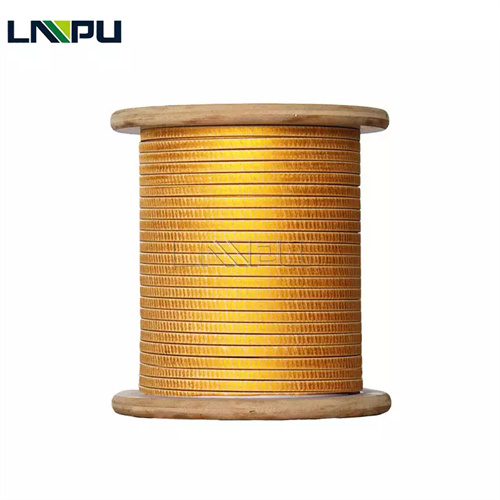
Fiberglass insulated wire, or simply fiberglass-coated wire, is a composite insulated winding wire in the electrical wire category, with inorganic glass fiber as the outer layer and impregnated with varnish and cured. Since its industrial application in the 1930s, fiberglass-coated wire has undergone multiple technological and application leaps, from special military applications to widespread use in the power industry, from single-structure to multi-layer dielectric composites, from hand-braiding to automated continuous production, and from small and medium-sized land-based equipment to high-power marine new energy sources. This article reviews the nearly ninety-year development history of fiberglass-coated wire along four main lines: standard evolution, material iteration, process innovation, and application expansion, and looks forward to its future direction in new energy, high-voltage electrical equipment, and rail transportation.
2 Standard Evolution Mainline
2.1 Early Standardization and the Establishment of the NEMA MW 1000 System
In the late 1940s and early 1950s, fiberglass-coated wire began to be used in the windings of power equipment, but product specifications and quality varied considerably. In 1949, the National Electrical Manufacturers Association (NEMA) published the first edition of the Magnet Wire Standards, incorporating fiberglass-coated round copper wire into the specification system and establishing it as the MW 41 series. This standard established unified benchmarks for core indicators of fiberglass-coated wire, such as conductor specifications, coating structure, breakdown voltage, and mechanical flexibility, marking the transition of fiberglass-coated wire from an industrial product to an engineering product.
Over the next sixty years, the NEMA MW 1000 standard system underwent several revisions, with the MW 41 series gradually refined into several subcategories, such as MW 41-C fiberglass-coated round copper wire and MW 41-A fiberglass-coated aluminum wire, corresponding to different thermal ratings and structural combinations. The ANSI/NEMA MW 1000-2018 standard, released in 2018, is the current mainstream version, explicitly defining the thermal rating of MW 41-C fiberglass-coated round copper (magnet wire) as 155, or F class, specifying a minimum dielectric breakdown voltage of not less than 170 volts for single-layer and not less than 315 volts for double-layer, corresponding to the international standard IEC 60317-48.
2.2 IEC International Standards and Global Collaboration
The International Electrotechnical Commission (IEC) began establishing an international standard system for winding wires in the 1970s, with the IEC 60317 series becoming the core framework for global winding wire standards. Among them, IEC 60317-48 specifically specifies glass fiber coated, resin or impregnated, bare or enameled round copper wires with a temperature index of 155, corresponding to NEMA MW 41-C.
In the 21st century, the IEC 60317 series has expanded to include specific areas such as rectangular wires, thin-film composite structures, and special applications. The IEC 60317-0 general rules, various IEC 60317-X specific specifications, and the IEC 60851 test method standard together constitute the international standard system for glass fiber wrapped wires. The corresponding national standard in China is GB/T 7672 Glass Fiber Wrapped Wire, the corresponding standard in Japan is JIS C3202, and major European manufacturers implement the IEC 60317 series.
2.3 Engineering Significance of Standard Evolution
The evolution of fiberglass insulation standards is essentially a process of transforming engineering experience into standardized text. From an early focus on basic insulation performance to the inclusion of multi-dimensional indicators such as dielectric strength, thermal rating, mechanical flexibility, breakdown voltage distribution, and environmental durability in the mid-term, the refinement of standards has promoted the engineering application of fiberglass insulation in demanding scenarios such as high-voltage motors, high-capacity transformers, traction motors, and wind power equipment.
3 Main Line of Material Iteration
3.1 Glass fiber substrates from C-Glass to E-Glass
The core material of fiberglass-insulated wire is electrical-grade continuous filament glass yarn. Early industrial applications used C-Glass chemical glass fiber, which had superior chemical resistance but relatively average dielectric properties and mechanical strength. In the 1960s, E-Glass electrically insulating glass fiber quickly became the mainstream substrate for fiberglass-insulated wire due to its excellent dielectric properties, high tensile strength, and relatively low cost.
E-Glass has a dielectric constant of approximately 6.0 to 6.5, a volume resistivity of 10¹² to 10¹⁴ ohmmeters, and a softening point of approximately 846 degrees Celsius. It can withstand the curing temperatures of F to H grade impregnation varnishes without performance degradation. In the 21st century, for specific high-frequency applications, special glass fibers such as S-Glass high-strength glass fiber, D-Glass low-dielectric glass fiber, and Q-Glass high-purity quartz fiber have begun to enter the winding wire field, but E-Glass remains the absolute mainstream.
3.2 Underlying Layer enamel coating From Single Paint Type to Multi-System
Early fiberglass-insulated wires often used a structure where bare wires were directly braided into fiberglass, i.e., a three-layer structure of conductor-glass fiber-varnish. As application scenarios demanded higher thermal class and dielectric strength, an enamel coating gradually became the standard configuration. Different coating types, such as polyurethane varnish, polyester varnish, polyester-imide varnish, and polyamide-imide varnish, impart different thermal classes and processability to the fiberglass-insulated wires.
The enamel coating grade gradually increases from 130 to 155, 180, 200, 220, and 240, corresponding to different thermal rating systems: F, H, N, R, and C. Grade F fiberglass insulation is coated with polyester or polyester-imide impregnation varnish, Grade H with polyester-imide or polyimide impregnation varnish, and Grade C and above require silicone or polyimide impregnation varnish. The addition of enamel coating increases the overall breakdown voltage of fiberglass insulation by 30% to 50% compared to bare fiberglass structures.
3.3 Impregnation systems from oil-based to solvent-free
The impregnation varnishes for fiberglass-insulated wires have undergone several iterations, from oil-based asphalt varnishes and phenolic resin varnishes to alkyd resin varnishes, polyester resin varnishes, epoxy resin varnishes, polyester imide resin varnishes, polyamide-imide resin varnishes, and silicone resin varnishes. Early oil-based impregnation varnishes had high VOC emissions, high curing temperatures, and long curing times. In the 21st century, environmentally friendly processes such as solvent-free impregnation varnishes, water-based impregnation varnishes, and low-temperature fast-curing impregnation varnishes have gradually become widespread.
The curing process for impregnating varnishes has evolved from early methods such as atmospheric pressure impregnation and natural drying to various processes including vacuum pressure impregnation, vacuum impregnation, drip impregnation, and roller impregnation. Vacuum pressure impregnation allows the impregnating varnish to fully penetrate the microscopic gaps in the fiberglass braided layer, forming a dense, gap-free insulator after curing. This is currently the standard process for high-voltage motor stators, wind turbine stators, and rail transit windings.
4. Main Theme of Technological Innovation
4.1 From Manual to Automated Weaving Techniques
From the 1930s to the 1950s, the weaving of fiberglass yarn relied mainly on manual operation, resulting in low efficiency, poor uniformity, and high costs. In the 1960s and 1970s, with the integration of textile machinery and motor winding production lines, fiberglass braiding machines began to achieve semi-automated and continuous production. The precision control of weaving density, pitch, and angle improved significantly, and the fiberglass coverage increased from 70% to 80% in the early days to over 95%.
In the 1980s and 90s, the introduction of microcomputer-controlled braiding machines and online inspection systems ushered in a digital era for fiberglass-insulated yarn braiding. Braiding pitch could be accurate to 0.1 mm, and coverage uniformity deviation was controlled within 2%. Entering the 21st century, Industry 4.0 and smart manufacturing concepts further propelled fiberglass-insulated yarn production towards continuous, digital, and green manufacturing.
4.2 Impregnation Process: From Atmospheric Pressure to Vacuum Pressure Impregnation
Atmospheric pressure impregnation is simple and inexpensive, but the impregnating varnish cannot penetrate deep into the fiberglass braided layer, resulting in air gaps and weak points inside the winding. Vacuum pressure impregnation first removes gas from the winding by evacuation, then injects impregnating varnish under pressure, allowing it to fully fill the gaps between the fiberglass fibers. Finally, it is cured by heat. VPI (Vacuum Pressure Impregnation) can increase the overall dielectric strength of the winding by 30% to 50% compared to atmospheric pressure impregnation and significantly reduce the probability of partial discharge.
Since its widespread adoption in high-voltage motor windings in the 1980s, VPI (Vacuum Insulation) technology has gradually expanded to wind power equipment, rail transit (traction motors), and special-purpose transformers. Variants such as secondary VPI, multiple VPI, and internally heated VPI have further improved the insulation reliability of large motor windings.
4.3 Winding Manufacturing: From Discrete Processes to Integrated Manufacturing
Traditional fiberglass-coated winding manufacturing involves multiple separate processes, including unwinding, shaping, binding, impregnation, and curing. The transfer, storage, and inspection between these processes increase costs and quality risks. Since the 21st century, winding manufacturing has gradually moved towards integrated production: combining winding, shaping, binding, connecting, impregnation, curing, and testing processes onto a single production line, coupled with a digital traceability system, to achieve full-process data digitization and quality traceability in winding manufacturing.
Roebel transposition technology for rectangular fiberglass-wrapped flat wires is a key process for stator windings in large hydroelectric generators and direct-drive wind turbines. This technology transposes the rectangular flat wires along a specific path within the slots, allowing each conductor to occupy a different position in the magnetic field. This effectively suppresses the skin effect and circulating current losses, improving unit efficiency by 1% to 2%. Invented by Ludwig Roebel in the 1920s, Roebel transposition technology has evolved from manual transposition to mechanical transposition and then to digital transposition, and remains a core technology for large generator windings.
5 Application Extension Mainline
5.1 Early Applications and Military Origins
The industrial application of fiberglass-coated wire can be traced back to the 1930s, initially serving the high-temperature resistance winding requirements of military electrical equipment. During World War II, military equipment such as aircraft motors, ship motors, and radar magnetrons placed extremely high demands on the heat resistance and reliability of winding insulation, and fiberglass-coated wire, due to the high heat resistance of inorganic glass fibers, became a key insulation material.
After the war, the military application experience of fiberglass-coated yarn gradually spread to the civilian sector, with power transformers, industrial motors, and household appliances becoming new application scenarios.
5.2 Popularization of the Electric Power Industry
From the 1950s to the 1970s, fiberglass-insulated wires were widely adopted in the power industry. Core power equipment such as oil-immersed power transformers, high-voltage motors, and large-capacity generators extensively used fiberglass-insulated wires as winding insulation. The establishment of the NEMA MW 1000 standard system and the publication of the IEC 60317 international standard further promoted the standardized application of fiberglass-insulated wires in the global power industry.
During this period, the main applications of fiberglass-coated wires included: stator windings of high-voltage motors with rated voltages of 6 kV and above, oil-immersed power transformer windings with rated voltages of 110 kV and above, stator windings of large and medium-sized AC generators, and armature windings of traction motors.
5.3 Application of Rail Transit and traction motor
From the 1980s to the early 21st century, high-vibration and high-overload applications such as rail transit traction motors, mining traction motors, and marine propulsion motors spurred further development of fiberglass-coated winding technology. The stalled, overloaded, and frequent start-stop conditions of traction motors place stringent demands on the vibration resistance, thermal shock resistance, and mechanical fatigue performance of winding insulation. The multi-layered dielectric composite structure and mechanical strength advantages of fiberglass-coated windings have been fully utilized in traction scenarios.
Fiberglass-coated rectangular flat wires have become a standard solution in applications such as rail traction motors and urban rail vehicle traction transformers. The IEC 60317 series provides specific requirements for traction applications, specifying indicators such as breakdown voltage distribution, temperature cycling, and mechanical vibration for fiberglass-coated wires.
5.4 Explosive Growth of Wind Power and New Energy
Since the beginning of the 21st century, the explosive growth of the global wind power and new energy industry has brought new opportunities for fiberglass-insulated windings. Onshore and offshore wind turbines have extremely high requirements for the comprehensive performance of winding insulation, including heat resistance, mechanical properties, moisture resistance, vibration resistance, and salt spray resistance. Fiberglass-insulated windings have become the mainstream solution for wind turbine windings.
The stator windings of doubly-fed asynchronous generators, stator windings of direct-drive permanent magnet synchronous generators, semi-direct-drive units, yaw and pitch motors, nacelle transformers, and auxiliary motors for offshore wind turbine compressors all use F-class or H-class fiberglass insulation as standard. In offshore wind power scenarios, fiberglass insulation combined with epoxy vacuum pressure impregnation can pass the IEC 60068-2-52 salt spray test for more than 96 hours, and the insulation life can reach more than 25 years.
In applications such as photovoltaic inverters, energy storage converters, and new energy vehicle drive motors, fiberglass-coated wires are also widely used as the insulation medium for high-frequency, high-current windings. New energy-specific standards such as IEC 61800, IEC 62109, and GB/T 19960 provide clear guidance on the application of fiberglass-coated wires.
5.5 Integration of Intelligent Manufacturing and Digitalization
Entering the 2020s, fiberglass winding technology has been deeply integrated with intelligent manufacturing and digital operation and maintenance. New technologies such as intelligent winding production lines, online defect detection systems, online monitoring of winding temperature and partial discharge, and insulation life prediction models have brought the manufacturing quality and operational reliability of fiberglass windings to new heights. Industrial Internet and artificial intelligence technologies are further driving the digital transformation of the fiberglass winding industry.
6 Engineering Implications of the Evolution of Fiberglass Wire Coating Technology
Looking back on its nearly 90-year development history, the evolution of fiberglass wrapping technology follows a clear engineering logic:
- Standardization First. From NEMA MW 1000 to IEC 60317, and from GB/T 7672 to JIS C3202, the collaboration and iteration of global standards systems have established a common language for the fiberglass insulation industry. – Continuous Material Iteration. The synergistic optimization of inorganic E-Glass substrates, organic enamel coatings, and impregnation varnishes has upgraded the thermal class of fiberglass insulation from the early B grade to the current C grade and above. – Automation and Integration of Processes. From hand weaving to intelligent manufacturing, from discrete processes to integrated processes, process innovation continuously improves the quality and efficiency of fiberglass insulation. – Application Scenarios Driven. Different application scenarios such as military, power, traction, wind power, and new energy place differentiated requirements on fiberglass insulation, driving continuous innovation in materials, processes, and standards.
This logic will continue in the future: with the rapid development of new energy, high-voltage electrical equipment, rail transportation, aerospace and other fields, fiberglass insulation technology will continue to evolve towards higher heat resistance, higher dielectric strength, stronger mechanical properties, longer lifespan, and more intelligent operation and maintenance.
7 Future Development Trends
Looking ahead, fiberglass wrapping technology will continue to make breakthroughs in the following areas:
- Higher thermal class. The application of Class C and above fiberglass insulation in aviation, deep-well exploration, and special motors will be further expanded, and the polyimide and silicone impregnation varnish system will continue to be optimized; – Offshore wind power and deep-sea applications. High-power offshore wind turbines of 15 MW and above place higher demands on the salt spray resistance, thermal cycling resistance, and mechanical reliability of winding insulation. The composite system of fiberglass insulation + vacuum pressure impregnation + waterproof and salt spray resistant outer sheath will continue to evolve; – Intelligent operation and maintenance integration. Fiberglass insulation windings will be deeply integrated with intelligent sensing technologies such as fiber optic temperature sensing, online partial discharge monitoring, and real-time insulation resistance monitoring to achieve real-time perception of winding status and lifespan prediction; – Green manufacturing. Green manufacturing technologies such as solvent-free impregnation varnish, water-based paint, recyclable fiberglass yarn, and low-temperature fast curing processes will continue to be promoted, reducing production energy consumption and environmental impact; – New energy vehicles and rail transit. Applications such as 800-volt high-voltage platforms (drive motors) and rail transit permanent magnet motors (traction motors) place new demands on the high-frequency characteristics, dielectric strength, and thermal stability of fiberglass-coated wires.
8 Conclusion
The development of fiberglass-coated wire over the past ninety years has been a history of synergistic evolution across five dimensions: inorganic glass fiber materials, organic enamel coatings and impregnation varnishes, automated processes, standardization systems, and expanded application scenarios. The establishment of standards such as NEMA MW 1000, IEC 60317, GB/T 7672, and JIS C3202, along with the iteration of key technologies such as E-Glass substrates, polyimide and silicone impregnation varnishes, vacuum pressure impregnation processes, and Roebel transposition technology, has solidified the irreplaceable position of fiberglass-coated wire in core equipment such as high-voltage motors, wind turbines, traction motors, and power transformers.
Driven by strategic emerging industries such as new energy, high-voltage electrical equipment, rail transportation, and aerospace, fiberglass insulation technology will continue to evolve towards higher heat resistance, higher dielectric constant, longer lifespan, greater intelligence, and greener technology, providing key basic material support for global energy transformation and high-end equipment manufacturing.
Contact Information:
- E-mail: office@cnlpzz.com
- WhatsApp: 0086-19337889070
- Zhengzhou LP Industry Co., Ltd.