

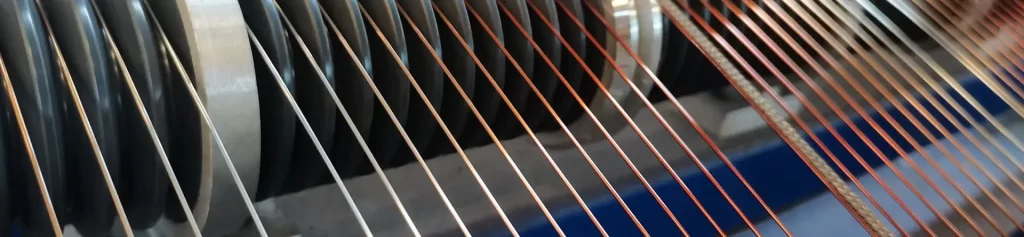
Inductors, as key passive components in inverters, play an irreplaceable role in filtering, energy storage, and power regulation.
The performance of inductors directly affects the inverter&39;s conversion efficiency, power density, and operational reliability, and the quality of enameled copper wire, as the core material for inductor windings, is crucial.
The harsh operating environment of solar inverters demands high efficiency, high power density, and high reliability from inductors.
Traditional enameled copper wire is insufficient to meet these requirements, necessitating the selection of specially designed enameled copper wire products.
Technical Requirements for Solar Inverter Inductors High Efficiency Requirements Solar inverters have extremely high requirements for conversion efficiency: The cost per kilowatt-hour of photovoltaic power generation is directly related to inverter efficiency; every 1% increase in efficiency means a significant increase in revenue.
Inverter efficiency is typically required to reach above 98%, which places strict requirements on inductor losses.
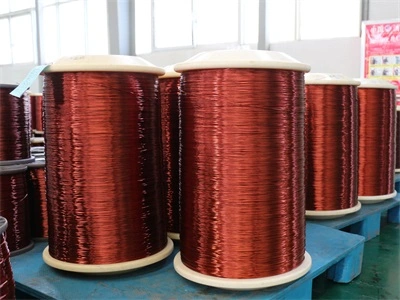
Inductor losses mainly include copper losses and iron losses, with copper losses directly related to the resistance of the enameled copper wire.
High Switching Frequency Modern inverters use high-frequency switching technology to improve power density: Switching frequencies are typically between 16kHz and 50kHz, with some high-efficiency inverters reaching over 100kHz.
At high frequencies, current tends to be absorbed by the skin effect on the conductor surface, resulting in a smaller effective conductive cross-sectional area and increased AC resistance.
Enameled copper wire or Litz wire structures suitable for high-frequency applications need to be selected.
High Power Density Photovoltaic Inverters Tend to Smaller Size and Higher Power: Increased power density means smaller inductor size and worse heat dissipation.
Inductors need to operate stably at higher operating temperatures.
This places higher demands on the heat resistance and reliability of the enameled copper wire.
Key Technical Characteristics of Enameled Copper Wire Excellent Conductivity Conductivity is the core indicator of enameled copper wire: copper conductor has excellent conductivity, reaching over 101% IACS.
Impurity content directly affects conductivity and requires strict control.
High-purity oxygen-free copper conductor can provide lower resistance and reduce copper losses.
Suitable insulation performance Insulation performance is related to the safe operation of the inductor: The insulation enamel coating needs to withstand high voltage stress and maintain integrity and durability. inverter has higher voltage stress on the output side, requiring the selection of enameled wire with an appropriate insulation class.
Partial discharge characteristics are an important consideration for high-voltage inductors.
Excellent Heat Resistance Inverters operate at high temperatures, requiring stringent heat resistance: Inductor temperatures can reach 100°C to 150°C during operation, and even higher temperatures can occur under short-term overload.
Enamelled copper wire with a thermal class matching the operating temperature is necessary.
Polyimide or polyimide insulating varnish can meet the requirements of high-temperature applications.
Low Eddy Current Loss Eddy current losses are a concern for high-frequency applications: Litz wire structure effectively reduces the effects of skin effect and proximity effect.
Multi-strand fine wire stranding increases conductor surface area and reduces AC resistance.
Enamelled coating thickness and insulation performance affect inter-strand insulation.
Typical Inductor Types and Applications Boost Inductor Boost inductors are the core component of the DC-DC boost circuit in the front-end of photovoltaic inverters: They withstand high DC bias current and need to handle ripple current.
Enamelled copper wire with low DC resistance is required to reduce conduction losses.
Requirements exist for saturation magnetic flux density, necessitating a well-designed winding structure.
Output-side Filter Inductors: Output-side filter inductors are used to filter switching harmonics: They carry sinusoidal currents with relatively low frequencies but large effective current values.
Enameled copper wire with a sufficiently large cross-sectional area is required to reduce copper losses and temperature rise.
Sometimes, a Litz wire structure is needed to reduce high-frequency losses.
Common-Mode Inductors: Common-mode inductors are used to suppress electromagnetic interference: They carry high-frequency common-mode currents, requiring consideration of high-frequency characteristics.
They are typically wound with multi-strand Litz wire to reduce high-frequency resistance.
Special requirements exist for the core and winding design.
Power Regulating Inductors: Power regulating inductors are used for active power filtering and reactive power compensation: They need to handle harmonic and non-sinusoidal currents.
The operating current varies over a large range, requiring good linearity.
The selection of enameled copper wire requires comprehensive consideration of both DC and AC performance.
Selection Guide Selection Based on Switching Frequency Switching frequency is a key parameter affecting the selection of enameled copper wire: For switching frequencies from 16kHz to 30kHz, ordinary enameled copper wire is sufficient.
For switching frequencies from 30kHz to 50kHz, Litz wire is recommended.
For high-frequency applications above 100kHz, multi-strand Litz wire winding is necessary.
Selection Based on Operating Temperature Operating temperature affects the choice of insulation class: For applications with continuous operating temperatures below 130°C, polyester insulation is sufficient.
For applications with continuous operating temperatures between 130°C and 180°C, polyester imide insulation is a better choice.
For applications above 180°C or frequent overload conditions, polyimide insulation is more reliable.
Selection Based on Current Specifications Current specifications determine the selection of conductor cross-sectional area: Calculate the required conductor cross-sectional area based on the inductor&39;s rated current.
Considering the skin effect, high-frequency applications require a larger total cross-sectional area.
Multi-strand parallel structures can reduce DC resistance and improve current distribution.
Cost-Based Selection: Optimize costs while meeting performance requirements: Ordinary grade enameled copper wire is cheaper and suitable for general applications.
High-temperature insulation grade products are more expensive and should be selected according to need.
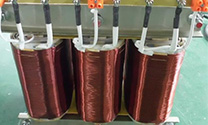
Consider the inductor&39;s efficiency, reliability, and total life-cycle cost.
Usage Precautions Winding Design: A reasonable winding design fully utilizes the performance of the enameled copper wire: Avoid overly concentrated windings and improve heat dissipation. For Litz wire structures, ensure uniform stranding and good inter-strand insulation. Consider the proximity effect at high frequencies and rationally arrange the winding positions. Manufacturing Process: The manufacturing process affects the final performance of the inductor: Avoid damaging the enamel coating during winding and maintain insulation integrity. For Litz wire, avoid loosening and deformation. The welding process must ensure good electrical connections. Quality Inspection: Strict quality inspection ensures product reliability: Enamel coating thickness and insulation performance testing. DC and AC resistance testing. Withstand voltage testing and partial discharge testing.
Technological Development Trends High-Frequency Inductor Technology Continues to Advance to Higher Frequencies: The application of silicon carbide and gallium nitride power devices drives further increases in switching frequency. Higher demands are placed on enameled copper wire and Litz wire technologies. Ultra-fine multi-strand Litz wire has become an important development direction. High Efficiency: Efficiency improvement is the eternal pursuit of photovoltaic inductors: Lower losses mean higher power generation revenue. New materials and structures continuously reduce inductor losses. Refined design and manufacturing technologies continue to advance. Intelligentization: Intelligentization technology is applied to the inductor field: Online monitoring and adjustment of inductor parameters. Deep integration with inductor control systems. Predictive maintenance and lifespan management.
Enameled copper wire for solar inductor inductors is a key material in photovoltaic power generation systems.
Its conductivity, insulation performance, heat resistance, and low eddy current loss characteristics directly affect the inductor&39;s conversion efficiency, power density, and operational reliability.
In applications such as boost inductors, filter inductors, common-mode inductors, and power regulating inductors, it is necessary to rationally select enameled copper wire products based on factors such as switching frequency, operating temperature, and current.
With the application of new power devices such as silicon carbide and gallium nitride, inverter technology is developing towards higher frequencies and higher efficiency, which will continue to increase the performance requirements of enameled copper wire, driving the research and innovation of related technologies.