

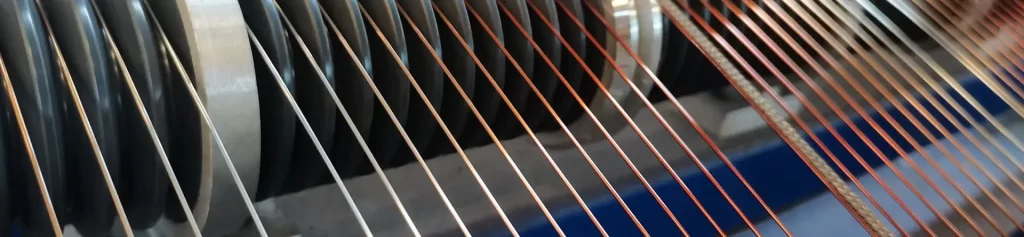
Transformers are indispensable key equipment in power systems, undertaking the important function of electrical energy conversion and distribution. As the core component of transformers, the choice of conductor material for windings directly affects the transformer’s performance, cost, and reliability.
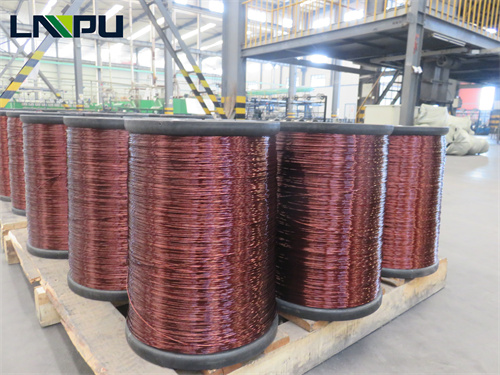
In recent years, enameled aluminum wire has been increasingly widely used in the transformer field. Particularly in distribution transformers, dry-type transformers, and special transformers, enameled aluminum wire has become an effective alternative to copper wire,with its lightweight advantages, cost benefits, and good electrical performance.
This article provides a systematic technical application guide for transformer design engineers and procurement decision-makers from six dimensions: technical feasibility of enameled aluminum wire in transformers, design considerations, application scenarios, manufacturing processes, quality control, and selection guide.
I. Technical Feasibility of Enameled Aluminum Wire in Transformers
1.1 Electrical Conductivity
The conductivity of aluminum is approximately 61% IACS, meaning that at the same cross-sectional area, the resistance of an aluminum conductor is about 60% higher than that of a copper conductor. To achieve the same resistance value as copper windings, the conductor cross-sectional area of aluminum windings needs to be increased by approximately 1.6 times (wire diameter increased by approximately 1.26 times).
In transformer design, by appropriately increasing the cross-sectional area of aluminum windings, it is entirely possible to achieve the same electrical performance as copper windings. This design compensation is entirely feasible in most distribution transformers and dry-type transformers.
1.2 Thermal Performance
The temperature rise difference between aluminum windings and copper windings is typically within 3-8°C. Through reasonable heat dissipation design (such as increasing cooling fin area, optimizing oil channel design, etc.), this gap can be effectively narrowed.
The thermal conductivity of aluminum is 237 W/(m·K), which, while lower than copper’s 401 W/(m·K), in transformers, heat is primarily conducted through insulation materials and cooling media. The thermal conductivity of the conductor itself has limited impact on overall heat dissipation.
1.3 Mechanical Strength
The tensile strength of aluminum (80-120 MPa) is lower than copper (200-300 MPa), but in transformer windings, conductors primarily withstand electromagnetic forces rather than tensile forces. Through reasonable winding structure design (such as using insulation cardboard support, increasing winding fastening measures, etc.), the mechanical strength of aluminum windings can fully meet transformer operating requirements.
1.4 Lightweight Advantage
The density of aluminum is only 2.70 g/cm³, approximately 30% of copper (8.96 g/cm³). Transformers using aluminum windings can weigh 30-50% less than copper winding transformers, an advantage particularly important in the following scenarios:
- Mobile transformers: Reduces transportation and installation difficulty
- High-rise building transformers: Reduces floor load-bearing requirements
- Remote area transformers: Reduces transportation costs
- New energy power station transformers: Reduces total system weight
1.5 Cost Advantage
The raw material cost of aluminum windings is 20-30% lower than copper windings. For cost-sensitive applications such as distribution transformers, aluminum winding transformers can significantly reduce manufacturing costs and improve product market competitiveness.
II. Transformer Design Considerations
2.1 Cross-Sectional Area Compensation
The primary principle of aluminum winding design is cross-sectional area compensation. To achieve the same resistance value as copper windings, the cross-sectional area of aluminum conductors needs to be increased by approximately 1.6 times. This means:
- Wire diameter increases by approximately 26%
- Winding volume increases, requiring larger window area
- Core dimensions may need corresponding adjustments
2.2 Insulation Design
The insulation design of aluminum winding transformers is essentially the same as copper winding transformers, but the following points need attention:
Insulation Class Selection: Select appropriate insulation class (Class A/B/F/H) based on transformer operating temperature.
Layer Insulation: Layer insulation for aluminum windings can use insulation paper, Nomex paper, or epoxy resin materials.
End Insulation: Winding ends are weak points in insulation and require enhanced insulation treatment.
2.3 Temperature Rise Control
Temperature rise control is key to aluminum winding transformer design:
Heat Dissipation Design: Improve heat dissipation by increasing cooling fin area, optimizing oil channel design, adopting forced air cooling, etc.
Load Rate Control: Reasonably set transformer load rate to avoid long-term overload operation.
Hot Spot Temperature: Monitor winding hot spot temperature to ensure it does not exceed the insulation material’s thermal limit.
2.4 Connection Design
The connection between aluminum windings and external copper busbars or copper terminals is a key link in aluminum winding transformer design:
Copper-Aluminum Transition Terminals: Use dedicated copper-aluminum transition terminals to avoid electrochemical corrosion caused by direct aluminum-copper contact.
Ultrasonic Welding: Aluminum winding leads can be connected to copper terminals using ultrasonic welding.
Mechanical Crimping: Large cross-section aluminum conductors can be connected using mechanical crimping.
III. Application Scenarios
3.1 Distribution Transformers
Distribution transformers are the most widely used field for aluminum winding transformers, particularly in 10kV/0.4kV distribution transformers, where aluminum winding transformers have been widely used.
Advantages:
- Low cost, suitable for bulk procurement
- Light weight, convenient for transportation and installation
- Performance meets distribution requirements
3.2 Dry-Type Transformers
Dry-type transformers are typically installed indoors or in densely populated areas, with high requirements for safety and environmental protection. Aluminum winding dry-type transformers, with their good flame retardant properties and lightweight advantages, have been widely used in commercial buildings, hospitals, schools, and other places.
Advantages:
- Good flame retardant properties, high safety
- Light weight, convenient for indoor installation
- Low maintenance cost
3.3 Oil-Immersed Transformers
In oil-immersed transformers, aluminum winding wire applications are relatively less common, but still used in some small-to-medium capacity, cost-sensitive applications.
Technical Requirements:
- Windings must be fully oil-immersed to ensure insulation performance
- Connection points require special treatment to prevent oil corrosion
3.4 Special Transformers
Electric Furnace Transformers: Aluminum winding applications in electric furnace transformers are gradually increasing, benefiting from their cost advantages and good heat resistance.
Rectifier Transformers: In industrial applications such as electrolysis and electroplating, aluminum winding rectifier transformers are favored for their cost advantages.
Mining Transformers: Mining transformers have strict weight requirements, and the lightweight advantage of aluminum windings makes them an ideal choice.
IV. Manufacturing Process Key Points
4.1 Winding Process
The winding process for aluminum windings is essentially the same as copper windings, but note:
Tension Control: The tensile strength of aluminum wire is lower than copper wire, and winding tension should be controlled within 15-25% of the aluminum wire’s breaking strength.
Bend Radius: The bend radius of aluminum wire should be appropriately increased to avoid enamel film damage during winding.
Layer Insulation: During winding, ensure layer insulation materials are placed correctly, without misalignment or damage.
4.2 Varnish Impregnation Process
The varnish impregnation process for aluminum windings is the same as copper windings:
Vacuum Pressure Impregnation (VPI): Suitable for dry-type transformers, ensuring insulation varnish fully penetrates windings.
Impregnation Time: Determined based on winding dimensions and varnish type.
Curing Temperature: Set curing temperature curve based on varnish curing characteristics.
4.3 Assembly Process
Assembly of aluminum winding transformers requires special attention to connection point treatment:
Copper-Aluminum Transition: Use dedicated copper-aluminum transition terminals to avoid electrochemical corrosion.
Fastening Measures: Windings must be fully fastened to prevent displacement due to electromagnetic forces during operation.
Insulation Treatment: After assembly, overall insulation treatment must be performed to ensure insulation performance.
V. Quality Control
5.1 Raw Material Inspection
Aluminum Wire Inspection:
- Conductivity: ≥61% IACS
- Wire diameter tolerance: ±0.002mm
- Enamel film quality: breakdown voltage, flexibility, film continuity
Insulation Material Inspection:
- Insulation paper/Nomex paper: thickness, breakdown strength
- Insulation varnish: viscosity, solid content, curing characteristics
5.2 Production Process Inspection
Winding Inspection:
- Winding dimensions: meet design requirements
- Layer insulation: no misalignment or damage
- Connection quality: welding or crimping is secure
Impregnation Inspection:
- Impregnation quality: varnish fully penetrates
- Curing quality: film is fully cured
5.3 Factory Testing
Aluminum winding transformers must undergo the following tests before leaving the factory:
| Test Item | Requirements |
|---|---|
| Voltage Ratio Test | Meets design requirements |
| DC Resistance Test | Three-phase balanced, deviation from design value ≤±2% |
| Insulation Resistance Test | ≥1000MΩ |
| Power Frequency Withstand Voltage Test | Execute according to standards |
| No-Load Test | No-load loss and no-load current meet standards |
| Load Test | Load loss and impedance voltage meet standards |
| Temperature Rise Test | Winding temperature rise ≤ insulation class allowable value |
VI. Selection Guide
6.1 Application Scenario Judgment
Scenarios prioritizing aluminum winding transformers:
- Cost-sensitive distribution projects
- Weight-sensitive mobile or high-altitude installations
- Stable load rate regular applications
- Indoor installations with high flame retardant requirements
Scenarios prioritizing copper winding transformers:
- High efficiency requirement industrial applications
- Large load fluctuations, frequent overload situations
- Space-constrained, unable to increase winding volume
- Harsh environments (high humidity, high corrosion)
6.2 Specification Confirmation
- Rated Capacity: Determined based on load requirements
- Voltage Level: Primary and secondary side voltages
- Insulation Class: Class A/B/F/H
- Cooling Method: Dry-type (AN/AF) or oil-immersed (ONAN/ONAF)
6.3 Certification Requirements
Ensure products meet relevant certification requirements, such as UL, IEC, GB, IEEE, and other standards.
Conclusion
The application of enameled aluminum wire in transformers is a mature and economical technical solution. Through reasonable cross-sectional area compensation, insulation design, and heat dissipation optimization, aluminum winding transformers can fully achieve performance levels comparable to copper winding transformers, while achieving significant cost reduction and weight reduction.
In distribution transformers, dry-type transformers, and special transformers, aluminum winding transformers have been extensively validated through large-scale applications. Transformer design engineers and procurement decision-makers should scientifically and reasonably select winding materials based on specific application requirements, cost budgets, and performance requirements, achieving maximum economic benefits while ensuring product quality.