

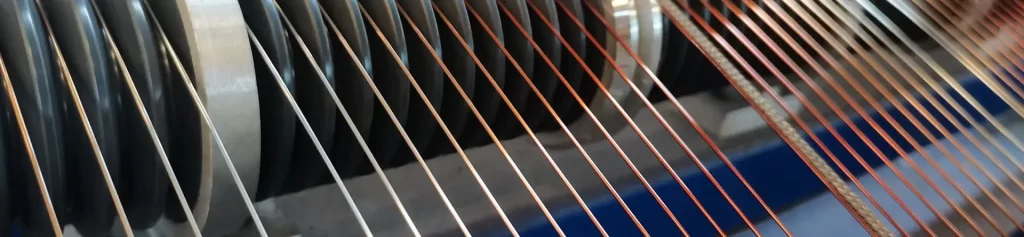
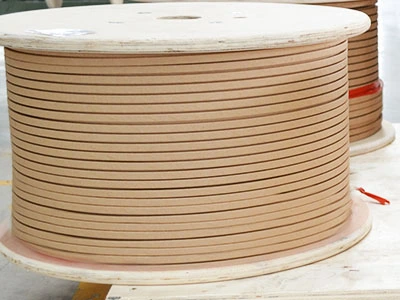
Paper-sheathed wire uses a copper conductor or aluminum conductor as its base, with an outer layer of cellulose insulating paper wound around it.
After drying and oil impregnation, it forms a complete insulation system.
The electrical performance of paper-sheathed wire is a complex system concept, including multiple dimensions such as dielectric strength, dielectric loss, insulation resistance, and partial discharge.
These performance indicators depend not only on the characteristics of the insulating paper itself but also on factors such as the paper tape structure, winding process, and oil impregnation treatment.
A thorough understanding of the electrical performance of paper-sheathed wire is of significant guiding importance for transformer design and engineering selection.
This article will systematically explain the meaning, influencing factors, testing methods, and standard requirements of various electrical performance characteristics of paper-sheathed wire, providing comprehensive technical reference for power engineers and technicians.
Dielectric Strength Characteristics Breakdown Voltage Breakdown voltage is the core indicator for measuring the insulation strength of paper-insulated wire: Breakdown voltage refers to the critical voltage at which an insulating material loses its insulation performance and becomes conductive under the influence of an electric field.
The breakdown voltage of paper-insulated wire depends on the thickness, density, and oil impregnation state of the insulating paper.
High-quality paper-insulated wire can have a breakdown voltage of tens of kilovolts, meeting the insulation requirements of high-voltage transformers.
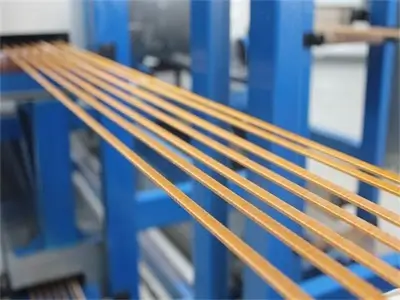
Dielectric Strength Dielectric strength represents the highest voltage that a unit thickness of material can withstand: It is usually measured in kilovolts per millimeter.
The dielectric strength of paper-insulated wire is closely related to the material and state of the insulating paper.
After drying and oil impregnation, the dielectric strength of paper-insulated wire can increase several times.
The dielectric strength of oil-impregnated paper-insulated wire is much higher than that in air.
Factors Affecting Dielectric Strength Many factors affect the dielectric strength of paper-insulated wire: The thicker the insulating paper, the higher the breakdown voltage, but the dielectric strength may decrease.
The higher the density of the insulating paper, the better the dielectric strength.
Moisture is a major enemy of dielectric strength; even trace amounts can significantly reduce insulation performance.
Increased temperature also leads to a decrease in dielectric strength, requiring a margin in the design.
Dielectric Loss Characteristics Dielectric Loss Principle Dielectric loss is the manifestation of energy loss in insulating materials under an alternating electric field: When insulating materials are placed in an alternating electric field, a polarization process occurs, converting some electrical energy into heat.
The dielectric loss tangent is a key parameter for measuring the magnitude of loss; the smaller the value, the better.
The dielectric loss of paper-insulated wire mainly comes from the polarization loss of cellulose paper and insulating oil.
Dielectric Loss Factor The dielectric loss factor is an important indicator for evaluating insulation quality: The dielectric loss factor of high-quality paper-insulated wire is typically between and 0.005.
An increased dielectric loss factor indicates potential aging, moisture, or contamination problems in the insulation.
Regularly checking the dielectric loss factor can determine the condition of the paper-insulated wire insulation.
Influencing Factors Dielectric loss is affected by various factors: Temperature has a significant impact on dielectric loss; increased temperature usually leads to increased loss.
Frequency also affects dielectric loss; losses increase at high frequencies.
Moisture significantly increases dielectric loss, so the moisture content of the insulating paper must be strictly controlled.
Aging of the insulating oil increases dielectric loss, requiring regular maintenance.
Insulation Resistance Characteristics Concept of Insulation Resistance Insulation resistance represents the ability of an insulating material to prevent current leakage: The higher the insulation resistance, the better the insulation performance.
The insulation resistance of paper-insulated wire is related to the thickness, density, moisture content, and oil impregnation state of the insulating paper.
Insulation resistance is usually measured in megohms, and a higher value is better.
Volume Resistivity and Surface Resistivity Insulation resistance can be divided into volume resistivity and surface resistivity: Volume resistivity reflects the conductivity inside the insulating material; cellulose paper has a very high volume resistivity.
Surface resistivity reflects the conductivity of the insulating material&39;s surface and is greatly affected by the environment.
After oil impregnation, the surface resistivity of paper-insulated wire will significantly increase.
Measurement Method There are standard methods for measuring insulation resistance: Use an insulation resistance meter; the measurement voltage is usually 500V or 1000V.
Before measurement, the sample needs to be fully discharged to avoid measurement errors.
Ambient temperature and humidity can affect the measurement results, so it needs to be performed under standard conditions.
Partial Discharge Characteristics Partial Discharge Principle Partial discharge is a local electrical discharge phenomenon inside or on the surface of insulating materials: Under the action of a strong electric field, tiny discharges will occur inside or on the surface of insulating materials.
Although the energy of partial discharge is small, long-term accumulation will accelerate insulation aging.
Partial discharge is an important indicator for evaluating the insulation status of high-voltage paper-insulated wires.
Partial Discharge Parameters The partial discharge characteristics of paper-insulated wires are described by several parameters: The partial discharge initiation voltage is the lowest voltage at which partial discharge occurs.
The partial discharge quantity is measured in picocoos, and the smaller the value, the better.
The discharge repetition rate reflects the frequency of discharge occurrence.
Test Method Partial discharge testing requires specialized equipment: A partial discharge detector is used for testing, which can display the discharge quantity and discharge mode.
The test voltage is usually to 2 times the rated voltage.
The test environment needs to be shielded to avoid external interference affecting the measurement results.
Other Electrical Properties Capacitive Characteristics Paper-insulated wires possess capacitive characteristics: A capacitive effect is formed between adjacent conductors, affecting the frequency response of the transformer.
The capacitance of paper-insulated wires is related to insulation thickness, area, and dielectric constant.
The impact of capacitance on voltage distribution needs to be considered in high-voltage transformer design.
Dielectric Constant The dielectric constant reflects the polarization ability of a material: The dielectric constant of cellulose paper is approximately between 2 and 4.
The dielectric constant of insulating oil is slightly higher than that of insulating paper.
When oil and paper are combined, the overall dielectric constant falls between the two.
Aging Performance The electrical properties of paper-insulated wires change with aging: Thermal aging causes the cellulose molecular chains to break, reducing the degree of polymerization.
Oxidative aging produces acidic substances, accelerating insulation deterioration.
Electrical aging gradually erodes the insulation structure under the influence of partial discharge.
Test Standards and Requirements International Standards The testing of the electrical properties of paper-insulated wires follows international standards: The IEC standard series specifies the test methods and technical requirements for paper-insulated wires. IEEE standards provide specifications for paper-insulated wires used in power equipment. Different voltage levels correspond to different testing requirements and acceptance standards. Test Items The standard-specified test items include several components: Breakdown voltage testing is the most basic electrical performance test. Dielectric loss factor testing assesses the insulation quality status. Partial discharge testing is used for high-voltage products. Insulation resistance testing is a routine inspection item. Quality Control Manufacturers need to conduct strict quality control: Incoming material inspection ensures the quality of insulation paper and conductors. In-process inspection monitors the process parameters of each step. Finished product inspection ensures the product meets technical requirements. A complete test report is required before shipment.
Engineering Application Considerations Design Selection transformer The electrical performance of the paper-insulated wire needs to be fully considered during design: Determine the insulation thickness and number of layers based on the voltage level. Determine the conductor cross-sectional area and current density based on the capacity. Leave sufficient insulation margin to ensure operational safety. Quality Acceptance Quality acceptance is required when purchasing paper-insulated wire: Verify test reports and certificates of conformity. Sampling and re-inspect key performance indicators. Check appearance quality and dimensions specifications. Operation and Maintenance Paper-insulated wires (transformers) in operation require regular maintenance: Monitor dissolved gas analysis in the oil to promptly detect insulation abnormalities. Perform dielectric loss factor tests regularly. Pay attention to operating temperature and avoid prolonged overload.
ConclusionThe electrical performance of paper-insulated wires is a comprehensive system of indicators, including dielectric strength, dielectric loss, insulation resistance, partial discharge, and other dimensions.
These performance indicators collectively determine the insulation effect and operational reliability of paper-insulated wires in transformers.
A thorough understanding of the influencing factors and testing methods of paper-insulated wire electrical performance is of significant guiding importance for transformer design, engineering selection, and operation and maintenance.
In practical applications, appropriate paper-insulated wire products should be selected based on specific operating conditions, and testing and acceptance should be strictly carried out according to standard requirements to ensure the safe and reliable operation of power equipment.