


Enameled copper wire is a core material in many fields such as motors, transformers, home appliances, automotive electronics, aerospace, and medical equipment. Its performance directly determines the power density, efficiency, lifespan, and reliability of electrical equipment. With the rapid development of new energy vehicles, rail transportation, renewable energy, and high-end industrial automation, the market demand for high-performance enameled copper wire continues to grow. “Direct from factory,” as a procurement model that eliminates intermediaries, offers advantages in customization, cost control, and technical responsiveness, making it the preferred procurement path for an increasing number of OEMs. This article starts with the technical system of high-performance enameled copper wire and systematically elaborates on the engineering value of the direct from factory model in terms of product customization, quality control, delivery time, and technical support.
Technical Positioning of High-Performance Enameled Copper Wire
The “high performance” of enameled copper wire is mainly reflected in three aspects: thermal class, electrical performance, and mechanical performance. Regarding thermal class, enameled copper wire is divided into several thermal classes based on the different enamemel coating materials. The thermal classes specified by the IEC standard are: Class E 120°C, Class B 130°C, Class F 155°C, Class H 180°C, Class N 200°C, and Class R 220°C, with some special enamemel coatings reaching 240°C. Different thermal classes correspond to different enamel coating material systems: polyurethane (UEW) is typically used for 130-180°C grades; polyester (PE) for 130°C grades; modified polyester for 155°C grades; polyester imide (PEI) for 180°C grades; polyamide-imide (PAI) for 200-220°C grades; and polyimide (PI) for 220-240°C grades. In terms of electrical performance, high-performance enameled copper wires have stringent requirements regarding breakdown voltage, insulation resistance, and dielectric strength. The IEC 60317 series of standards clearly specifies the breakdown voltage for different enamel coating grades.
Taking 0.5 mm diameter enameled round copper wire as an example, the minimum breakdown voltage of Grade 1 enameled wire is 1.4 kV (peak value), Grade 2 is 2.8 kV, and Grade 3 is 4.2 kV. In high-voltage applications such as new energy vehicle drive motors and wind power converters, the withstand voltage of Grade 3 enameled wire is a key indicator. In terms of mechanical properties, the enameled wire needs to withstand mechanical stresses such as tension, bending, and friction during the winding process. IEC standards have specific testing requirements for mechanical properties such as elongation, springback angle, adhesion, and flexibility. For example, the elongation of 0.5 mm diameter enameled wire should not be less than 25% (in annealed copper), the springback angle should be less than 38°, and the enameled wire should pass a winding test (winding its own diameter without cracking) and a thermal shock test (175-200°C/30 min without cracking).
Conductor Materials and Specifications System
The main conductor materials for enameled copper wire are as follows: Oxygen-Free Copper (OFC) has a copper content ≥99.99%, conductivity ≥101% IACS, and oxygen content ≤10 ppm, making it the preferred conductor material for high-performance enameled wire. The low oxygen content of oxygen-free copper avoids hydrogen embrittlement, making it particularly suitable for applications requiring long-term reliability. Electrolytic Tough Pitch Copper (ETP) has a copper content ≥99.9%, conductivity ≥100% IACS, and oxygen content of 100-650 ppm, making it the standard conductor material for conventional enameled wire. Regarding conductor specifications, the nominal diameter range of enameled round copper wire is typically 0.05-5.0 mm.
Extremely fine wires with a diameter less than 0.1 mm are mainly used in high-frequency small inductors, headphone coils, and medical instrument coils; fine wires with a diameter of 0.1-0.5 mm are mainly used in relays, sensors, and small transformers; medium-sized wires with a diameter of 0.5-2.0 mm are mainly used in general-purpose transformers, motors, and household appliances; heavy-duty wires with a diameter of 2.0-5.0 mm are mainly used in high-power transformers, reactors, and welding machines. Rectangular enameled wire (flat wire) specifications are expressed as “thickness × width,” typically ranging from 0.5-5.0 mm in thickness and 2.0-12.0 mm in width. The width-to-thickness ratio of rectangular wire is usually between 2:1 and 8:1. The main advantages of rectangular wire are high slot fill factor (up to 70% or more), good heat dissipation, and compact coil structure; it is mainly used in transformer windings and hairpin windings for new energy vehicle drive motors.
High-Performance Enamel System
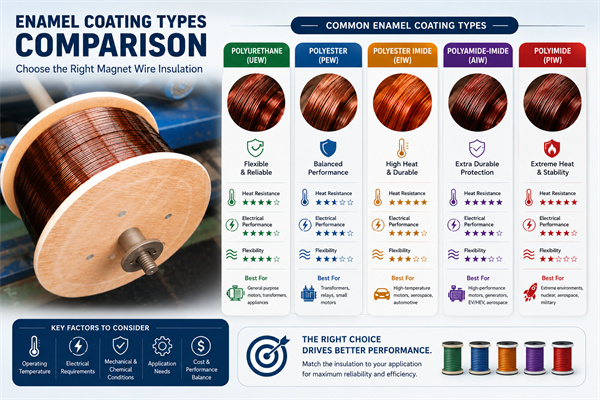
The performance of enameled copper wire is primarily determined by the enamel coating. Different enamel coating systems have different characteristics in terms of temperature resistance, chemical resistance, corona resistantness, and solderability. Polyester-imide (PEI) is the mainstream enamel coating material for 180°C grade enameled wire. PEI enamel coating has excellent heat resistance, mechanical strength, and electrical properties, and is highly compatible with polyamide-imide (PAI) topcoats. PEI is mainly used as a primer, forming a two-coat system with PAI to cover 200°C grade applications. Polyamide-imide (PAI) is the preferred material for 200-220°C grade enamel coatings.
The softening breakdown temperature of PAI (polyimide) enamel coatings can reach 330-350°C, far exceeding its official thermal class (220°C). Under instantaneous thermal shock of 200°C, the internal stress of the PAI enamel coating is extremely low, preventing cracking. PAI is typically used as a topcoat in conjunction with PEI (polyethylene terephthalate) primers to significantly improve the thermal shock and chemical resistance of the enamel coating. Polyimide (PI) is a top-tier enamel coating material in the 220-240°C range. PI enamel coatings offer the highest thermal class and optimal radiation resistance, primarily used in extreme environments such as aerospace, nuclear industry, and military electronics. The disadvantages of PI enamel coatings are high cost and poor solderability (requiring specialized welding processes). The unique advantage of solderable polyurethane (UEW) enamel coating is that it can be directly soldered at soldering temperatures of 375-410°C without prior scraping off the enamel coating. UEW enamel coating is mainly used in applications requiring automated soldering, such as relays, coils, and transformers. The standard soldering temperature for UEW Class 130 is 375°C, for Class 155 it is 390°C, and for Class 180 (H-class heat resistant) it is 390-410°C. Corona-resistant enamel coating is for motors and transformers driven by frequency converters.
The PWM waveform output by frequency converters contains high dv/dt harmonic components, which can cause partial discharge in the winding insulation. Corona-resistant enamel coatings, by adding inorganic nanofillers (such as alumina and silicon dioxide), resist partial discharge erosion, extending their lifespan by 10-100 times. Surge-resistant enamel coatings target the rapid transient voltages (dv/dt up to 10 kV/μs) generated by IGBT switching. Similar to corona-resistant enamel coatings, surge-resistant enamel coatings place greater emphasis on withstanding high-frequency transient voltages. Self-bonding enamel coatings can bond to themselves under heat (120-180°C) or solvents (alcohol, acetone), forming a robust coil structure without impregnation. Self-bonding enamel coatings are primarily used in frameless coils, irregularly shaped coils, and speaker voice coils.
Core Value of Direct From Factory Supply
Direct From Factory (DFO) refers to OEMs directly signing purchase contracts with wire manufacturers, bypassing intermediaries such as distributors, agents, and traders. This procurement model has unique engineering value in the wire industry. In terms of cost advantages, DFO can save 15%-30% on procurement costs. In the traditional supply chain of the wire industry, distributors typically add 15%-25% markups, while traders add 20%-35%. In bulk purchase scenarios, the markup percentage may be even higher.
DFO eliminates these intermediaries, allowing OEMs to purchase wire at near-factory prices. Regarding customization capabilities, DFO can provide more flexible customization services. The factory can customize conductor diameter (non-standard specifications within the range of 0.05-5.0 mm), enamel coating thickness (Grade 1/2/3 or further subdivisions), enamel coating material (PEI, PAI, PI, UEW, etc.), thermal class (120-240°C), packaging specifications (spool size, single-spool weight, marking method), and special properties (corona resistant, surge resistant, self-adhesive) according to specific customer needs. Intermediaries, due to inventory and procurement cost constraints, find it difficult to provide this level of customization. In terms of technical response, direct supply from the factory can provide more direct technical support.
The application of enameled wire involves multiple technical aspects, including conductor selection, enamel coating matching, winding process, welding process, and reliability verification. The factory’s engineers can directly connect with the customer’s technical team, providing full-process technical support from sample testing, pilot production, mass production to after-sales service. Intermediaries typically lack this level of technical capability. In terms of quality traceability, factory direct supply provides complete production process data. Each batch of wire corresponds to a unique production batch number, traceable to raw material suppliers, production lines, production times, operators, and testing data. This traceability is crucial for applications with high reliability requirements, such as automotive, aerospace, and medical industries. Regarding delivery time guarantees, factory direct supply offers more stable delivery time assurances. The factory can arrange raw material procurement, production scheduling, and inventory preparation in advance according to the customer’s production plan, avoiding potential inventory shortages or logistical delays that may occur with distributors. For small-batch, multi-batch special requirements, factory direct supply also demonstrates significantly faster response times than distributors.
Product Customization Capabilities of Direct From Factory Supply
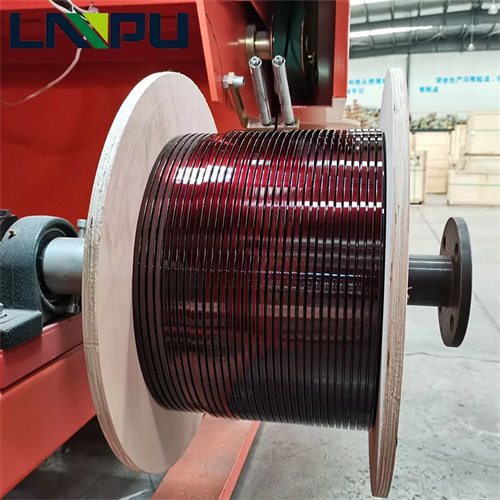
Directly supplied enameled wire typically possesses the following customization capabilities: For conductor specifications, any specifications within the nominal diameter range of 0.05-5.0 mm can be produced according to customer requirements. Conductor diameter tolerance can be controlled between ±0.001 mm (fine wire) and ±0.01 mm (heavy duty wire). Conductor materials can be selected from ETP oxygen-free copper, OFC oxygen-free copper, high-purity copper (≥99.99%), nickel-plated copper (high temperature resistance, oxidation resistance), etc. For enamel coating system customization, different enamel coating combinations can be selected according to application requirements. Primer options: polyester, modified polyester, polyester imide, polyamide imide. Topcoat options: polyamide imide, polyimide, polyvinyl alcohol formaldehyde.
Enamelled wire thickness: Grade 1 (G1, thin), Grade 2 (G2, standard), Grade 3 (G3, thick), or customized according to customer requirements. Double-coat structure (primer + topcoat) is a common design for high-performance enameled wire. Regarding special features of the enamelled wire, the factory can provide: direct soldering enamelled wire (UEW, 130-180°C, direct soldering), self-adhesive enamelled wire (self-adhesive after heating or solvent activation), corona-resistant enamelled wire (nanofiller modified), surge-resistant enamelled wire (high-frequency transient voltage withstand), high elongation enamelled wire (high flexibility), low coefficient of friction enamelled wire (high-speed winding), etc. For rectangular and irregularly shaped wires, the factory can customize enameled wires with rectangular, square, trapezoidal, and other irregular cross-sections according to customer-provided drawings.
The thickness, width, aspect ratio, and corner radius of rectangular wires can all be customized. Irregularly shaped wires primarily serve applications requiring high slot fill factor or special spatial constraints, such as new energy vehicle drive motors, rail transit traction transformers, and wind power converters.
Quality Control System of Direct From Factory Supply
The quality control system for factory-direct supply typically includes three levels: raw material inspection, process inspection, and finished product inspection. For raw material inspection, copper rods entering the factory require testing for chemical composition (copper content, impurity elements), electrical conductivity (≥100% IACS), mechanical properties (tensile strength, elongation), and appearance quality (surface smoothness, oxidation degree). For enamel coating raw materials (resin, solvent, additives), solid content, viscosity, and curing characteristics need to be tested. For process inspection, online detection points are set up for key processes. Conductor diameter is continuously monitored online using a laser diameter gauge, with automatic alarms for tolerance exceeding limits.
The thickness of the enamel coating is monitored online using a capacitive or photoelectric thickness gauge. The continuity of the enamel coating (number of pinholes) is detected using a high-voltage spark test (typically 100-500 V AC). Conductor resistance is tested online using a DC bridge sampling test. Regarding finished product inspection, each batch of finished products must undergo the following tests before leaving the factory: appearance inspection (color uniformity, surface finish, coating integrity), dimensional inspection (conductor diameter, coating outer diameter), electrical inspection (breakdown voltage, insulation resistance, coating continuity), mechanical inspection (elongation, springback angle, adhesion, winding test), thermal performance inspection (thermal shock test, softening breakdown test, solderability test), and chemical inspection (solvent resistance test, acid and alkali resistance test).
The factory’s quality control certifications typically include: ISO 9001 Quality Management System Certification, ISO 14001 Environmental Management System Certification, IATF 16949 Automotive Industry Quality Management System Certification (for automotive electronics applications), UL Product Safety Certification, RoHS Directive Compliance, REACH Regulation Compliance, and ISO 45001 Occupational Health and Safety Management System Certification, etc.
Application Scenarios of Direct From Factory Supply
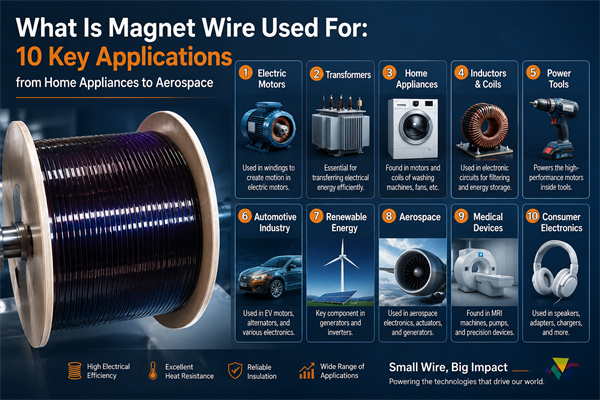
High-performance enameled copper wire supplied directly from the factory serves a wide range of applications, including: New energy vehicle drive motors are currently the fastest-growing application area for high-performance enameled wire. Demand continues to grow for hairpin flat wire, PAI enameled round wire (withstanding 200°C) specifically for new energy vehicles, and Grade 3 enameled wire for 800V high-voltage platforms. Direct factory supply provides complete support from sample production to mass production.
Rail transit traction transformers and traction motors require high-performance enameled wire with a thermal class exceeding 200°C. H-grade and C-grade enameled round and rectangular wires are the mainstream choices. Factory direct supply can provide certified products that comply with multiple standards such as IEC 60317, NEMA MW 1000, and TB/T 3021 (rail transit industry standard). Boost inductors, filter inductors, and isolation transformers in wind power converters and photovoltaic inverters have stringent requirements for the high-frequency performance of enameled wire.
Factory direct supply can provide skin effect optimized fine enameled wire or Litz wire according to the switching frequency (10-100 kHz). Servo motors, stepper motors, encoders, and sensors in industrial automation and robotics require high-performance fine enameled wire. Factory direct supply can provide various specifications within the diameter range of 0.05-0.5 mm, supporting small-batch customization. Aerospace and military electronics have stringent requirements for the reliability, resistance to extreme environments (-55°C to +260°C), radiation resistance, and vacuum resistance of enameled wire. PI (enamel coating), Kapton wrapped wire, and fiberglass wrapped wire are commonly used solutions. Direct factory supply can provide complete certification documentation and traceability records. Medical devices (such as MRI coils, CT transformers, and medical instruments) have special requirements for the biocompatibility, reliability, and long lifespan of enameled wire. Direct factory supply can provide certified products that comply with IEC 60601 (medical electrical equipment standard).
Cooperation Models of Direct From Factory Supply
Direct supply cooperation models typically include the following: OEM Customization Model: The customer provides detailed technical specifications (conductor specifications, enamel coating requirements, performance indicators), and the factory produces according to these specifications. This is the most common factory direct supply model, suitable for high-volume products with clearly defined specifications. ODM Joint Development Model: The customer provides application scenarios and basic requirements, and the factory’s technical team designs the product, makes samples, performs performance testing, and ultimately delivers a product that meets the customer’s needs. This is suitable for new product development or non-standard product customization.
Sample Trial Production Model: The customer provides a small sample requirement (usually 5-50 kg), and the factory conducts small-batch trial production and provides samples. Mass production begins after the sample trial is successful. This is suitable for introducing new suppliers or validating new specifications. Long-Term Supply Agreement Model: Both parties sign an annual or multi-year supply agreement, stipulating key terms such as product specifications, price, delivery schedule, and quality requirements. This model allows the factory to lock in production capacity and prices for customers, and secure orders for the factory. The emergency production capacity model prioritizes production capacity response when customers have urgent needs. Under the factory’s direct supply model, emergency response time is typically 1-2 weeks, while the distributor model may require 4-8 weeks.
Selection Recommendations for Direct From Factory Supply
When selecting a supplier of enameled wire directly from a factory, OEMs need to consider the following factors: In terms of technical capabilities, the factory should possess a complete process chain encompassing conductor drawing, annealing, enameling, and testing. Priority should be given to factories with their own wire drawing equipment (ensuring conductor quality), their own enameling equipment (ensuring enameled coating quality), and comprehensive testing equipment (ensuring quality control). Regarding certification systems, the factory should possess core certifications such as ISO 9001, ISO 14001, and IATF 16949 (automotive applications). For the target market, relevant product certifications (UL, CE, CQC, etc.) and compliance documents (RoHS, REACH) are also required.
In terms of R&D capabilities, the factory should have a professional technical team capable of supporting customer sample production, process optimization, and problem solving. You can examine indicators such as the factory’s R&D investment ratio, number of patents, and number of cooperative clients. Regarding production capacity and delivery time, the factory’s capacity should be able to meet peak customer demand while maintaining a stable delivery time of 4-8 weeks. Prioritize factories with a capacity utilization rate between 60% and 85% (too low may indicate insufficient orders, too high may affect delivery time). In terms of geographical location and logistics, the factory’s location should facilitate raw material procurement and finished product transportation.
For export orders, factors such as sea freight cycles, tariff policies, and customs clearance capabilities at the destination port need to be considered. Regarding business reputation, the factory should have a good business reputation and stable financial status. This can be assessed through third-party credit reports, customer testimonials, and industry reputation.
Conclusion
Factory direct supply, as an efficient model for procuring high-performance enameled copper wire, offers unparalleled advantages over traditional distribution models in terms of cost control, customization capabilities, technical responsiveness, quality assurance, and stable delivery times. For high-performance application fields such as new energy vehicles, rail transportation, wind and solar power, industrial automation, aerospace, and medical equipment, factory direct supply has become a crucial choice for OEMs to optimize their supply chains and enhance product competitiveness. Understanding the technical system of high-performance enameled copper wire, mastering the factory direct supply cooperation model, and standardizing supplier selection and evaluation are fundamental to the successful implementation of factory direct supply procurement.